
The Lockerbie Bombing Confession the Netflix Series Omits
The Netflix series ends at the 2001 Camp Zeist verdict, but the live US Lockerbie prosecution turns on a fight it never reaches: whether Masud's 2012 confession to a Libyan investigator was voluntary. This record flags the duress allegations and the reported 'lost' recording as contested, details Judge Friedrich's partial Telex ruling, and carries the August 25, 2026 jury-selection date (last verified Aug 3, 2026).
- Jurisdiction
- US federal
- Court
- U.S. District Court for the District of Columbia
- Judge
- Dabney L. Friedrich
- AI tool named
- No AI tool
- Ruling date
- Jul 1, 2026
- Source document
- View primary court order ↗
- Last verified
- Aug 3, 2026
Lex Machina Review is an independent risk-tracking and reference resource. Nothing on this site is legal advice, and using it does not create an attorney-client relationship. Every record is reviewed against primary sources but may not reflect the most current status of a matter — always verify directly against the cited court order, rule text, or a licensed attorney before relying on it.
Companion explanation — secondary to the source document above
Risk Digest posture and scope
- Category: risk-digest.
- Legal-background review: Mara Venn.
- Primary-source posture: docket entries, court rulings, charging materials, and identified hearing reporting control; disputed assertions are labeled as defense allegations, government theory, reported testimony, or court ruling.
- Non-advice disclaimer: this is legal-background analysis, not legal advice and not a prediction of admissibility, guilt, or trial outcome.
- Last verified: Aug. 3, 2026.
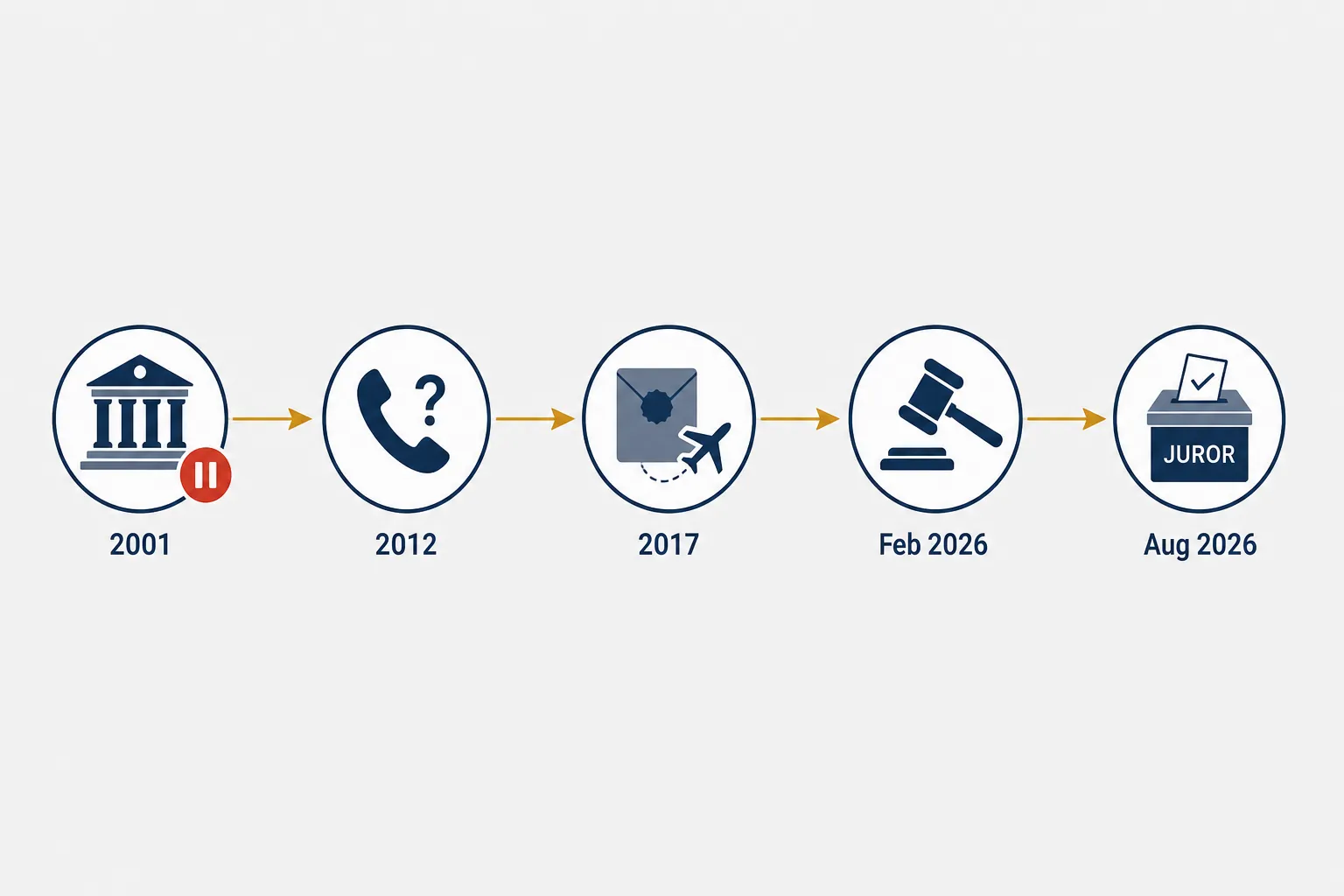
At the point where the Netflix drama finds its clean legal ending — the January 2001 Camp Zeist conviction — the live U.S. case is only beginning to become useful to lawyers. Viewers looking for legal analysis after the Netflix Lockerbie series need the genre corrected first: the Netflix title is a drama, not the documentary-format “Lockerbie: The Unheard Voices.” This record is not another scene-by-scene accuracy comparison; that narrower television question is handled in the series comparison. The present question is what a federal jury in Washington, D.C. may be allowed to hear.
That distinction matters because United States v. Abu Agila Mohammad Mas’ud Kheir Al-Marimi is not a rerun of Camp Zeist. The case now turns on a 2012 statement attributed to Masud by a Libyan investigator, a statement the defense attacks as coerced and the government treats as a detailed insider confession. Until the court resolves that admissibility fight, any account that stops at the 2001 verdict is reading from the wrong litigation map.
Where the D.C. case actually stands
Masud was charged in December 2020 under 18 U.S.C. §§ 32(a)(1), 32(a)(2), and 844(i), entered U.S. custody on Dec. 11, 2022, and pleaded not guilty on Feb. 8, 2023.[1] This article carries Aug. 25, 2026 as the current jury-selection date, last verified Aug. 3, 2026; recent reporting has placed jury selection in the Aug. 24–25 window, so any filing, client alert, or courtroom plan should still be checked against the live docket before use.[2]
The delay history explains why date discipline is not cosmetic here. The trial had previously been set for May 12, 2025, then moved into 2026 on health and complexity grounds; later reporting described the trial as delayed until the following year.[3][4] The broader count-by-count posture belongs in the Pan Am 103 prosecution status record. The evidentiary hinge is narrower: whether the 2012 statement survives suppression.
The confession record the series never reaches
At a Feb. 11, 2026 admissibility hearing, FBI Special Agent Todd Tunstall testified, as reported by BBC News, that the confession record originated with Scottish investigators and that a copy was handed to the United States in 2017. He also testified that a Libyan investigator identified in the reporting as “Jamal” said his phone recording of the 2012 interview was “lost.”[5]
That is not a clerical detail. If the government offers a confession through a later copy or written account, while the reported source recording is unavailable because the investigator says it was lost, counsel are no longer arguing only about what Masud allegedly said. They are arguing about how the statement was captured, preserved, transferred, and tested.
The defense account, as reported, is that Masud was in Libyan custody, that three masked men appeared, that threats were made against his family, and that he then gave a false confession. The government’s contrary theory is that he freely gave a highly detailed insider account, and that the statement is corroborated by crime-scene, forensic, immigration, and flight records.[2][5]
Those labels have to stay attached. The masked men and threats are defense allegations, not established findings. The “freely provided” account is the government’s position, not a judicial conclusion. The “lost” recording is Jamal’s reported statement, not an independently resolved fact. Precision on those points is not hedging; it is the only way to describe a live suppression record without quietly deciding the motion before the judge does.
| Record item | How it should be labeled | Why it matters |
|---|---|---|
| 2012 interview by Libyan investigator | Reported source event / government confession evidence | The statement is the prosecution’s central evidentiary asset if admitted. |
| Three masked men, threats to family, false confession | Defense allegation | Goes to voluntariness and the reliability attack. |
| Phone recording said to be “lost” | Reported statement by Jamal | Creates preservation, authentication, and testing questions around the source interview. |
| Copy handed to U.S. in 2017 | Reported hearing testimony | Defines the evidentiary chain counsel must examine before trial. |
| Crime-scene, forensic, immigration, and flight-record corroboration | Government theory | Aims to make the statement look less dependent on the missing recording. |
Why voluntariness is the center, not a side issue
A confession taken in foreign custody presents a different litigation problem from a domestic station-house interview. The familiar U.S. Miranda frame does not do all the work when the original questioning was conducted abroad by a foreign investigator. The court still has to confront voluntariness: whether the statement was the product of free choice or of coercive pressure that makes it inadmissible.
That is why the alleged circumstances of the 2012 interview carry more weight than the dramatic content of the confession. Before a jury hears a statement said to implicate Masud in the bombing plot, the judge has to decide whether the way the statement was obtained permits its use at all. A detailed confession is powerful only if it crosses that threshold.
The missing-recording issue sharpens the problem. A recording would let the parties and the court examine tone, sequence, pauses, prompts, interruptions, visible or audible distress, and whether the written account tracks the actual exchange. Without it, the fight shifts toward testimony, copies, translations or summaries if any are offered, investigator credibility, and corroborating evidence outside the interview.
The government’s corroboration theory is the answer one would expect: if independent records line up with details in the statement, the government can argue the confession reflects insider knowledge rather than coercion or fabrication. But corroboration and voluntariness are not the same question. Corroboration may make a statement more reliable in the government’s telling; it does not automatically cure coercion if the court credits the defense account of the interview conditions.
The defense, for its part, does not win merely by showing that the recording is unavailable. A missing source recording is a serious trial and suppression fact, but it is not a magic exclusion rule standing alone. The defense still has to tie the missing recording and the alleged threats to a legal reason the statement should not reach the jury.
The Telex ruling shows how narrowly Judge Friedrich may gatekeep
The July 2026 Telex ruling is not the main event, but it is a useful signal. Judge Dabney L. Friedrich admitted only the specific Pan Am no-show-luggage language — “In the event of a no-show, into the belly of the plane the baggage goes” — and rejected the government’s request to admit the entire message.[2]
That ruling is worth more than a passing mention because it shows a court willing to separate a probative excerpt from the larger document the government wanted. It does not forecast how the confession motion will be decided. It does, however, warn counsel not to assume that contextual material arrives wholesale merely because one sentence has evidentiary force.
For trial preparation, that matters. A prosecution theory built from old records, international transfers, and historical aviation practices will invite the government to ask for narrative context. The Telex ruling suggests the judge may require a closer fit: what exactly proves what, and how much surrounding material is necessary before unfair prejudice, confusion, hearsay objections, or relevance limits overtake the offer.
What counsel should track next
The bombing facts remain historically and humanly enormous. The legal record now before Judge Friedrich is smaller and more exacting. Counsel following the case should be watching the admissibility order, the court’s treatment of foreign-custody voluntariness, the evidentiary foundation for any copy or account of the 2012 interview, and the degree to which corroborating records are permitted to support the government’s confession theory.
The practical file note is simple enough to be useful: do not cite the Netflix endpoint as the current case posture. Use the trial timeline for chronology, the prosecution status record for docket breadth, and this confession record for the issue likely to decide what the D.C. jury actually hears.
References
- Terrorist Trial Tracker — PA103LL.
- Lockerbie bomber movie Pan Am — The National, updated Aug. 3, 2026.
- Trial of second Lockerbie bomber delayed until next year — Scottish Legal News.
- Trial delayed until next year for 3rd person charged in Lockerbie bombing — syracuse.com.
- Lockerbie bombing accused’s confession was recorded then lost, court hears — BBC News.
Related records
Tool profile
How Meta's AI Spending Reshapes Law Firm ProfitabilityGoverning regulation
Browse the obligations tracker →Preventive workflow
Browse verification workflows →
Report a correction or tip
Spotted an outdated figure, a misstated fact, or a ruling this case record should reflect? Public comments are disabled for this content given the professional cost of a misreported case outcome, penalty amount, or rule text — use the structured correction channel instead.
Report a correction or tip for this record →