
Legal issues behind Yerington's Monarch Data Center protest
A primary-source-linked legal record of the protest-covered Monarch Data Center project in Yerington, NV, tracking its path from the 2025 rezoning fight to the Lyon County Board of Commissioners' Aug. 6, 2026 vote on the PUD zone change, and mapping the challenges that would follow. As of Aug. 4, 2026, no lawsuit has been filed against the approvals, and each remaining vector — NRS 278 appeals, water-rights conversion, tribal-consultation arguments, and federal intervention — is flagged confirmed or reported.
- Jurisdiction
- Nevada, US
- Court
- No court action filed
- AI tool named
- No AI tool named
- Ruling date
- Aug 6, 2026
- Source document
- View primary court order ↗
- Last verified
- Aug 4, 2026
Lex Machina Review is an independent risk-tracking and reference resource. Nothing on this site is legal advice, and using it does not create an attorney-client relationship. Every record is reviewed against primary sources but may not reflect the most current status of a matter — always verify directly against the cited court order, rule text, or a licensed attorney before relying on it.
Companion explanation — secondary to the source document above
Status as of Aug. 4: no filed lawsuit, one pending county vote
The legal status of the Monarch data center protest in Yerington is narrower than the public fight around it. As of Aug. 4, 2026, the record reviewed for this article shows no filed lawsuit against the project approvals. The next legally meaningful event is Lyon County’s Aug. 6, 2026 Board of County Commissioners meeting, where agenda item 6.b places the Monarch Planned Unit Development zone-change ordinance before the Board for final action.[1]
| Question | Record answer as of Aug. 4, 2026 |
|---|---|
| Project identity | Monarch Data Center / Copia Power DevCo LLC campus proposed for Mason Valley near Yerington. |
| Local jurisdiction | Lyon County, Nevada; final local land-use action is before the Board of County Commissioners. |
| Immediate decision point | Aug. 6, 2026 BOCC vote on the PUD zone change, agenda item 6.b.[1] |
| Current litigation posture | No filed lawsuit identified in the reviewed record. |
| What could become legal proceedings | An NRS Chapter 278 land-use appeal, water-rights conversion proceedings, tribal-consultation or federal-intervention claims, and environmental-review or segmentation arguments — but only when a party files or an agency acts. |
| Main caution | Public opposition, tribal objections, and economic disputes are significant, but they are not the same thing as pending litigation. |
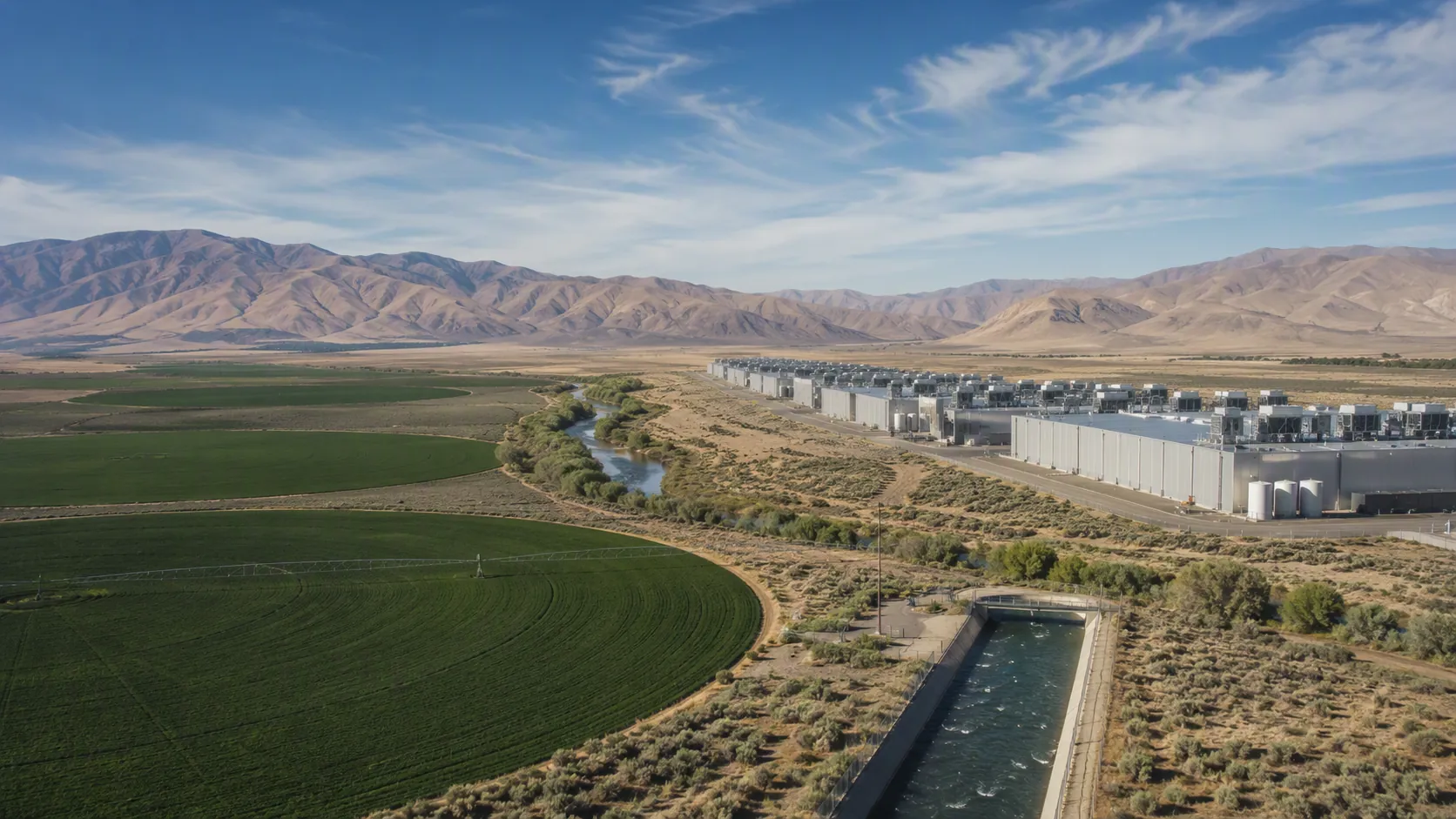
That distinction matters because the controversy is already being described in litigation-shaped language. The record does not yet support that label. What it does support is a live administrative controversy with a dated vote, a long paper trail, and several routes that could become justiciable after the county acts.
How Monarch reached the Aug. 6 Board agenda
The project has been described in 2025 materials as a roughly 505-acre, 1,000 MW data center campus with about 4.6 million square feet of building area.[2] Later local reporting on the July 2026 PUD vote described a different configuration, including eight two-story buildings up to 95 feet tall.[4] Those differences should not be treated as clerical trivia. In a land-use dispute, the version before the deciding body is the version that matters, and the Aug. 6 staff and ordinance record should control over older summaries where the descriptions diverge.
The clean procedural path looks like this:
| Date | Administrative step | Why it matters |
|---|---|---|
| July 8, 2025 | Lyon County Planning Commission unanimously recommended a master-plan change for the data center proposal.[2] | This moved the project out of ordinary local discussion and into the formal land-use record. |
| Aug. 7, 2025 | The Board of County Commissioners tabled the request after public comment that local reporting described as 13 speakers opposed and 4 in favor.[2] | The Board did not deny the proposal; it paused action, leaving the applicant’s path open. |
| Dec. 4, 2025 | The Board approved the Master Plan Amendment 4-1, with Commissioner Hockaday opposed.[3] | This was a major local approval, but it was not the final PUD zone-change vote now set for Aug. 6. |
| July 14, 2026 | The Planning Commission voted 4-3 to advance the Monarch PUD.[4] | A split recommendation put the final land-use issue back before the elected Board. |
| Aug. 3, 2026 | The county held an ordinance workshop before the final vote setting.[1] | The workshop matters for record-building, but it did not replace the scheduled Board vote. |
| Aug. 6, 2026 | The Board agenda sets the PUD zone-change ordinance for final action as item 6.b.[1] | This is the next appeal-relevant county action if the Board approves, denies, or materially changes the ordinance. |
That sequence is the spine of the legal issues behind the Monarch data center protest in Yerington. It shows why the dispute is not at the courthouse yet, and also why it is not merely political theater. A land-use applicant has moved through master-plan amendment and PUD recommendation stages. Opponents have built a record around water, consultation, compatibility, and process. The Board now has to vote on an ordinance, and that vote will determine which objections become ripe enough for a formal challenge.
The opposition record is broader than the march
The Aug. 2 march in Yerington matters because it occurred days before the final Board vote, not because a march by itself creates a claim. Pizen Switch Times reported the community march on Aug. 2, placing visible public pressure immediately ahead of the Aug. 6 agenda item.[6] That is useful context for the hearing record: commissioners were not voting in a vacuum.
The Change.org petition is also part of the political record, with 2,381 signatures and a posted response from Commissioner Cassinelli disputing parts of the opposition narrative.[7] Petitions rarely decide land-use legality on their own. They can, however, help show that objectors raised issues before the local body acted, which may matter later if an appellant argues that concerns were preserved during the administrative process.
The strongest opposition material is the tribal-consultation record. The Walker River Paiute Tribal Council’s June 2026 Resolution WR-53-2026 and John Dini’s July 14 Planning Commission testimony are the materials that most directly point toward a future legal or agency dispute. Local reporting on the Planning Commission vote placed those objections inside the same proceeding that advanced the PUD to the Board.[4]
The difference is practical. A chant outside the building shows pressure. A petition shows organized public opposition. A tribal resolution and testimony can identify a procedural or substantive defect that an agency, court, or federal office may have to address if someone invokes the right process.
Economic-benefit claims do not line up cleanly
The economic case for the project is part of the county record, but it should be read with caution. Local and applicant-side descriptions have not produced one stable public-benefit figure. KOLO reported Copia’s claim of $2.5 billion in economic output over 25 years and no tax abatements.[4] Carson Now reported a $1.5 billion property value figure and roughly $250 million in sales-tax revenue in connection with the master-plan amendment.[5] NVBEX earlier reported projected construction-tax figures of $16 million to the state and $8 million locally, plus about $562,000 in annual property-tax revenue.[2] The petition record also includes Commissioner Cassinelli’s posted claim of $3 billion over 20 years.[7]
Those figures may be describing different tax bases, time periods, or modeling assumptions. The problem is that they are being used in the same public fight as if they can be added into a single bottom line. The Nevada Independent has separately cautioned, in its reporting on Nevada data-center development, that some public-benefit assertions around these projects are not publicly verifiable.[8] For Monarch, that means the economic pitch is relevant to the Board’s policy judgment, but it is not a settled factual answer to the water, land-use, and consultation objections.
Water is the issue most likely to outlive the zoning vote
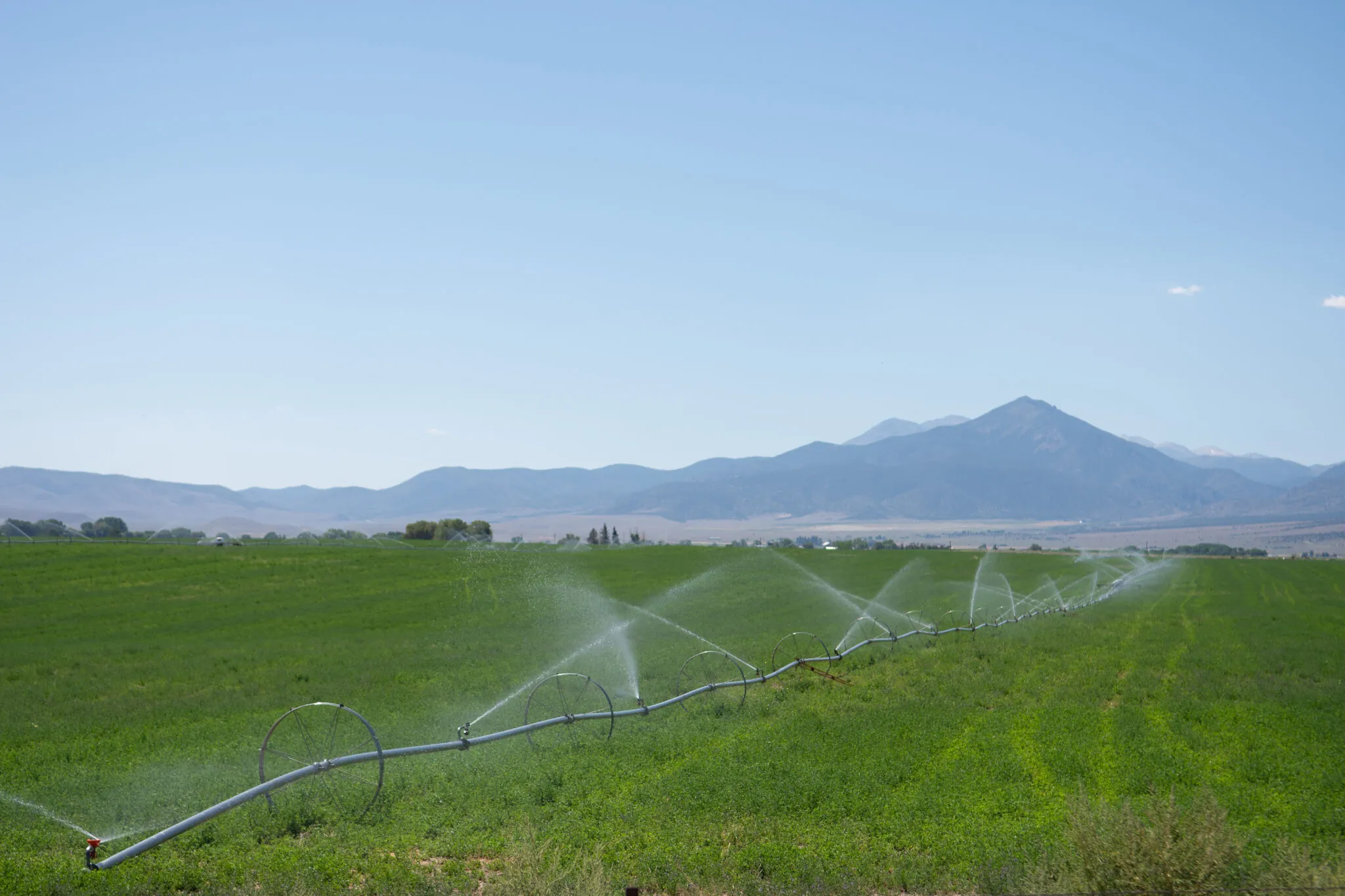
The water numbers in the public record should be handled the same way as the project-scope numbers: carefully, and preferably against the county staff report and any State Engineer filings. The reviewed record identifies an approximately 800 acre-foot-per-year water figure, while also noting that water and power-demand figures vary by source. That is enough to identify water as a core legal-risk area, but not enough to treat every public estimate as final.
The more durable point is not the precise public-facing number. It is the proposed conversion of agricultural water use to industrial data-center use in Mason Valley and the Walker River system. Reporting from Nevada Current and This Is Reno has described Mason Valley and the Walker basin in over-appropriation terms, which makes the water-rights pathway distinct from the county zoning pathway.[12]
A county PUD approval would not, by itself, settle State Engineer questions. Conversely, a water-rights protest or ruling would not automatically rewrite the county’s zoning record. Counsel tracking this project should keep those files separate until an application, protest, ruling, or appeal connects them.
What could become litigation after the Board acts

The useful map after Aug. 6 is not a list of lawsuits. It is a list of legal vectors, each with a different trigger. Nevada’s land-use appeal statute is one route; water-rights proceedings are another; tribal consultation and federal intervention are a third; environmental-review or segmentation arguments may arise only if a party can attach them to a review obligation, permit, agency action, or final local decision.
| Vector | Status as of Aug. 4, 2026 | What would make it concrete |
|---|---|---|
| NRS Chapter 278 land-use appeal | Available, not filed. | A party aggrieved by a final county land-use decision files in the proper district court under Nevada’s land-use appeal framework.[9] |
| Water-rights conversion challenge | Available or expected if water-rights applications or transfer proceedings are invoked; no project lawsuit identified in the reviewed record. | A protest, State Engineer ruling, administrative record, or judicial appeal tied to the agricultural-to-industrial conversion issue. |
| Tribal-consultation claim | Alleged and documented in opposition materials; not shown as a filed lawsuit. | A court filing, agency petition, federal response, or other official action addressing consultation obligations. |
| Federal intervention | Reported, not confirmed as a filed case. | An official federal inquiry, agency action, or federal-court filing. The Fernley Reporter has reported that a Walker River Paiute member sought federal intervention, but that remains a reported-status item in this record.[10] |
| Environmental-review or project-segmentation claim | Alleged potential, not pending litigation. | A filing or agency process arguing that the project was improperly segmented or reviewed under the wrong environmental procedure. |
| County data-center ordinance issue | Confirmed as a county policy process; retroactivity to Monarch’s pending application remains an open question. | A county action applying, declining to apply, or litigating the new data-center ordinance framework. Lyon County announced a Data Center Ordinance workshop on July 27, 2026.[11] |
The NRS Chapter 278 route is the cleanest local-government pathway because it depends on a final county action. If the Board approves the PUD ordinance on Aug. 6, an opponent claiming to be aggrieved can look to Nevada’s statutory land-use appeal structure. If the Board denies or substantially changes the application, the posture changes for both the applicant and objectors.
The water route is less dependent on the Board’s ordinance text. It turns on water rights, transfer or conversion proceedings, and the State Engineer’s record. That is why the same project can be “approved” locally and still face a separate water-rights fight, or be delayed locally while water issues continue on their own administrative track.
The tribal and federal routes need the most careful labeling. The Walker River Paiute objections are not background atmosphere; they are among the most legally relevant opposition materials in the record. But unless a tribal government, member, agency, or other party files or obtains official action, the proper label remains alleged or reported, not pending litigation.
The county ordinance question is real, but not yet decisive
Lyon County’s separate data-center ordinance process is worth watching because it shows the county trying to build a rule set around a use that ordinary zoning categories were not designed to absorb. The county announced a Data Center Ordinance workshop on July 27, 2026, shortly before the Aug. 3 workshop and Aug. 6 Monarch vote.[11]
The unresolved legal question is retroactivity. If the ordinance is adopted after Monarch’s application has already moved through key stages, opponents may argue that the new standards should govern or inform the Board’s decision. The applicant may argue that pending applications should be judged under the rules in place when the application was processed. The available record does not resolve that issue before the Aug. 6 vote.
This is the same kind of verification problem that now appears across AI-infrastructure development: local approvals, utility demands, water records, and promised economic benefits move on different clocks. For a comparable watch-list approach, see our record on the legal risk of IREN AI data center expansion.
What to watch on Aug. 6
The Aug. 6 Board vote should answer a limited but important question: whether Lyon County will approve, deny, or alter the Monarch PUD zone change. It will not, by itself, answer every water-rights question, settle tribal-consultation objections, verify the economic-benefit figures, or create a lawsuit.
If the Board approves the PUD, the dispute becomes easier to challenge through defined legal routes, but it still is not litigation until a complaint, petition, appeal, protest, or agency filing appears. If the Board denies or modifies the ordinance, the next record update changes accordingly. Until then, the correct label is a protest-covered administrative controversy with identified legal vectors, not a filed Monarch data center case.
References
- Lyon County BOCC agenda Aug. 6, 2026, Lyon County, Aug. 6, 2026.
- Lyon County Considering 1,000MW Data Center, NVBEX, Jul. 17, 2025.
- Lyon County CivicAlerts AID=386, Lyon County, Dec. 4, 2025.
- Lyon County Planning Commission approves Monarch Data Center, KOLO, Jul. 15, 2026.
- Lyon County Commissioners OK master plan amendment for data center, Carson Now, Dec. 7, 2025.
- Community March in Yerington, Pizen Switch Times, Aug. 2, 2026.
- Change.org petition, Change.org.
- No land? No problem, The Nevada Independent.
- NRS Chapter 278, Nevada Legislature.
- Walker River Paiute Member Seeks Federal Intervention, Fernley Reporter.
- Lyon County Data Center Ordinance Workshop press release, Lyon County, Jul. 27, 2026.
- This Is Reno / Nevada Current on Mason Valley over-appropriation, Nevada Current / This Is Reno.
Related records
Tool profile
How Meta's AI Spending Reshapes Law Firm ProfitabilityGoverning regulation
Browse the obligations tracker →Preventive workflow
Browse verification workflows →
Report a correction or tip
Spotted an outdated figure, a misstated fact, or a ruling this case record should reflect? Public comments are disabled for this content given the professional cost of a misreported case outcome, penalty amount, or rule text — use the structured correction channel instead.
Report a correction or tip for this record →