
The Legal Questions Behind Nancy Guthrie's Inconclusive DNA
When DNA tests in a high-profile abduction return no match, no exclusion, and a mixed profile, the legal meaning is narrower than headlines suggest. This record breaks down what inconclusive results mean for probable cause, evidence admissibility, and the civil claim now pending against investigators.
- Jurisdiction
- Arizona, United States
- Court
- Arizona state court
- AI tool named
- No AI tool named
- Source document
- View primary court order ↗
- Last verified
- Aug 3, 2026
Lex Machina Review is an independent risk-tracking and reference resource. Nothing on this site is legal advice, and using it does not create an attorney-client relationship. Every record is reviewed against primary sources but may not reflect the most current status of a matter — always verify directly against the cited court order, rule text, or a licensed attorney before relying on it.
Companion explanation — secondary to the source document above
The legal problem with the Nancy Guthrie DNA evidence is not that it is dramatic. It is that the public phrase “inconclusive DNA” collapses three different lab situations into one headline: a hair sample with no result, DNA from a glove that did not produce a CODIS match, and a mixed profile reportedly involving four or more people. Those results do not clear anyone. They also do not identify anyone. The harder question is what a prosecutor, defense lawyer, warrant affiant, judge, or civil litigator can responsibly do with them.
This Risk Digest record is not legal advice. Last verified: Aug. 3, 2026. The Guthrie investigation remains active, and no published court order in the Guthrie matter itself has resolved the disputed probable-cause, admissibility, or civil-liability questions discussed here. Where the record rests on outlet reporting, this article treats it as reported rather than court-established.
Keep the three DNA findings separate
The first discipline is vocabulary. A “no result” hair test, a database no-hit, and a complex mixed profile answer different questions. Treating them as one “DNA came back inconclusive” event makes every later legal analysis sloppier.
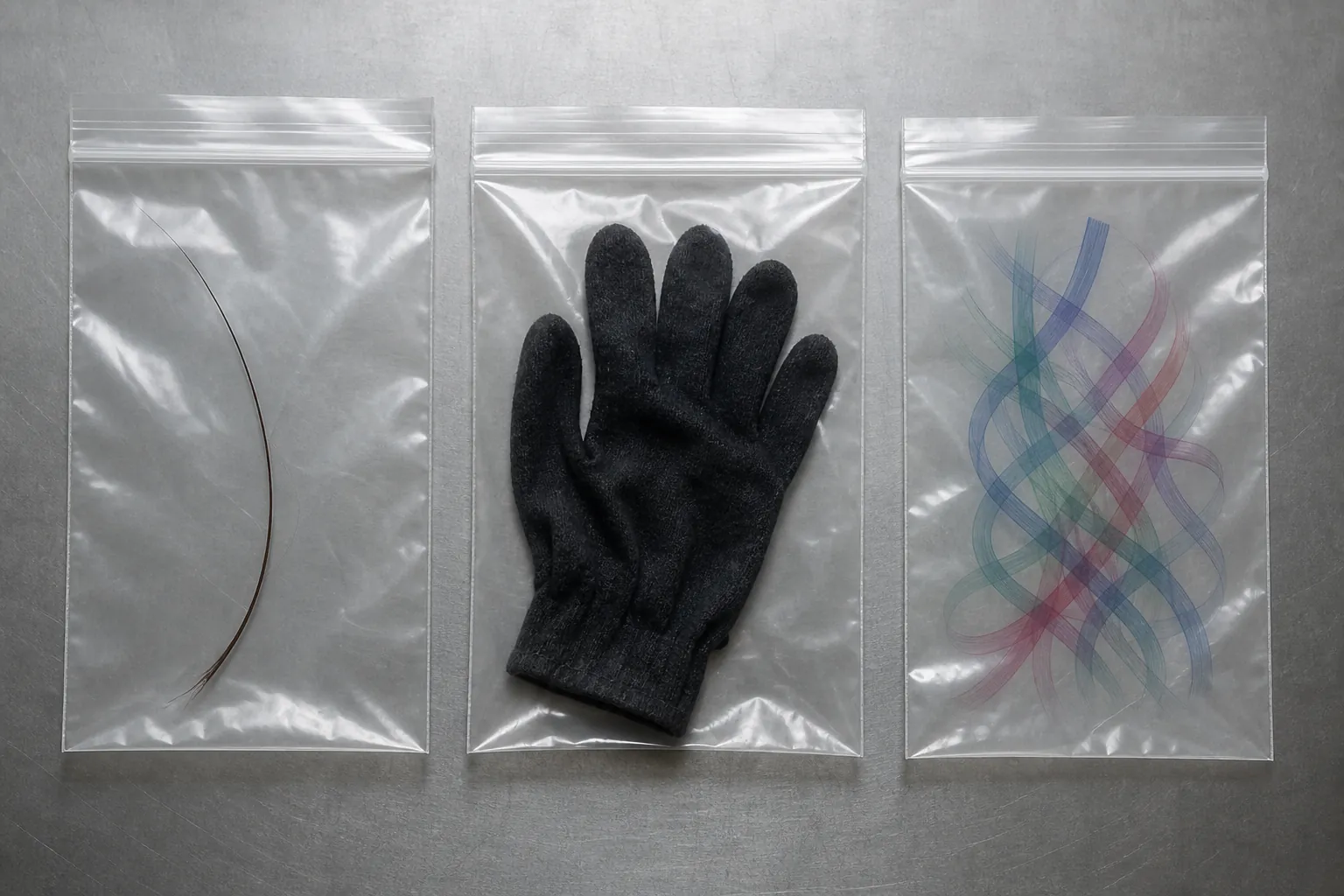
| DNA item | Reported result | What it can fairly support | What it does not support |
|---|---|---|---|
| Hair sample | CBS News reported that a hair sample found at Nancy Guthrie’s home produced “no results,” with the result verified in early June 2026 and disclosed publicly by Sheriff Chris Nanos in July 2026. [1] | A narrow statement that the tested hair did not yield a usable identity answer on the reported record. | It is not an exclusion, a match, or a scientific finding that the hair belonged to any particular person. |
| Glove DNA | CBS News reported that DNA from a glove did not produce a CODIS match and may not provide enough evidence to help investigators, according to sources. [2] | A database-search fact: the profile did not hit in CODIS on the reported record. | It is not proof that the contributor was uninvolved, unknown to investigators, or absent from the crime scene. |
| Mixed profile | NewsNation reported DNA expert CeCe Moore’s discussion of a mixture involving four or more people. [3] | A caution flag for interpretation: mixture complexity can make attribution harder and can require more careful expert foundation. | It is not, by itself, a reliable public basis to name or eliminate a suspect. |
Retired FBI agent Jason Pack put the restraint well: an inconclusive finding “doesn’t exonerate anyone, and it doesn’t implicate anyone.” [4] That sentence should do more work than it usually does in high-profile coverage. It does not mean investigators must stop investigating. It means the lab result has not done the identity work that a match or exclusion would do.
Probable cause turns on how the ambiguity was used
Ambiguous forensic information can still appear in a probable-cause presentation. Investigators are not required to ignore a partial lead in an active abduction investigation merely because the lab has not supplied a clean identity answer. The legal risk begins when the affidavit, oral presentation, or public explanation turns a limited forensic fact into something stronger than the lab actually reported.
A hair sample with no result is particularly thin as probable-cause material. It may explain an investigative step: why officers tested the hair, why they waited for a lab result, or why a line of inquiry stalled. It does not, without more, add identity weight against a person. If a warrant application treated “no result” as suspicious in itself, the problem would not be that the lab was inconclusive. The problem would be the inference built on top of the inconclusion.
A CODIS no-hit sits in a different place. It can show that investigators searched a database and did not receive a reported match. That may matter to diligence, sequencing, or investigative necessity. But it does not exclude someone whose profile is not in the database, whose profile was not searched in the same way, or whose connection to the evidence cannot be determined from the reported result.
A four-plus-person mixture is the most dangerous item to overstate because it can sound scientific while carrying attribution problems that are easy to blur. The legally relevant questions are not just whether DNA was detected. They are whether the lab can distinguish contributors, whether any person can be included or excluded under the method used, whether statistical weight exists, and whether the person presenting the evidence is candid about the limits.
That is why the sheriff’s reported response that a judge signed off on probable cause is important but not dispositive. Fox News reported that a man detained in the Guthrie investigation was preparing a lawsuit and that the Pima County sheriff defended the detention by saying a judge found probable cause. [5] Judicial approval matters. It is also not the end of the later inquiry if a detained person claims the application relied on false, baseless, omitted, or overstated evidence.
The pending notice-of-claim issue is therefore a legal risk signal, not a liability finding. Fox News reported a single claimed damages figure, while NewsNation separately reported an itemized set of claimed damages for detained men. [5][6] Those are outlet reports, and the actual filing should control before any dollar amount is treated as the operative claim. The point for risk review is narrower: the inconclusive-DNA record has already migrated from investigative uncertainty into a threatened civil-liability dispute.
A CODIS no-match is not an exclusion
CODIS context helps only if it is kept modest. NPR reported in February 2026 that FBI figures showed roughly 27 million profiles in CODIS and more than 750,000 investigations aided. [7] Those figures explain why investigators and the public pay attention when a search is run. They do not turn a no-hit into an exclusion.
A database can only return what it is capable of returning. If the contributor is not represented in the searched population, if the profile is insufficient for comparison, or if the evidentiary profile is too limited or complex, a no-match does not answer the identity question. For warrant practice, the safer formulation is blunt: CODIS was searched and did not produce a match on the reported record. Anything more needs support from the lab language, not from the size of the database.
Trial use depends on foundation, not headline value
Inconclusive DNA is not automatically irrelevant at trial. It may explain investigative decisions, rebut an overclaim, support cross-examination, or show why a case lacks a forensic link. But identity proof requires more than the aura of DNA. The proponent has to identify what the test actually found, what the method can reliably say, and how the result helps a factfinder without inviting a stronger inference than the science allows.
The Office for Victims of Crime’s DNA interpretation materials describe DNA results in terms that require careful distinction among inclusion, exclusion, and inconclusive outcomes. [8] That framework matters here because each Guthrie item falls short of a public identity conclusion. A no-result hair sample does not become probative of a suspect merely because it came from a significant location. A database no-hit does not become exculpatory merely because CODIS is large. A multi-person mixture does not become attributable merely because DNA was detected.
The ABA’s DNA Evidence Standards likewise treat admissibility as a foundation problem: the court must be concerned with the reliability of the testing, the application of the method, and the way the result is presented to the factfinder. [9] That does not bar all inconclusive-DNA evidence. It does mean the court has to police the gap between a laboratory limitation and an advocacy sentence.
The National Research Council’s treatment of DNA evidence in the legal system is useful for the same reason. It emphasizes that DNA evidence reaches court through scientific interpretation, statistical explanation, and legally meaningful limits rather than through the word “DNA” alone. [10] With a complex mixture, that caution becomes practical. The court may need to know whether the expert can describe the number of contributors, whether any contributor can be separated with confidence, whether a statistical comparison was performed, and whether the proposed testimony would help or mislead the jury.
The courtroom risk is not only admission or exclusion. It is also phrasing. Jurors may hear “DNA on the glove” and supply a suspect connection that the lab did not supply. They may hear “no CODIS match” and infer that the tested person was cleared. They may hear “four or more contributors” and assume investigative abundance, when the actual legal problem may be interpretive fragility.
What each side would need to lock down before relying on the DNA
The immediate work is documentary, not rhetorical. The lab reports, bench notes, database-search documentation, warrant materials, and notice-of-claim filing matter more than any public description of what the DNA “means.” Counsel reviewing the Guthrie record would want the exact words used at each handoff: lab to investigator, investigator to judge, sheriff to public, claimant to county.
- For the hair sample: determine whether the lab reported no DNA, insufficient DNA, failed amplification, contamination concerns, or another reason for “no result.” Those are not interchangeable.
- For the glove: obtain the exact CODIS-search language, including whether a profile was uploaded, searched locally or nationally, rejected as insufficient, or searched without a hit.
- For the mixture: identify the lab’s contributor estimate, whether any inclusion or exclusion was made, whether probabilistic genotyping was used, and whether the analyst can assign any statistical weight.
- For the warrant: compare the lab language against the probable-cause language. The risk question is whether the affidavit accurately preserved uncertainty.
- For the civil claim: use the actual notice of claim, not press summaries, to identify the alleged false or baseless evidence and the operative damages demand.
This article does not revisit evidence-delay and chain-of-custody questions already addressed in Nancy Guthrie Evidence Delay Exposes Chain-of-Custody Risks. Those issues may affect admissibility and weight, but the present question is narrower: what happens when the DNA interpretation itself does not identify or exclude anyone.
The unresolved pressure point
On the current public record, the Nancy Guthrie DNA evidence does not legally clear or implicate any person. The hair sample produced no reported identity answer. The glove DNA produced no reported CODIS match. The mixed profile reportedly involves four or more people, which makes attribution harder rather than easier unless the underlying lab work supports a more specific conclusion.
Those limits do not make the investigation improper. They do make later legal claims more exacting. Probable-cause review will turn on what was represented and what was left uncertain. Trial use will turn on foundation, interpretation limits, and jury-confusion risk. Civil exposure will turn on the actual notice-of-claim allegations and the warrant record, not on the public comfort of saying a judge signed off.
That is where the record stops for now: inconclusive DNA has not answered the identity question, but it has created a concrete litigation question over how far investigators and lawyers may go when the science has not gone there first.
References
- Hair sample found at Nancy Guthrie's home inconclusive as search for missing mother hits 6-month mark — CBS News.
- DNA from Nancy Guthrie's house may not provide enough evidence to help investigators, sources say — CBS News.
- Nancy Guthrie DNA expert: Hope for answers — NewsNation.
- Nancy Guthrie case: FBI prepares for parallel realities while awaiting DNA results — Fox News.
- Nancy Guthrie case: sheriff says no one permanently ruled out as detained man prepares lawsuit — Fox News.
- Men detained in Guthrie case seek $3M in damages — NewsNation.
- Nancy Guthrie investigation turns to DNA and forensic genetic genealogy — NPR, Feb. 19, 2026.
- Interpreting Results of DNA Analysis — Office for Victims of Crime.
- DNA Evidence — American Bar Association.
- DNA Evidence in the Legal System — National Research Council.
Related records
Tool profile
How Meta's AI Spending Reshapes Law Firm ProfitabilityGoverning regulation
Browse the obligations tracker →Preventive workflow
Browse verification workflows →
Report a correction or tip
Spotted an outdated figure, a misstated fact, or a ruling this case record should reflect? Public comments are disabled for this content given the professional cost of a misreported case outcome, penalty amount, or rule text — use the structured correction channel instead.
Report a correction or tip for this record →