
OpenAI Executive's Wildlife Donation Has Legal Implications
Greg and Anna Brockman's $5.5M Save Moon Camp donation, announced July 24, 2026 ahead of a July 31 closing, carries donor-side deduction limits, charity-side IRS disclosure duties, and California AG oversight questions. The record separates confirmed mechanics from reported details and flags unadjudicated exposure from Brockman's testimony and the Musk v. Altman verdict.
- Jurisdiction
- US-Federal
- Court
- U.S. District Court, Northern District of California
- Judge
- Yvonne Gonzalez Rogers
- AI tool named
- OpenAI
- Ruling date
- May 18, 2026
- Source document
- View primary court order ↗
- Last verified
- Aug 3, 2026
Lex Machina Review is an independent risk-tracking and reference resource. Nothing on this site is legal advice, and using it does not create an attorney-client relationship. Every record is reviewed against primary sources but may not reflect the most current status of a matter — always verify directly against the cited court order, rule text, or a licensed attorney before relying on it.
Companion explanation — secondary to the source document above
Greg and Anna Brockman’s July 24, 2026 donation of more than $5.5 million to the Save Moon Camp campaign is a wildlife-conservation event, but its legal implications begin with transaction mechanics: a $10 million-plus campaign, a roughly 63-acre Big Bear parcel near the Jackie and Shadow bald-eagle nest, and a reported July 31 closing deadline that should still be labeled reported rather than independently confirmed on the present record.[1][2]

The public gift completed the campaign only after more than 25,000 small donors reportedly supplied roughly half the total. That fact matters. It means the parcel was not simply rescued by one large check. It also means the large check cannot be treated as reputation weather, detached from substantiation, deduction limits, donor-benefit analysis, public acknowledgments, California charitable-trust oversight, and litigation-context diligence.
Event record and status flags
The confirmed center of the record is the announcement: Greg and Anna Brockman gave more than $5.5 million to help Friends of Big Bear Valley and the San Bernardino Mountains Land Trust complete the Save Moon Camp fundraising goal. The campaign’s stated purpose was to acquire the Moon Camp property near the well-known Big Bear bald-eagle nest, with funds also directed to closing costs, taxes, legal fees, and land maintenance.[1][2]
The closing is the status-sensitive point. Public reporting placed the closing deadline at July 31, 2026; the materials available here do not independently confirm that the deed closed. A legal file should therefore separate “announced gift” and “reported closing schedule” from “completed land transfer.” If the closing occurred as reported, the post-closing questions move to title, stewardship, restricted-fund administration, and public-benefit follow-through. If not, the inquiry is different: refund rights, escrow treatment, donor restrictions, and campaign communications.
| Issue | Current record | Legal consequence |
|---|---|---|
| Donor-side deduction | Gift announced in 2026; actual filing posture, AGI, itemization status, and deduction claim are not public. | Deductibility depends on substantiation and the 2026 charitable-deduction rules described in secondary OBBBA summaries, plus IRS documentation rules for contributions of $250 or more.[3][4][5] |
| Charity acknowledgment and donor benefits | Save Moon Camp published recognition tiers, and Friends of Big Bear Valley published a Brockman acknowledgment page.[6][7] | If goods, services, or more-than-insubstantial benefits were provided for a contribution over $75, IRS quid pro quo disclosure rules may apply.[8] |
| Land stewardship | The San Bernardino Mountains Land Trust is identified as the holder of the parcel in perpetuity, after a prior transfer-to-U.S.-Forest-Service plan was dropped.[6] | The legal question becomes whether restricted charitable funds and land-holding commitments are administered consistently with campaign representations. |
| California oversight | The parcel, the recipient organizations, and the OpenAI-related charitable-asset controversy all sit in California’s charitable-trust environment. | The Attorney General can scrutinize charitable assets, but compelled donor-list disclosure has constitutional limits after Americans for Prosperity Foundation v. Bonta.[9][10] |
| Political-donation context | The Brockmans were reported to have made $50 million in 2025 super PAC donations; OpenAI stated in June 2026 that the donations were personal.[11][12] | This is diligence context, not evidence that the wildlife gift is unlawful or insincere. |
| OpenAI litigation context | Musk v. Altman ended on statute-of-limitations grounds; Brockman’s prior promised-but-undelivered $100,000 donation was reported as trial cross-examination material.[13][14] | The verdict did not adjudicate the merits of charitable-mission claims or establish charitable misconduct by Brockman. |
The tax question is narrower than the headline amount
A $5.5 million-plus charitable gift does not translate mechanically into a $5.5 million-plus federal income-tax benefit. Counsel cannot know the Brockmans’ deduction position from the announcement. The material variables are still private: adjusted gross income, itemization, carryforward position, timing of payment, whether the recipients qualify for the relevant public-charity treatment, and whether any donor benefit reduced the deductible amount.
The 2026 complication is the One Big Beautiful Bill Act. The available tax-rule materials in this record are CPA and law-firm summaries, not direct statutory parsing. Those summaries describe a 0.5%-of-AGI floor for itemized charitable deductions beginning in 2026, a 60% AGI limitation for cash gifts to public charities, a 35% cap on itemized deductions for taxpayers in the top bracket, and a new non-itemizer charitable deduction of $1,000 for single filers or $2,000 for joint filers.[4][5]
Those rules point to questions, not conclusions. If a donor itemizes, the 0.5%-of-AGI floor can make the first slice of giving nondeductible. The 60% cash cap can limit current-year use even when a contribution is otherwise eligible. The 35% top-bracket itemized cap can reduce the value of the deduction below the donor’s marginal rate. The non-itemizer rule is unlikely to be the operating issue for a multimillion-dollar contribution, but it belongs in the rule set because 2026 tax law changed for both large and small donors.
Substantiation is less glamorous and more immediate. IRS Topic 506 states that a donor generally must obtain a contemporaneous written acknowledgment from the qualified organization for any contribution of $250 or more, and that the acknowledgment must include the amount of cash and whether the organization provided goods or services in exchange.[3] For a gift at this scale, the acknowledgment letter is not courtesy correspondence. It is the document that protects the donor’s deduction position and forces the charity to characterize any donor benefit.
No public source in this record establishes whether the Brockmans will claim the donation, how much they can deduct in 2026, whether any amount carries forward, or how the gift was structured. The safest legal phrasing is therefore conditional: the announced gift creates a potential charitable-deduction position subject to 2026 limits and substantiation, not a known tax outcome.
Recognition benefits are where the charity-side paperwork begins
The charity-side burden is easy to miss because public attention usually follows the donor. The receiving organizations have the harder documentary chores: acknowledgment letters, donor-recognition language, restricted-fund accounting, benefit valuation, and public explanations if anyone later questions whether the campaign treated donors consistently.
Save Moon Camp published recognition tiers beginning at $50,000 for “Nature Guide,” including a $5 million “Habitat Warrior” tier and a $10 million “Bald Eagle Hero” tier.[6] Friends of Big Bear Valley also published a dedicated acknowledgment page for Anna and Greg Brockman.[7] Public thanks alone usually do not create a problem. The legal question is whether recognition crossed into goods, services, privileges, naming rights, access, advertising value, or any other benefit that must be valued and disclosed.
The IRS quid pro quo rule is the hinge. When a donor makes a payment of more than $75 partly as a contribution and partly in exchange for goods or services, the charity must provide a written disclosure statement telling the donor that only the amount exceeding the fair market value of the goods or services is deductible, and giving a good-faith estimate of that value.[8]
The same IRS guidance also preserves room for ordinary donor recognition. Benefits of insubstantial value under the IRS revenue-procedure framework do not require quid pro quo disclosure, and the IRS page identifies a penalty of $10 per contribution for failing to make a required disclosure, capped at $5,000 per fundraising event or mailing.[8] That cap does not make the issue trivial. A failure here would not be measured only by the penalty; it would affect donor substantiation, public trust, and the organization’s ability to defend its campaign records.
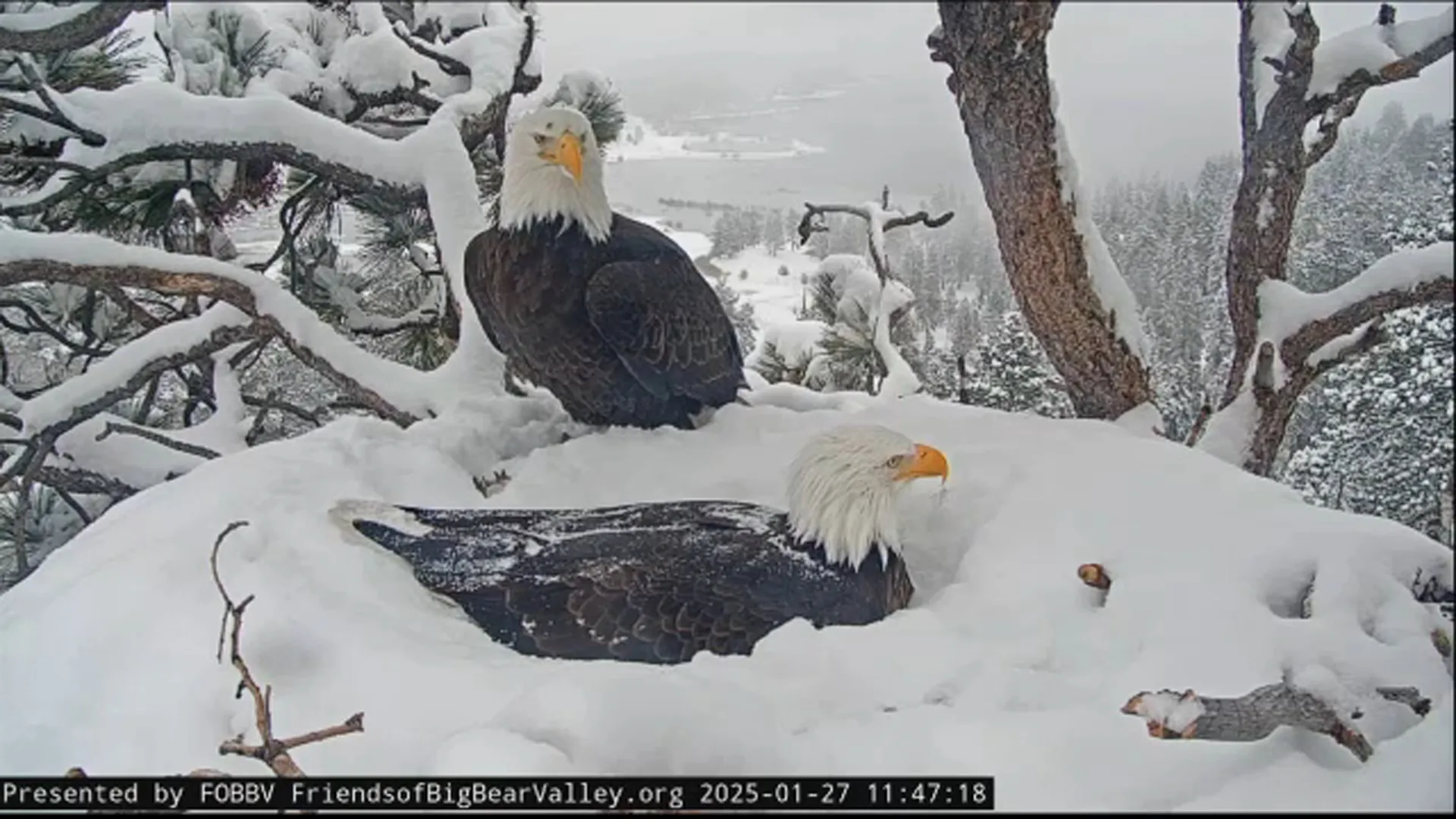
The conservation purpose is concrete enough to deserve its own place in the file. The Moon Camp parcel has been contested for years, with Save Moon Camp’s timeline tracing disputes back to 2001 and recounting CEQA litigation history.[15] The current campaign was aimed at land acquisition near the nest, not an abstract branding pledge. That matters because the legal analysis is stronger when it follows the actual asset: money raised, parcel acquired or not acquired, land held by the trust, restrictions honored, maintenance funded.
California oversight is about charitable assets, not public curiosity
California charitable-trust oversight is relevant for two different reasons. The first is ordinary: California charities, restricted gifts, land-trust commitments, and conservation representations can draw Attorney General attention if charitable assets appear to be misapplied. The second is contextual: OpenAI’s own charitable-asset structure had already become a California oversight issue before this wildlife gift.
On January 29, 2025, the San Francisco Foundation announced that it led a coalition of more than 25 organizations asking California Attorney General Rob Bonta to investigate OpenAI’s charitable assets, which the coalition described as valued up to $157 billion.[9] That coalition letter is not an accusation about the Moon Camp gift. It does explain why an OpenAI president’s large public charity donation lands in a diligence environment already attentive to charitable assets, fiduciary obligations, and California oversight authority.
There is also a limit. California cannot treat donor identification as a free-standing disclosure entitlement. In Americans for Prosperity Foundation v. Bonta, the Supreme Court invalidated California’s compelled donor-disclosure regime in a 6-3 decision, limiting how the state can demand large-donor lists from charities.[10] That decision does not disable charitable-trust enforcement. It does mean any oversight theory must be tied to charitable assets, compliance, restrictions, governance, or fraud concerns rather than generalized public interest in who gave what.
For the Moon Camp transaction, the cleaner oversight questions are practical. Were restricted donations used for the campaign purposes described to the public? Did the land trust receive and hold the parcel as represented? Were closing costs, taxes, legal fees, and maintenance reserves handled consistently with donor communications? Did large-donor recognition remain within ordinary acknowledgment, or did it confer benefits that required valuation? These are not scandal questions by themselves. They are the normal questions that attach when a public charity closes a high-visibility land campaign with one late, large gift.
Political giving changes the diligence file, not the legal character of the wildlife gift
The Brockmans’ reported 2025 political donations belong in the record because they affect counterparty-risk review, not because they prove anything about the wildlife gift. Gizmodo, citing FEC records, reported that the Brockmans gave $25 million combined to MAGA Inc. and $25 million combined to the pro-AI super PAC Leading the Future in 2025; Business Insider also reported on OpenAI’s response to attention around the donations.[11][12] The $50 million political figure is larger than the Save Moon Camp campaign and about five times the campaign’s $10 million-plus total, but the comparison is reputational and contextual rather than dispositive.
OpenAI issued a June 2026 statement that the donations were personal.[11][12] That statement does not erase leadership-risk questions for companies contracting with OpenAI, but it does set the boundary: a personal political contribution record should not be converted into an allegation that a separate conservation gift was unlawful, insincere, or made on OpenAI’s behalf.
Readers tracking OpenAI ecosystem exposure may want to place this record beside other procurement and litigation-risk notes, including the OpenAI Astra legal-analytics evaluation, the State Department AI map watermark record, and the Trump grant-freeze ChatGPT ruling. Those cross-references are reference paths, not proof that this donation is part of a larger wrongdoing pattern.
The Musk verdict leaves a litigation shadow, not an adjudication
Musk v. Altman should enter the donation analysis late and carefully. CNBC reported that on May 18, 2026, an advisory jury found Elon Musk’s claims barred by the three-year statute of limitations, and that Judge Yvonne Gonzalez Rogers adopted the verdict without reaching the merits; Musk called the result a “calendar technicality” and vowed an appeal.[13] On the present materials, any appeal should be treated as vowed, not resolved.
Business Insider’s trial coverage reported that Brockman was cross-examined about having promised a $100,000 donation to OpenAI’s charity and never paying it.[14] That is testimony reporting and cross-examination material, not an adjudicated finding of charitable misconduct. It is still relevant for diligence because a current public charity gift sits beside a prior giving-related episode that opposing counsel considered useful enough to put before a jury.
The distinction matters. The May 2026 verdict did not vindicate or reject the charitable-mission merits of Musk’s claims. It ended the case on limitations grounds. A risk file can therefore say that Brockman’s giving history has been litigated around and tested in cross-examination. It should not say that a court found he misused charitable assets or that the Moon Camp donation confirms any prior allegation.
What counsel can safely record now
The safe record is narrower than the public story and more consequential than a feel-good conservation item. The Brockmans made a major announced charitable gift tied to a specific land campaign. The campaign had broad small-donor support. The closing deadline was reported, but the closing should not be stated as independently confirmed unless later title or organizational records establish it.
On the donor side, the gift creates a potential 2026 charitable-deduction position governed by substantiation, AGI limits, the 0.5%-of-AGI floor, and the top-bracket itemized cap. On the charity side, the published recognition structure and acknowledgment page make quid pro quo and insubstantial-benefit analysis more than theoretical. On the oversight side, California has a legitimate charitable-assets lane, while compelled donor disclosure remains constitutionally constrained. On the litigation side, Musk v. Altman remains unresolved risk context because the result turned on limitations rather than merits.
That is the legal event: not proof of wrongdoing, not a sentimental eagle story, and not a reputational offset to political giving. It is a large, dated charitable transaction with tax documentation, donor-benefit, land-trust, disclosure, and California oversight consequences that should be recorded with status labels intact.
References
- Open AI co-founder donates $5.5M to buy land near famed Big Bear eagle nest, Los Angeles Times, July 24, 2026
- Big Bear famous bald eagle nest fundraiser surpasses goal, LAist
- Topic no. 506, Charitable contributions, Internal Revenue Service
- Charitable Deduction Changes Under the One Big Beautiful Bill Act, Landmark CPAs
- 2026 Estate and Gift Tax Update, Nelson Mullins
- Save Moon Camp, SaveMoonCamp.org
- Anna and Greg Brockman, Friends of Big Bear Valley
- Charitable contributions — quid pro quo contributions, Internal Revenue Service
- Coalition Requests Attorney General Action to Protect OpenAI’s Charitable Assets, San Francisco Foundation, January 29, 2025
- Divided court invalidates California donor disclosure rules, SCOTUSblog, July 2021
- OpenAI Really Doesn’t Like the Attention Its Co-Founder’s Political Donations Are Getting, Gizmodo
- OpenAI Greg Brockman political donations super PAC statement Leading the Future, Business Insider, June 2026
- Musk-Altman OpenAI trial verdict, CNBC, May 18, 2026
- Things you missed from Greg Brockman’s testimony at the OpenAI trial with Elon Musk, Business Insider, May 2026
- Story of Moon Camp, SaveMoonCamp.org
Related records
Tool profile
Neither Codex nor Claude Code Is Safe for Legal AI AgentsGoverning regulation
Browse the obligations tracker →Preventive workflow
Browse verification workflows →
Report a correction or tip
Spotted an outdated figure, a misstated fact, or a ruling this case record should reflect? Public comments are disabled for this content given the professional cost of a misreported case outcome, penalty amount, or rule text — use the structured correction channel instead.
Report a correction or tip for this record →