
Carlos Palazuelos' Pima County notice of claim, explained
Notice-of-claim law is a documented AI-hallucination target, and in Arizona a defective notice can end the claim outright: A.R.S. § 12-821.01 imposes strict 180-day and 60-day windows. The fabricated SDNY case in Hall v. Academy Charter School USA shows the risk; the Palazuelos notice of claim against Pima County — filed July 27, 2026, inside the window, response period still open — shows the compliant path and why AI-assisted filings must verify every cited authority before relying on it.
- Jurisdiction
- US-EDNY
- Court
- U.S. District Court for the Eastern District of New York
- AI tool named
- Unspecified AI tool
- Ruling date
- Aug 7, 2025
- Source document
- View primary court order ↗
- Last verified
- Aug 2, 2026
Lex Machina Review is an independent risk-tracking and reference resource. Nothing on this site is legal advice, and using it does not create an attorney-client relationship. Every record is reviewed against primary sources but may not reflect the most current status of a matter — always verify directly against the cited court order, rule text, or a licensed attorney before relying on it.
Companion explanation — secondary to the source document above
The Carlos Palazuelos Pima County notice of claim is still a pre-lawsuit filing. Palazuelos, Daniel Maddox, and Josefina Maddox reportedly served a notice of claim on July 27, 2026, naming Pima County, the Pima County Sheriff’s Department, Sheriff Chris Nanos, and Detective Earl Gieron, with Robbins Curtin Millea & Showalter attorney Jesse Showalter identified as counsel. The reported combined demand is $3.25 million: $2.5 million for Palazuelos, $500,000 for Daniel Maddox, and $250,000 for Josefina Maddox.[1]
That filing is not a complaint, not a court ruling, and not a finding that the county or any official is liable. It is a statutory gatekeeping document. As of Aug. 2, 2026, the 60-day response period described in coverage of the claim remains open, so the notice has not yet ripened into the next procedural question: whether the claim is accepted, denied, deemed denied, or followed by litigation.[2]

What the Palazuelos notice says, and what it does not
The reported factual allegations are narrow enough to state without turning the notice into a verdict. Palazuelos was detained on Feb. 10, 2026, in connection with the Nancy Guthrie investigation. The claimants allege a gunpoint arrest, roughly seven to eight hours of detention, a warrant based on false or baseless evidence that remains under seal, and public statements by Sheriff Nanos that, according to the claimants, were not retracted.[1]
Those are reported assertions from the notice, not adjudicated facts. The full notice controls over any news summary. Where public accounts differ on details such as age or demand framing, the safe move is not to choose the more vivid account; it is to pull the actual notice and check the caption, service list, date, demand language, and exhibits.
For a factual companion record on the same filing, see Wrongful arrest lawsuit in Savannah Guthrie case? Not yet. This entry is doing something different: it treats the Palazuelos notice as a live example of Arizona notice-of-claim procedure and of why AI-assisted citation work is dangerous in that procedural lane.
Why an AI citation problem belongs in this file
The Palazuelos notice itself is not reported to involve AI. The AI risk comes from a separate, documented federal record: in Hall v. The Academy Charter School USA, an opposition brief filed in the Eastern District of New York cited a non-existent Southern District of New York case for a notice-of-claim point.[3] Damien Charlotin’s AI hallucination database separately tracks the matter among court records involving fabricated legal authorities.[4]
That matters here because notice-of-claim law is not decorative authority. It decides whether a claimant may proceed at all. A hallucinated case about pleading standards can embarrass counsel and invite sanctions; a hallucinated notice-of-claim case can also cause the drafter to miss the document, recipient, deadline, or demand language that keeps the claim alive.
Hall is a New York federal record. It is not an Arizona ruling and it does not say anything about Pima County’s liability. Its relevance is narrower: an AI-invented authority has already appeared in notice-of-claim briefing, and Arizona is a jurisdiction where notice compliance is treated as a strict procedural condition rather than a loose narrative preview of a lawsuit.

The Arizona sequence to verify before anyone relies on the draft
Arizona’s government-claim workflow turns on dates and statutory compliance. A.R.S. § 12-821.01 sets the 180-day notice requirement for claims against public entities or public employees; Arizona courts treat notice compliance as strict, not approximate.
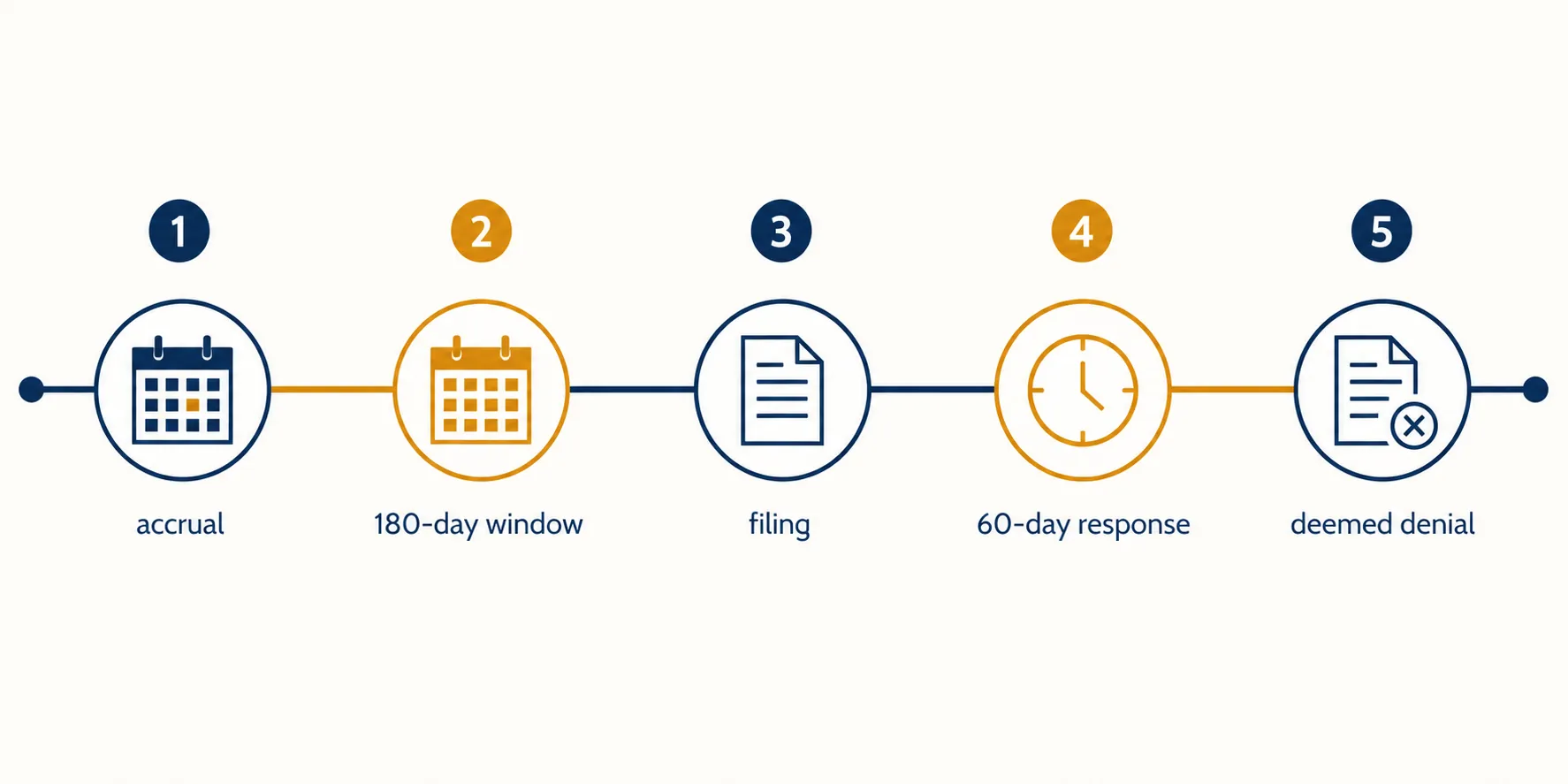
| Verification point | What must be checked in the Palazuelos record | Why it matters |
|---|---|---|
| Accrual date | The reported detention date is Feb. 10, 2026; the actual notice should be checked for how the claimants define accrual. | The 180-day clock runs from accrual, not from publication of later news coverage. |
| 180-day filing window | The notice was reportedly filed July 27, 2026, about five and a half months after the detention. | If the notice is late, the defect can bar the claim before merits discovery begins. |
| Public-entity context | The reported targets include Pima County, the sheriff’s department, Sheriff Nanos, and Detective Gieron. | The statute applies to claims against public entities and public employees; service and recipient details must be verified from the primary document. |
| Sum-certain demand | The reported demand totals $3.25 million across the three claimants. | Arizona notices must state an amount for which the claim can be settled; vague damages language is not a safe substitute. |
| 60-day response period | The filing date places the notice inside an open response window as of Aug. 2, 2026. | The public entity has time to act before the claim is treated as denied under the statutory sequence. |
The accrual issue is where Thompson v. Pima County earns its place in the file. In that Pima County notice-of-claim dispute, the Arizona Court of Appeals discussed accrual by focusing on when the injured party knew or should have known of the injury and its cause, not on when every downstream legal theory became fully developed.[5]
Applied to the reported Palazuelos timeline, the first date to test is Feb. 10, 2026, the detention date. A July 27, 2026 notice falls within 180 days of that date. That is a procedural observation, not a liability conclusion. It says the reported filing date is consistent with the statutory window if Feb. 10 is the operative accrual date; it does not prove service, sufficiency, causation, damages, or any constitutional violation.
Where AI-assisted drafting is most likely to fail
The dangerous AI output in this setting is usually not a flamboyant fake Supreme Court case. It is a plausible procedural sentence: a made-up Arizona appellate decision on substantial compliance, a real case name attached to the wrong holding, a New York municipal notice rule treated as if it applies in Arizona, or a fabricated quote about when a claim accrues.
A useful verification pass starts with the least glamorous material:
- Pull the statute text and confirm the current version of A.R.S. § 12-821.01, including the 180-day notice requirement, settlement amount requirement, and 60-day response/deemed-denial mechanics.
- Pull every cited case from the issuing court or a reliable reporter, then check that the court, date, posture, and holding match the proposition in the draft.
- Separate Arizona authority from out-of-state notice cases. Hall documents a hallucination risk; it is not Arizona notice law.
- Check the actual notice, not only media coverage: claimant names, public entities and employees named, service addresses, delivery date, demand amount, factual basis, and signatures.
- Recalculate the deadline from the asserted accrual date and then test whether a different accrual theory would change the result.
The same 60-day pattern appears in other Arizona public-entity claims. For a separate Pima County example involving the deemed-denial window, see the Pima County swatting-shooting claim. For a notice-of-claim filing in a different jurisdiction where the filing should also be read as an unadjudicated account rather than a finding, see the New York State Police recruit strip-search case.
The narrow conclusion
The Palazuelos filing is best understood as a current procedural marker: a July 27, 2026 notice of claim, reportedly filed within the 180-day period measured from a Feb. 10 detention, with the 60-day response period still open as of Aug. 2. It is not yet a lawsuit and it is not a ruling on the claimants’ allegations.
The AI lesson is equally narrow. Notice-of-claim law has already been the subject of a fabricated authority in a federal court record, and Arizona’s strict-compliance regime makes that category of error unusually costly. Before an AI-generated draft is filed or relied on in an Arizona government-claim matter, every procedural statement and every citation needs to be checked against the statute text, the issuing court, and the actual notice.
References
- Men detained in Guthrie investigation file notice of claim against Pima County sheriff — NBC News — link
- Man detained in Guthrie case files notice of claim against Pima County Sheriff’s Department — ABC15 — link
- Hall v. The Academy Charter School USA, No. 2:24-cv-08630-JMW, Doc. 32 — GovInfo — filed Aug. 7, 2025 — link
- AI Hallucination Cases Database — Damien Charlotin — link
- Thompson v. Pima County, 226 Ariz. 42 — Justia — 2010 — link
Related records
Tool profile
How Meta's AI Spending Reshapes Law Firm ProfitabilityGoverning regulation
Browse the obligations tracker →Preventive workflow
Browse verification workflows →
Report a correction or tip
Spotted an outdated figure, a misstated fact, or a ruling this case record should reflect? Public comments are disabled for this content given the professional cost of a misreported case outcome, penalty amount, or rule text — use the structured correction channel instead.
Report a correction or tip for this record →