
The legal lessons from the David Hearn Reflecting Pool case
How the David Hearn Reflecting Pool prosecution moved from felony indictment to a July 31, 2026 motion to dismiss without prejudice, and what each stage means for charging diligence, evidence preservation, grand-jury integrity, and Rule 48 strategy.
- Jurisdiction
- District of Columbia
- Court
- D.C. Superior Court
- Judge
- Todd E. Edelman
- AI tool named
- No AI tool named
- Ruling date
- Jul 31, 2026
- Source document
- View primary court order ↗
- Last verified
- Aug 2, 2026
Lex Machina Review is an independent risk-tracking and reference resource. Nothing on this site is legal advice, and using it does not create an attorney-client relationship. Every record is reviewed against primary sources but may not reflect the most current status of a matter — always verify directly against the cited court order, rule text, or a licensed attorney before relying on it.
Companion explanation — secondary to the source document above
As of August 2, 2026, the David Hearn Reflecting Pool case is not over in the way many headlines make it sound. The government has moved to dismiss the felony destruction-of-property charge without prejudice; the D.C. Superior Court has not yet ruled on that motion; and “without prejudice” means the government has not permanently given up the ability to refile. The posture also should not be merged with the separate misdemeanor cases against other people arrested around the same Reflecting Pool events. Hearn’s case is in a distinct procedural place because the government itself has now told the court that the central damage theory behind his indictment was wrong.[1]
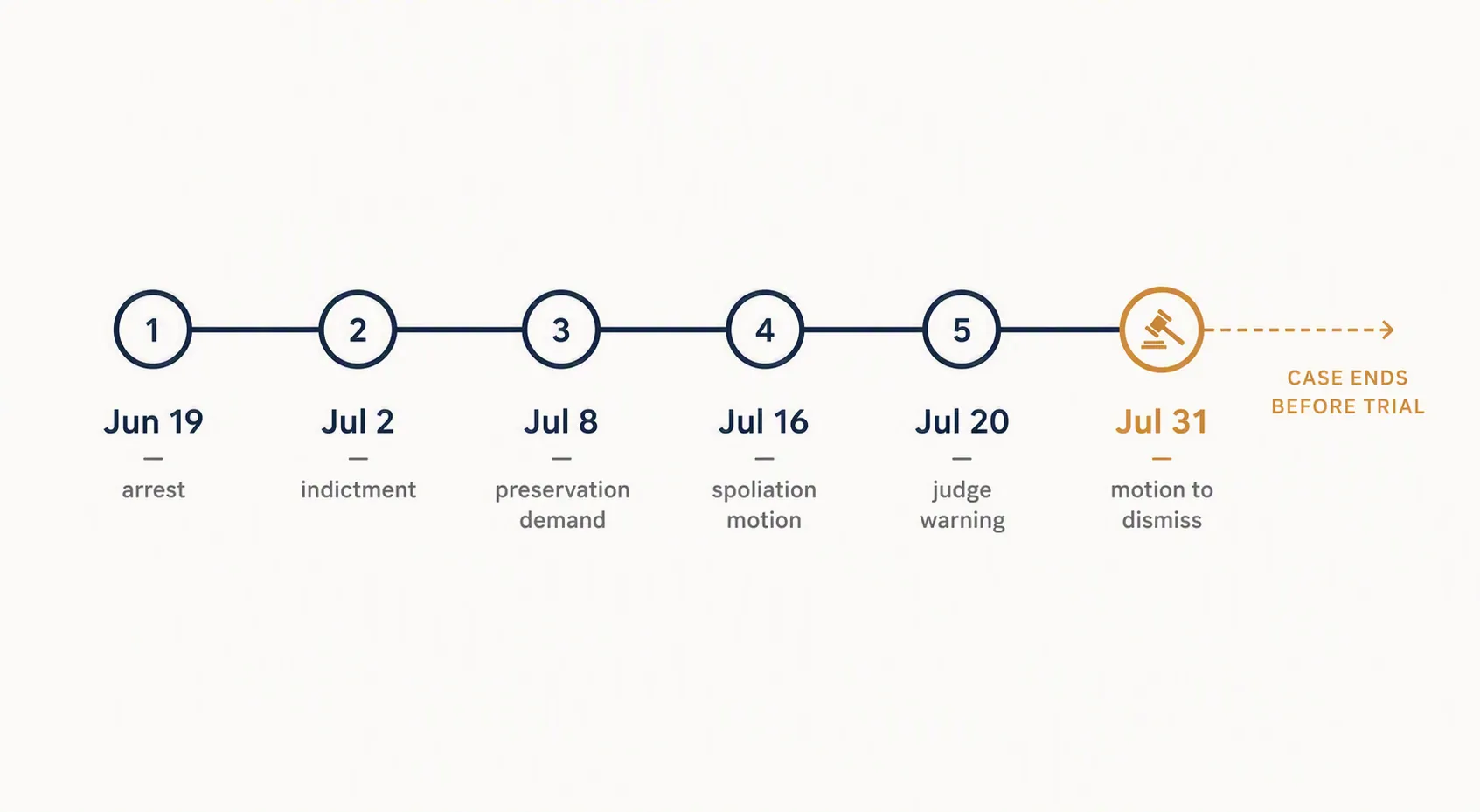
The compressed docket arc is this: Hearn was arrested on June 19; a grand jury indicted him on July 2 on a felony destruction-of-property count; he was arraigned July 9 before Judge Carmen Guerricagoitia McLean; later proceedings were before Judge Todd E. Edelman; the defense pushed preservation and grand-jury challenges; and on July 31 the government acknowledged that the Reflecting Pool damage it had charged as vandalism was instead tied to a botched installation by Atlantic Industrial Coatings and the rush to complete work before the America 250 celebrations.[1][2][3]

What the July 31 motion changed
The July 31 filing matters because it did not merely say the government had decided to conserve resources or exercise discretion. It said the prosecution had been built on incomplete information. The motion stated that the Department of the Interior “provided less than fulsome information at the outset,” and that prosecutors were “armed only with DOI’s representations” when they went to the grand jury.[1]
That is not a cosmetic defect in a case charged as felony property destruction. The D.C. felony threshold for destruction of property turns on whether damage exceeds $1,000, and the charged exposure was not symbolic: Hearn faced a felony count carrying a maximum of 10 years.[3] If the government cannot separate damage caused by the defendant from damage caused by aging infrastructure, prior defects, contractor work, or government-directed repair activity, the charging decision becomes unstable before anyone reaches trial evidence.
The post-indictment production is the embarrassing part, but also the legally useful part. After indictment, the government received and produced a 695-megabyte set of materials. Those materials, according to the government’s July 31 motion, showed that the Reflecting Pool liner problem was “the result of a botched installation” by Atlantic Industrial Coatings and a rush to complete the project before America 250 events, rather than vandalism by Hearn.[1]
A press conference can make a case sound clean. A felony indictment can make it sound tested. Neither substitutes for verifying the loss theory against the documents held by the agency and contractor closest to the damaged object.
The charging problem: agency representations are not proof of attribution
Federal and local prosecutors regularly depend on agencies for technical facts. That dependence is not misconduct by itself. The problem in Hearn is narrower and more practical: the government appears to have treated one agency’s account of a physical-damage event as sufficient to support a felony loss theory before testing nearby contradictory information.
The June 11 email is the first warning sign. Eight days before Hearn’s arrest, a National Park Service engineer had flagged that the Reflecting Pool coating was vulnerable to peeling.[4] That does not prove what Hearn did or did not do on June 19. It does mean the government was charging into a factual environment where the surface condition, installation history, and repair sequence mattered from the beginning.
For a misdemeanor trespass-style case, a preexisting coating vulnerability might sit at the margins. For felony destruction of property, it moves to the center. The government had to be able to say what damage was caused by the charged act, what it would cost to repair that damage, and why that amount crossed the felony threshold. The July 31 motion indicates that prosecutors did not have the full factual basis needed to make that attribution when they obtained the indictment.[1]
That distinction is why the case is more than an ordinary “charges dropped” story. The collapse point was not a witness recanting on the eve of trial or a suppression ruling after months of litigation. It was a post-indictment realization that the charged account of the physical damage could not carry the case the government had filed.
The grand-jury issue is not procedural decoration
The defense grand-jury motion deserves more attention than the press-conference coverage because it goes directly to the integrity of the charging process. Hearn’s lawyers argued that the grand jury heard from a single National Park Service witness and that the witness acknowledged several facts that complicated the loss theory: the Reflecting Pool had been leaking more than 1 million gallons per week, expansion joints were past their service life, there was a preexisting rip, and the witness could not attribute repair costs to Hearn.[2]
Those facts matter for two separate reasons. First, they bear on causation. A defendant can damage already compromised property, but the government still has to prove the damage it charges. Second, they bear on amount. If repair work includes correcting preexisting defects, failed installation, long-overdue replacement, or contractor-caused damage, the dollar figure cannot simply be dropped into the indictment as if every cost is attributable to the defendant.
The defense also alleged that prosecutors withheld a photograph showing the pool before Hearn touched it and relied on hearsay in the grand-jury presentation.[2] Those allegations had not been adjudicated when the government moved to dismiss. They should therefore be treated as allegations, not findings. But they explain why the defense was not merely arguing that the government’s trial evidence would be weak. It was attacking the route by which the felony charge was obtained.
There is a tendency to treat grand-jury disputes as inside-baseball fights unless a court dismisses an indictment. Hearn shows why that is too casual. Where the indictment depends on a specific loss threshold, grand-jury proof of loss is not a bookkeeping attachment. It is part of the felony theory. If the witness cannot allocate repair costs, and if the physical condition of the property was already in dispute, the grand jury’s view of probable cause may have rested on a materially simplified record.
The preservation fight put the prosecution’s theory and the repair project on a collision course
The evidence-preservation sequence is just as important as the dismissal motion, because the alleged damaged object was not sitting untouched in an evidence locker. It was a national landmark undergoing work. The defense sent a preservation demand on July 8. On July 16, it filed a spoliation motion. The next day, during a site visit to the now-drained pool, extensive damage was immediately noted.[5]
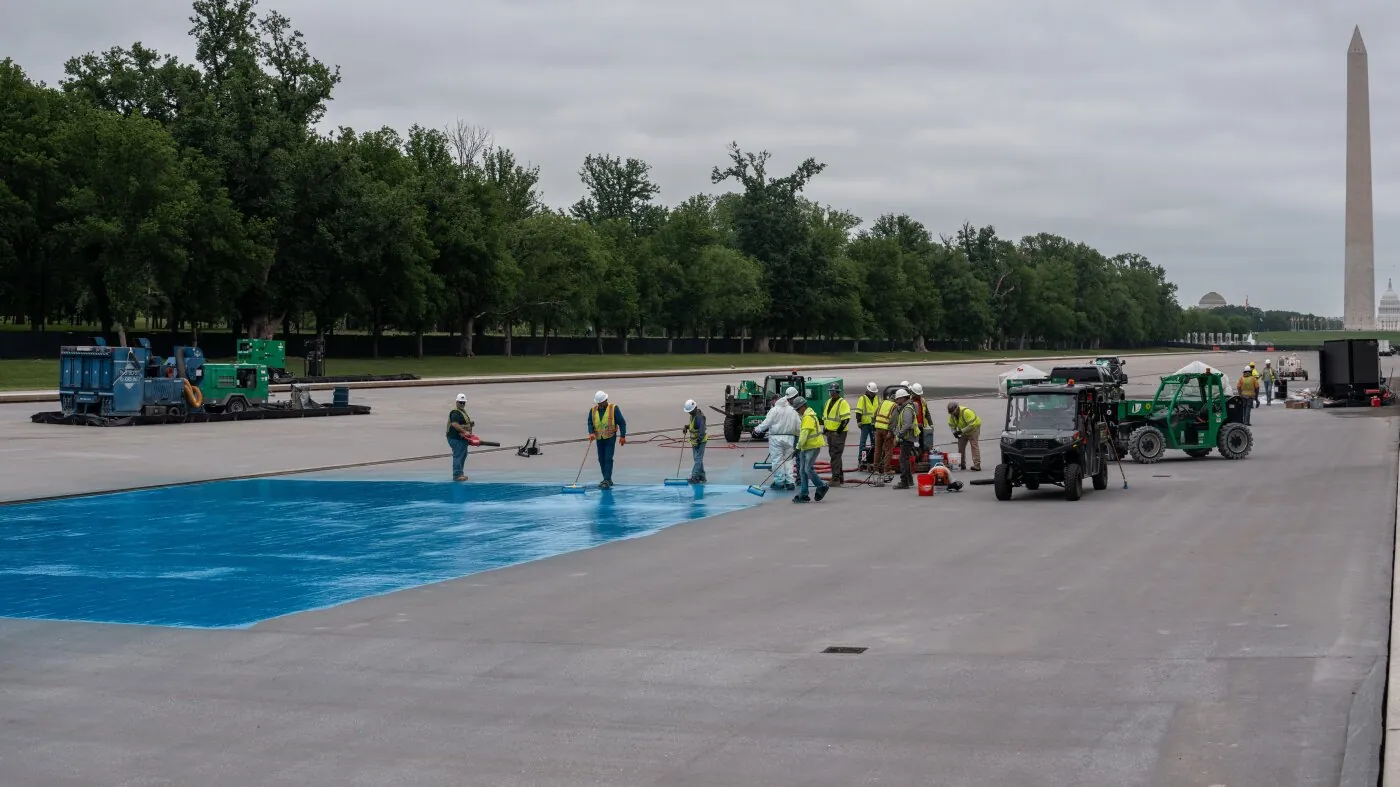
At a July 20 hearing, Judge Edelman warned that if the government altered the pool or failed to preserve relevant evidence while the criminal case was pending, it was “operating at its own peril.”[6] That warning captured the practical problem. Repairs may be necessary for public reasons, but when the object being repaired is also the alleged crime scene, the government cannot treat preservation as a scheduling nuisance.
The defense inspection right and the government’s repair timeline were competing in real time. A drained pool might reveal more than a filled one. Scraping, patching, resurfacing, or replacing material might erase information about what failed first, what peeled naturally, what tore under stress, what was contractor-caused, and what, if anything, Hearn caused. In that setting, preservation is not a generic discovery issue. It is the condition for testing the indictment.
This is also where the dollar figures become treacherous. The Atlantic Industrial Coatings contract is listed on USAspending at $14.7 million.[7] Other public reports and political statements have used different project-cost figures, but those figures should not be blended into a single number and treated as Hearn-attributable loss. A project budget, a resurfacing contract, a presidential estimate, and a felony damage amount are not the same legal fact.
A short procedural map
| Date | Event | Legal significance |
|---|---|---|
| June 11, 2026 | NPS engineer email flagged peeling vulnerability. | Pre-arrest information complicated any clean vandalism-only theory. |
| June 19, 2026 | Hearn was arrested. | The case moved from site incident to criminal exposure. |
| July 2, 2026 | Grand jury returned felony indictment. | Loss attribution and the $1,000 felony threshold became central. |
| July 8, 2026 | Defense preservation demand. | The defense put the government on notice that the physical condition of the pool had to be preserved. |
| July 16–20, 2026 | Spoliation motion, site visit, and Judge Edelman warning. | Repair activity and criminal evidence preservation collided. |
| July 31, 2026 | Government moved to dismiss without prejudice. | The government acknowledged its original damage theory was wrong, while leaving refiling technically open. |
Rule 48: why “without prejudice” is doing work here
A motion to dismiss without prejudice under Rule 48 is not an acquittal. It does not mean a jury found Hearn not guilty. It does not itself bar a later prosecution. It means the government is asking the court for permission to exit the current case without permanently surrendering the charge.
That request invites scrutiny because of timing. The government is not walking away from a pristine case. It is seeking to dismiss after a preservation fight, after a grand-jury challenge, and after acknowledging that the agency information supplied at the outset was materially incomplete. Emptywheel has framed the “without prejudice” posture as part of the reason the dismissal itself deserves attention: the government wants out of a damaged prosecution while preserving room to return.[8]
The court does not have to decide, on the present motion, every factual dispute the defense raised. But the posture matters for anyone reading the docket. If the motion is granted without prejudice, Hearn remains unconvicted, but not protected in the way an acquittal or dismissal with prejudice would protect him. If the government ever tried to refile, the same attribution, preservation, and grand-jury problems would not disappear merely because the first indictment had been dismissed.
What remains open after the motion
Several downstream categories are plausible from the record, but they should be kept in their lanes. A court could still address the dismissal motion. A grand-jury process review is conceivable if the court or other authorities focus on what was presented and what was omitted. Ethics complaints are possible whenever a failed prosecution raises questions about charging diligence or disclosure, though possibility is not the same as discipline. Civil claims or contractor litigation could emerge from the repair facts, but the present criminal docket does not establish contractor liability.
For teams tracking procedural-verification failures, the safer habit is to keep the status labels separate: indicted, motion to dismiss filed, dismissal granted, dismissal with prejudice, dismissal without prejudice. A useful parallel checklist appears in the site’s same-case docket-status record, which separates a motion from an actual court order.
The legal lesson from the Reflecting Pool case is therefore not that every government error proves bad faith, or that every high-profile property case is doomed. It is more concrete. A felony charge tied to physical damage needs verified attribution before indictment, preserved evidence while repairs proceed, and a grand-jury presentation that can support the loss element. In Hearn, the case failed in that pretrial machinery before any trial jury ever weighed vandalism evidence.
References
- United States v. Hearn Motion to Dismiss, D.C. Superior Court, July 31, 2026, https://prod-i.a.dj.com/public/resources/documents/US-v-Hearn-7-31-2026.pdf
- Hearn Filing, DocumentCloud, https://www.documentcloud.org/documents/28517032-hearn-filing/
- Trump prosecutor charges ex-Olympian with felony over Reflecting Pool damage, Associated Press, July 2, 2026, https://apnews.com/article/reflecting-pool-damage-trump-david-hearn-c2f8e1d689d8cd3cd4f9aade65c674ee
- The strange case of David Hearn and the Reflecting Pool, The Atlantic, July 2026, https://www.theatlantic.com/politics/2026/07/reflecting-pool-case-david-hearn/688151/
- Jeanine Pirro’s motion to dismiss in the Reflecting Pool case, Law Dork, https://www.lawdork.com/p/jeanine-pirro-motion-to-dismiss-reflecting-pool
- Judge warns Trump about ongoing Reflecting Pool work during ex-Olympian trial, Forbes, July 20, 2026, https://www.forbes.com/sites/conormurray/2026/07/20/judge-warns-trump-about-ongoing-reflecting-pool-work-during-ex-olympian-trial/
- Award Summary: 140P2026C0028, USAspending.gov, https://www.usaspending.gov/award/CONT_AWD_140P2026C0028_1443_-NONE-_-NONE-
- The flapping holes in Jeanine Pirro’s Davey Hearn juicebox jam, emptywheel, August 1, 2026, https://emptywheel.net/2026/08/01/the-flapping-holes-in-jeanine-pirros-davey-hearn-juicebox-jam/
Related records
Tool profile
How Meta's AI Spending Reshapes Law Firm ProfitabilityGoverning regulation
Browse the obligations tracker →Preventive workflow
Browse verification workflows →
Report a correction or tip
Spotted an outdated figure, a misstated fact, or a ruling this case record should reflect? Public comments are disabled for this content given the professional cost of a misreported case outcome, penalty amount, or rule text — use the structured correction channel instead.
Report a correction or tip for this record →