
What International Law Regulates AI-Enabled Shahed Drones?
Layer-by-layer map of what international law does and does not regulate about AI-enabled Shahed-136/Geran-2 drones in 2026, covering existing IHL, the UNGA and CCW treaty track, and sanctions and export controls, with a gap table for each layer. For counsel and risk staff who need the primary-sourced 2026 status before briefing partners or clients.
- Jurisdiction
- International
- Court
- CCW GGE
- AI tool named
- Shahed-136/Geran-2
- Ruling date
- Aug 4, 2026
- Source document
- View primary court order ↗
- Last verified
- Aug 4, 2026
Lex Machina Review is an independent risk-tracking and reference resource. Nothing on this site is legal advice, and using it does not create an attorney-client relationship. Every record is reviewed against primary sources but may not reflect the most current status of a matter — always verify directly against the cited court order, rule text, or a licensed attorney before relying on it.
Companion explanation — secondary to the source document above
Verified status: the short answer counsel can brief
Last verified: August 4, 2026. Legal-background review: Mara Venn source-status review. This record is not jurisdiction-specific legal advice and does not assess any particular transfer, strike, supplier, or sanctions exposure.
For the question counsel usually means by “AI-enabled Shahed drone regulation,” the briefable answer is narrow but important: as of this date, no binding treaty specifically governs AI-enabled Shahed-136/Geran-2-style one-way attack drones as a category. The legal analysis has to be separated into layers. Existing international humanitarian law remains the binding floor. The UN General Assembly and CCW process show substantial treaty momentum but do not yet create a dedicated prohibition or control rule. Sanctions and export controls may create immediate legal consequences, but they regulate transfers, components, actors, financing, and support networks rather than autonomy as such.
That separation matters because the question usually arrives in compressed form: “Are AI-enabled Shaheds illegal?” A clean answer cannot be reached by stapling “AI” onto a drone and then treating UN votes, IHL duties, and sanctions lists as one regime. Each layer regulates something real. Each layer also leaves a different gap.
The object: Shahed-136/Geran-2, and what is only reported
The baseline object is not a general “AI drone.” RUSI’s technical profile describes Russia’s Iranian-made Shahed-136/Geran-2 as a one-way attack UAV using a commercial inertial navigation system corrected by civilian GPS/GLONASS signals, designed for point-to-point attack, with an estimated unit cost in the $20,000–$30,000 range at the time of that profile.[1] That baseline matters because a pre-programmed one-way attack UAV is not automatically an autonomous weapon system in the stronger legal-policy sense just because it flies without a pilot on board.

The deployment frame for this record runs from the reported first use of Shahed-136/Geran-2 systems in Ukraine in September 2022 through the 2026 reporting cycle. The AI-capability claims are more limited than the headlines often suggest. Public secondary summaries report a June 2025 “MS-series” Geran-2 variant with an infrared camera and Nvidia Jetson-class onboard computer, and a February 2026 reconnaissance variant using vision-processing functions.[2] This record treats those as reported capability claims, not independently confirmed technical findings.
- Confirmed for this record: the RUSI-described Shahed-136/Geran-2 baseline as a one-way attack UAV with commercial navigation components and point-to-point use.[1]
- Reported, not independently confirmed here: 2025–2026 Geran-2 variants with onboard vision or AI-capable processing hardware.[2]
- Legal consequence: the analysis should not assume every Shahed-136/Geran-2 is AI-enabled, or that reported AI hardware necessarily gives the system autonomous target-selection or engagement functions.
The legal trigger is therefore conditional: if a Shahed-style system has autonomous functions that, once activated, can select, identify, track, or apply force to targets without further human intervention, the autonomous-weapons debate becomes directly relevant. If it is merely pre-programmed to fly to fixed coordinates, the harder questions may be target choice, precautions, supply-chain restrictions, and accountability, not autonomy.
Layer 1: existing IHL is binding, but it is not a Shahed-AI treaty
Existing international humanitarian law applies to the use of drones in armed conflict. The ICRC’s December 2025 FAQ frames the relevant duties around the ordinary IHL rules governing means and methods of warfare, including distinction, proportionality, precautions, and weapons review obligations where applicable.[3] Those rules do not stop operating because the munition is cheap, remotely launched, one-way, or software-assisted.
This is the settled-law layer. A commander or state cannot avoid IHL by saying the weapon was automated, and a supplier cannot turn a prohibited attack into a lawful one by pointing to the absence of an autonomous-weapons treaty. The more useful question is whether the system can be used in a way that permits lawful target selection, feasible precautions, cancellation or suspension when required, and post-strike assessment. The site’s settled-law predecessor, What International Law Applies to Autonomous Drone Strikes?, maps that floor in more detail; this record starts where that floor stops answering the 2026 Shahed-AI question.
The ICRC’s 2026 position on autonomous weapon systems is also more specific than a general reminder that IHL applies. It treats drones with autonomous functions as capable of falling within the AWS problem space once activated, while also stating that existing IHL does not fully address the distinctive challenges raised by autonomous weapon functions.[4] That is the gap: IHL governs attacks and weapons use, but it does not supply a dedicated, universally binding rule that says which Shahed-style autonomy functions are prohibited, which require particular human oversight, or which are permissible only under technical constraints.
Article 36-style weapons reviews sit in the same layer. They can be operationally significant where a state is party to Additional Protocol I or applies equivalent review practice. They ask whether a new weapon, means, or method of warfare would be prohibited in some or all circumstances. They do not, by themselves, create an international registry of AI-enabled drones or a common definition of “meaningful human control.” For procurement staff working with terminal autonomy claims, the practical review questions are closer to those in How to Assess Terminal Autonomy Liability in Drone Procurement: what function is autonomous, at what phase, against what target set, with what human ability to supervise or abort?
Layer 2: the UNGA and CCW track changed the record, not the binding rule
The treaty-status layer is where 2026 becomes interesting. UN General Assembly resolution 79/62 passed on December 2, 2024 by 166 votes to 3, with 15 abstentions.[5] The 2025 follow-up, L.41, passed in the First Committee on November 6, 2025 by 156 votes to 5, with 8 abstentions.[6] Those numbers are not a treaty. They are, however, a poor basis for telling clients that the autonomous-weapons file is “just talk.”
The CCW Group of Governmental Experts on lethal autonomous weapons systems is in its final mandate year in 2026. The current calendar places the last GGE session on August 31–September 4, 2026, ahead of the CCW Seventh Review Conference in November 2026.[7] That means a briefing dated before the Review Conference should not imply that the treaty question has been settled for the year. It should say the opposite: the binding-law position remains unchanged as of August 4, while the institutional process is still live.
The state-position movement is also material. Reporting from the March 2026 GGE session recorded support for negotiations growing from more than 40 states to more than 70 states.[7] That is not evidence that a treaty already exists. It is evidence that the diplomatic center of gravity has moved far enough that procurement representations, policy statements, and public-risk assessments may now be judged against a developing expectation of tighter human-oversight language.
The content of that language remains contested. The United States proposed wording based on “good faith human judgement and care” rather than the more familiar formulation of “human control.”[7] Russia has taken the position that existing IHL suffices and that the GGE is the “best suited platform” for the discussion.[8] Those are not cosmetic differences. A rule framed around human control may ask whether humans retain effective authority over target selection and engagement. A rule framed around judgment and care may leave more room for system-level design, commander intent, and contextual review. A minimalist position may resist any new binding rule at all.
For AI-enabled Shahed-style systems, this is the central treaty gap. The UNGA votes and CCW work identify a live international concern about autonomous weapon functions, but they do not yet answer the operational question: whether a one-way attack drone with onboard vision processing, target-recognition support, or terminal autonomy is unlawful as such. The present answer is no dedicated binding treaty rule; the pending question is whether the CCW or another process will draw a line around human oversight, target profiles, environmental constraints, or prohibited autonomous functions.
Layer 3: sanctions and export controls may be the enforceable layer now
Sanctions and export controls answer a different question from weapons law. They do not usually ask whether a drone is an autonomous weapon system. They ask who transferred it, who financed it, who supplied the components, which entity owns or controls the counterparty, what technology moved across borders, and whether a listed actor or prohibited end use is involved.
That difference can be the difference between an abstract treaty discussion and an immediate compliance issue. Public summaries of the Shahed-136 record note the United States’ assertion that Iran’s drone transfers violated UN Security Council Resolution 2231, while Iran has disputed that interpretation.[2] That dispute does not turn a reported AI variant into an autonomous-weapons treaty case. It does show why counsel should not stop the analysis after concluding that no dedicated AWS treaty exists.
A sanctions memo for a Shahed-style file should therefore be built around actors, goods, software, services, financing, and support networks. OFAC materials, EU listings, national export-control rules, and ownership-or-control tests may matter even where the autonomous-weapons treaty layer remains nonbinding. If a file involves an entity such as Sahara Thunder, or a component category associated with UAV production, the practical question is not “does the drone have AI?” but “does this transaction touch a sanctioned person, restricted technology, prohibited end use, or evasion network?”
The autonomy feature can still matter in this layer, but usually indirectly. AI-capable processors, imaging sensors, navigation modules, and software may affect export classification, red flags, end-use diligence, or procurement warranties. They do not need to transform the munition into a legally defined autonomous weapon before compliance obligations arise.
Do not let the briefing collapse the layers
A reliable 2026 briefing should start with source status. RUSI’s baseline technical profile can support statements about the known Shahed-136/Geran-2 design described there.[1] Secondary reports about 2025–2026 Geran-2 AI-capable variants should be labeled as reported unless independently verified.[2] UNGA vote tallies can support statements about political momentum, not binding legal obligations.[5][6] CCW session dates and state-position shifts can support statements about the live treaty process, not the existence of a concluded treaty.[7]
The same discipline applies to human oversight. “Meaningful human control,” “human judgment,” “human care,” “human supervision,” and “human-in-the-loop” are not interchangeable legal terms. They may point to overlapping concerns, but a procurement clause, policy pledge, or state submission can depend on the exact phrase used. For the U.S. domestic layer, including the relationship between international debate and Department of Defense autonomy policy, see AI Weapons Legal Implications Shift as DoD Rewrites 3000.09.
The cleanest briefable answer is usually a layered one: “No dedicated binding treaty currently prohibits AI-enabled Shahed-style one-way attack drones as such. Existing IHL governs their use. The UNGA and CCW process may shape future treaty language and present policy expectations. Sanctions and export controls may create immediate restrictions on transfers, components, services, and counterparties.” That answer is less satisfying than a yes-or-no label, but it is much harder to misstate.
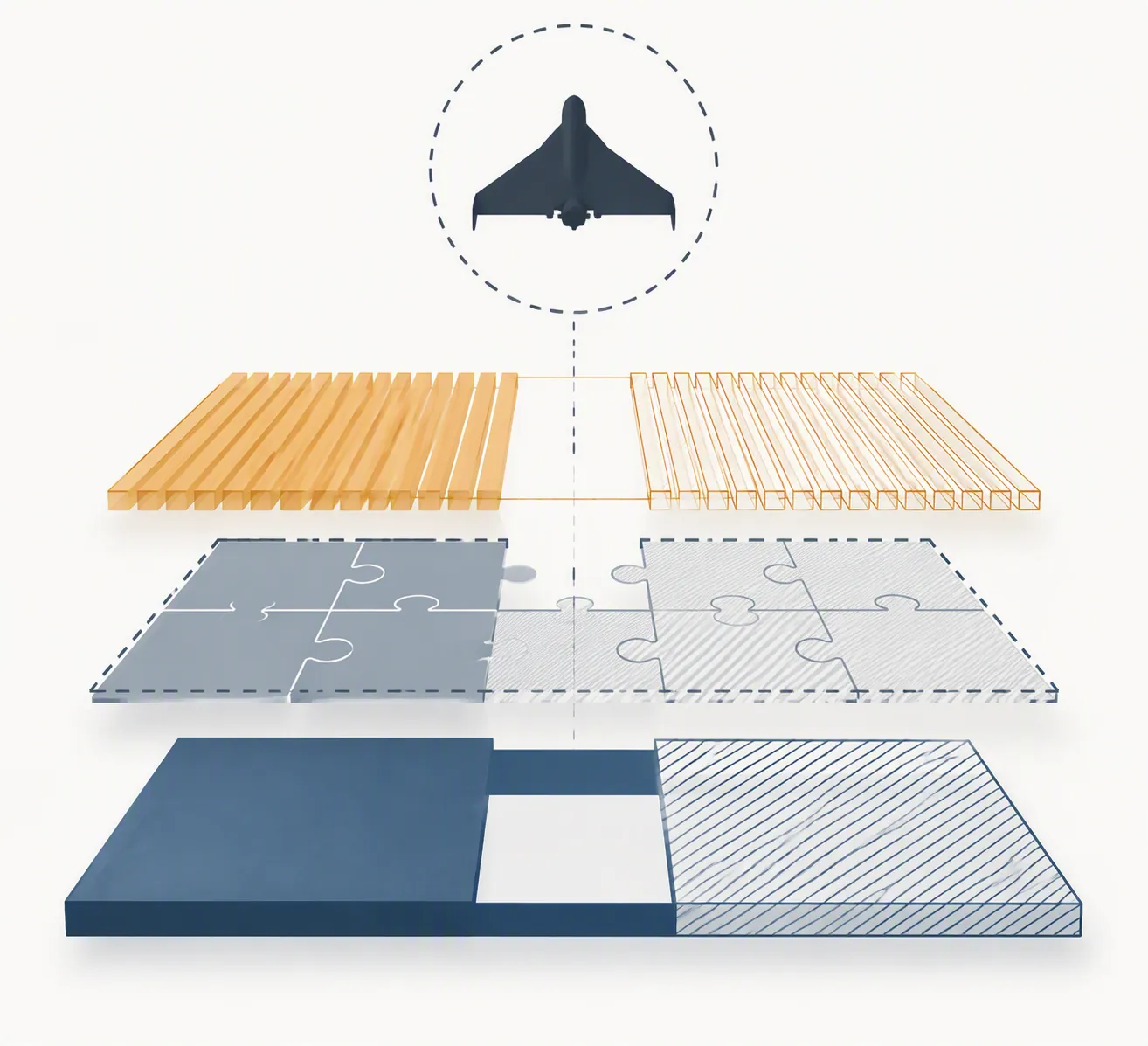
Gap map for AI-enabled Shahed-style drones in 2026
| Layer | Legal effect as of August 4, 2026 | What it regulates | What it does not settle | Briefing caution |
|---|---|---|---|---|
| Existing IHL | Binding in armed conflict | Distinction, proportionality, precautions, and lawful use of means and methods of warfare; IHL applies to drone use in armed conflict.[3] | No dedicated Shahed-AI rule; no universally agreed treaty definition of prohibited autonomous functions. | Do not imply that absence of an AWS treaty means absence of IHL obligations. |
| Weapons review / Article 36-style analysis | Binding for states with applicable treaty obligations; influential as a review practice elsewhere | Whether a new weapon, means, or method would be prohibited in some or all circumstances. | No common international registry or single global test for meaningful human control. | Ask which function is autonomous: navigation, target recognition, target selection, terminal engagement, or battle-damage assessment. |
| UNGA autonomous-weapons resolutions | Nonbinding political and normative record | Records broad state support for addressing autonomous weapons: 79/62 passed 166-3-15 in 2024; L.41 passed 156-5-8 in First Committee in 2025.[5][6] | Does not itself prohibit AI-enabled Shahed-style drones or impose operational design rules. | Use vote tallies to describe momentum, not current treaty obligations. |
| CCW GGE on LAWS | Live diplomatic process; no concluded dedicated treaty as of this verification date | Human oversight language, possible prohibitions or regulations, and competing state positions; final 2026 GGE session scheduled for August 31–September 4 before the November Review Conference.[7] | No final binding line yet between permitted automation and prohibited autonomy. | Mark U.S., Russian, and other state formulations separately; do not merge them into one consensus rule. |
| Sanctions and export controls | Potentially enforceable now, depending on jurisdiction, parties, goods, technology, and transaction | Transfers, components, software, services, financing, designated actors, end-use restrictions, and evasion networks. | Usually does not regulate autonomy as such or decide whether a drone is an AWS. | Run the actor/component/end-use analysis even after concluding there is no dedicated AWS treaty prohibition. |
The usable 2026 risk conclusion is therefore layered, not dramatic. Existing IHL governs attacks involving Shahed-style drones. The UNGA and CCW process is building pressure toward a more specific autonomous-weapons instrument, but has not yet produced one. Sanctions and export controls may impose enforceable restrictions now, but through transfer, component, actor, and support-network rules. None of those layers alone specifically governs AI-enabled Shahed drones as such. A competent briefing should name the layer before naming the gap.
References
- Russia's Iranian-Made UAVs: A Technical Profile, RUSI
- HESA Shahed 136, Wikipedia
- Frequently Asked Questions: International humanitarian law and the use of drones in armed conflict, ICRC, Dec. 10, 2025
- Autonomous Weapons Systems - IHL-ICRC, ICRC, 2026
- Killer Robots: UN Vote Should Spur Treaty Negotiations, Human Rights Watch, Dec. 5, 2024
- 156 states support UNGA resolution on autonomous weapons, Stop Killer Robots, Nov. 6, 2025
- CCW Report, Vol. 14, No. 2: The Final Stretch Before the Finishing Line, WILPF/Reaching Critical Will, Mar. 11, 2026
- No New Rules Needed: Russia's Minimalist Vision of Human Oversight for LAWS, Lieber Institute, Apr. 13, 2026
Related records
Tool profile
Browse tool evaluations →Governing regulation
Browse the obligations tracker →Preventive workflow
Browse verification workflows →
Report a correction or tip
Spotted an outdated figure, a misstated fact, or a ruling this case record should reflect? Public comments are disabled for this content given the professional cost of a misreported case outcome, penalty amount, or rule text — use the structured correction channel instead.
Report a correction or tip for this record →