
What the Social Security 2100 Act Would Change
The 2026 Social Security 2100 Act (H.R. 9519 / S. 5042) is a time-limited, 10-year expansion rather than a permanent benefit increase: benefit changes would apply only from 2027 through 2036, while the payroll-cap repeal and new investment-income tax are permanent. This provision-by-provision breakdown shows which beneficiaries each change actually targets, which provisions sunset, and why the introduced bill is not yet law.
- Jurisdiction
- US Federal
- Court
- U.S. Congress
- AI tool named
- None
- Ruling date
- Jun 29, 2026
- Source document
- View primary court order ↗
- Last verified
- Aug 4, 2026
Lex Machina Review is an independent risk-tracking and reference resource. Nothing on this site is legal advice, and using it does not create an attorney-client relationship. Every record is reviewed against primary sources but may not reflect the most current status of a matter — always verify directly against the cited court order, rule text, or a licensed attorney before relying on it.
Companion explanation — secondary to the source document above
Status record — last verified August 4, 2026
| Item | Record |
|---|---|
| House bill | H.R. 9519, Social Security 2100 Act, 112 pages, introduced June 29, 2026. The introduced House text is the provision source for this explainer. [1][2] |
| House status | Introduced; referred to the House Committees on Ways and Means, Education and Workforce, and Energy and Commerce. GovTrack lists the bill at the introduced stage. [2] |
| Senate bill | S. 5042, Social Security 2100 Act, 113 pages, introduced July 21, 2026. GovTrack lists the Senate bill at the introduced stage. [3] |
| Senate cosponsors snapshot | Sen. Richard Blumenthal’s July 22, 2026 release named four Democratic Senate cosponsors: Sens. Elissa Slotkin, Ben Ray Luján, Sheldon Whitehouse, and Tammy Duckworth. [4] |
| House cosponsors snapshot | QuiverQuant’s July 8, 2026 summary listed zero House cosponsors for H.R. 9519. Cosponsor counts are point-in-time records. [5] |
| Current legal effect | Not enacted. GovTrack lists both H.R. 9519 and S. 5042 as introduced and gives each a 0% enactment prognosis. [2][3] |
| Planning note | No provision in the introduced bill changes anyone’s 2026 Social Security check. |
This is a statutory explainer for benefits and compliance planning, not legal, tax, investment, or individualized Social Security claiming advice. Any client-facing use should be checked against the latest bill text, committee action, amendments, official cost estimates, and SSA implementation materials if the proposal moves.
The controlling answer: no 2026 change, a 2027–2036 benefit window, and permanent taxes
The 2026 Social Security 2100 Act would not raise, recalculate, or protect any benefit payable in 2026. The benefit-side provisions in the introduced House text generally apply to benefits payable for calendar years 2027 through 2036, then expire with statutory recomputation language. The revenue-side provisions are different: the full repeal of the payroll wage cap after 2026, the 1% benefit crediting rule for earnings above the base, and the new 12.4% tax on high earners’ net investment income are written as ongoing changes rather than 10-year benefit add-ons. [1]
That date structure matters more than the headline. A retiree hearing “Social Security 2100 Act changes explained” could reasonably ask whether the August 2026 payment, the December 2026 COLA notice, or a 2026 claiming decision has already changed. The answer is no. As of Q3 2026, this is pending legislation at the introduced stage. [2][3]
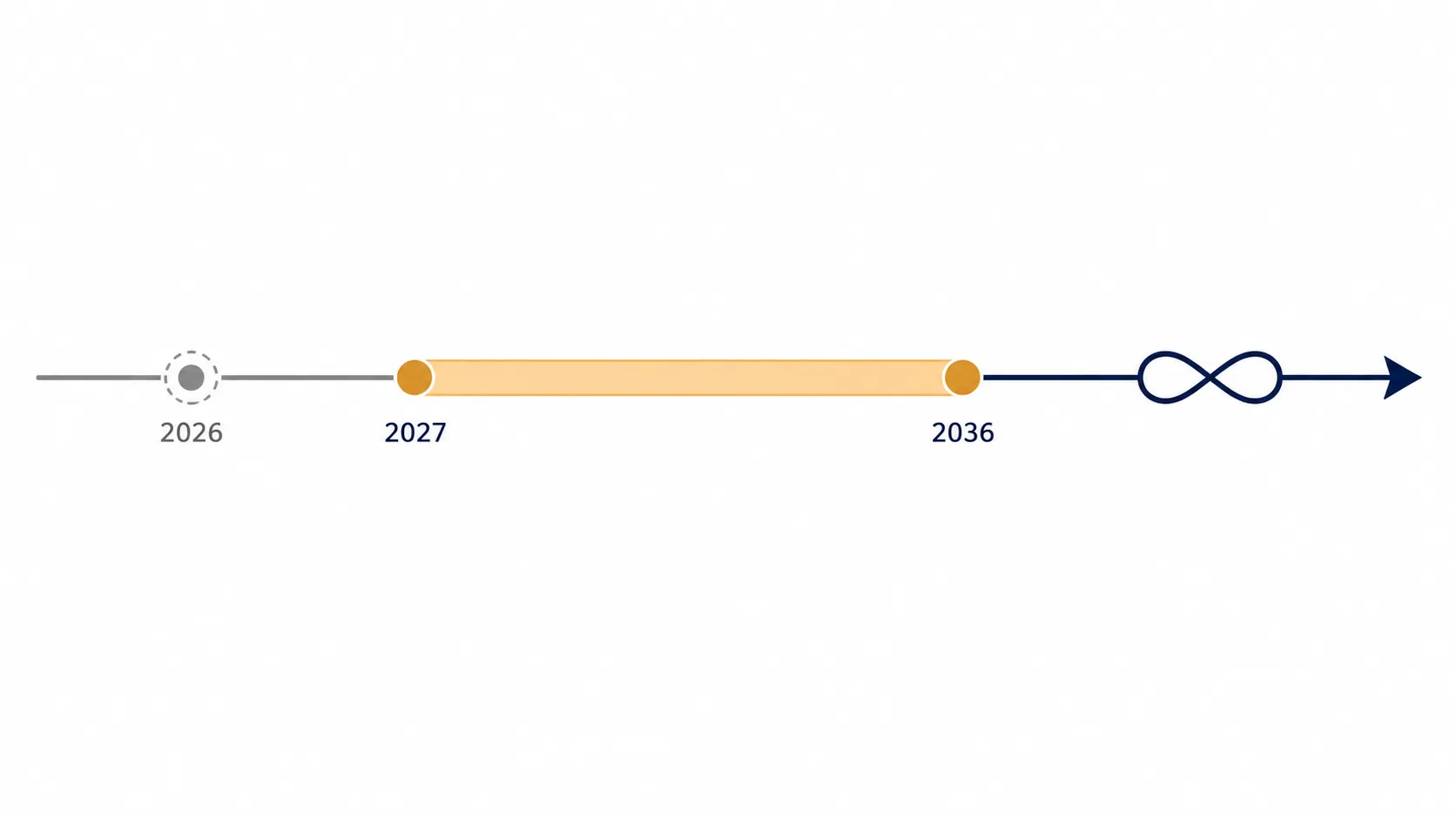
Who would be affected, when, and for how long?
| Provision area | Main group affected | Effective period in the introduced House text | What changes |
|---|---|---|---|
| Primary insurance amount formula | Retired-worker, disabled-worker, survivor, and dependent beneficiaries whose benefits are tied to the statutory benefit formula | Benefits payable for 2027 through 2036 | The first bend-point factor rises from 90% to 93%. [1] |
| COLA measure | Beneficiaries receiving annual cost-of-living adjustments | Benefits payable for 2027 through 2036 | The COLA is based on the higher of CPI-W or CPI-E. [1] |
| Special minimum benefit | Long-career low earners | Benefits payable for 2027 through 2036 | A new minimum-benefit table applies, with the highest tier for 30 or more years of work set at 125% of the poverty guideline. [1] |
| Taxation of benefits | Beneficiaries whose Social Security benefits are included in federal taxable income | Taxable years 2027 through 2036 | The benefit-taxation thresholds rise to $35,000 for individuals and $50,000 for couples. [1] |
| Survivor benefits | Surviving spouses and other survivor beneficiaries affected by the surviving-spouse formula | Benefits payable for 2027 through 2036 | A surviving spouse benefit is set at the greater of the deceased worker’s PIA or 75% of the couple’s combined benefits, subject to the bill’s terms. [1] |
| Long-term eligibility bonus | People who have been eligible for Social Security benefits for a long period | Benefits payable for 2027 through 2036 | A 5% benefit increase applies after 15 years of eligibility. [1] |
| Caregiver credits | People providing substantial unpaid care | Calendar years 2027 through 2036 | The bill gives deemed wages for unpaid care of 960 or more hours, for up to 5 years. [1] |
| Disability Insurance waiting period and work offset | Disabled-worker applicants and DI beneficiaries attempting work | Benefits payable for 2027 through 2036 | The 5-month DI waiting period is eliminated and a gradual earnings offset is added. [1] |
| Child student benefits and kinship care | Children in post-secondary education and children in qualifying kinship-care arrangements | Benefits payable for 2027 through 2036 | Student benefits extend to age 26 for post-secondary students, and kinship-care access rules are added. [1] |
| SSI, Medicaid, and CHIP harmless clause | Dual-eligible and low-income beneficiaries whose other benefits could otherwise be affected | Applies to the bill’s covered benefit increases | Section 113 directs that certain increases are not counted in a way that harms SSI, Medicaid, or CHIP eligibility or benefit levels. [1] |
| Payroll wage cap | Workers and employers with wages above the Social Security contribution and benefit base | After 2026 | The contribution and benefit base is fully repealed for payroll tax purposes. [1] |
| Benefit crediting above the old base | High earners with wages above the former base | After 2026 | Earnings above the base are credited at 1% of AIME. [1] |
| Net investment income tax | High earners with net investment income above $400,000 | After 2026 under the bill’s tax provisions | A new 12.4% tax applies above $400,000, in addition to the existing 3.8% NIIT. [1] |
| OASI/DI trust fund structure | Trust-fund accounting for retirement/survivor and disability benefits | January 1, 2027 | The OASI and DI trust funds are merged into one Social Security Trust Fund. [1] |
The benefit changes are real proposals, but they are not permanent increases
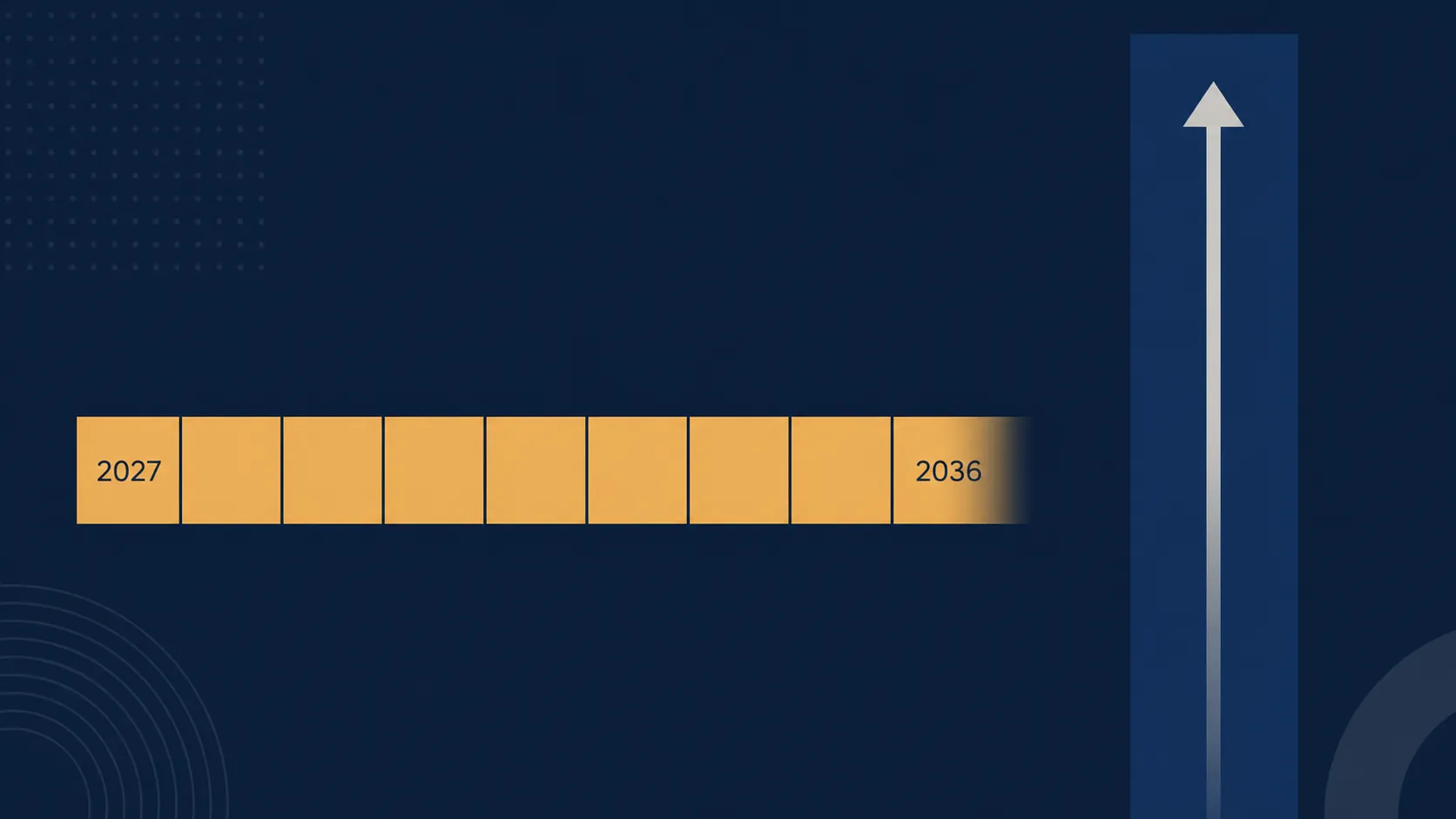
Most mistaken summaries of this bill will probably come from reading the benefit provisions without the dates attached. The introduced text does not simply say “increase benefits.” It repeatedly ties benefit-side changes to benefits payable in calendar years 2027 through 2036. That means a planner should not describe the bill as a permanent across-the-board benefit expansion, and a beneficiary should not treat it as a change already built into SSA’s 2026 payment systems. [1]
The 90% factor would become 93% for the first bend point
The bill’s broadest formula change is the increase of the first bend-point percentage from 90% to 93% for benefits payable from 2027 through 2036. In Social Security formula terms, that is not the same thing as a flat 2% raise for every beneficiary. It changes one factor used in the primary insurance amount calculation and related benefit computations. [1]
For client conversations, the safer description is narrow: the introduced 2026 bill would temporarily increase the first PIA factor during the 2027–2036 benefit window. The size of any individual increase would depend on how the person’s benefit is calculated and on SSA’s implementation if the bill became law.
COLAs would use the higher of CPI-W or CPI-E
For benefits payable from 2027 through 2036, the annual cost-of-living adjustment would be calculated using the higher of CPI-W or CPI-E. That is a temporary measurement switch, not a promise that a particular future COLA percentage has already been set. [1]
This is the same legal-labeling problem that appears whenever unofficial COLA forecasts circulate before SSA’s statutory determination. A projection can help model cash flow, but it is not the payable benefit. For the site’s approach to that distinction, see How the 2027 SSI COLA Increase Is Legally Fixed.
The minimum benefit targets long-career low earners
The special minimum benefit provision is aimed at long-career low earners, not at every retiree. The introduced bill creates a minimum-benefit table for 2027 through 2036, with the top tier reaching 125% of the poverty guideline for workers with 30 or more years of coverage. [1]
HousingWire described that top-tier minimum for a single individual as roughly $1,663 per month. Treat that as a reported illustration tied to the article’s assumptions, not as a substitute for checking the final statutory text, the applicable HHS poverty guideline, and SSA implementation tables if the bill advances. [6]
Benefit-tax thresholds would rise for ten taxable years
The bill raises the thresholds used for federal income taxation of Social Security benefits to $35,000 for individuals and $50,000 for couples for taxable years 2027 through 2036. This provision concerns income taxation of benefits. It does not change the payroll tax wage base, which is handled separately in Title II. [1]
The date limit is not a footnote. If a retiree is modeling taxable income in 2037 and later, the introduced text does not support assuming those higher thresholds continue unless Congress later extends or changes the law.
Survivor benefits would get a different floor
For benefits payable from 2027 through 2036, the survivor provision would set the surviving spouse benefit at the greater of the deceased worker’s primary insurance amount or 75% of the combined benefits of the couple, subject to the bill’s statutory limits. [1]
That change is easy to oversell if reduced to “survivors get more.” The affected amount depends on the couple’s pre-death benefit structure, the deceased worker’s PIA, and the bill’s formula. The important planning point is that the proposal is targeted to survivor calculations during the 2027–2036 window.
A long-term eligibility bonus would start after 15 years
The introduced text adds a 5% benefit increase for people who have been eligible for Social Security benefits for 15 years. Here again, the bill places the increase inside the 2027–2036 benefit window. [1]
This provision is most relevant to older retirees and long-duration disability or survivor beneficiaries. It is not a 2026 payment correction, and it is not framed as a permanent age-based supplement.
Caregiver credits would recognize unpaid care, with limits
The caregiver-credit provision gives deemed wages to people who provide 960 or more hours of unpaid care, with credits available for up to 5 years. The bill places the provision in the same 2027–2036 temporary framework used for the benefit expansion provisions. [1]
This is one of the bill’s more concrete beneficiary protections because unpaid caregiving often shows up in Social Security as missing or lower earnings years. The statutory limit still matters: a caregiver credit is not unlimited replacement earnings, and the introduced bill does not make it a permanent feature.
Disability Insurance changes would remove the waiting period and soften work penalties
For Disability Insurance, the introduced bill eliminates the 5-month waiting period and adds a gradual earnings offset for the 2027–2036 period. Those changes would matter to disabled workers who are waiting for cash benefits after entitlement and to beneficiaries testing work capacity. [1]
The practical consequence is different from a general benefit bump. Eliminating a waiting period affects when benefits begin. A gradual offset affects how earnings interact with benefits. Both are administration-heavy provisions that would require SSA rules and systems if enacted.
Child benefits would reach more students and some kinship-care situations
The bill extends child benefits to age 26 for post-secondary students and adds kinship-care access rules for benefits payable from 2027 through 2036. [1]
That is a beneficiary-class expansion, not a change to the retirement age and not a general family tax credit. Advisors should keep it in the Social Security dependent-benefit lane: the proposal concerns who may qualify as a child beneficiary under the bill’s terms and for how long.
The SSI, Medicaid, and CHIP harmless clause prevents a familiar trap
Section 113 is worth reading slowly. It provides a harmless rule for SSI, Medicaid, and CHIP so that certain Social Security increases under the bill do not count in a way that reduces or ends those benefits. [1]
For dual-eligible beneficiaries, that clause is not decorative. A higher Social Security check can sometimes create anxiety about resource limits, income counting, and linked medical coverage. The introduced text tries to prevent the bill’s own increases from causing that kind of collateral loss. For the monthly-benefit side of that problem, see Does the July 2026 SSI Double Payment Threaten Your Eligibility?.
The permanent side is revenue, not the benefit expansion
The bill’s mismatch is deliberate in the text: the benefit expansions are generally time-limited, while the major revenue provisions are not written as 2027–2036 temporary provisions. After 2026, Section 201 fully repeals the payroll contribution and benefit base for Social Security tax purposes. That means the 2026 bill does not use the “donut hole” structure described in several older Social Security 2100 Act summaries. [1]
Section 202 then credits earnings above the former base at 1% of average indexed monthly earnings. That matters because the bill does not simply tax all wages above the base while treating those wages identically to current covered wages for benefit purposes. It taxes the higher wages and gives a limited benefit crediting rule for them. [1]
Section 203 adds a new 12.4% tax on high earners’ net investment income above $400,000, on top of the existing 3.8% net investment income tax. That is a major tax change, but it is not a retiree benefit payable in 2026 and should not be described as one. [1]
Section 204 merges the Old-Age and Survivors Insurance and Disability Insurance trust funds into a single Social Security Trust Fund effective January 1, 2027. That is an accounting and financing structure change. It is not, by itself, an official solvency score for the bill. [1]
Title III is about SSA administration and beneficiary protection
Title III is a 2026-version feature that should not be buried under the benefit formulas. It sets a Social Security Administration workforce floor tied to January 19, 2025 full-time-equivalent staffing levels. For anyone who has watched field-office delays become the real benefit barrier, staffing language is not abstract process language. [1]
The title also restricts field-office and hearing-office closures by requiring a moratorium structure, 120-day notice, and public-hearing procedures. That does not guarantee a local office stays open forever. It does mean the bill treats office access as part of benefit administration, not merely a facilities decision. [1]
The beneficiary-data provisions bar political appointees and special government employees from accessing beneficiary data systems and attach civil damages of $5,000 per act. Title III also adds protections against wrongful Social Security number invalidation. These are not benefit increases, but they are legal protections aimed at the machinery that determines whether a person can receive and maintain benefits. [1]
The overpayment provision caps monthly recovery at 10%. That is a plain protection for beneficiaries living on monthly checks. It does not erase every overpayment dispute, but it limits how much SSA could recover from a monthly benefit under the bill’s terms. [1]
What this 2026 bill does not do
- It does not create a 2026 benefit increase. The introduced benefit provisions are generally tied to benefits payable from 2027 through 2036. [1]
- It does not contain the older “donut hole” payroll-tax design. The 2026 House text fully repeals the wage base after 2026. [1]
- It does not provide the flat 2% across-the-board benefit increase commonly associated with older Social Security 2100 Act explainers. The current House text uses the 90%-to-93% first bend-point change instead. [1]
- It does not repeal WEP or GPO. That repeal already occurred through the Social Security Fairness Act, which SSA says was signed January 5, 2025. [7]
- It does not change the retirement age. The bill’s child-student, disability, survivor, caregiver, COLA, minimum-benefit, and tax provisions should not be repackaged as a retirement-age change. [1]
- It does not currently have an official CBO or SSA Chief Actuary estimate in the source record for this introduced 2026 text. Older estimates for earlier bill numbers should not be carried over.
The older-score problem is not technical nitpicking. CBO’s estimate for H.R. 860 was an estimate for the 2019 bill, not for H.R. 9519 or S. 5042 in 2026. It cannot supply a current cost, solvency, or distributional estimate for provisions that have changed. [8]
The same discipline applies to pending-bill summaries in other Social Security debates. A bill can be important, detailed, and worth tracking without being law. For a similar “not law yet” treatment, see Does the PROMISE Act Cut Social Security Benefits?.
How to track it without changing 2026 planning assumptions
The watch items are ordinary but important: bill text, amendments, cosponsor changes, committee action, official CBO scoring, any SSA Chief Actuary letter, and any later implementation guidance if a version passes. Until then, advisors should not adjust 2026 benefit expectations, tax withholding, survivor-income projections, or SSI/Medicaid/CHIP eligibility assumptions as though H.R. 9519 or S. 5042 had been enacted.
As of August 4, 2026, the clean legal conclusion is narrower than the campaign language around it: the Social Security 2100 Act is a pending, time-limited 2027–2036 benefit-expansion proposal with permanent revenue provisions. It is not an enacted 2026 benefit change.
References
- Text of H.R. 9519 (Introduced) — GovTrack
- H.R. 9519 bill page — GovTrack
- S. 5042 bill page — GovTrack
- Blumenthal Introduces Bill Strengthening Social Security — Senator Richard Blumenthal — July 22, 2026
- New Bill: Representative John B. Larson introduces H.R. 9519: Social Security 2100 Act — QuiverQuant
- Social Security 2100 Act seeks higher benefits, long-term program solvency — HousingWire
- Social Security Fairness Act — Social Security Administration
- H.R. 860, Social Security 2100 Act — Congressional Budget Office
Related records
Tool profile
Browse tool evaluations →Governing regulation
Browse the obligations tracker →Preventive workflow
Browse verification workflows →
Report a correction or tip
Spotted an outdated figure, a misstated fact, or a ruling this case record should reflect? Public comments are disabled for this content given the professional cost of a misreported case outcome, penalty amount, or rule text — use the structured correction channel instead.
Report a correction or tip for this record →