
Is your college on the $23 billion settlement list?
Find out whether your for-profit college is on Exhibit C of the Sweet v. McMahon (formerly Sweet v. Cardona) settlement. The lookup covers the roughly 151 schools organized by parent company, schools added or removed, the distinct 2026–2027 relief deadlines, and how to verify eligibility only through official channels.
- Jurisdiction
- US federal (N.D. Cal.)
- Court
- U.S. District Court for the Northern District of California
- Judge
- William Alsup
- AI tool named
- No AI tool named
- Ruling date
- Aug 9, 2022
- Source document
- View primary court order ↗
- Last verified
- Aug 4, 2026
Lex Machina Review is an independent risk-tracking and reference resource. Nothing on this site is legal advice, and using it does not create an attorney-client relationship. Every record is reviewed against primary sources but may not reflect the most current status of a matter — always verify directly against the cited court order, rule text, or a licensed attorney before relying on it.
Companion explanation — secondary to the source document above
Non-advice note: this is a legal-record lookup aid, not legal advice and not an eligibility determination. It is the school-list companion to our Sweet v. McMahon eligibility record, which handles the borrower-defense application-date and status-verification flow. Last verified: August 4, 2026.

Record first: what this settlement list is
The “$23 billion student loan settlement colleges list” people are searching for is Exhibit C to the settlement agreement in Sweet v. McMahon, formerly Sweet v. Cardona and before that Sweet v. DeVos. The case is in the U.S. District Court for the Northern District of California, Case No. 3:19-cv-03674-WHA, before Judge William Alsup. The Department of Education’s Sweet settlement page is the safest starting point for official implementation notices, and the school list itself is the Exhibit C PDF filed as Doc. 317-1 on August 9, 2022.[1][2]
The list is often described as covering roughly 151 schools. That count is useful for search and triage, but it is not a court-certified number in this article: Tate Esq uses 151, while NPR describes the settlement as covering more than 150 schools and Higher Ed Dive uses a 150-plus formulation.[3][4][5]
One correction matters before anyone starts checking names. After preliminary approval, Higher Ed Dive reported that ATI College, Missouri College of Cosmetology North, Hallmark University, and International Technical Institute were removed, while Missouri College was added.[5] If you see a recycled list that still treats those names casually, read the source document before relying on it.
Look up the school by parent company and brand name
The court exhibit is organized around institutional names that often sit one layer above what borrowers remember. A borrower usually remembers Everest, Heald, WyoTech, ITT Tech, the Art Institutes, DeVry, Sanford-Brown, Le Cordon Bleu, University of Phoenix, or Ashford. The parent company is the filing-cabinet label. The school brand is what was on the building, the transcript, the TV ad, or the billing statement.
Use the table as a practical index, then verify the exact spelling and any campus-specific question against the official Exhibit C PDF and StudentAid.gov. Parent-company grouping is drawn from the settlement exhibit as surfaced through borrower-defense list resources, including Tate Esq and The College Investor; the official exhibit remains the controlling record.[2][3][6]
| Parent company / operator grouping | School names and brands borrowers commonly search for | Name-handling notes |
|---|---|---|
| Alta Colleges, Inc. | Westwood College | Also check any transcript or billing record for Westwood campus wording. |
| American Commercial Colleges, Inc. | American Commercial College | Single-brand lookup; verify exact location if your paperwork lists a campus. |
| American National University | American National University; National College | Borrowers may remember “National College” rather than the later university name. |
| Anthem Education Group / related entities | Anthem College; Anthem Institute; Morrison University | Do not assume every similarly named “Anthem” program is covered without checking Exhibit C. |
| Apollo Group | University of Phoenix; Western International University | University of Phoenix is one of the major recognizable brands on the list. |
| ATI Enterprises | ATI Career Training Center; ATI Technical Training Center | Higher Ed Dive reported ATI College was removed after preliminary approval; check the corrected list rather than an older repost.[5] |
| B&H Education | Marinello Schools of Beauty | Marinello also has a separate group-discharge history discussed below; the Exhibit C question is still separate from application timing. |
| Bridgepoint Education | Ashford University; University of the Rockies | Ashford borrowers may also encounter separate Department of Education relief references outside the Sweet Exhibit C path. |
| Capella Education Company | Capella University | Verify against the official list before treating the name alone as an eligibility result. |
| Career Education Corporation / Perdoceo-related brands | American InterContinental University; Briarcliffe College; Brooks College; Brooks Institute; Brown College; Brown Institute; California Culinary Academy; Colorado Technical University; Collins College; Gibbs College; Harrington College of Design; International Academy of Design and Technology; Katharine Gibbs School; Le Cordon Bleu; Lehigh Valley College; McIntosh College; Missouri College; New England Institute of Art; Pittsburgh Career Institute; Sanford-Brown College; Sanford-Brown Institute; School of Computer Technology; Ultrasound Diagnostic Schools | This is one of the largest brand clusters. Missouri College was added after preliminary approval; Missouri College of Cosmetology North was reported removed.[5] |
| Center for Excellence in Higher Education / CollegeAmerica-related entities | CollegeAmerica; Independence University; Stevens-Henager College; California College San Diego | CEHE schools also appear in separate borrower-defense relief discussions; keep the Exhibit C and group-discharge paths distinct. |
| Corinthian Colleges | Everest College; Everest Institute; Everest University; Heald College; WyoTech | Borrowers often remember Everest, Heald, or WyoTech, not Corinthian. Corinthian also has separate group-discharge relief. |
| DeVry Education Group / Adtalem-related entities | DeVry University; Keller Graduate School of Management; Carrington College | DeVry and Keller names are often mixed together on borrower records; check the school and program identity carefully. |
| Education Management Corporation | The Art Institutes; Argosy University; Brown Mackie College; South University; Western State College of Law | Many borrowers search “Art Institute” in the singular; the list uses institutional names that may include plural branding or campus variations. |
| Empire Education Group | Empire Beauty School | Beauty-school names are easy to confuse with unrelated local institutions; verify exact school identity. |
| FastTrain College | FastTrain College | Single-brand lookup. |
| Globe Education Network | Globe University; Minnesota School of Business | Certain Globe/Minnesota School of Business criminal-justice programs also have a separate group-discharge path noted by PPSL.[7] |
| Grand Canyon Education | Grand Canyon University | Check official materials before assuming how the school-list fact interacts with application timing. |
| International Education Corporation | Florida Career College; United Education Institute; UEI College | Brand names may appear differently on enrollment documents. |
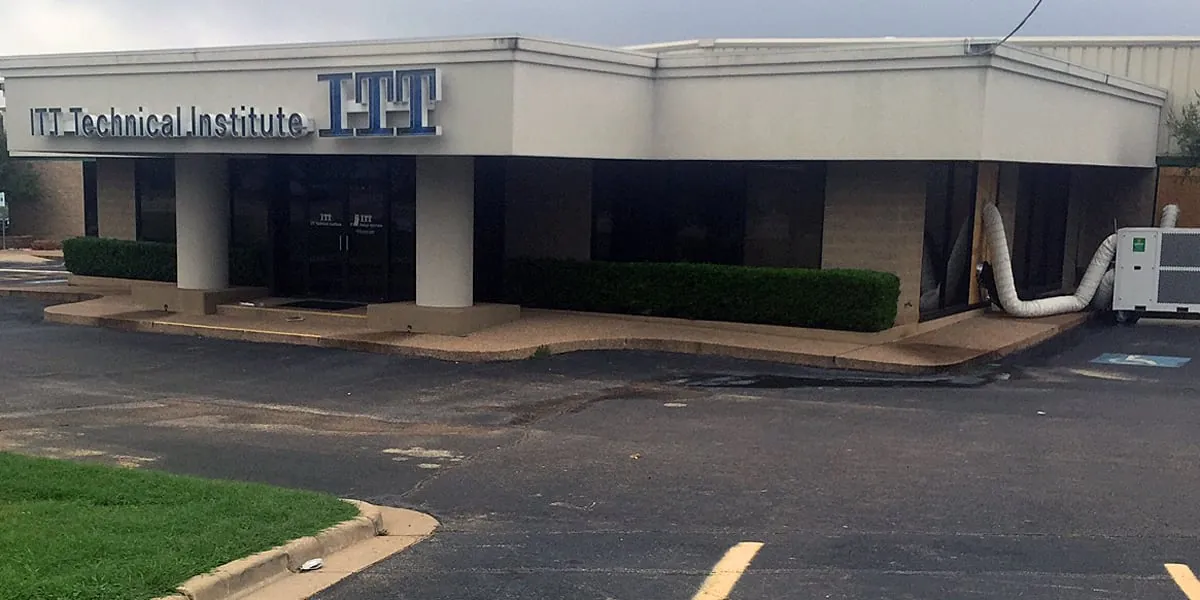
| ITT Educational Services | ITT Technical Institute; Daniel Webster College | ITT Tech has a separate group-discharge history; that does not erase the need to understand Sweet class and post-class dates. |
| Kaplan Higher Education / Graham Holdings-related brands | Kaplan Career Institute; Kaplan College; Bauder College; Texas School of Business | Kaplan-branded schools have multiple names and ownership histories; verify against the exhibit. |
| Laureate Education | Walden University | Confirm the official listing rather than relying on search snippets. |
| Lincoln Educational Services | Lincoln Technical Institute; Lincoln College of Technology; Lincoln Culinary Institute; Euphoria Institute of Beauty Arts & Sciences | Specified Lincoln Tech campuses also appear in separate group-discharge guidance; campus matters there. |
| Medtech College / JTC Education | Medtech College; Radians College | Check school-name spelling against the official exhibit. |
| Premier Education Group | Branford Hall Career Institute; Salter College; Salter School; Seacoast Career Schools; Hallmark Institute of Photography | Higher Ed Dive reported Hallmark University was removed; do not confuse it with Hallmark Institute of Photography without checking the record.[5] |
| Remington College | Remington College | Single-brand lookup; verify exact institutional name in StudentAid records. |
| Sullivan and Cogliano Training Centers | Sullivan and Cogliano Training Centers | A training-center name may not look like a traditional college on borrower paperwork. |
| Vatterott Educational Centers | Vatterott College; Court Reporting Institute; ex’treme Institute by Nelly; L’Ecole Culinaire | Vatterott-related branding can be highly program-specific. |
| Wilfred American Education Corporation | Robert Fiance Beauty Schools; Wilfred Academy | Beauty-school records may use old or local naming conventions. |
That table is deliberately a lookup table, not a verdict. If your school name appears, you have found one relevant fact. If it does not appear, do not pay anyone to “add” it, “appeal” it through a private service, or file something on your behalf without checking the official Department of Education materials first.
What being on Exhibit C does — and does not — decide
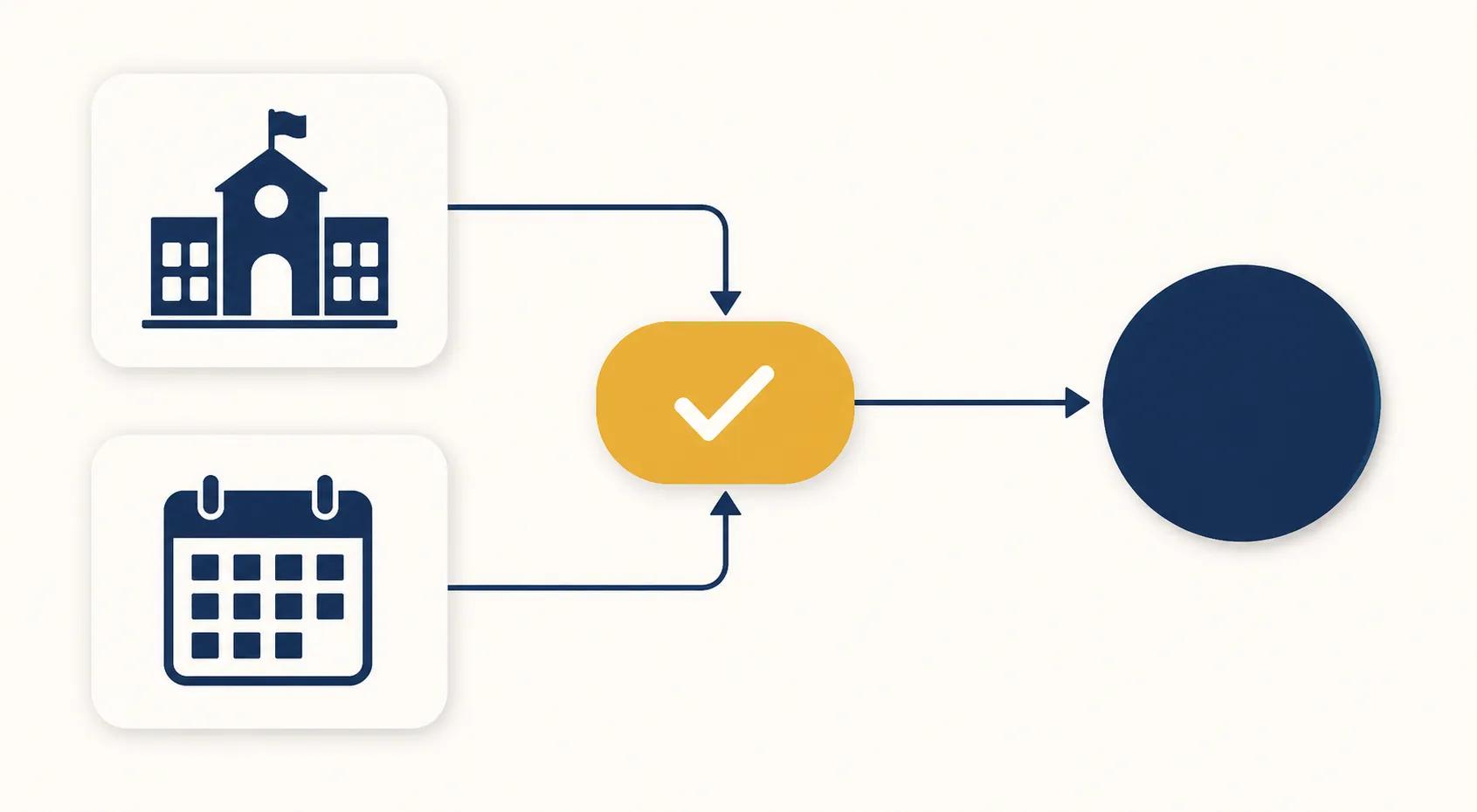
For Sweet settlement purposes, the school list answers only the school fact. It does not, by itself, answer the application-date fact. The central dividing line is whether the borrower filed a borrower-defense application on or before June 22, 2022, or during the later post-class window from June 23 through November 15, 2022.[7]
| Borrower-defense application timing | Settlement category | How Exhibit C matters |
|---|---|---|
| Application filed on or before June 22, 2022 | Class member | Exhibit C attendance is one of the key facts for full settlement relief treatment. |
| Application filed June 23, 2022 through November 15, 2022 | Post-class applicant | Exhibit C attendance can matter, but the post-class deadline mechanics are different. |
| No borrower-defense application in those windows | Not made a Sweet class or post-class applicant merely by attending a listed school | A listed school name alone does not create a new Sweet application path in 2026. |
This is the place where many bad summaries do real harm. “My college is on the list” is not the same sentence as “I can file a new paid application today and receive the July 2026 Sweet relief.” The latter is the sentence scammers want borrowers to believe.
For the detailed status check — how to confirm whether a borrower-defense application exists, what filing date matters, and where to verify it — use the separate Sweet v. McMahon eligibility guide. This page stays with the school-list record because that is the thing most people are trying to find before they can ask the next question.
Do not flatten the 2026 and 2027 deadlines
The settlement is now described by PPSL as totaling at least $23 billion, and PPSL and NPR attribute to lead counsel Eileen Connor the characterization that it is the largest settlement ever against the U.S. government.[8][4] That $23 billion figure is a current relief total. It should not be treated as the same thing as the settlement’s original 2022 valuation.
CNBC and NPR reported that about 450,000 borrowers are eligible, while PPSL and Business Insider use an over-500,000 borrower formulation.[9][4][8][10] Those are not typos to be quietly merged. They are differently framed public descriptions, and a borrower should not use either number as a personal eligibility test.
The July 2026 relief amounts are tied to missed court-ordered decision deadlines. They are automatic relief mechanics under the settlement, not a new application program. CNBC, citing Connor, reported an average cleared balance of more than $48,000, typical refunds of more than $15,000, and June 15, 2027 as the latest date by which eligible debt must be cleared.[9]
PPSL separately states that Exhibit C post-class relief is due by March 30, 2027.[7] Keep that March 30, 2027 post-class date separate from the June 15, 2027 latest-clear date reported by CNBC. They are not interchangeable calendar labels.
| Date or period | What it means | Do not confuse it with |
|---|---|---|
| June 22, 2022 | Last day for borrower-defense applications to fall in the Sweet class-member filing window. | A new 2026 application deadline. |
| June 23–November 15, 2022 | Post-class borrower-defense application window. | Automatic class-member treatment. |
| July 2026 relief reporting | Relief amounts tied to missed court-ordered deadlines. | A new borrower-paid filing opportunity. |
| March 30, 2027 | PPSL’s date for Exhibit C post-class relief. | The CNBC/Connor latest-clear date. |
| June 15, 2027 | Latest-clear date reported by CNBC, citing Connor. | The post-class Exhibit C relief deadline. |
A short case orientation, because captions changed
The case name changed because the U.S. education secretary changed. Sweet v. McMahon is the current caption; it was Sweet v. Cardona during the Biden administration and Sweet v. DeVos when filed. The Department of Education still hosts materials under Sweet settlement announcements, and the school-list PDF uses the Sweet v. Cardona caption because that was the caption when the settlement exhibit was filed.[1][2]
The case concerns borrower-defense applications — claims by federal student-loan borrowers that their schools misled them or otherwise engaged in misconduct relevant to their loans. The Exhibit C list became important because the settlement gave certain treatment to borrowers who had attended listed schools and filed borrower-defense applications in the relevant windows.
| Record point | Current public status to verify |
|---|---|
| Court | U.S. District Court for the Northern District of California |
| Case number | 3:19-cv-03674-WHA |
| Judge | William Alsup |
| School-list document | Exhibit C, Doc. 317-1, filed August 9, 2022 |
| Ninth Circuit stay issue | March 25, 2026 stay-denial order should be checked directly against the court PDF before relying on its text or holding. |
| Ninth Circuit memorandum disposition | July 17, 2026 memorandum disposition should be checked directly against the CourtListener-hosted PDF before relying on its text or holding. |
| Merits appeal | As of this record’s last verification, briefing was completed May 7, 2026, and oral argument was not yet scheduled. |
| PPSL breach notice | PPSL’s June 18, 2026 Notice of Material Breach remains an open implementation thread in the research record. |
For the March 25, 2026 Ninth Circuit stay-denial order and the July 17, 2026 memorandum disposition, check the actual PDFs before relying on quoted language, docket identifiers, or holding descriptions. This record treats them as status flags, not as a substitute for the court documents themselves.
Separate group discharges are real, but they are not the Exhibit C shortcut
PPSL’s FAQ notes that some borrowers from certain schools may have relief routes even if they never filed a borrower-defense application in the Sweet windows. The schools and programs PPSL flags include ITT Technical Institute, Corinthian schools such as Everest, Heald, and WyoTech, Westwood, the Art Institutes, Marinello, Ashford, CEHE schools, Drake College of Business, specified Lincoln Tech campuses in Lowell and Somerville, Massachusetts, and certain Globe University/Minnesota School of Business criminal-justice programs.[7]
That matters for borrowers who attended one of those schools and never filed a borrower-defense application. It does not turn Exhibit C into an all-purpose forgiveness directory. The safer order is still: identify the school, identify the application or group-discharge route, then verify through StudentAid.gov.
Verification, taxes, and loan type
Official verification belongs at StudentAid.gov and in Department of Education communications from [email protected]. CNBC, citing higher-education expert Mark Kantrowitz, reported that the Sweet relief concerns federal loans, not private loans.[9]
Tax treatment also should not be guessed from old settlement summaries. PPSL’s FAQ states that the American Rescue Plan Act tax-free period expired after December 31, 2025, and points to IRS Revenue Procedure 2015-57 for borrower-defense discharges.[7] That is enough for a borrower to know not to rely on a stale “always tax-free” sentence; it is not a substitute for tax advice.
No one has to pay a company to receive automatic Sweet settlement relief. A fee request, a promise to “place” a borrower into the automatic July 2026 relief, or a demand for account credentials is a scam signal. Check StudentAid.gov, compare any email to official Department of Education communications, and use the eligibility record for the application-date mechanics before sending anyone money or documents.
References
- Sweet v. Cardona Settlement, StudentAid.gov
- sweet-v-cardona-school-list.pdf, StudentAid.gov, August 9, 2022
- Student Loan Forgiveness For For-Profit School List, Tate Esq, updated July 8, 2026
- Student loan borrowers are poised for $23 billion in debt relief. Their colleges told them lies, NPR, July 31, 2026
- Here’s a list of the colleges in the Sweet v. Cardona settlement agreement, Higher Ed Dive, September 2022
- For-Profit College Student Loan Forgiveness List, The College Investor
- Sweet v. McMahon Class Members, Project on Predatory Student Lending
- Sweet v. McMahon, Project on Predatory Student Lending
- Student loan borrowers who attended these schools are getting an average of over $48,000 in debt cleared, CNBC, July 31, 2026
- Over 500,000 student-loan borrowers are getting debt relief after being defrauded by their schools, Business Insider, July 2026
Related records
Tool profile
How Meta's AI Spending Reshapes Law Firm ProfitabilityGoverning regulation
Browse the obligations tracker →Preventive workflow
Browse verification workflows →
Report a correction or tip
Spotted an outdated figure, a misstated fact, or a ruling this case record should reflect? Public comments are disabled for this content given the professional cost of a misreported case outcome, penalty amount, or rule text — use the structured correction channel instead.
Report a correction or tip for this record →