
White House Delay Escalates Taylor Farms Cyclospora Legal Risks
At least seven federal lawsuits are pending against Taylor Farms and Taco Bell operators under strict product liability, negligence, warranty, and consumer-protection theories. The White House delay request adds punitive-damages discovery risk and a non-trivial tail risk of criminal enforcement under the responsible corporate officer doctrine, even as the FDA's false-positive retraction removes the only positive product test from the public record.
- Jurisdiction
- US federal (multiple districts)
- Court
- U.S. District Courts (N.D. Ohio, S.D. Cal., E.D. Mich.)
- AI tool named
- No AI tool implicated
- Ruling date
- Jul 19, 2026
- Source document
- View primary court order ↗
- Last verified
- Jul 31, 2026
Lex Machina Review is an independent risk-tracking and reference resource. Nothing on this site is legal advice, and using it does not create an attorney-client relationship. Every record is reviewed against primary sources but may not reflect the most current status of a matter — always verify directly against the cited court order, rule text, or a licensed attorney before relying on it.
Companion explanation — secondary to the source document above
Risk Digest record
Last verified: July 31, 2026. This record is a structured legal-risk digest, not legal advice. Legal-background review: Mara Venn; product-liability, recall-response, and food-enforcement issues only. No opinion is offered on any party’s ultimate liability.
The Taylor Farms cyclospora recall now has three legally important features on the public record. First, at least seven federal lawsuits are pending in press-reported filings, with at least four naming Taylor Farms directly and others naming Taco Bell operators or related defendants under strict product liability, negligence, implied warranty, and consumer-protection theories.[1][2][3][4][5] Second, the reported White House request to delay the recall changes the discovery map: it may put timing, knowledge, communications, and motive into play even if it does not prove contamination.[6][7] Third, the FDA’s July 19 retraction of a positive product test removes the only public positive product sample, leaving plaintiffs and regulators to lean more heavily on epidemiological traceback, illness clustering, and recall-timing evidence.[5][8]
That combination makes this more than a routine contaminated-food docket, but it also prevents an easy liability story. The public record supports exposure analysis, not certainty. The pending cases can proceed without a surviving positive product test if plaintiffs can prove causation by a preponderance of the evidence. Regulators and prosecutors, however, would face a different burden and a thinner factual spine unless additional testing, traceback records, or admissions emerge.
The exposure map as of July 31
The public outbreak record is not one clean number. The FDA outbreak page reported 1,947 confirmed illnesses across 9 states; CDC HAN 00531 reported 1,645 cases across 34 states; national surveillance figures cited in the record reported 4,173 confirmed cases plus 7,400 under investigation; and Michigan reported more than 7,171 cases.[8][10][11] Those figures are not interchangeable. They reflect different reporting channels, confirmation standards, geographic scopes, and update cycles. The legally safer way to read them is that the outbreak remained active and procedurally unsettled as of July 31, 2026.
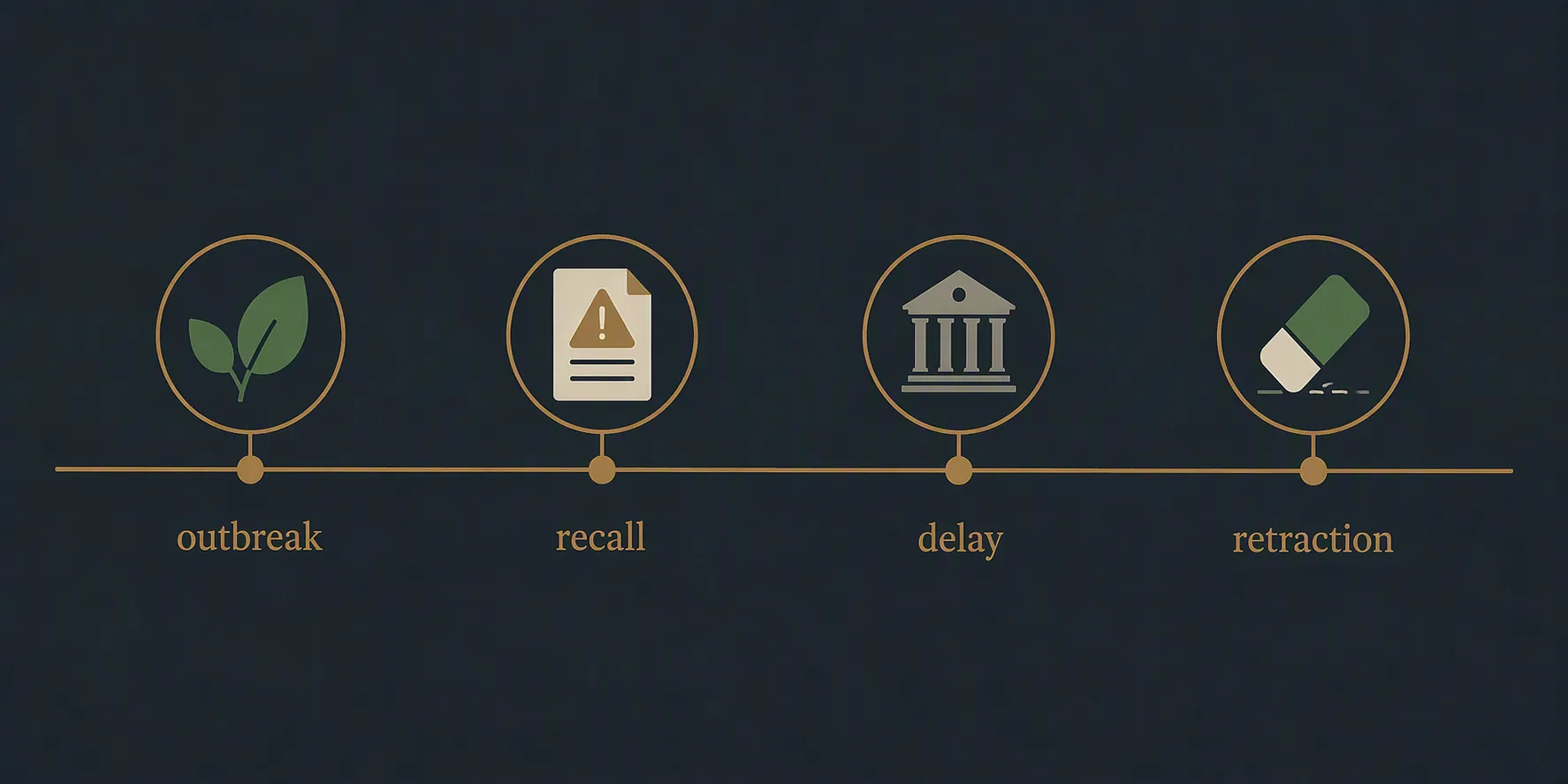
The recall itself began publicly on July 17, when Taylor Fresh Foods recalled iceberg lettuce from central Mexico because of a possible health risk.[9] The outbreak start date in the FDA record is May 17.[8] A two-month distance between first illness onset and recall notice does not by itself prove negligence. It does, however, give plaintiffs a time window to examine what was known, when it was known, who knew it, and what consumer-facing warnings were delayed or narrowed.
Press-reported federal docket
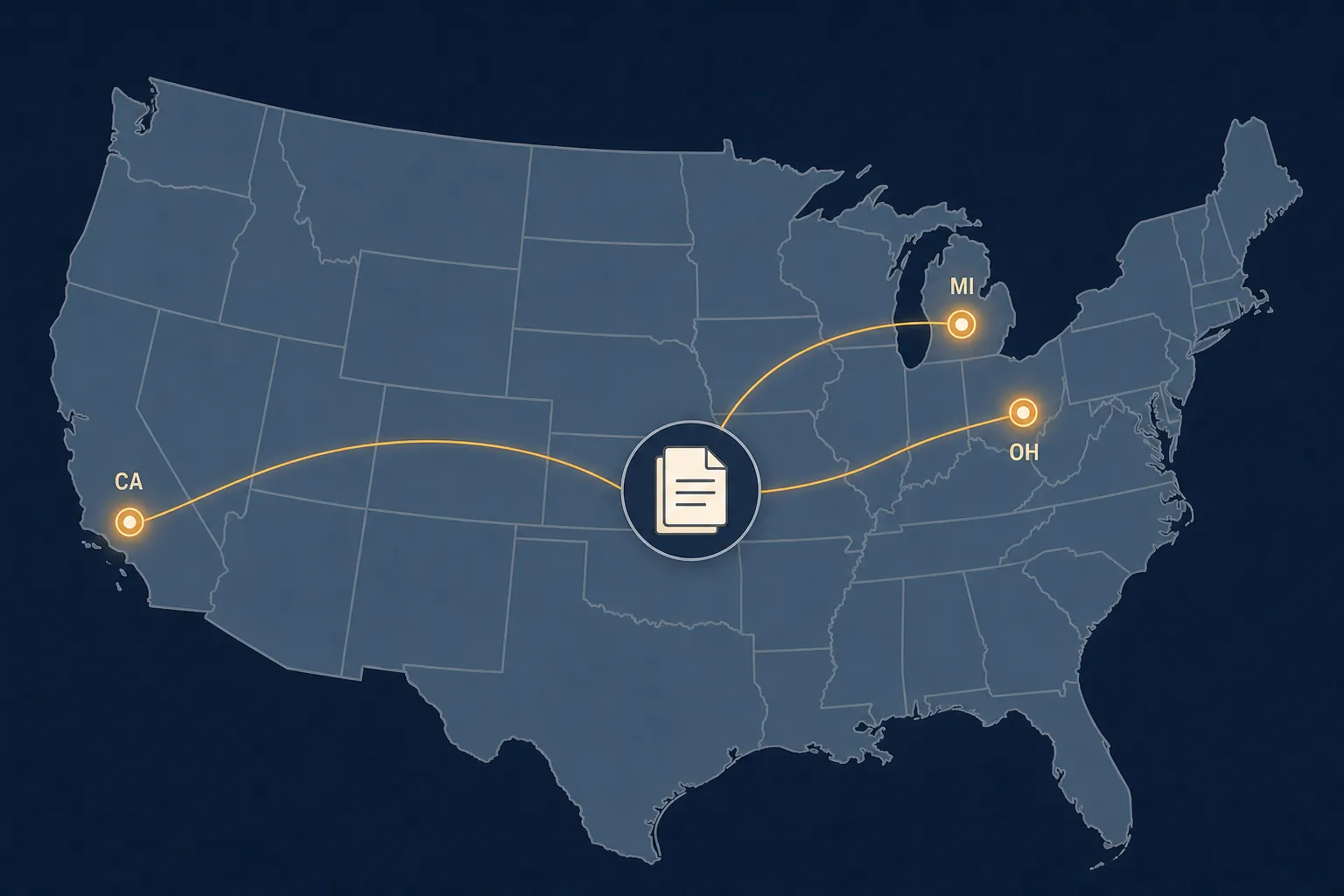
The docket below is reconstructed from Marler Clark, Marler Blog, Legal Newsline, Forbes, and FindLaw coverage. It has not been independently PACER-verified for docket numbers, amended pleadings, service status, or consolidation activity. For risk purposes, that limitation matters: press-reported complaints are enough to identify theories and venues, but not enough to assume operative pleadings or final party alignments.
| Press-reported venue | Representative filing or grouping | Defendants reported | Theories reported | Risk significance |
|---|---|---|---|---|
| Northern District of Ohio | Ayyad v. Pacific Bells, described by Marler Clark as the first lawsuit filed in the 2026 multistate cyclospora outbreak | Taco Bell operator Pacific Bells; Taylor Farms not identified in that first-case source as the named defendant | Product-liability and negligence-style foodborne illness claims, as reported in outbreak litigation coverage | Shows early franchise-operator exposure even where the alleged contaminated ingredient was upstream in the supply chain. [1][4] |
| Southern District of California | Caruso v. Taco Bell/Taylor Farms, reported by Marler Blog | Taco Bell and Taylor Farms | Strict product liability, negligence, breach of implied warranty, and related foodborne-injury theories | Places Taylor Farms directly in the case caption and ties supplier conduct to consumer-facing restaurant injury allegations. [2] |
| California federal filings / Legal Newsline coverage | Legal Newsline-reported class-action filings seeking relief over alleged illness linked to shredded iceberg lettuce | Taylor Farms and Taco Bell-related defendants, as reported | Consumer-protection, warranty, negligence, and product-liability theories | Adds class pleading pressure and consumer-notice allegations, although class certification remains a separate and much harder procedural question. [3] |
| Eastern District of Michigan | Forbes- and FindLaw-reported federal lawsuits among the broader set of at least seven pending cases | Taylor Farms directly in at least some cases; Taco Bell operators or related entities in others | Strict product liability, negligence, implied warranty, and state consumer-protection claims | Michigan’s large reported illness figures make venue and causation fights especially consequential, but public case counts do not substitute for individual proof. [4][5][11] |
The theories matter because they ask different questions. Strict product liability focuses on whether the food was defective or unreasonably unsafe when supplied. Negligence asks whether defendants acted reasonably in sourcing, testing, warning, and recall response. Implied warranty claims ask whether the food was fit for ordinary consumption. Consumer-protection claims may turn on what was represented, omitted, or inadequately communicated to buyers.
Taylor Farms’ direct exposure is clearest in the filings that name it. Taco Bell operators face a different but real problem: they may be sued by the consumer even if the operational facts they need sit upstream with a grower, processor, distributor, testing lab, or government agency. That is where indemnity, supplier contracts, franchise documentation, and preservation notices become central. The public complaints identify the front door of litigation; discovery will determine how far the responsibility chain can be followed.
What the reported White House delay changes
The Guardian and CBS News reported, relying on Wall Street Journal-derived accounts, that the White House requested a delay in the Taylor Farms recall.[6][7] That is not a primary White House document in the public materials reviewed here. It is also not proof that Taylor Farms contaminated lettuce, that Taco Bell served contaminated lettuce, or that any particular official acted unlawfully. Its legal significance is narrower and more durable: it creates a new category of records plaintiffs, congressional investigators, and possibly enforcement lawyers will want.
In civil discovery, a delay request can open requests for communications among Taylor Farms, restaurant customers, federal agencies, White House personnel, state health departments, and outside counsel. The obvious subjects are timing and knowledge: when illness signals were associated with iceberg lettuce, when product lots were identified, when recall language was drafted, who objected, and whether any business, political, or reputational concern affected public notice.
That matters most for punitive-damages and bad-faith arguments. A plaintiff does not need to prove a political motive to win an ordinary foodborne-illness claim. But if evidence shows that a warning was delayed after a credible risk was understood, the case changes character. The dispute moves from contamination and causation into conscious disregard, public-warning adequacy, and whether defendants or public officials allowed consumers to remain exposed while internal communications continued.
The same facts can cut several ways. A company may argue that it waited for confirmatory testing, lot identification, regulatory alignment, or a legally adequate notice rather than rushing out a confusing recall. Franchise operators may argue they relied on supplier and government instructions. Plaintiffs will test those explanations against timestamps, draft notices, epidemiological signals, and what decision-makers said before lawyers edited the record.
The FDA retraction is not a footnote
On July 19, the FDA retracted the positive product test that had linked a sample to cyclospora, describing it as a false positive.[8] FindLaw’s consumer-protection analysis treated that retraction as a serious complication for pending lawsuits, because it removed the only public positive product sample from the case narrative.[5]
That does not end civil exposure. Foodborne-illness cases can be built through epidemiology, traceback, purchase records, medical testing, incubation-period analysis, and exclusion of alternative exposures. Civil plaintiffs generally need to prove their claims by a preponderance of the evidence, not beyond a reasonable doubt. But the retraction gives defendants a clean, understandable point: the public product-test evidence that looked most direct has been withdrawn.
For plaintiffs, the response has to be evidentiary rather than rhetorical. They will need to show why the outbreak still tracks to the recalled lettuce despite the retraction. For Taylor Farms and downstream operators, the retraction is useful but not dispositive. It weakens a plaintiff story that depends on a positive sample; it does less against a record built from medical confirmations, lot movement, restaurant exposure histories, and the recall decision itself.
Recall notice adequacy becomes part of the negligence record
Consumer Federation of America criticized the Taylor Farms recall notice as “outrageous,” focusing on the difficulty consumers faced in using brand codes to identify affected lettuce.[14] Consumer Reports separately covered the retailer scope of the recall, emphasizing the practical problem of knowing where implicated lettuce may have been sold.[15]
Those criticisms are not liability findings. They are still useful in negligence and consumer-protection litigation because recall notice is judged by function, not polish. A notice that requires consumers to decode obscure identifiers, guess at retailer overlap, or search multiple pages for the same answer gives plaintiffs a concrete warning-adequacy theory. It also gives defendants a concrete defense if they can show that the notice followed FDA recall conventions, identified the affected product as precisely as available records allowed, and was updated as information changed.
Congressional letters add records pressure, not proof
Senator Richard Blumenthal’s July 30 press release and letter sought answers from the FDA and Taylor Farms about the cyclospora outbreak and recall response.[12] Separately, a House Oversight letter from Representative Robert Garcia requested records from Taylor Farms and set an August 13, 2026 deadline.[13]
The congressional materials also put political context into the public file. The Garcia letter cited a $1 million super PAC donation, $810,000 in lobbying, FoodNet cuts, and 3,500 FDA firings as part of its oversight theory.[13] The Blumenthal letter characterized an $11.4 billion FoodNet cut figure by citing NBC reporting.[12] Those claims should be treated as attributed oversight allegations and capacity concerns, not as proof that any contribution, lobbying expense, or staffing decision caused lettuce contamination or a delayed recall.
Their practical effect is records pressure. Congressional letters can preserve documents before civil litigants receive them, frame agency testimony, and create public admissions that later appear in motions or settlement negotiations. They also increase the odds that internal recall chronology becomes a public dispute rather than a private discovery fight.
Criminal-enforcement tail risk under the Park Doctrine
The responsible corporate officer doctrine, often called the Park Doctrine, allows misdemeanor food-safety liability for responsible corporate officials in certain circumstances without proof that the official personally intended contamination. It is a strict-liability enforcement tool, not a headline generator that makes charges imminent whenever an outbreak becomes severe.
Food-case precedent shows why the doctrine stays on the risk map. Marler Blog’s criminal-prosecution context post discusses prior food cases including Blue Bell’s $17.25 million resolution, the Peanut Corporation of America prosecution that produced a 28-year sentence, and Jensen Farms criminal penalties.[16] Those examples do not predict a Taylor Farms prosecution. They show the pattern enforcement lawyers examine when outbreak harm, knowledge, sanitation or sourcing failures, and delayed public action appear together.
The delay report is what keeps criminal tail risk non-trivial. If records showed that responsible officers had access to credible contamination or exposure information and participated in delaying a warning, enforcement interest could sharpen. If the record instead shows uncertainty, a withdrawn positive test, good-faith coordination with regulators, and no formal FDA contamination finding, the criminal theory weakens sharply.
That distinction is important for compliance officers looking beyond this outbreak. The enforcement lesson is not that every supplier tied to a recall should expect prosecution. It is that recall-delay communications, draft notices, escalation logs, and executive decision records should be written as if they may later be read by plaintiffs, FDA investigators, congressional staff, and criminal prosecutors.
Present legal posture
Civil exposure is real and already filed. The strongest plaintiff path is not a single lab result; it is a combined proof record of illness confirmations, product movement, restaurant exposure, recall timing, and warning adequacy. The strongest defense path begins with the FDA retraction and presses hard on causation, alternative exposures, plaintiff-specific proof, and the difference between an outbreak association and a legally proven defect.
The White House delay episode makes the Taylor Farms matter legally different from an ordinary outbreak-recall docket because it creates discovery pathways into communications and decision-making that would otherwise sit at the edge of the case. It may support punitive-damages theories or enforcement interest if the documents show knowing delay after credible risk. The FDA retraction, however, materially weakens the factual spine plaintiffs and regulators would prefer to have: a public positive product test that directly ties the recalled lettuce to cyclospora.
Readers tracking the broader food-safety enforcement framework can compare this record with the site’s PT Organics enforcement analysis and the Kroger egg recall liability assessment. The useful comparison is procedural: what was known, who controlled the notice, how fast the warning moved, and which records can prove it.
References
- First Lawsuit in 2026 Multistate Cyclospora Outbreak Filed Against Taco Bell Operator in Ohio Federal Court, Marler Clark
- Marler Clark and Darr Law sue Taco Bell and Taylor Farms over Cyclospora Outbreak Linked to Shredded Iceberg Lettuce, Marler Blog
- Lawsuits seek to shred Taylor Farms over explosive diarrhea outbreak, Legal Newsline
- Taco Bell Hit With Federal Lawsuits Over Cyclosporiasis Infections, Forbes, July 17, 2026
- FDA Retracts Key Test in Taylor Farms Cyclospora Probe: What About the Lawsuits Already Filed?, FindLaw
- Taylor Farms White House Cyclospora Recall, The Guardian, July 26, 2026
- Taylor Farms Cyclospora Outbreak White House Investigation, CBS News
- Investigation of 9-State Outbreak of Cyclospora Illnesses: Iceberg Lettuce, U.S. Food and Drug Administration, July 2026
- Taylor Fresh Foods Recalls Iceberg Lettuce from Central Mexico Because of Possible Health Risk, U.S. Food and Drug Administration, July 17, 2026
- HAN Archive - 00531, Centers for Disease Control and Prevention
- Cyclospora Outbreak Investigation, Centers for Disease Control and Prevention
- Blumenthal Presses FDA and Taylor Farms for Answers About Cyclospora Outbreak, Office of Senator Richard Blumenthal, July 30, 2026
- Garcia Letter to Taylor Farms Regarding Cyclospora-Contaminated Lettuce, House Oversight Democrats, July 27, 2026
- Taylor Farms Recall Notice Is Outrageous, Consumer Federation of America
- Taylor Farms Pulls Mexican Lettuce Linked to Cyclospora, Consumer Reports
- Some Context of Criminal Prosecutions in Food Cases, Marler Blog
Related records
Tool profile
How Meta's AI Spending Reshapes Law Firm ProfitabilityGoverning regulation
Browse the obligations tracker →Preventive workflow
Browse verification workflows →
Report a correction or tip
Spotted an outdated figure, a misstated fact, or a ruling this case record should reflect? Public comments are disabled for this content given the professional cost of a misreported case outcome, penalty amount, or rule text — use the structured correction channel instead.
Report a correction or tip for this record →