
Was the Tucson mom's ICE arrest after her hearing lawful?
Verified record of ICE's July 28, 2026 arrest of Tucson mother 'Ana' after her county noise-citation hearing, with disputed location, targeting, and prior-record claims flagged and tied to the legal questions they raise.
- Jurisdiction
- US-AZ
- Court
- Pima County Justice Court
- AI tool named
- No AI tool implicated
- Ruling date
- Jul 28, 2026
- Source document
- View primary court order ↗
- Last verified
- Aug 1, 2026
Lex Machina Review is an independent risk-tracking and reference resource. Nothing on this site is legal advice, and using it does not create an attorney-client relationship. Every record is reviewed against primary sources but may not reflect the most current status of a matter — always verify directly against the cited court order, rule text, or a licensed attorney before relying on it.
Companion explanation — secondary to the source document above
Record posture as of Aug. 1, 2026
Last verified: Aug. 1, 2026, UTC. This is a legal-record digest, not legal advice. The family asked reporters to identify the woman only as “Ana” because of harassment concerns; this article follows that request even though some public reports use her full legal name.
The short answer is narrow. On ICE’s account, the July 28, 2026 apprehension was a lawful civil administrative arrest after Ana left a Pima County Justice Court hearing on a county noise citation. The family disputes facts that matter legally: where the arrest happened, how she was identified, and what prior record ICE relied on.
The verified narrative begins at a misdemeanor-adjacent county court calendar, not at a federal immigration courtroom. Ana went to Pima County Justice Court in downtown Tucson on July 28, 2026, for a hearing tied to a county noise citation, and she was taken into ICE custody afterward, according to the Tucson Sentinel’s family-based account.[1] The Arizona Daily Star later reported ICE spokeswoman Yasmeen Pitts-O’Keefe’s account, including ICE’s position that the arrest did not occur on county property and did not involve courthouse surveillance.[2]
That disagreement is not a side note. In this record, “courthouse arrest” is too blunt a phrase. A federal immigration courthouse, a county justice-court building, a county-owned sidewalk or parcel, and a nearby street intersection do not raise the same rule.
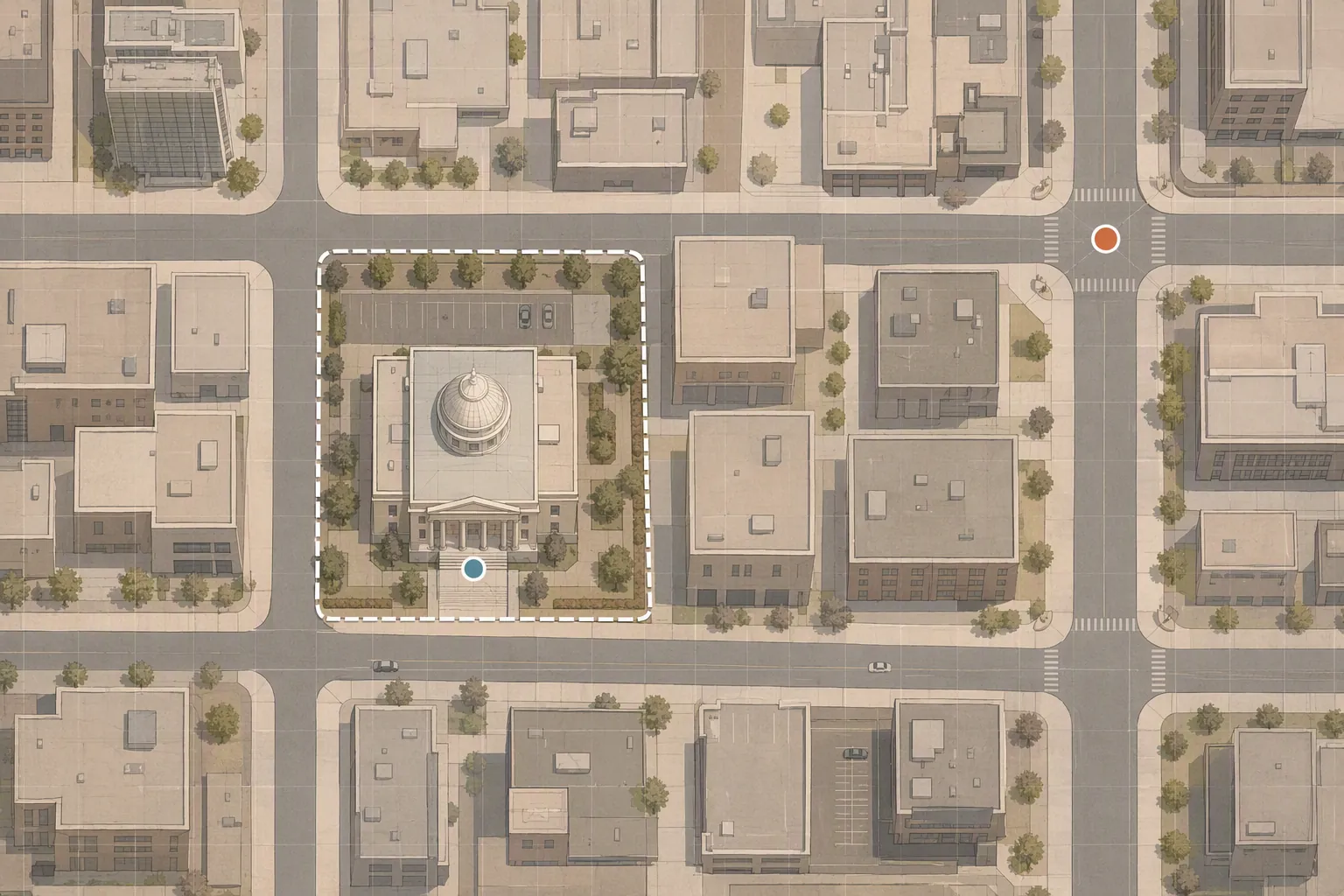
The disputed facts that actually change the legal question
| Disputed point | What the record says | Why it matters legally |
|---|---|---|
| Location | The family account places the arrest on or near county court property after the hearing; ICE told the Arizona Daily Star the arrest occurred at the W. Council St. / N. Church Ave. intersection, about a block away, and not on county property.[1][2] | If the arrest used county property as a staging area, Pima County Resolution 2026-10 becomes relevant. If it occurred at a public street intersection away from county property, the county-resolution argument becomes harder to reach. |
| Targeting method | The family account raises the concern that Ana was identified through the court calendar; ICE’s spokeswoman said there was no surveillance and framed the apprehension as based on publicly available information rather than courthouse monitoring.[1][2] | This affects whether the challenge is really about courthouse access and public-calendar use, not simply the physical place where officers made contact. |
| Prior record cited by ICE | Reports conflict on the older citation or plea history ICE referenced, including whether the relevant date was 2004 or 2006 and how the domestic-violence-related record should be described.[1][2] | That dispute goes to what ICE says supported removability or probable cause for a civil immigration arrest. It is separate from the county-property question. |
| Rule source | Pima County’s local resolution, ICE’s protected-areas policy materials, and the federal Sequen ruling all sit in the background, but they do not do the same work.[3][4][5] | A reader cannot safely move a rule from one setting to another. The courthouse label has to be tied to the exact forum and location. |
Location: county property is the hinge, not a technicality
Pima County Resolution 2026-10 is the local rule people are reaching for because Ana’s hearing was in county justice court. The Board of Supervisors adopted the resolution 4-1 on Feb. 17, 2026. Its operative restriction bars the use of county property as a staging area for civil immigration enforcement without a judicial warrant, but only “not to less than the full extent permitted by federal law.”[3]
That last clause matters. The resolution is not a county command to ICE agents in the way a courtroom observer might wish it were. It is a county-property rule written against the limits of federal supremacy and preemption. Pima County later defended the resolution against an SB1487 challenge by arguing that the measure did not obstruct federal immigration enforcement and was confined to the county’s own property-management authority.[4]
So the location fight has two layers. First: where did officers actually take Ana into custody? Second: even if some part of the operation touched county property, did it amount to using county property as a staging area for civil immigration enforcement without a judicial warrant? Those are not answered by saying “after court.”
The family-facing account reported by the Tucson Sentinel puts the arrest in the immediate courthouse context after Ana appeared on the noise citation.[1] ICE’s account, reported by the Arizona Daily Star, places the arrest at W. Council St. and N. Church Ave., away from county property.[2] If ICE’s location account is accurate, Resolution 2026-10 may have little practical bite. If the family’s location account is accurate, the county-property question becomes live, though still not automatically decisive against federal officers.
The judicial-warrant phrase in the county resolution also should not be blurred into a general statement that ICE always needs a judicial warrant to make a civil arrest. For readers tracking that distinction, the separate issue of judicial versus administrative warrants is treated in more detail in our workplace ICE-arrest record. Here, the county’s language matters because it is a county-property condition, not because it rewrites federal arrest authority.
Targeting: a public calendar claim is not the same as surveillance
The second dispute is how Ana came to ICE’s attention that morning. The family account, as reported, centers the fact that she appeared for a routine county matter and was taken afterward.[1] ICE’s spokeswoman told the Arizona Daily Star that Ana’s name was on a public court calendar and that agents were not conducting surveillance at the courthouse.[2]
Those two statements can be in tension without being exact opposites. Using a public court calendar to identify a person with a scheduled appearance is not identical to physically watching everyone who enters a courthouse. It still raises a courthouse-access concern: people with minor local matters may hesitate to appear if a public calendar functions as an enforcement lead sheet. But the legal question is different from a claim that officers stationed themselves inside a courthouse or on county property.
That distinction is uncomfortable because the consequence to Ana’s family is the same in the moment: she went to court for a noise citation and did not come home from that court trip. But for any later challenge, the record would need more than a label. It would need facts about who checked the calendar, when they checked it, what database or record they paired it with, where officers waited, and what instruction they were operating under.
Prior-record claims: the date conflict matters because ICE’s justification depends on it
The third disputed cluster concerns the older record ICE cited. The available reports do not line up cleanly on whether the relevant prior matter dates to 2004 or 2006, and they do not give one uncontested description of the domestic-violence-related plea history.[1][2]
That is not a newspaper-cleanup problem only. If ICE says an old criminal or citation record helped establish removability or probable cause for a civil immigration arrest, then the exact record matters: the charge, disposition, date, statutory label, and immigration consequence cannot be substituted with a rough public shorthand. A family dispute over that record is therefore not just a character defense. It goes to the premise ICE says supported custody.
The present public record does not resolve that conflict. It supports a narrower statement: ICE has offered an enforcement rationale through a spokeswoman, and the family contests factual pieces of that rationale. A later filing would need the actual criminal-court and immigration records, not a paraphrase of either side’s description.
Why Sequen does not control this arrest
Readers are asking about Sequen for an understandable reason. On June 23, 2026, a federal judge ruled against ICE policies allowing arrests at immigration courthouses, and coverage of the ruling emphasized that ICE could not make arrests at immigration courthouses under those policies.[5] The ACLU of Northern California’s case materials identify the case as Pablo Sequen v. Albarran and describe the challenge to immigration-courthouse arrests and related detention practices.[6]
That is where the borrowing should stop. Ana was not reported to be attending immigration court. She was at Pima County Justice Court on a county noise citation. Sequen concerned immigration-courthouse arrest policies and a related 12-hour detention-waiver issue; its preliminary-injunction appeal was still a separate procedural matter in the case materials.[5][6]
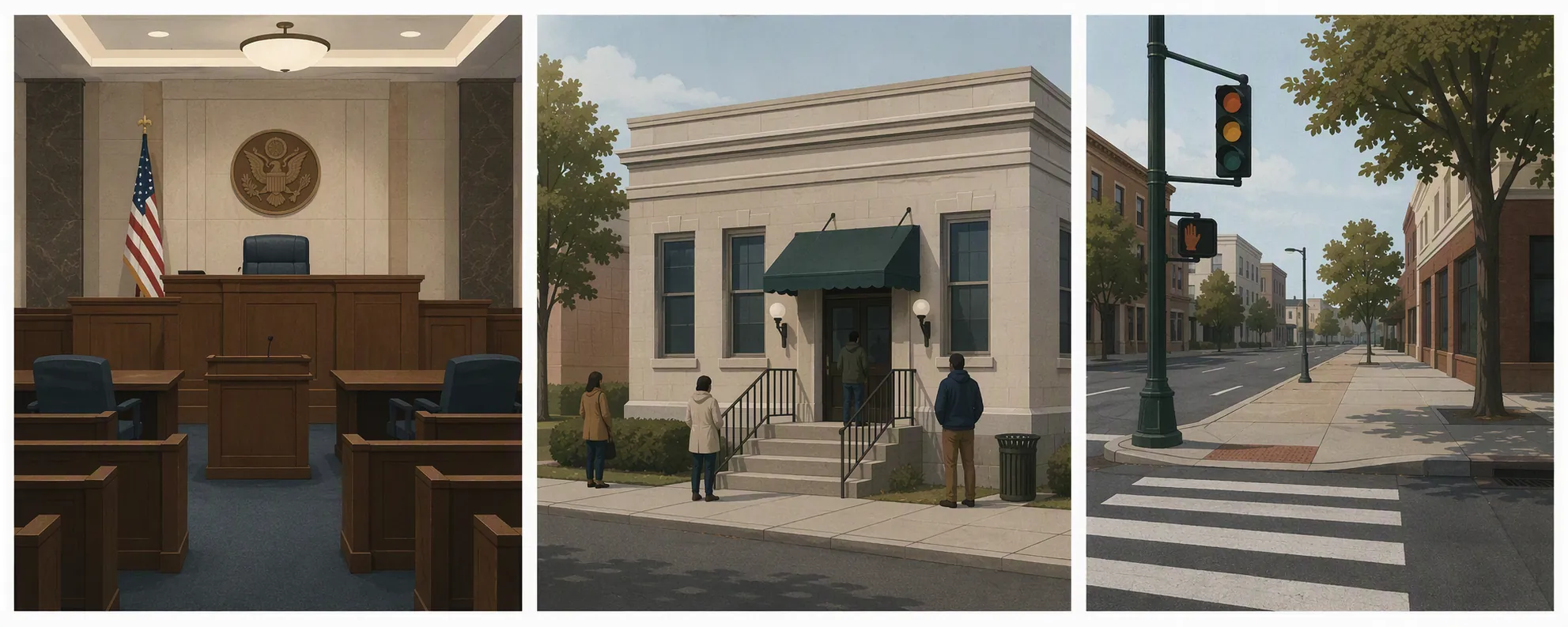
A county justice-court hearing can raise serious access-to-court and local-government concerns. It does not become an immigration courthouse because ICE was nearby. Treating those settings as interchangeable would make the record sound stronger while making the legal analysis weaker.
The current protected-areas patchwork does not supply a clean categorical ban
ICE’s protected-areas page is the current public agency source for locations where enforcement actions are treated as restricted under agency policy.[7] The reviewed materials do not establish a current categorical federal rule that barred this arrest merely because Ana had just appeared in a county justice-court matter.
Pending federal sensitive-location proposals sometimes enter the local debate, but pending legislation is not law. It cannot be used to say this July 28 arrest was unlawful on the day it happened.
Local responses show institutional alarm, not a legal finding
Local officials responded sharply. The Tucson Sentinel and Arizona Daily Star accounts reported reactions from Tucson Mayor Regina Romero, Police Chief Prieto, Pima County Attorney Laura Conover, Board Chair Allen, and Rep. Raúl Grijalva.[1][2]
Those reactions matter as evidence of how local institutions understood the event: a mother of three went to answer a local citation and ended the day in federal immigration custody. They do not, by themselves, decide whether ICE violated the county resolution, federal policy, or constitutional limits. The legal record still returns to the location, the targeting method, and the record ICE relied on.
What remains unverified
- The exact arrest location remains disputed between the family account and ICE’s account.
- The record does not yet establish whether county property was used as a staging area within the meaning of Pima County Resolution 2026-10.
- The public record does not resolve how ICE selected Ana beyond the reported public-calendar and no-surveillance statements.
- The prior-record details ICE cited remain unsettled in the available reports.
- This article does not report a bond decision, release, transfer, or later misdemeanor-court development because the reviewed materials do not establish one as of the last-verified date.
On the record available now, ICE has given an account under which the arrest was a lawful civil administrative apprehension. The family’s account contests facts that could matter in a challenge, but those disputes do different legal work. The location dispute points to county-property limits and federal preemption. The targeting dispute points to public-calendar use and courthouse access. The prior-record dispute points to the factual basis ICE says justified custody. Sequen does not decide this case because this was a county justice-court appearance, not an immigration-court arrest.
References
- Tucson Sentinel report on Ana’s July 28, 2026 ICE arrest after a Pima County Justice Court hearing, Tucson Sentinel.
- Arizona Daily Star report on ICE’s account of Ana’s arrest location and targeting, Arizona Daily Star.
- Pima County Resolution 2026-10, Pima County, Feb. 17, 2026.
- Pima County attorney rejects GOP challenge to block ICE from staging on county property, Arizona Mirror, Apr. 22, 2026.
- Federal judge rules ICE can’t make arrests at immigration courthouses, Courthouse News.
- Pablo Sequen v. Albarran, ACLU of Northern California.
- Protected Areas, U.S. Immigration and Customs Enforcement.
Related records
Tool profile
How Meta's AI Spending Reshapes Law Firm ProfitabilityGoverning regulation
Browse the obligations tracker →Preventive workflow
Browse verification workflows →
Report a correction or tip
Spotted an outdated figure, a misstated fact, or a ruling this case record should reflect? Public comments are disabled for this content given the professional cost of a misreported case outcome, penalty amount, or rule text — use the structured correction channel instead.
Report a correction or tip for this record →