
How to Verify AI Answers on HOA Foreclosure Laws
AI legal tools misfire on state-specific HOA foreclosure rules at rates the Stanford benchmark puts above 17%, and fabricated citations carry real sanction risk in 2026. This reference walks through a statute-first verification workflow, using worked examples from California, Texas, and Florida, so you can check any AI answer against the controlling law.
- Jurisdiction
- US federal
- Court
- U.S. appeals court
- AI tool named
- Lexis+ AI, Ask Practical Law AI, Westlaw AI-Assisted Research
- Ruling date
- Jun 3, 2026
- Source document
- View primary court order ↗
- Last verified
- Aug 4, 2026
Lex Machina Review is an independent risk-tracking and reference resource. Nothing on this site is legal advice, and using it does not create an attorney-client relationship. Every record is reviewed against primary sources but may not reflect the most current status of a matter — always verify directly against the cited court order, rule text, or a licensed attorney before relying on it.
Companion explanation — secondary to the source document above
The risky version of the query usually begins innocently: someone asks an AI tool for “hoa foreclosure laws by state,” and the tool returns a neat chart. It names statutes. It lists notice periods, redemption periods, dollar thresholds, and “super lien” rules. It may even sound more useful than a cautious lawyer because it answers in one pass.
That answer is not a 50-state legal reference. It is not legal advice. It is a lead that has to be taken apart before anyone relies on it. HOA foreclosure law is exactly the kind of subject where a polished AI response can be wrong in a quiet, damaging way: one state’s threshold migrates into another state’s summary, an old notice period survives in the model’s memory, or a secondary-source phrase hardens into something that sounds like controlling law.
The need to verify is no longer theoretical. Stanford RegLab and HAI reported that, in their pre-registered benchmark, Lexis+ AI and Ask Practical Law AI were incorrect more than 17% of the time, while Westlaw AI-Assisted Research was incorrect more than 34% of the time. Those are tool-specific findings from that study, not a universal rate for every legal AI product, but they are enough to change supervision habits when the question involves state-specific lien enforcement. [1]
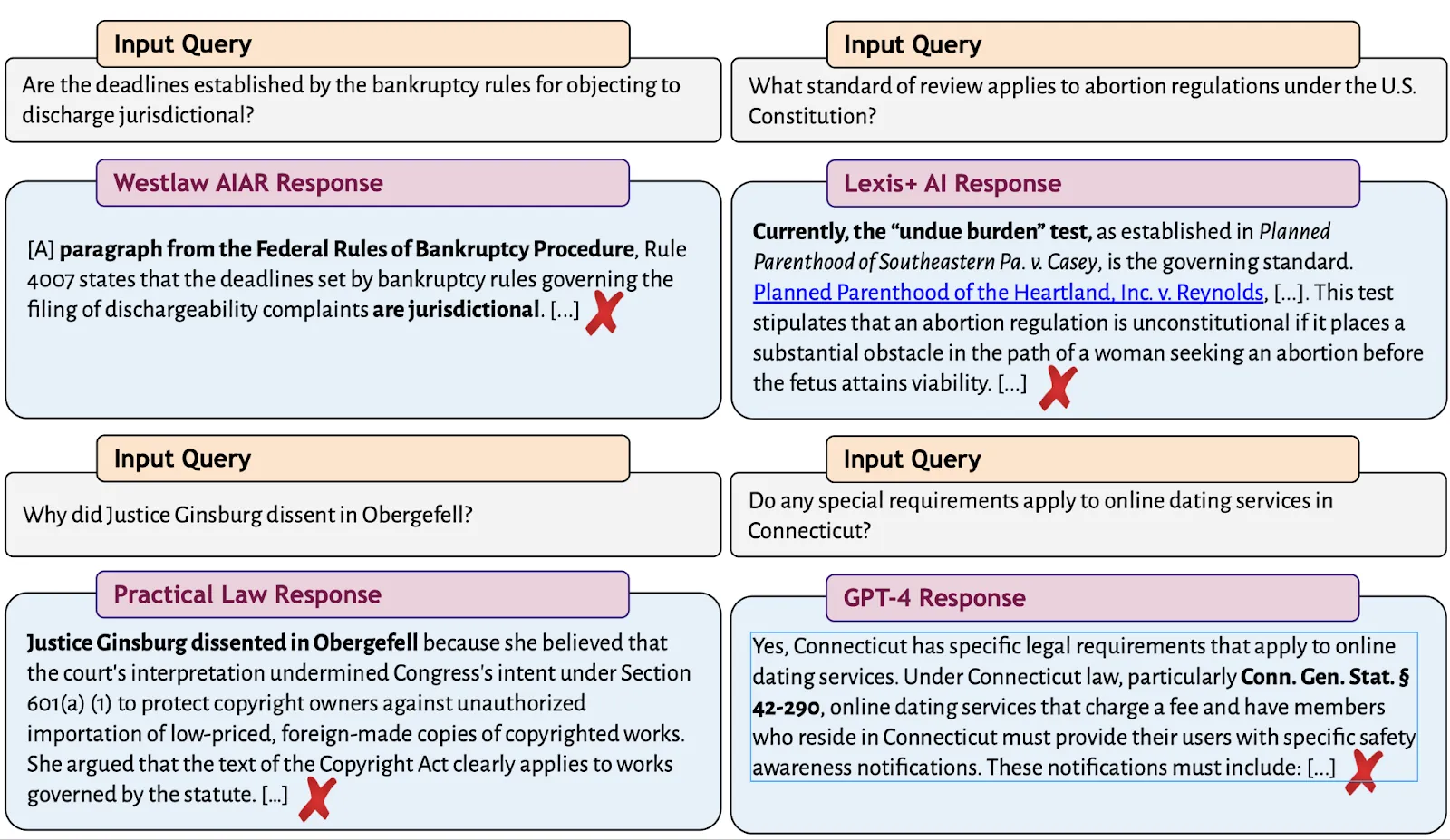
The professional consequence is just as concrete. On June 3, 2026, Reuters reported that a U.S. appeals court sanctioned two lawyers over AI hallucinations and lack of candor involving nonexistent cases. [2] A bad HOA citation may begin as a research shortcut, but if it reaches a brief, demand letter, board packet, title file, or client memo, the person left explaining it will not be the model.
The verification path, before any reliance
A usable workflow does not start by asking whether the AI answer “seems right.” It starts by separating the answer into claims that can be checked against controlling sources.
| Move | What you are checking | What should be preserved |
|---|---|---|
| Identify the jurisdiction | State, property type, and whether the matter involves an HOA, condominium association, or another common-interest form | The exact jurisdictional assumption used |
| Isolate the AI claim | Notice days, foreclosure threshold, redemption period, lien priority, fines, court-order requirement, or super-lien amount | The AI answer verbatim, with date and tool |
| Open the current statute text | The operative code section, current version, effective dates, and amendments | Link or citation to the current statute text and access date |
| Review recorded governing documents | CC&Rs, declaration, bylaws, assessment provisions, lien language, and any recorded amendments | Recording information and the exact provisions reviewed |
| Compare and classify | Whether the AI answer is accurate, incomplete, stale, overbroad, or unsupported | A short discrepancy note |
| Decide whether it is usable | Whether the point is verified enough for internal discussion, requires local counsel, or must be discarded | Reviewer, date, and remaining uncertainty |
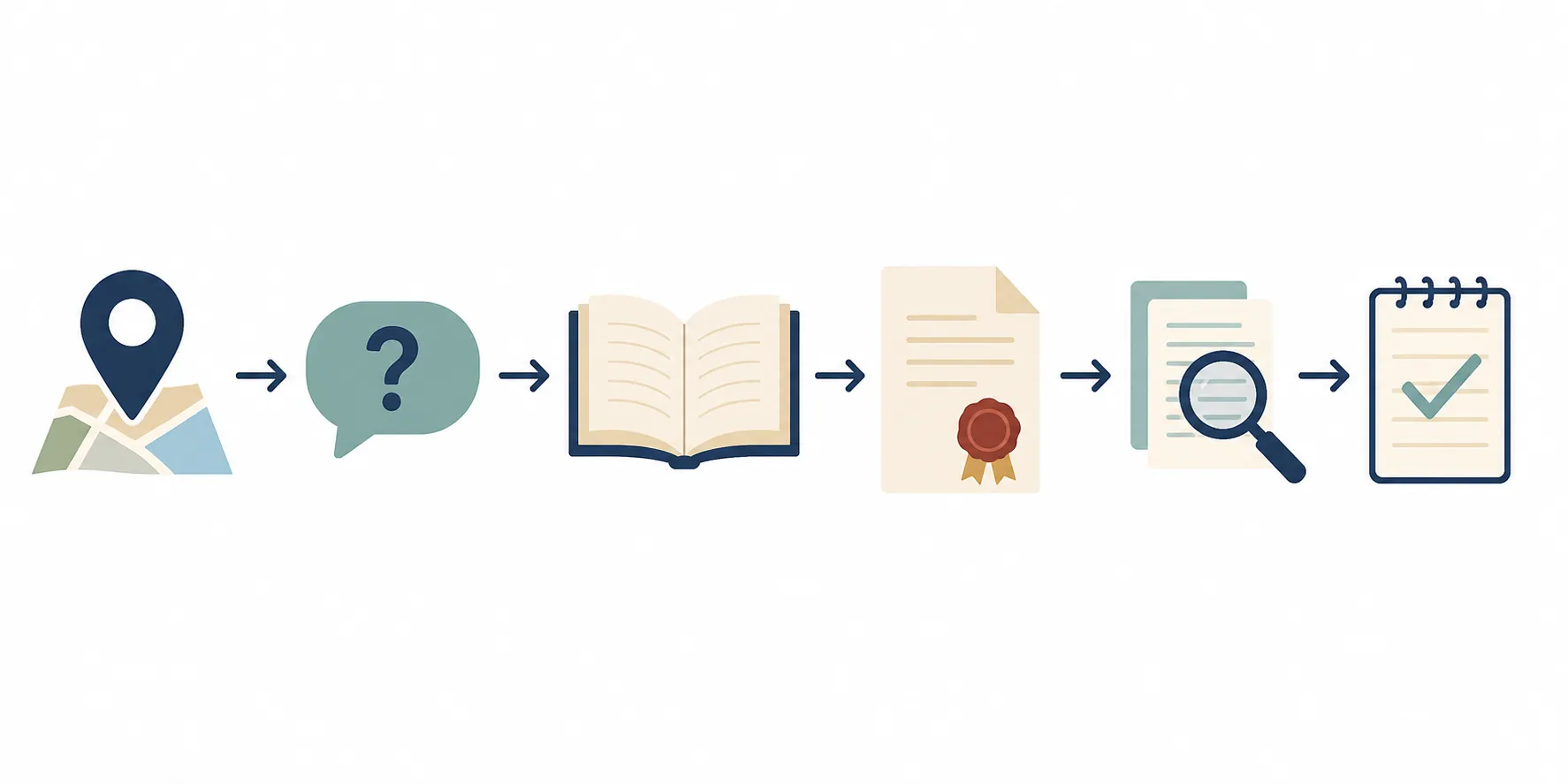
This is a statute-first workflow, not a distrust-everything workflow. AI can surface a statute to open, a phrase to search, or a conflict to investigate. The mistake is letting that first lead occupy the place reserved for current law and recorded documents.
California: check the threshold, then check what the lien is actually for
Suppose the AI answer says: “In California, an HOA generally may not foreclose unless delinquent regular or special assessments reach $1,800 or are more than 12 months delinquent; fines are excluded; there is a 90-day redemption period.” That answer is close enough to be tempting. It is not close enough to use without opening the statute.
The verification starts with California Civil Code § 5720. The specific claims to check are the dollar threshold, the 12-month alternative, and the exclusion of fines from the foreclosure threshold. The redemption claim belongs in a different place: California Civil Code § 5715. If the AI answer blends all of that into one undifferentiated “California HOA foreclosure law” paragraph, the verification note should separate the propositions by code section.
Then the recorded CC&Rs matter. The association’s governing documents may identify what counts as an assessment, how assessments are levied, when they become delinquent, what charges may be secured by a lien, and what board or notice steps must occur before enforcement. A statutory foreclosure threshold does not prove that this particular association has a clean lien for this particular balance.
A proper California verification note would not say only “AI answer confirmed.” It would look more like this: “Checked current Cal. Civ. Code §§ 5720 and 5715 on [date]. AI accurately identified the $1,800 / 12-month foreclosure threshold and 90-day redemption point, subject to current statutory text. Reviewed recorded declaration at [recording reference]. Need allocation of balance between assessments, late charges, interest, collection costs, and fines before treating lien as foreclosable.”
That last sentence is where many tidy AI answers fail. In a real file, the consequence may turn on the composition of the balance, not on the model’s ability to recite a threshold.
Texas: distinguish lien existence from foreclosure authority
Texas is a good place to catch another common compression error. An AI response may say that Texas allows HOA foreclosure and gives homeowners a 180-day redemption period. It may also mention that nonjudicial foreclosure requires an expedited court order and that fines-only liens are not foreclosable. Those claims point to different checks, and treating them as one rule is careless.
The redemption statement should be checked against Texas Property Code § 209.011(b). The expedited court-order point belongs with Texas Property Code § 209.0092(c). The fines-only point must be checked separately because it answers a different practical question: even if an association has recorded a lien or claims a debt, may that debt support foreclosure?
The governing documents again do real work. Texas files often require review of the declaration and other recorded dedicatory instruments to determine assessment authority, lien language, notice mechanics, and whether the property falls within the statutory scheme the AI assumed. If the AI answer does not distinguish assessments from fines, or lien perfection from sale authority, the answer should be marked incomplete even if one or two cited provisions are real.
A usable Texas note might read: “AI claim separated into redemption, foreclosure-process, and fines-only propositions. Checked current Tex. Prop. Code §§ 209.011(b) and 209.0092(c) on [date]. Reviewed recorded declaration and lien provisions at [recording reference]. Do not treat existence of lien as authority to foreclose; confirm debt category and required court process before any demand or filing.”
Florida: stale notice periods are not harmless
Florida is the example to keep nearby when an AI answer sounds plausible because it used to be right. A model or summary that says a Florida homeowners’ association must give a 30-day demand or notice may be repeating stale law. The current check belongs in Florida Statutes § 720.3085, where the notice period reflected in the research materials is 45 days.

That 30-to-45-day move is the sort of change AI systems flatten. It does not look dramatic in a generated paragraph. It matters to the person sending the notice, the lawyer reviewing the timeline, the association deciding whether it can proceed, and the homeowner trying to understand whether the next step is valid.
The Florida verification note should record more than the number. It should state the version of § 720.3085 opened, the date accessed, whether the matter involves a homeowners’ association rather than a condominium association, and whether the association’s recorded governing documents impose any additional steps. If the AI answer supplied a 30-day period, the note should say “stale notice period identified,” not merely “partially correct.”
Why a single 50-state chart is the wrong deliverable
The reader who searches for HOA foreclosure laws by state usually wants a table. That desire is reasonable. It is also where the research risk concentrates. State rules do not vary along one clean dimension. One state’s issue may be a foreclosure threshold. Another’s may be a redemption period. Another’s may be lien priority, notice, court involvement, owner-occupancy protections, fines, or whether the property is governed by an HOA statute at all.
Virginia is a useful warning because source conflicts can appear before the lawyer even reaches the statute. The research file surfaced a conflict between an older common-interest-community summary and a current secondary source description of the foreclosure threshold and lien timing rules. The right response is not to average the figures or pick the more recent-looking PDF. The right response is to open the current Virginia Code provision and record which source was stale, incomplete, or addressing a different association type.
The same caution applies to “super lien state” lists. Nevada’s NRS 116.3116 is commonly discussed in nine-month super-lien terms. Colorado’s Colo. Rev. Stat. § 38-33.3-316 is commonly discussed in six-month super-lien terms. Those two examples do not justify a merged master roster. Different publishers count states differently, update at different speeds, and sometimes use different definitions of what qualifies as a super-lien statute.
Colorado also shows how fast the surrounding collection rules can change. HB22-1137, the 2022 Colorado bill page maintained by the Colorado General Assembly, is a compact reminder that HOA collection and foreclosure rules can be rewritten by statute rather than merely reinterpreted by commentary. [3] If an AI answer treats Colorado as a static “six-month super lien state” and stops there, it has not done the file-level work.
Secondary sources are signposts, not substitutes
Secondary sources are useful. A good state page, treatise section, lender guide, or community-association summary can point the reviewer to the right code section and warn that an issue exists. The problem begins when a secondary-source sentence becomes the final answer, especially after an AI tool has paraphrased it without preserving scope, date, or association type.
For verification purposes, the source hierarchy is blunt:
- Current statute text first, including effective dates and amendments.
- Recorded governing documents next, because the association’s authority must exist in the actual file.
- Recorded lien, notice, account ledger, board action, and correspondence after that, depending on the issue being checked.
- Secondary summaries last, as signposts and conflict detectors.
This order matters most when the AI answer includes a citation. A real citation is not the same as a correct proposition. A model can cite a statute that exists, then attach the wrong threshold, the wrong association type, or the wrong procedural consequence to it. The citation has to be opened.
If your office tracks AI research failures, the same discipline used in a benchmark discrepancy log or a legal-tool abstention review belongs here: preserve the query, the answer, the source opened, and the discrepancy. For litigation filings, the sanction lesson is even plainer; a court does not need a theory of AI to enforce the duty to verify citations, as the D. Kan. Lexos sanction record illustrates.
What to record before discussing the answer internally
“Verified enough” is not a feeling. Before an AI answer on HOA foreclosure law is used in a partner briefing, client conversation, risk memo, title review, or homeowner decision, the file should show what was checked and what remains open.
- The exact AI query and response, including date, tool, and any cited authorities.
- The exact jurisdictional assumption: state, association type, property type, and whether the question concerns assessments, fines, collection costs, lien priority, foreclosure process, or redemption.
- Each AI claim separated into a checkable proposition, such as “45-day demand notice,” “180-day redemption,” “fines-only lien not foreclosable,” or “court order required before nonjudicial sale.”
- The current statute text opened for each proposition, with code section, version or effective-date information where available, and access date.
- The recorded CC&Rs, declaration, bylaws, amendments, and lien provisions reviewed, with recording information.
- Any conflict among secondary sources, without forcing the conflict into a false combined rule.
- A classification of the AI answer: verified, stale, incomplete, wrong jurisdiction, wrong association type, unsupported, or requires local counsel.
- The reviewer’s name, review date, and whether the conclusion is suitable only for internal triage or for external use.

A discrepancy log does not need to be elaborate. The useful entry is usually short: “AI said Florida notice was 30 days. Current § 720.3085 review shows 45 days. Marked AI answer stale. Do not use earlier period.” That entry is more valuable than a polished memo that hides the correction.
For a homeowner, the same idea can be simpler: do not decide whether a house can be sold, redeemed, refinanced, or cleared for closing because a chatbot produced a state-law paragraph. The document that matters may be the statute, the recorded declaration, the recorded lien, or the notice actually sent. The AI answer may tell you what to ask for; it does not prove what happened.
The answer to the original query
If someone asks whether they can trust an AI answer on HOA foreclosure laws by state, the safe answer is narrow: trust it only as a research lead. It may identify the right state statute. It may surface a useful issue. It may also carry forward an old notice period, import a neighboring state’s rule, collapse HOA and condominium provisions, or invent confidence around a citation that has not been opened.
Verified enough for internal discussion means the current statute text has been opened, the recorded CC&Rs have been reviewed, the AI’s claims have been separated and checked, secondary-source conflicts have been noted rather than merged, benchmark risk has been understood, and no citation is being used unless someone has confirmed that it exists and says what the AI claimed it says.
References
- AI on Trial: Legal Models Hallucinate in 1 out of 6 (or More) Benchmarking Queries, Stanford HAI
- US appeals court sanctions lawyers over AI hallucinations, lack of candor, Reuters, June 3, 2026
- HB22-1137, Colorado General Assembly
Related records
Tool profile
Dunia AI funding exposes legal industry's verification gapGoverning regulation
Browse the obligations tracker →Preventive workflow
Browse verification workflows →
Report a correction or tip
Spotted an outdated figure, a misstated fact, or a ruling this case record should reflect? Public comments are disabled for this content given the professional cost of a misreported case outcome, penalty amount, or rule text — use the structured correction channel instead.
Report a correction or tip for this record →