
Can Yellowstone Bison Attack Victims Sue the Government?
The June 26 and July 10, 2026 Yellowstone bison attacks leave their victims one plausible recovery route: an FTCA claim against the United States, which no confirmed claim or lawsuit has yet tested. Applying Chadd's discretionary-function analysis and the park's 25-yard rule, this record concludes recovery is unlikely on the current record, but the two-year and six-month filing deadlines must still be preserved.
- Jurisdiction
- United States (Ninth Circuit)
- Court
- U.S. Court of Appeals for the Ninth Circuit
- AI tool named
- No AI tool implicated
- Ruling date
- Jul 10, 2026
- Source document
- View primary court order ↗
- Last verified
- Aug 4, 2026
Lex Machina Review is an independent risk-tracking and reference resource. Nothing on this site is legal advice, and using it does not create an attorney-client relationship. Every record is reviewed against primary sources but may not reflect the most current status of a matter — always verify directly against the cited court order, rule text, or a licensed attorney before relying on it.
Companion explanation — secondary to the source document above
For the 2026 Yellowstone bison attacks, the liability answer is narrower than the injuries make it feel. The two publicly identified 2026 Yellowstone bison incidents point to one realistic damages defendant: the United States, through a Federal Tort Claims Act administrative claim. They do not point to an ordinary negligence suit against individual Yellowstone staff, and as of the Aug. 4, 2026 verification point, no primary-source-confirmed FTCA claim or lawsuit by either 2026 victim was found.
That does not make the injuries legally irrelevant. A child injured near Mud Volcano and a 65-year-old visitor reportedly tossed by a bison at Bridge Bay Campground are serious records, not background color. But the missing hinge is still the same one that controls many national-park injury claims: whether the plaintiff can identify a breached, non-discretionary federal duty. Without that, the discretionary-function exception is likely to dominate before a jury ever hears a visitor-safety story.
| Risk Digest field | Current record |
|---|---|
| Incidents covered | June 26, 2026, Mud Volcano area; July 10, 2026, Bridge Bay Campground. |
| Confirmed status | The June 26 incident is confirmed by an NPS release: a 12-year-old was injured by a bison near Mud Volcano, and NPS described it as Yellowstone’s first reported bison incident of 2026. [1] |
| Reported status | The July 10 incident involving Carl McDaniel, 65, has been reported by news outlets while the NPS investigation remained open; details such as distance from the animal and a truck-horn trigger remain unadjudicated public accounts. [2][3] |
| Plausible defendant | The United States, through the FTCA process, not a direct state-law negligence suit against Yellowstone employees. |
| Main defense | Discretionary-function immunity under 28 U.S.C. § 2680(a), analyzed here through Chadd v. United States by analogy, not as a bison-specific holding. |
| Immediate control point | Written FTCA presentation to the National Park Service within two years, followed by a six-month suit window after final denial if the claim is rejected. [6] |
| Use note | This is a litigation-risk analysis, not legal advice for any victim, family member, or lawyer. |
The two 2026 incidents now on the record
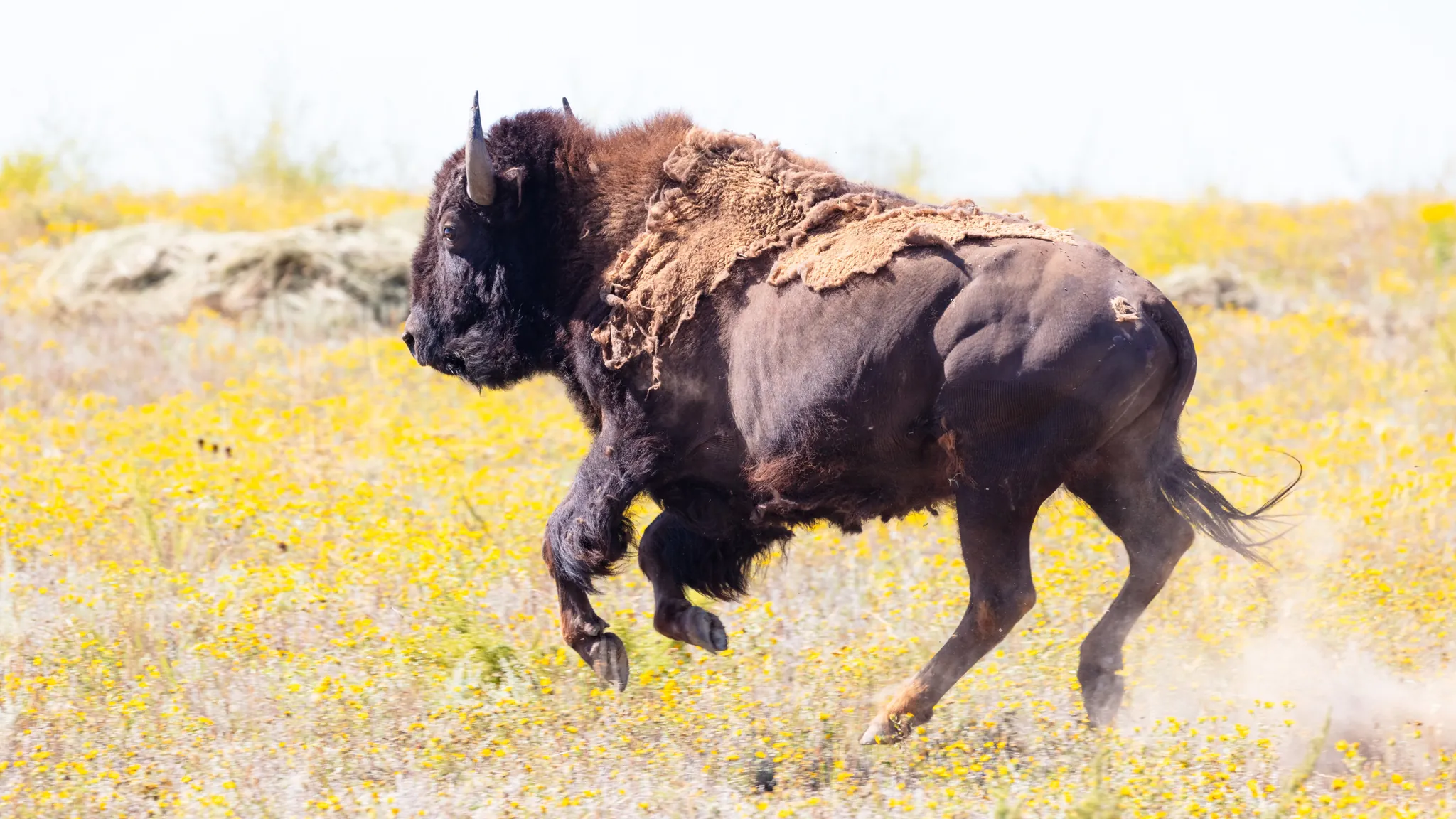
The first 2026 record is straightforward because it comes from the park itself. On June 26, 2026, Yellowstone reported that a 12-year-old visitor was injured by a bison near the Mud Volcano area and identified the event as the park’s first reported bison incident of the year. [1] The NPS release matters because it fixes the date, location, victim age, animal involved, and official status without relying on a later retelling.
The second record is more developed in human detail but less settled as a legal record. News reports identified the July 10, 2026 victim as Carl McDaniel, 65, and described him being tossed by a bison at Bridge Bay Campground, with a femur fractured in four places. [2][3] CNN reported McDaniel’s account that he was about 100 yards away from the bison and that a truck horn startled or agitated the animal before the encounter. [3] Those facts, if later supported, would be important to visitor conduct. They are not yet findings by a court or an agency.
The reported distance in the McDaniel account is the fact that keeps the legal question from being dismissed too quickly. Yellowstone tells visitors to stay at least 25 yards away from bison and other large animals, and the park’s safety page says bison have injured more people in Yellowstone than any other animal. [4] A person who was actually about 100 yards away was not violating that minimum-distance rule. But that does not automatically convert a bison attack into government liability.
Why the claim is not a simple negligence case
The first narrowing move is basic but often skipped in public discussion: Yellowstone is a federal park. A visitor cannot treat this like a slip-and-fall claim against a private campground and sue the nearest ranger as though the ranger personally operated the premises. The FTCA is the damages route because it is the statute that allows certain tort claims against the United States. That route comes with conditions, and one of the most important is that some government choices remain immune even if the injured person can describe the choice as careless.
For a Yellowstone bison attack, the central immunity problem is not whether bison are dangerous. The park itself says they are. The problem is whether the alleged NPS failure was the violation of a mandatory directive, or instead a protected judgment about how to manage wild animals, public access, visitor education, ranger staffing, warning signs, road and campground operations, and the competing public interest in viewing wildlife.
That distinction is where many promising-looking park-injury claims lose force. A visitor can be badly hurt, can have acted reasonably, and can still face a federal immunity defense that prevents recovery. The legal issue is not moral sympathy. It is whether Congress has allowed the claim to proceed against the United States on the specific theory pleaded.
Chadd is the case that should worry plaintiffs
The most important authority for this analysis is not a Yellowstone bison case. It is Chadd v. United States, a Ninth Circuit case involving a fatal mountain-goat attack in Olympic National Park. Its value here is analogical: Yellowstone sits in the Ninth Circuit, and Chadd shows how that court treats NPS decisions about dangerous, habituated, or managed wildlife when the FTCA’s discretionary-function exception is raised. [5]
In Chadd, the court applied the discretionary-function exception to NPS decisions surrounding a mountain goat that had become associated with people. The key point was not that the animal was harmless, or that the Park Service’s response was perfect. The key point was that the challenged decisions were susceptible to policy analysis: how to balance visitor safety, wildlife conservation, public access, resource allocation, and the management of animals in a national park. The exception applies even where a plaintiff alleges an abuse of discretion, so long as the decision falls within the protected category. [5]
For the 2026 Yellowstone incidents, that means a plaintiff would need more than proof that NPS knew bison can injure people. Yellowstone’s bison risk is not hidden. The stronger plaintiff theory would have to identify a specific mandatory rule that required NPS personnel to act in a particular way under the circumstances, and then show that they failed to do that. A general claim that the park should have warned better, moved faster, closed more space, hazed an animal, removed an animal, or stationed more staff nearby will likely be characterized by the government as a protected management judgment.
That is why Chadd matters more than broad commentary about park safety. It gives the government a clean litigation path: even assuming the injury happened, even assuming bison are dangerous, and even assuming a different management choice might have reduced the risk, the claim is barred unless the plaintiff can escape discretionary-function immunity. The plaintiff does not win simply by proving that the animal was dangerous. The plaintiff needs the non-discretionary duty.
That analysis also keeps the July 10 reported distance in its proper place. If McDaniel was about 100 yards away, that may help defeat a claim that he approached too closely. It does not, by itself, prove that NPS breached a mandatory obligation to remove or control that bison before the attack. Under Chadd’s logic, the government will argue that decisions about managing a moving, potentially agitated, publicly visible wild animal in a campground setting are exactly the kinds of choices Congress left protected.
The 25-yard rule is evidence, not a liability switch
The 25-yard rule will matter in any Yellowstone bison injury file. It is a published visitor-safety rule, it is easy to understand, and it gives both sides something concrete to argue from. Yellowstone’s safety page instructs visitors to stay at least 25 yards away from bison and other large animals. [4]
For the government, the rule is often useful because it anchors visitor fault. If a visitor approached within the posted minimum distance, the United States can argue that the visitor’s own conduct caused or contributed to the injury. That argument may appear as comparative fault, causation, assumption of risk, or a factual defense to breach, depending on the claim posture. The exact doctrinal label matters less than the practical effect: the closer the visitor was without a good reason, the more the case becomes about the visitor’s conduct rather than park management.
For a plaintiff, compliance with the rule is helpful but limited. It can remove one obvious defense. It can make the injury feel less self-inflicted. It can support the factual argument that the visitor acted reasonably. But it does not create a federal guarantee that a person standing 26 yards, 50 yards, or reportedly 100 yards away will be protected from a wild animal. The rule tells visitors what they must not do. It does not necessarily tell NPS exactly what it must do in response to every bison near a road, trail, thermal area, or campground.
That distinction is especially important for the McDaniel account. A reported distance of about 100 yards is far beyond the published 25-yard minimum, and that makes the claim more serious on visitor-conduct grounds. But the distance fact still has to pass through the FTCA immunity screen. If the pleaded breach is that NPS should have predicted, relocated, dispersed, closed access around, or otherwise controlled a bison before the attack, Chadd gives the government a substantial argument that those choices are protected wildlife-management judgments.

What a viable FTCA theory would need
A plausible administrative claim would need to do more than recount the injury and attach hospital records. It would need to identify the operational act or omission that allegedly violated a mandatory federal directive. The most useful facts would be specific: a required closure that did not happen, a mandatory warning protocol that was ignored, a required response to a known animal in a specific location that was not followed, or some other directive that left NPS personnel no policy choice.
The weaker version of the claim is a generalized warning-and-management theory: Yellowstone knew bison are dangerous, tourists were nearby, and NPS should have done more. That may be emotionally persuasive, especially after a severe fracture or a child’s injury, but it is the version most exposed to discretionary-function dismissal. In federal-tort practice, the difference between “should have done more” and “was required to do this specific thing” is often the difference between a claim that survives and a claim that never reaches merits discovery.
Older public-lands wildlife and warning cases can still be useful for framing duty-to-warn arguments, but they should not be overread as a Yellowstone bison answer. The modern problem is not merely whether the government knew an animal or condition was dangerous. It is whether the challenged choice is protected by the discretionary-function exception. For the broader same-park liability map, see How the FTCA Shapes Liability for Yellowstone Tourist Incidents and Why Yellowstone Hot Spring Injury Claims Almost Always Fail. The hot-spring context is different, but the same basic lesson appears: Yellowstone injury analysis usually turns on immunity and visitor warnings before it turns on ordinary negligence instincts.
Separate litigation over federal bison-management planning should also stay in its lane. An administrative-law challenge to a bison-management plan may test agency procedure, environmental review, or herd-management policy. It is not a personal-injury damages action for a visitor tossed by a bison. Conflating those tracks makes the injury claim look broader than it is.
The deadline question should not wait for the immunity answer
The practical mistake would be to decide too early that immunity will certainly defeat the claim and then miss the FTCA deadline. Under 28 U.S.C. § 2401(b), a tort claim against the United States is barred unless it is presented in writing to the appropriate federal agency within two years after it accrues. If the agency denies the claim, suit must be filed within six months after the denial is mailed. [6]
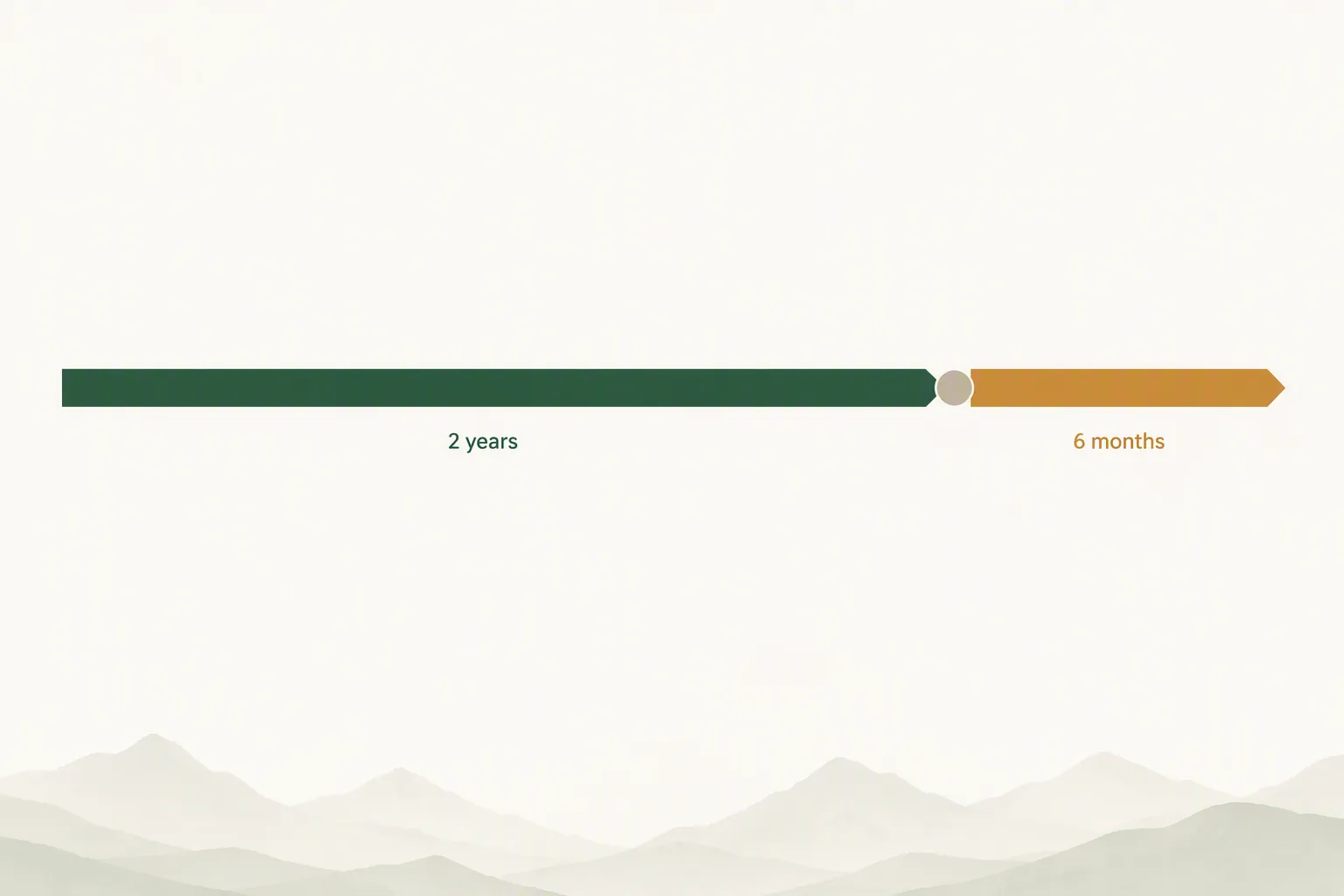
For these incidents, that makes the administrative presentation deadline the first real control point. The June 26, 2026 incident and the July 10, 2026 incident would each have its own accrual analysis, but the ordinary working assumption is that the injury date starts the two-year clock. A lawyer preserving the claim would not wait for social-media claims, viral interviews, or a complete public investigative record before calendaring the FTCA presentation deadline.
The administrative claim also matters because it forces the theory to become concrete. It should identify the claimant, state the facts, present a sum certain, and be directed to the proper agency. The issue at that stage is not whether an injured visitor deserves sympathy. It is whether the claim can be pleaded around discretionary-function immunity with enough specificity that the United States must answer something other than “protected policy judgment.”
If NPS denies the claim, the six-month window becomes the next hard date. That is the point at which the claimant must decide whether the available facts justify federal litigation against the United States despite the immunity risk. For additional discretionary-function context outside the Yellowstone setting, see What the Soldier's Secret Service Lawsuit Reveals About the FTCA.
Current risk assessment
On the current verified record, recovery from the federal government is unlikely. The FTCA is the only realistic damages path, and Chadd gives the United States a strong discretionary-function defense for NPS wildlife-management choices. The June 26 official release confirms a serious bison injury involving a child, but it does not by itself identify a violated mandatory duty. The July 10 McDaniel account is more favorable on visitor conduct if the reported distance is accurate, but compliance with the 25-yard rule does not itself create government liability.
- Strongest plaintiff fact now visible: the July 10 reported distance of about 100 yards, because it undercuts any simple claim that the visitor approached within the published minimum.
- Strongest government defense now visible: Chadd-style discretionary-function immunity for wildlife-management and visitor-safety choices.
- Fact that should not drive the analysis: an unverified social-media assertion that a lawsuit has already been filed.
- Deadline that should drive preservation: written FTCA presentation to NPS within two years, then a six-month filing window after final denial.
The claim is therefore not impossible in the abstract, but it needs a different kind of proof than public discussion usually demands. A compliant visitor, a dangerous bison, and a severe injury are not enough. The missing item is a breached, non-discretionary federal duty. Until that appears, the realistic posture is preservation rather than confidence: calendar the FTCA deadlines, investigate the mandatory-duty question, and expect immunity to be the government’s first serious answer.
References
- Yellowstone National Park visitor injured by bison — National Park Service, June 26, 2026
- Man tossed by Yellowstone bison says hitting the ground was the worst part — AP News
- Bison attack Yellowstone — CNN, July 13, 2026
- Safety — National Park Service
- Chadd v. United States — Animal Legal & Historical Center
- 28 U.S. Code § 2401 - Time for commencing action against United States — Cornell Legal Information Institute
Related records
Tool profile
How Meta's AI Spending Reshapes Law Firm ProfitabilityGoverning regulation
Browse the obligations tracker →Preventive workflow
Browse verification workflows →
Report a correction or tip
Spotted an outdated figure, a misstated fact, or a ruling this case record should reflect? Public comments are disabled for this content given the professional cost of a misreported case outcome, penalty amount, or rule text — use the structured correction channel instead.
Report a correction or tip for this record →