
ChatGPT's Author Style Ban Poses Shifting Risk for Legal AI
ChatGPT's July 2026 named-author style ban is an unannounced, moving target—the refusal boundary shifted from living authors to copyright-protected works within roughly 12 days, and trait-based prompts still bypass the block. This evaluation audits five chatbots, documents the provider divergence, and provides a re-test checklist for legal-tech buyers and firm workflows, framing the guardrail as a per-vendor risk variable rather than a fixed tool attribute.
- Tool
- ChatGPT
- Benchmark source
- No Latency
- Hallucination rate
- Not measured / undisclosed
- Test methodology
- Five-chatbot snapshot audit across seven prompt categories and 35 first responses in consumer builds.
- Test date
- Jul 15, 2026
The copyright implications of ChatGPT blocking author style mimicry are less useful as an abstract debate than as a dated reliability problem. On July 15, No Latency’s audit found ChatGPT refusing prompts to imitate living authors while allowing prompts tied to deceased authors, in a five-chatbot test covering seven prompt categories and 35 first responses in consumer builds.[1] By July 27, Ars Technica reported ChatGPT refusals for direct style requests involving Stephen King, J.K. Rowling, Amy Tan, Charles Dickens, and Ernest Hemingway, with no comment from OpenAI.[2] On July 28, Engadget reported an Agatha Christie refusal that pointed to works “still under copyright.”[3]
| Observed boundary | Last-tested date | What the material supports | Buyer-facing consequence |
|---|---|---|---|
| Living-author line | July 15, 2026 | ChatGPT refused living-author style imitation but allowed deceased-author prompts in No Latency’s consumer-build audit.[1] | A workflow approved on this basis would treat death status as a practical dividing line. |
| Broader copyright-status line | July 27–28, 2026 | Reported tests saw refusals for living and deceased authors; one reported refusal cited works still under copyright.[2][3] | The same workflow could fail less than two weeks later even if the user prompt did not change. |
| Trait-based substitute prompts | Late July 2026 | Coverage reported that prompts using broad traits, rather than named authors, still produced output.[4][5] | The guardrail appears to control a prompt surface, not remove the model’s ability to produce adjacent prose effects. |
That is the benchmark frame. The No Latency material is the cleanest audit record because it states the tested tools, prompt categories, response count, consumer-build scope, and snapshot caveat.[1] The Ars Technica item is treated here as reported testing; the full text was not independently crawlable in the research record and is therefore used with the corroboration caveat noted in the source review.[2] Engadget’s Agatha Christie example is used for the refusal wording, with the same caution that snippet-level verification is narrower than a full reproducible audit.[3] None of this proves the exact deployment date of the broader rule, and none of it should be read as a permanent model attribute.
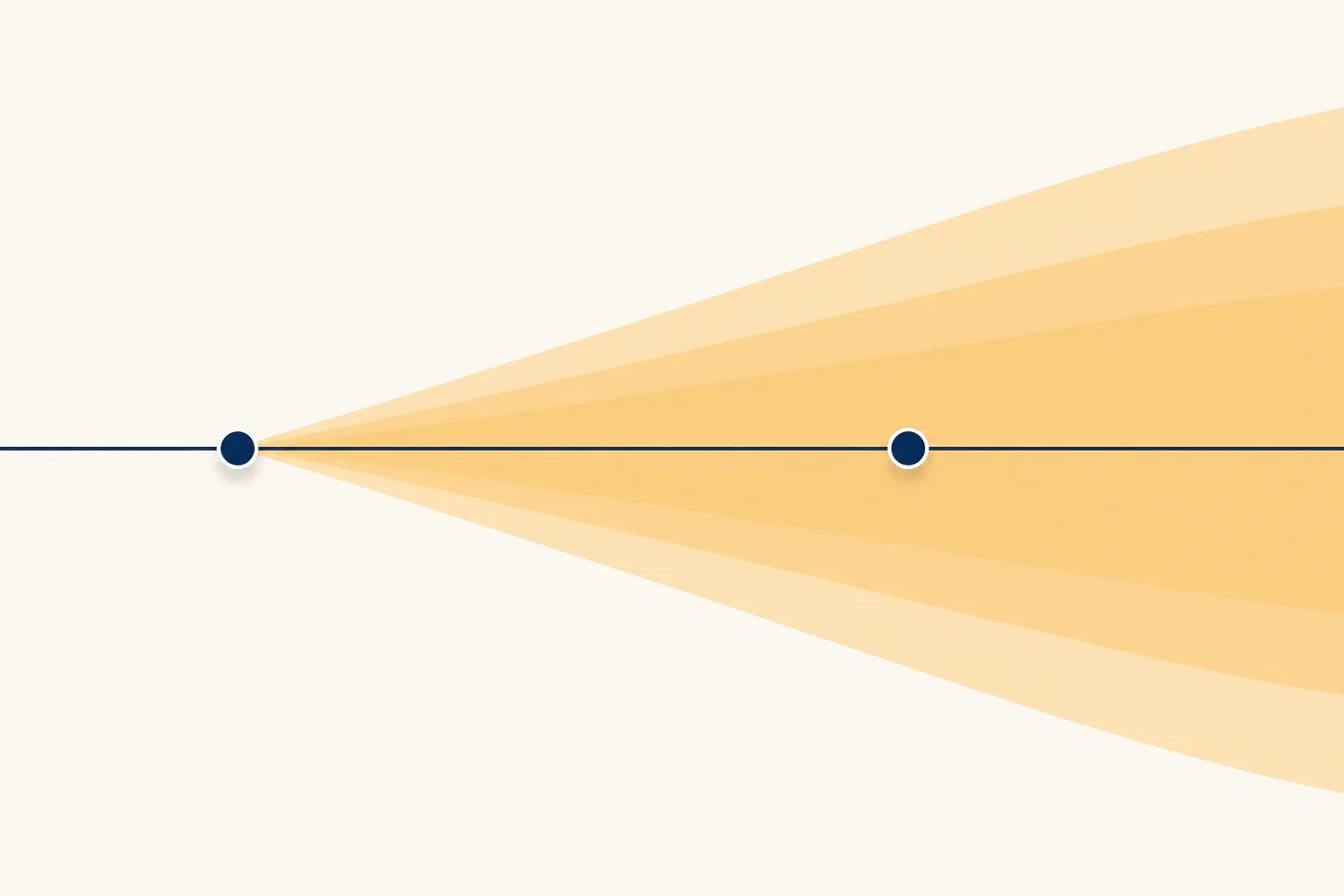
The operational issue is the 12-day shift
For a law firm or legal-tech buyer, the uncomfortable fact is not merely that ChatGPT refused a named-author prompt. It is that the refusal boundary appears to have moved within roughly 12 days, from a living-author distinction to a broader copyright-status distinction. A mid-July validation memo could reasonably have recorded one behavior; a late-July user test could encounter another.
That difference matters because legal AI workflows often freeze a tool description at procurement. A knowledge-management lawyer may write guidance saying that named living-author imitation is blocked, deceased-author imitation is not, and broad trait prompts remain available. If the provider quietly changes the refusal boundary, the guidance becomes stale without any obvious failure signal. Users see only a refusal, a redirect, or a modified completion; they do not necessarily see a versioned policy change.
The late-July reports do not establish that every account, region, model route, or product tier behaved identically. They establish a narrower and more useful point: by those test dates, ChatGPT could refuse both living and deceased named-author style requests, and at least one reported refusal used copyright status as the stated reason.[2][3] That is enough to make the guardrail a moving risk variable rather than a stable control.
The provider comparison shows this is not an industrywide technical limit
No Latency’s July 15 audit is valuable because it did not stop at ChatGPT. It tested ChatGPT, Perplexity, Claude, Copilot, and Gemini across seven prompt categories, for 35 first responses total, using consumer builds and expressly warning that the results were a snapshot.[1] That structure is closer to what a buyer needs than a single viral refusal screenshot.
| Tool | Direct named-author style prompt | How the tool handled the request | What still remained available |
|---|---|---|---|
| ChatGPT | Refused living-author imitation in the July 15 audit; later reports showed broader refusals involving living and deceased authors.[1][2][3] | Refusal plus redirection toward broader, non-named traits. | Broad-style prompts and style analysis remained available in the audit.[1] |
| Perplexity | Refused and redirected named-author style imitation in the July 15 audit.[1] | Treated the request as disallowed but offered safer alternatives. | Broad-style prompts and style analysis remained available.[1] |
| Claude | Complied with qualifications in the July 15 audit.[1] | Did not impose the same categorical refusal as ChatGPT or Perplexity. | Broad-style prompts and style analysis remained available.[1] |
| Copilot | Complied with qualifications in the July 15 audit.[1] | Added cautionary framing rather than refusing outright. | Broad-style prompts and style analysis remained available.[1] |
| Gemini | Complied outright in the July 15 audit.[1] | No comparable refusal was recorded for the tested prompt category. | Broad-style prompts and style analysis remained available.[1] |
The table is the procurement point. If five major assistants respond differently to the same kind of named-author style request, the behavior is not a universal capability boundary. It is a provider choice, a deployment choice, or both. That distinction should affect contract diligence, internal user guidance, and any claim that a product “blocks author style mimicry” as though the block were self-defining.
The bypass surface is broad traits, not magic words
The reported block is aimed at direct named-author style imitation. It does not, on the current materials, prevent a user from asking for prose with a cluster of traits associated with a genre, mood, structure, or narration pattern. RuntimeWire and MLQ News both reported that trait-based substitutes such as “small-town dread,” “clipped sentences,” or an “unreliable narrator” still worked after the named-author refusals appeared.[4][5]
That makes the control easier to misunderstand. A refusal to “write in the style of Author X” is visible. A successful prompt asking for a compressed voice, domestic unease, gothic pacing, satirical narration, or spare dialogue is less visible, even when it may be functionally adjacent for the user’s drafting purpose. In No Latency’s audit, all five tested tools allowed broad-style prompts and style analysis.[1]
For firm policy, the distinction is practical. If the internal rule says only “do not request a living author’s style,” users may route around the rule with trait lists. If the internal rule says “do not create prose intended to imitate a specific author, whether by name or by distinctive substitutes,” reviewers need examples of prohibited trait-prompting, not just screenshots of refusal messages.
The copyright rationale explains exposure management, not settled doctrine
OpenAI’s published Model Spec language, as described in the December 2025 update, contains a general instruction to respect creators’ intellectual property, but the research record does not show an explicit named-author text rule in that spec.[6] That absence is important. If the product began refusing a broader set of author-style prompts in late July 2026, the public-facing spec did not give buyers a simple, versioned rule to map against their workflows.
The copyright explanation is still easy to understand as risk management. Engadget’s reported Christie refusal invoked works still under copyright.[3] OpenAI had already drawn a more visible line on the image side with DALL-E 3’s living-artist limitation, and the text-side litigation environment includes Authors Guild v. OpenAI and a court-ordered production of 20 million logs.[4] Those facts create pressure for provider-side controls, especially controls that are simple to communicate to ordinary users.
They do not turn the refusal into a legal conclusion. In U.S. copyright terms, the relevant boundary still runs through protected expression, not a generalized style label standing alone. A chatbot message saying it cannot imitate an author because works remain under copyright is a product response, not a court holding, not a user safe harbor, and not a concession that every style-adjacent prompt would infringe.
The same caution applies in the other direction. A model’s willingness to comply does not make the output low-risk. Claude, Copilot, and Gemini behaved more permissively than ChatGPT and Perplexity in No Latency’s July 15 audit.[1] That divergence may be useful for benchmarking, but it should not be converted into a legal ranking of which outputs are safe.
What buyers should re-test before relying on the guardrail
A firm does not need to turn every drafting workflow into a copyright seminar. It does need to stop recording refusal behavior as if it were a permanent feature. The re-test should be attached to the workflow, not buried in a vendor demo note.
- Test direct named-author prompts separately for living authors and deceased authors.
- Include copyright-status edge cases, because the late-July reports suggest the boundary may have shifted toward works still under copyright.[2][3]
- Test trait-based substitutes that avoid the author’s name but aim at a recognizably similar effect.
- Test style-analysis prompts separately from style-generation prompts; the July 15 audit found style analysis remained available across all five tools.[1]
- Record model name, model version if exposed, account tier, region, date, time, and whether the environment is consumer, team, enterprise, or embedded through another product.
- Save the full prompt, first response, refusal wording, regeneration behavior, and any redirect the system offers.
- Re-run the test before live drafting use, not only during procurement or pilot approval.
This is especially important when a tool is being compared across product families. A consumer ChatGPT result may not predict an enterprise deployment, and a Copilot result inside one configuration may not predict another. For related adoption controls, the same verification habit belongs in snapshot benchmark protocols and in any review that distinguishes consumer ChatGPT exposure from enterprise-tier controls.
The safest internal wording is modest: as last tested on a stated date, in a stated account and model environment, the tool refused or allowed specified author-style prompts. Anything broader invites the next silent rollout to make the memo wrong.
The risk variable to record
ChatGPT’s late-July author-style refusals are useful evidence of provider caution around copyrighted authors’ works. They are not proof that named-author style risk has been resolved, and they are not proof that the same control will appear tomorrow in the same place. The practical control is the audit trail: what was prompted, what refused, what complied, what redirected, and when the test was rerun before the output entered a live drafting workflow.
References
- Living-Author Style: Five AI Chatbots Compared — No Latency, July 15, 2026
- ChatGPT starts blocking direct requests to copy an author's style — Ars Technica, July 27, 2026
- ChatGPT is now refusing requests to write in famous authors' styles — Engadget, July 28, 2026
- ChatGPT Blocks Author Style Imitation, OpenAI Copyright Line — RuntimeWire
- ChatGPT Now Refuses Named-Author Style Prompts but Still Writes to Broad Traits — MLQ News
- Sharing the latest Model Spec — OpenAI, December 2025
Chronological incident history
- Marius Borg Høiby received a four-year prison sentence
- Where does the NYT v. OpenAI lawsuit stand now?
- Halusinasi AI pada fakta zodiak Cina — peguam wajib semak
- Who answers for NYT's AI-generated search summaries?
- Who are the Billings shooting victims? Alan Smith isn't one
- Wisconsin absentee ballot replacement rules just changed
- What the '1933 double' Reveals About ChatGPT Benchmarks
- FBI agent Patrick Yaroch charged with stealing Bitcoin
- What charges does the FBI agent face for crypto theft?
- FBI agent cryptocurrency theft case, explained
Report a correction or tip
Spotted an outdated figure, a misstated fact, or a ruling this tool profile should reflect? Public comments are disabled for this content given the professional cost of a misreported case outcome, penalty amount, or rule text — use the structured correction channel instead.
Report a correction or tip for this record →