
FBI agent cryptocurrency theft case, explained
A primary-source-linked briefing on the federal case against FBI agent Patrick Yaroch, charged with using internal FBI access to steal roughly $1 million in cryptocurrency from monitored adversary wallets. It separates court-confirmed facts — charges, amounts, recovery, and procedural status as of Aug 4, 2026 — from media-attributed claims such as the unnamed Russia identification.
- Jurisdiction
- US - E.D. Va.
- Court
- U.S. District Court for the Eastern District of Virginia
- Judge
- Magistrate Judge Lindsey R. Vaala
- AI tool named
- ChatGPT
- Ruling date
- Aug 3, 2026
- Source document
- View primary court order ↗
- Last verified
- Aug 4, 2026
Lex Machina Review is an independent risk-tracking and reference resource. Nothing on this site is legal advice, and using it does not create an attorney-client relationship. Every record is reviewed against primary sources but may not reflect the most current status of a matter — always verify directly against the cited court order, rule text, or a licensed attorney before relying on it.
Companion explanation — secondary to the source document above
Verified posture as of Aug. 4, 2026
Last checked Aug. 4, 2026: Patrick Yaroch, described in the charging papers as an FBI special agent, is charged in the Eastern District of Virginia by criminal complaint with interstate transportation of stolen goods, securities, and monies, and receipt of stolen goods, securities, and monies. The case is at the allegation stage. The public record available here does not show an indictment, plea, or conviction. [1]
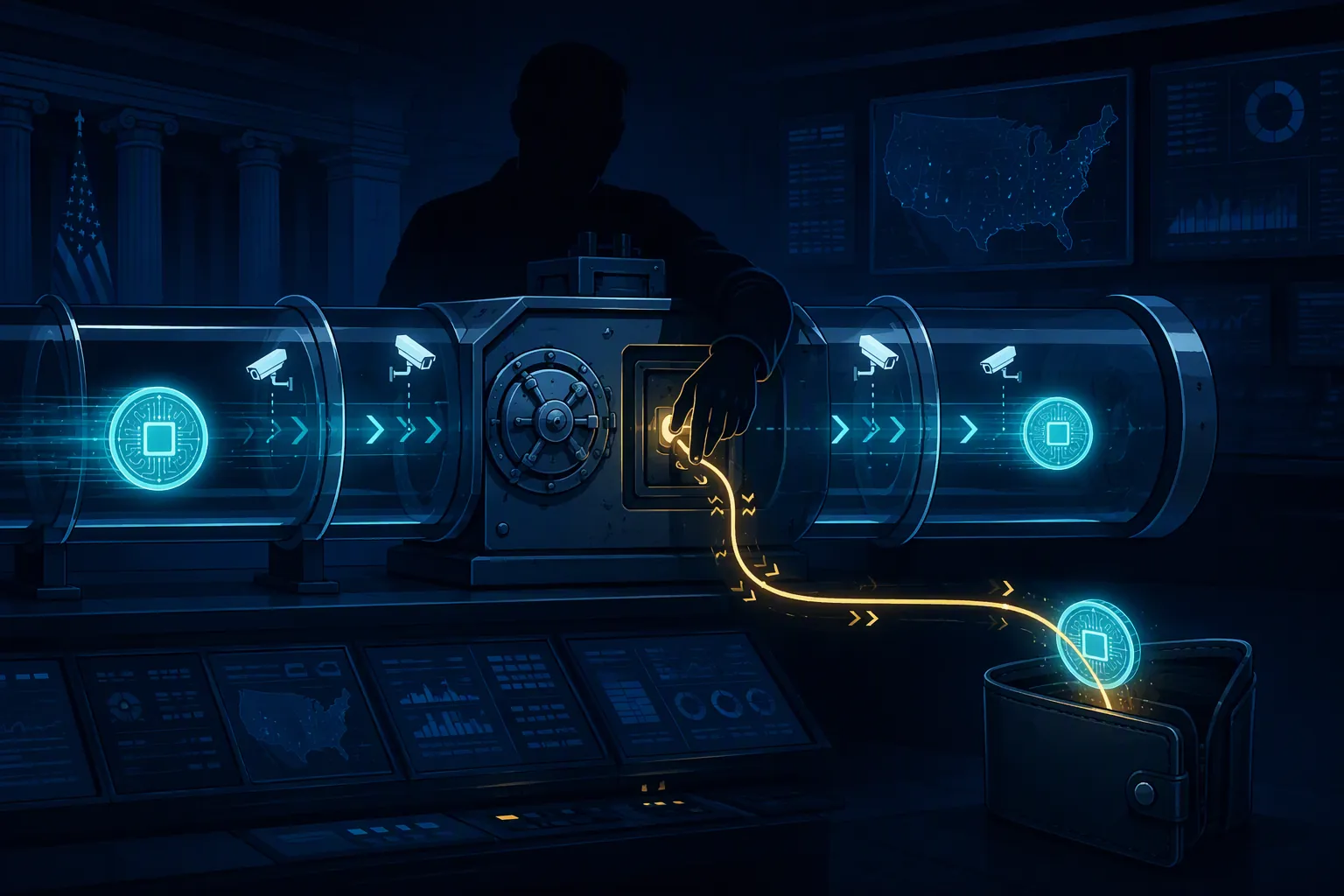
The core allegation is not that Yaroch defeated an outside exchange or performed a cinematic hack. The FBI affidavit says he used internal FBI access to seed phrases or passphrases for monitored adversary wallets, then moved cryptocurrency through personal and decentralized-finance accounts over a series of transfers beginning in late 2024 or early 2025. [2] NBC News, citing two unnamed sources, reported that the adversary nation was Russia; the public court record reviewed for this briefing does not identify the nation or the individual target. [3]
| Point | What the public record supports | What should not be overstated |
|---|---|---|
| Charging posture | Criminal complaint in E.D. Va.; two stolen-property counts. [1] | Not an indictment, conviction, plea, or sentencing record. |
| Alleged asset movement | Internal FBI access to recovery material; 10–12 transfers; personal Kraken wallet; Suilend through Slush; later recovery of $925,426.07. [2] | Not yet adjudicated as proven theft. |
| Adversary attribution | Court papers use an unnamed adversary-wallet frame. [2] | Russia is a media-attributed identification, not a public-docket identification. [3] |
| AI and travel evidence | The affidavit cites ChatGPT queries, travel arrangements, and Portugal-related legal steps. [2] | No public ruling establishes admissibility, authentication, or motive. |
| Custody status | Temporary detention was ordered Aug. 3 by Magistrate Judge Lindsey R. Vaala, with a further hearing set for Aug. 4. [4] | Detention is procedural; it is not a finding of guilt. |
The alleged failure is a chain-of-custody failure
The affidavit’s most important detail is access. The government says the wallets were being monitored because they were associated with a foreign adversary, and that FBI systems contained the seed phrases or passphrases needed to move the assets. Yaroch allegedly had access to those materials through his work. That narrows the case considerably: the alleged control failure begins inside the investigative environment, before the assets ever reach Kraken, Suilend, Slush, or any later recovery wallet. [2]
The alleged transfers were not described as a single sweep. The affidavit says there were approximately 10 to 12 transfers beginning in late 2024 or early 2025. From there, the government traces funds into a personal Kraken wallet tied to Yaroch and a TD Bank account, and then to Suilend through the Slush app. It also identifies $165,582.49 as stranded in U.S. dollars. [2]
For readers who do not live in crypto custody terminology, only one distinction matters here. A seed phrase or recovery phrase is not a password in the ordinary customer-service sense. Possession of the recovery material can amount to practical control over the wallet. If the government’s account is right, the relevant security question is not how an outsider broke in; it is how an insider could reach recovery material for monitored assets and move value before the control environment surfaced the problem.
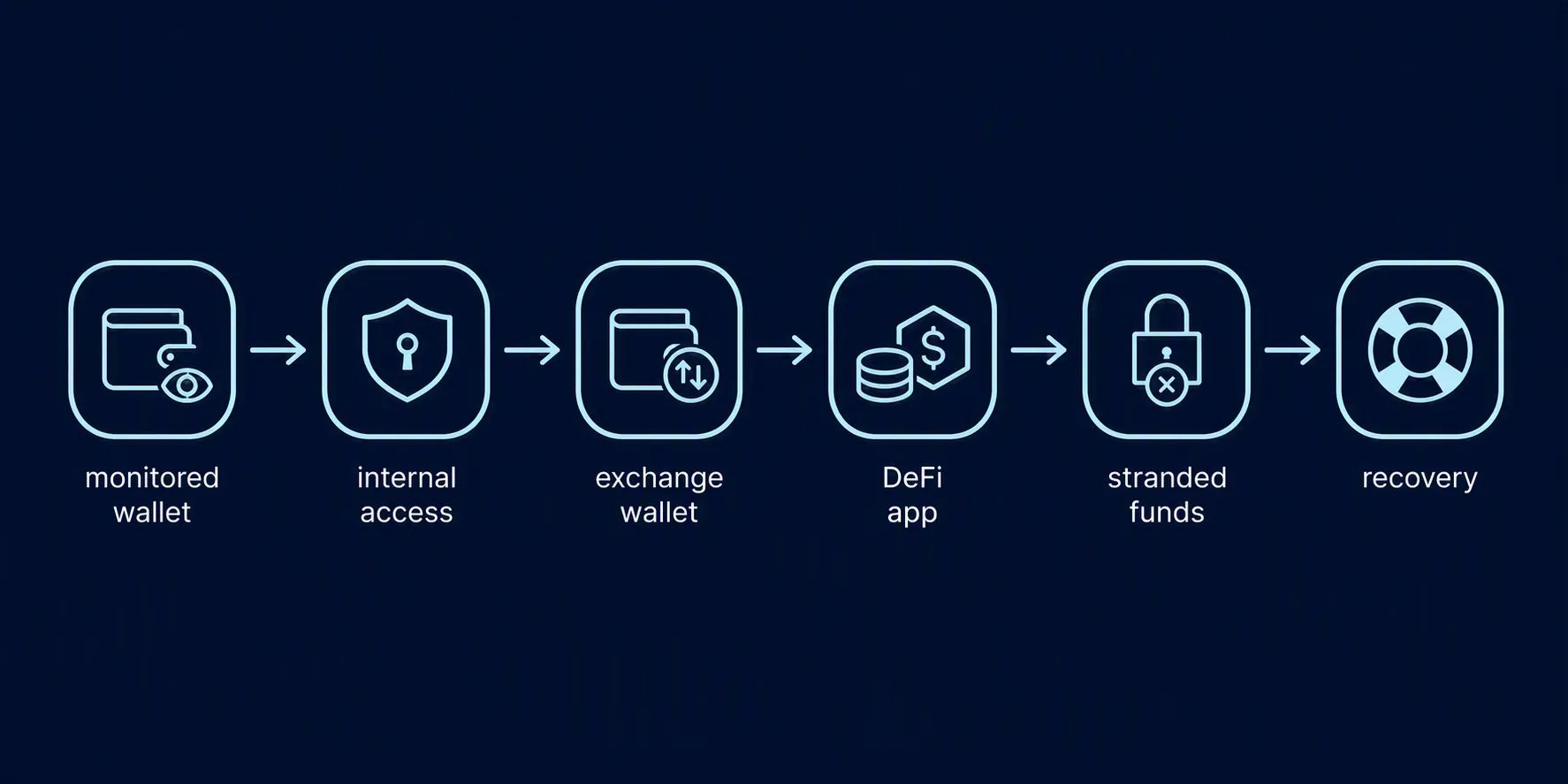
| Stage | Government’s allegation | Why it matters |
|---|---|---|
| Monitored wallets | The assets were associated with an unnamed foreign adversary and were being monitored. [2] | The public record starts with government custody or monitoring, not with a private victim wallet. |
| Internal access | Yaroch allegedly obtained seed phrases or passphrases through FBI access. [2] | That is the alleged point where control moved. |
| Personal exchange account | Funds allegedly passed through a Kraken wallet tied to Yaroch and a TD Bank account. [2] | This gives the affidavit a traceable personal-account theory. |
| DeFi movement | The affidavit says about $1.02 million was moved to Suilend through Slush. [2] | The crypto labels matter only because they show where control allegedly went next. |
| Stranded cash | $165,582.49 was described as stranded in U.S. dollars. [2] | Not every dollar was in the same posture when recovery began. |
| Recovery | $925,426.07 was recovered on July 31, 2026. [2] | The recovery figure is the precise public-record number, not a rounded headline amount. |
The self-report and recovery timeline
The affidavit’s chronology turns on Yaroch himself. On July 28, 2026, he contacted a Department of Justice employee over Signal. On July 29, he met at FBI headquarters. During that meeting sequence, he briefly consented to surrender recovery phrases, then withdrew that consent about 30 minutes later. [2]
That sequence is more revealing than the round-number headline near $1 million. If the public affidavit is complete on this point, the transfers came to light because the person alleged to have moved the funds surfaced the issue, not because a monitoring system promptly blocked or flagged the withdrawals. The later recovery does not erase that gap; it just shows that investigators eventually regained control over a large portion of the assets.
On July 31, the government says $925,426.07 was seized, including approximately $188,570.58 in Kraken. The same date also appears in the record as the point at which Yaroch was fired and arrested at his home in Ashburn, Virginia. [2]
The custody problem is therefore concrete. Someone has to decide who may view recovery material, who logs that access, who reviews movement from monitored wallets, who receives the alert, and who has authority to recover funds when consent is given and then withdrawn. Those are operational questions, not crypto mysticism.
The ChatGPT and travel evidence should be read as affidavit material, not as proof of motive
The affidavit cites ChatGPT queries from May and June 2026 concerning European Union residency, a Turkish visa, an email about a job in Greece, and a tool recommendation pointing toward Portugal. It also cites travel-related material, including Sept. 3–11 round-trip flights, a mid-June power-of-attorney arrangement with Portuguese lawyers, and undisclosed travel to Germany, Portugal, and Grenada. [2]
Those facts may matter to detention, flight-risk arguments, or later evidentiary disputes. They do not yet prove why the alleged transfers occurred. No public ruling in the materials reviewed here authenticates the ChatGPT conversations for trial, decides admissibility, or converts travel research into an adjudicated state of mind.
There is also a smaller but familiar verification trap. If an AI exchange contains a biographical premise, the premise is not automatically a verified biography. It may show what a user typed, what a tool inferred, or what an investigator later recovered. That is a different proposition from a court finding. The same distinction appears in other fast-moving legal stories where AI material sits inside a larger evidentiary record; the safer habit is to separate what the filing says from what commentators make it stand for. See, for example, this site’s earlier treatment of AI research tools in a criminal-charge explainer and its checklist on AI-generated summaries of legal proceedings.
Same-day coverage introduced avoidable record errors
Start with posture: this is a criminal complaint. A complaint can support arrest and initial proceedings, but it is not a grand-jury indictment. Coverage that labeled the matter an indictment overstated the posture of the public docket. [5]
Name spelling is another basic record check. The charging document uses Yaroch. At least one same-day crypto-policy report used Yarmoch. [1][6] That spelling difference does not change the legal substance, but it is the kind of small error that can fracture search results, docket checks, and later citation trails.
Attribution needs the same discipline. NBC’s Russia identification is reportable because NBC attributed it to two unnamed sources, but it should not be merged into the complaint or affidavit. [3] The public record says foreign adversary wallets and leaves the nation and individual target unnamed. If later filings unseal more, the record can change. Until then, Russia is a reported identification, not a court-confirmed one.
Amount language also needs care. “Nearly $1 million,” “about $1 million,” and “more than $900,000” may be defensible headline approximations, but they are not substitutes for the affidavit’s exact recovery figure of $925,426.07, the approximate $1.02 million movement to Suilend through Slush, or the $165,582.49 described as stranded in U.S. dollars. [2][3][6]
These are not stylistic quibbles. They are the difference between a docket-status record and a viral case summary. The same method is useful in other live matters: separate court-confirmed facts from reported allegations, then leave room for later filings to alter the picture. That approach is laid out in this site’s guide to checking allegations against docket records and its running model for case-status verification.
Procedural status and watch points
As of Aug. 4, 2026, the public record shows an initial criminal complaint and a temporary detention order. Magistrate Judge Lindsey R. Vaala ordered Yaroch temporarily detained on Aug. 3, with a further hearing set for Aug. 4. The detention order is procedural; it does not decide the criminal charges. [4]
The public-defender assignment and detention posture put the case in its earliest contested phase. The next meaningful record changes would be a grand-jury indictment or other charging development, a detention ruling that changes custody status, public unsealing of the adversary-wallet details, or filings that clarify how the FBI controlled and audited recovery material for the monitored wallets.
- Whether an indictment is returned, and whether it tracks or changes the complaint’s two stolen-property counts.
- Whether detention changes after the Aug. 4 hearing or later bond proceedings.
- Whether sealed or omitted details identify the adversary nation, the individual target, or the wallet-monitoring process.
- Whether the government later revises the amount, recovery mechanics, or asset path.
- Whether the ChatGPT and travel evidence remains detention color or becomes part of a more formal motive or flight-risk theory.
References
- United States v. Yaroch — Criminal Complaint (RECAP PDF, E.D. Va., gov.uscourts.vaed.602203) — CourtListener
- FBI Affidavit in Support of Criminal Complaint — CourtListener
- Feds charge ‘frustrated’ FBI agent they say stole nearly $1 million in crypto from Russia — NBC News
- Temporary Detention Order by Magistrate Judge Lindsey R. Vaala — CourtListener
- Former FBI agent indicted for stealing crypto from FBI — Protos
- U.S. FBI Intelligence Agent Arrested in Connection With Theft of $1 Million in Crypto — CoinDesk
Related records
Tool profile
How to Read Legal AI Benchmarks Ahead of the OpenAI IPOGoverning regulation
Browse the obligations tracker →Preventive workflow
Browse verification workflows →
Report a correction or tip
Spotted an outdated figure, a misstated fact, or a ruling this case record should reflect? Public comments are disabled for this content given the professional cost of a misreported case outcome, penalty amount, or rule text — use the structured correction channel instead.
Report a correction or tip for this record →