
What Claude's Outage Record Means for Legal Work
Claude's commercial tier recorded roughly one documented outage per 1.3 days during 2026, with 90-day uptime near 99.3–99.4% and no standard published SLA — short of the 99.9% reliability norm legal teams expect from production infrastructure. This source-verified evaluation profiles the outage record, explains why legal work inherits the availability risk, and lists the SLA and fallback checks that reduce deadline exposure.
- Tool
- Claude
- Benchmark source
- StatusGator; TechTimes
- Hallucination rate
- Not measured / undisclosed
- Test methodology
- Aggregation of public outage records and reported 90-day uptime figures from StatusGator and TechTimes as of 2026-08-26; not a controlled legal-task benchmark.
- Test date
- Aug 26, 2026

Claude’s outage record matters to legal work not because a chatbot was briefly annoying to use, but because legal teams are beginning to route drafting, source-checking, matter context, and document retrieval through the same AI layer. When that layer stops responding, the filing clock keeps running.
As of Aug. 26, 2026, Claude’s commercial reliability record is not where deadline-critical legal infrastructure should be without a fallback plan. StatusGator lists 185 documented Claude outages since January 2026, while TechTimes reported Claude’s 164th outage on Aug. 5 and separately reported 28 commercial disruptions in the 30 days before Aug. 24. Those are not one combined count; they are dated, source-specific views of the same practical pattern: repeated commercial-service interruption during a period when legal users were being encouraged to treat Claude as workflow infrastructure.
| Source | Cutoff or publication date | Affected surface | Reported reliability signal | How to read it |
|---|---|---|---|---|
| StatusGator | Checked Aug. 26, 2026 | Claude service history | 185 documented outages since January 2026 [1] | Useful as an independent outage-history count; not interchangeable with Anthropic’s own status accounting. |
| TechTimes | Aug. 5, 2026 | Commercial Claude surfaces including claude.ai, API, and Claude Code | 164th outage reference; 90-day uptime reported at 99.36% for claude.ai, 99.42% for API, and 99.34% for Claude Code [2] | Puts commercial uptime around the 99.3%–99.4% range, below the 99.9% enterprise norm discussed in the same report. |
| TechTimes | Aug. 24, 2026 | Commercial Claude compared with Claude for Government | 28 commercial disruptions in 30 days; government tier reported at 100% uptime over 90 days [3] | Important evidence of tier separation, not evidence that ordinary commercial legal users receive government-tier isolation. |
| Anthropic status page | Current operational record | Official incident reporting surface | Primary vendor status record [4] | The page is necessary for live triage, but it is not a substitute for a negotiated SLA. |
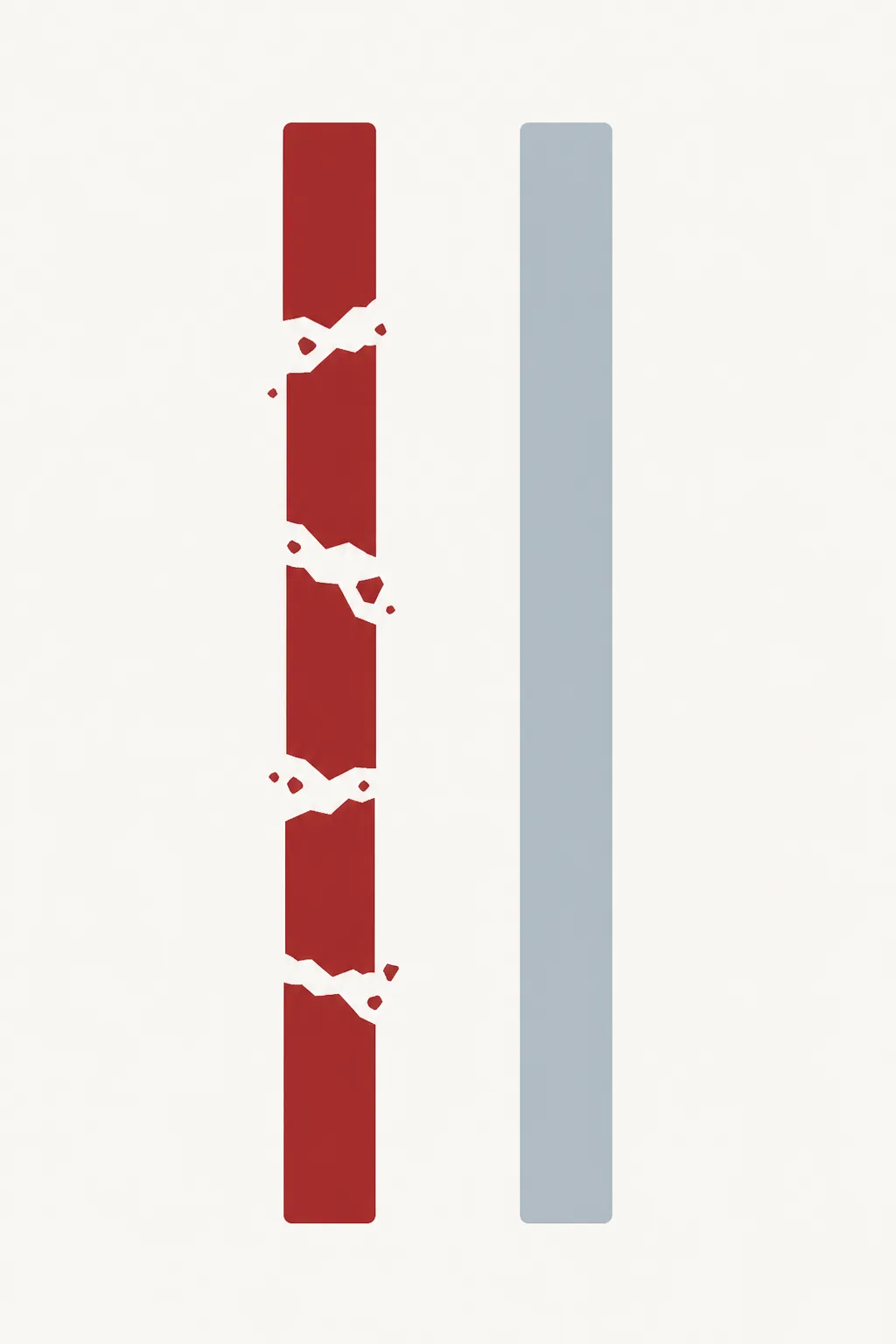
The 90-day uptime figures matter because 99.3% does not feel like a small difference when translated into legal operations. In a 90-day quarter, 99.9% uptime allows roughly 2.2 hours of downtime. Uptime between 99.34% and 99.42% implies roughly 12.5 to 14.3 hours of downtime over the same period, depending on the service surface. That is enough to collide with filing windows, deal-signing sequences, deposition-preparation blocks, or litigation-support batch work.
Why legal work is more exposed than ordinary AI use
A generic business user can often wait out a chatbot outage. A lawyer may not have that option. The exposure changes once Claude is embedded into a workflow where one tool drafts, retrieves matter context, checks legal sources, and helps prepare work product that someone else must review before a deadline.
Fortune reported on May 12, 2026, that legal was the top power-user job function inside Claude Cowork, and that firms including Freshfields, Quinn Emanuel, Holland & Knight, and Crosby Legal were using Claude on live matters. The same report described legal grounding through connectors to Westlaw, CourtListener, and iManage as part of the hallucination-control strategy [5].
That connector model is the central legal reliability issue. If Claude is merely a drafting assistant, downtime removes a convenience. If Claude is the interface through which the team reaches research, public case-law material, and matter files, downtime can also remove the verification path that was supposed to make the drafting assistant safer.
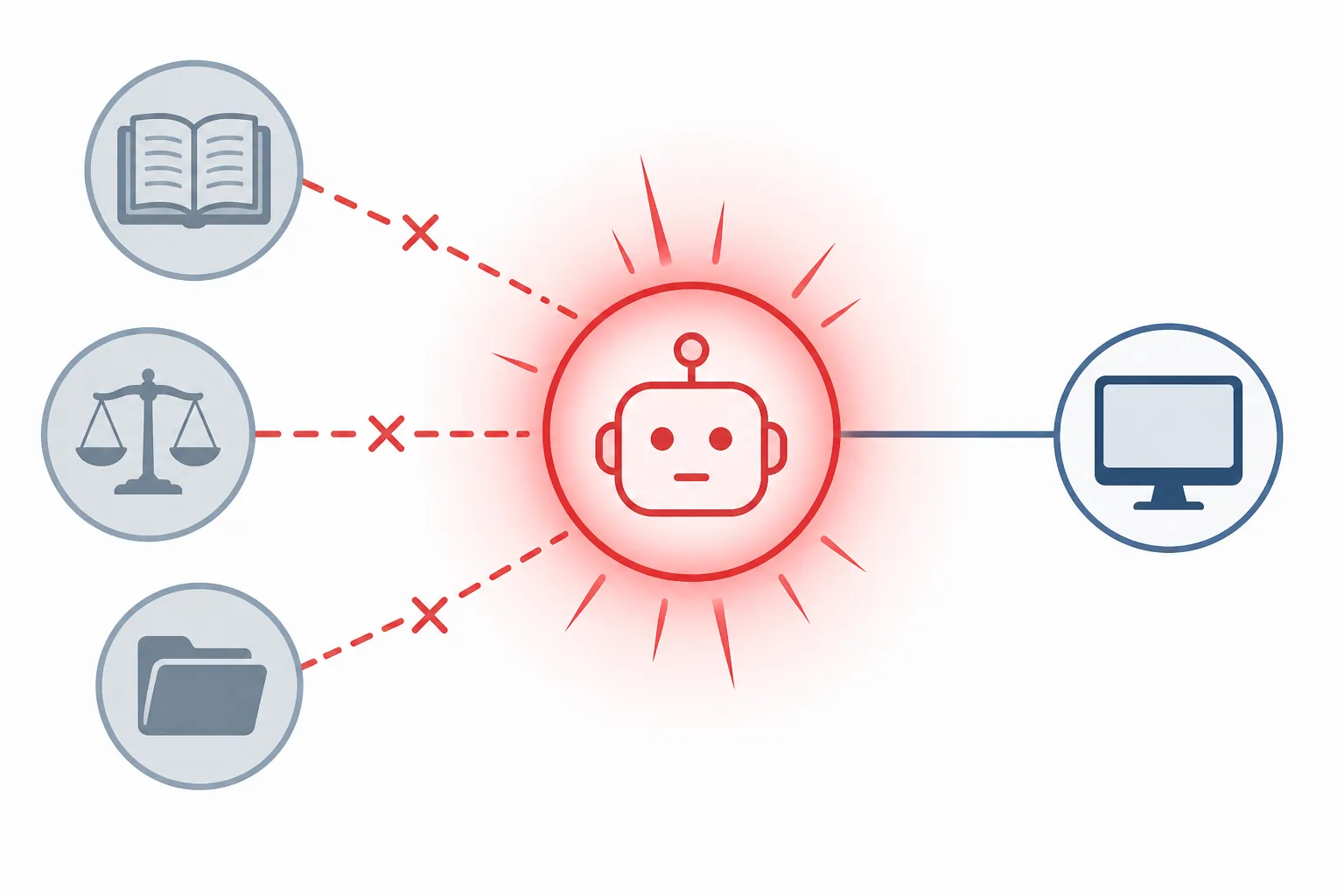
This is the step from adoption to dependency. A firm can pilot Claude, praise the demo, and still keep lawyers in Westlaw, its document-management system, and its citation-checking workflow. The risk profile changes when the Claude workflow becomes the first route to those systems, the place where associates expect the legal answer to be grounded, or the channel through which matter context is assembled.
For ethics exposure, court-facing duties, and sanction-risk context, the companion record Claude 529 Outages Create an Ethics Exposure for Law Firms is the better place to go. This reliability profile is narrower: availability, shared failure surfaces, and whether legal teams can keep working when Claude and its verification layer are unavailable at the same time.
The outage pattern is about shared surfaces, not just incident count
The exact outage count depends on the source and cutoff date. That caveat should not be used to soften the operational signal. For legal teams, the more useful question is which surfaces failed together and what work would have stopped if the firm had built around those surfaces.
| Incident window | Reported affected surface | Legal-ops significance | Source |
|---|---|---|---|
| Mar. 2, 2026 | Claude service interruption recorded in outage/status histories | An early 2026 data point in a pattern that later became material for procurement review. | StatusGator and Anthropic status records [1][4] |
| Jun. 2, 2026 | Claude outage discussed as AI infrastructure dependency | A useful marker for treating frontier AI tools as infrastructure rather than experimental add-ons. | Thoughtworks [6] |
| Jul. 29–30, 2026 | Commercial Claude network failures; Claude for Government reported unaffected on isolated infrastructure | Shows that infrastructure separation can matter, but does not prove ordinary legal commercial users receive the same protection. | explainx [7] |
| Aug. 5, 2026 | Commercial Claude outage; TechTimes described it as the 164th outage | Reinforces the gap between commercial uptime and the enterprise reliability norm legal buyers tend to assume. | TechTimes [2] |
| Aug. 12–19, 2026 | Multiple incidents reported across the period, including an Aug. 14 status-page certificate failure | The status-reporting layer itself can become part of the incident-management problem if teams rely on it as the sole source of truth. | Deployflow [8] |
| Aug. 16, 2026 | Authentication failure affecting claude.ai, API, Claude Code, and Cowork simultaneously | The clearest shared-failure example for legal teams using several Claude surfaces in one workflow. | BleepingComputer [9] |
| Aug. 24, 2026 | 28 commercial disruptions in 30 days; government tier reported at 100% uptime over 90 days | Supports a tier-separation procurement question: which infrastructure is the legal team actually buying? | TechTimes [3] |
The Aug. 16 incident deserves more attention than a routine outage bullet. BleepingComputer reported an authentication failure affecting claude.ai, API, Claude Code, and Cowork at the same time [9]. For a legal team, that is the wrong kind of elegance: the same identity or access failure can interrupt the chat interface, the API integration, developer workflows, and the collaborative work surface together.
That matters because many legal deployments are intentionally layered. A litigation-support lead may have Claude in a browser for review support, an API-backed internal tool for document triage, Claude Code assisting with scripts, and Cowork organizing team activity. If authentication fails across those surfaces, the fallback is not “open another Claude window.” The fallback has to be outside the shared failure domain.
The July 29–30 and Aug. 24 reports point in a different direction. They suggest that Claude for Government may have been insulated from commercial outages by separate infrastructure, with the Aug. 24 TechTimes report describing 100% government-tier uptime over 90 days while commercial Claude recorded repeated disruption [3][7]. That is procurement-relevant, but it should not be overread. A law firm using standard commercial Claude, Claude Team, Claude Enterprise, or Claude for Legal should not assume government-tier isolation unless the contract and architecture say so.
The SLA question is smaller than the workflow question, but it cannot be skipped
A status page tells a team whether the vendor says the service is impaired. It does not tell the team whether the vendor has promised legal-grade availability, which services are covered, how downtime is counted, or what remedy exists if the tool is unavailable during a filing sprint.
TechTimes’s Aug. 5 analysis, citing Patrick Moorhead’s Forbes discussion, described a tier gap: best-effort API service on standard access, a reported 99.5% Priority target, and negotiated enterprise arrangements said to reach 99.99%, with service-credit remedies typically capped at 5% to 10% of monthly fees [2]. Because that SLA discussion traces through TechTimes to a Forbes/Moorhead source not independently reviewed here, legal procurement teams should verify the original agreement language before treating those targets as binding.
Even a real service credit is not a missed-deadline remedy. A few percentage points of monthly fees will not reconstruct a broken filing workflow, restore review time, or explain to a partner why the source-checking process stopped at the same time as the drafting assistant. SLA review belongs in the procurement file, but the operational answer has to be a recoverable workflow.
The reported $71 billion compute-deal context in the Aug. 5 TechTimes piece is useful mainly as a warning against a procurement shortcut [2]. Large compute commitments can support growth, but they do not by themselves prove production reliability for legal work. Buyers still need incident history, service definitions, uptime commitments, dependency maps, and fallback procedures. For the broader procurement lens, see What Anthropic’s investment surge means for legal AI buyers.
What should not depend on Claude alone
Claude can still be useful in legal work. The reliability record does not support a blanket rejection. It supports a more specific risk rating: Claude should not be treated as sole-path infrastructure for deadline-critical drafting, citation checking, source verification, or matter-management workflows unless the legal team has a tested fallback outside Claude’s shared failure surfaces.
The riskiest configuration is not “a lawyer asks Claude for help.” It is a workflow where the lawyer asks Claude for help, Claude reaches the research connector, Claude reaches the matter repository, Claude drafts from that context, and the team’s review plan assumes the same environment will remain available through filing. If that environment fails, the team may lose both the generated draft and the verification route at once.
Accuracy benchmarks are relevant, but they do not cure availability risk. A model can perform well in a benchmark and still be unavailable when a brief is due. The two records should be read together: Legal AI Accuracy Benchmarks: A Guide to Interpreting the Numbers explains how to read performance claims, while this record asks whether the tool and its grounding path will be available when the workflow needs them.
Vendor continuity and infrastructure constraints also belong in the same procurement file. The related records on AI-market stress for legal tech buyers and supply-chain strain limiting legal AI tool performance are not outage records, but they help frame why “the vendor is well funded” is not the same as “this workflow is recoverable tonight.”
Risk-tier judgment for legal teams
Risk tier: elevated for deadline-critical legal work; manageable for assisted work with independent verification and a tested fallback. Claude’s 2026 commercial outage record, the 99.3%–99.4% reported 90-day uptime range, the lack of a published enterprise SLA on standard access, and the connector-based legal grounding model make sole-path reliance difficult to defend in legal operations.
Before a legal team relies on Claude for a production workflow, the procurement and matter team should verify:
- Whether the team has a published SLA, a negotiated SLA, or only best-effort service.
- Which services the SLA actually covers: claude.ai, API, Claude Code, Cowork, connectors, authentication, and status reporting should not be assumed to share the same protection.
- How downtime is measured, who declares it, and whether partial degradation counts.
- Whether service credits are capped, and whether the cap is commercially meaningful compared with the consequence of workflow failure.
- Whether Westlaw, CourtListener, iManage, and any other grounding connectors remain available through a Claude outage, or whether lawyers must go directly to those systems.
- Which fallback research, citation-checking, drafting, and document-retrieval tools remain outside Claude’s shared failure domain.
- What internal deadline buffer applies when Claude is used in a filing, closing, investigation, or regulatory-response workflow.
- Who owns manual recovery when the AI workflow fails: associate, supervising lawyer, knowledge team, litigation support, IT, vendor manager, or practice-group lead.
References
- Claude Outage History, StatusGator
- Claude Goes Down Again: $71B Compute Deal Cannot Prevent Anthropic's 164th Outage, TechTimes, Aug. 5, 2026
- Commercial Claude Has Gone Down 28 Times in 30 Days; Its Government Tier Has Never Gone Down Once, TechTimes, Aug. 24, 2026
- Claude Status, Anthropic
- Anthropic Legal Plug-In Release Claude Cowork Big Law, Fortune, May 12, 2026
- Claude Outage June 2026, Thoughtworks, June 2026
- Claude Outage: Network Failures and Recovery July 2026, explainx
- Claude Anthropic Outage: Protect Claude Infrastructure, Deployflow
- Anthropic confirms Claude is down in major outage affecting multiple services, BleepingComputer, Aug. 16, 2026
Report a correction or tip
Spotted an outdated figure, a misstated fact, or a ruling this tool profile should reflect? Public comments are disabled for this content given the professional cost of a misreported case outcome, penalty amount, or rule text — use the structured correction channel instead.
Report a correction or tip for this record →