
What Gemini 3.7 Flash API Costs Legal AI Buyers
Cheap per-token prices make Gemini 3.7 Flash look attractive for legal AI, but the $0.75-per-1M input rate is only the first line of a larger cost picture: document token rates, search-grounding overages, and a verification layer that mid-pack legal benchmarks make necessary. Legal-tech buyers should model cost-per-verified-answer across the 2026 intro window and the January 2027 rate cliff.
- Tool
- Gemini 3.7 Flash API
- Benchmark source
- Vals AI Legal Research Bench; Stanford RegLab/Stanford HAI; DeepMind model card
- Hallucination rate
- Not measured / undisclosed
- Test methodology
- Vals AI strict all-pass on 413 expert-authored legal questions; Stanford RAG benchmark eval; DeepMind Harvey LAB-AA; results are benchmark-specific.
- Test date
- Aug 13, 2026
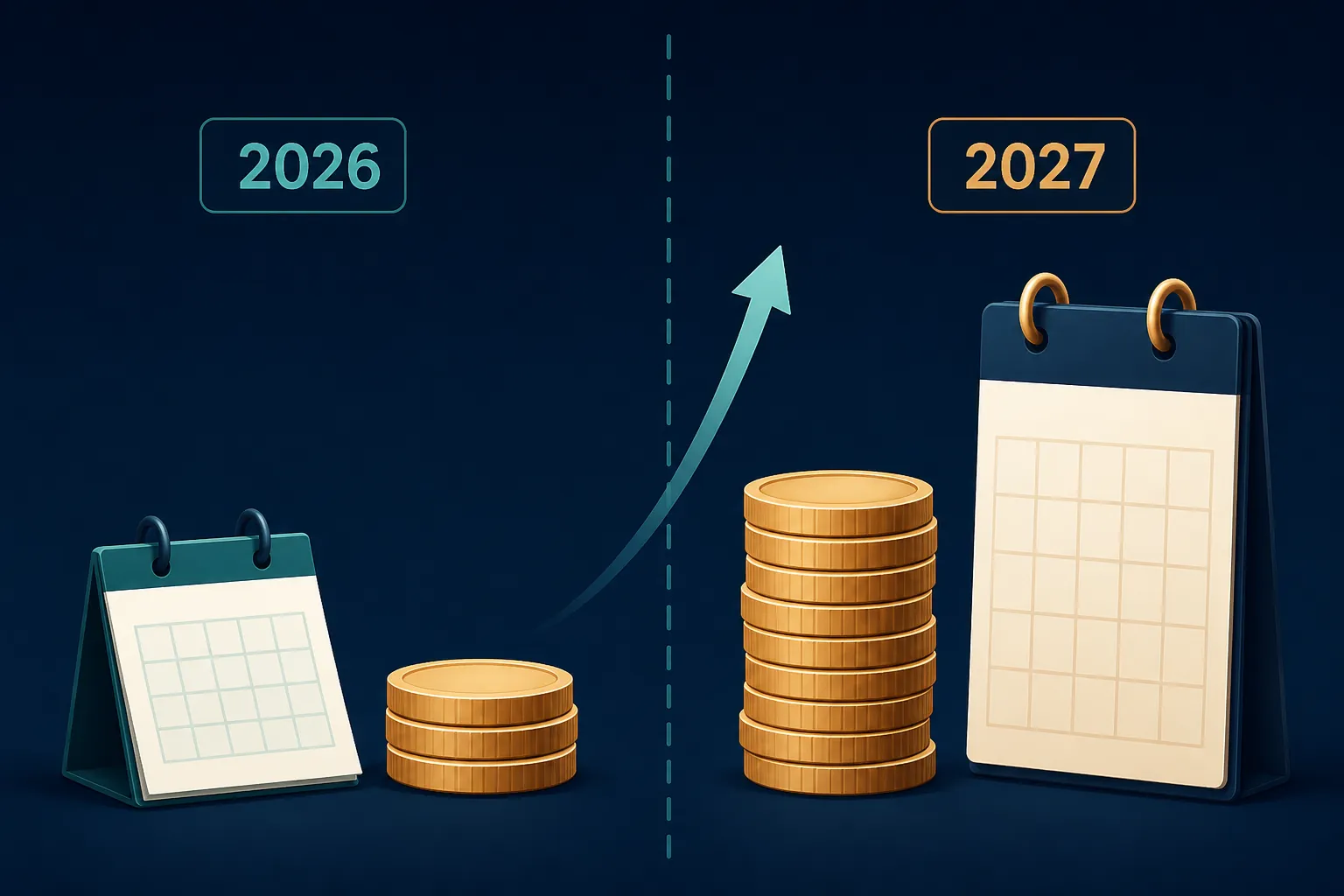
Gemini 3.7 Flash API pricing for legal AI tools starts with a genuinely attractive rate card: on Google’s paid tier, the model is listed at $0.75 per 1 million input tokens and $3.75 per 1 million output tokens through December 31, 2026. Beginning January 1, 2027, those standard rates double to $1.50 per 1 million input tokens and $7.50 per 1 million output tokens. Google also states that output pricing includes thinking tokens, which matters whenever a legal workflow depends on longer reasoning traces rather than short completions. [1]
That headline input price is the part most likely to survive a vendor slide. It is also the part least likely to explain the production invoice. A legal answer normally has to pass through document handling, retrieval or grounding, citation review, and sometimes a second lawyer or research attorney before anyone is comfortable relying on it.

The official rate card belongs at the top of the spend model
For procurement purposes, the baseline should be the official Google API price, with the effective date recorded in the memo. Reseller and router prices may be commercially relevant, but they should not replace the official rate-card baseline unless the contract, support model, data terms, and uptime expectations are also being procured through that channel.
| Gemini 3.7 Flash API line | Rate through December 31, 2026 | January 1, 2027 issue | Why legal buyers should care |
|---|---|---|---|
| Standard paid tier | $0.75 / 1M input tokens; $3.75 / 1M output tokens. Output price includes thinking tokens. [1] | $1.50 / 1M input tokens; $7.50 / 1M output tokens. [1] | Use this as the default baseline for pilots, renewals, and vendor comparisons. |
| Batch / Flex | $0.375 / 1M input tokens; $1.875 / 1M output tokens. [1] | Re-check the official 2027 line before treating pilot economics as renewal economics. | Useful only where the workflow can tolerate the associated service pattern; not every legal task can wait. |
| Priority | $1.35 / 1M input tokens; $6.75 / 1M output tokens. [1] | Re-check the official 2027 line before renewal or production expansion. | Relevant if the product promise depends on responsiveness for lawyers, clients, or support teams. |
| Context caching | $0.075 / 1M cached input tokens, plus $0.50 / 1M tokens per hour for storage during the intro window. [1] | Re-check before long-running knowledge-base or matter-file deployments. | Can reduce repeated input cost, but storage and cache design become part of the cost model. |
OpenRouter, for example, lists Google Gemini 3.7 Flash at $0.375 per 1 million input tokens and $1.875 per 1 million output tokens, with a 1,048,576-token context window. That is useful market context for discounting, but it is not the same thing as an official Google API procurement baseline. [2]
The billing lines legal teams are most likely to miss
The first missed line is already embedded in the output rate: thinking tokens are included in output pricing. That does not make thinking tokens bad. It means a workflow designed to ask the model to reason carefully across statutes, contracts, pleadings, or deposition excerpts may produce a larger output-side bill than a simple per-answer estimate suggests. [1]
Document treatment is another easy place to undercount. Google’s pricing page states that DOCUMENT and PDF tokens are billed at the image token rate. For legal AI, that is not a footnote. The materials people actually want to process are often PDFs: briefs, exhibits, orders, contracts, policies, file dumps, regulatory materials, and scanned matter records. A pilot that tests short pasted prompts can understate the cost of a production workflow that ingests full documents. [1]
Grounding is the third line to model explicitly. Google Search grounding is free for up to 5,000 requests per month, shared across all Gemini 3.x models. After that shared monthly allowance, the listed price is $14 per 1,000 requests. A legal research tool that grounds many answers, retries queries, or shares the allowance with other Gemini 3.x applications can reach that paid line faster than a single-product spreadsheet implies. [1]
| Illustrative arithmetic only | Assumption | What the official rates imply |
|---|---|---|
| Token-only monthly model call | 10M input tokens and 1M output tokens on the standard paid tier; this is not a sourced norm for legal workloads. | $11.25 through December 31, 2026; $22.50 beginning January 1, 2027. [1] |
| Grounded-search overage | 7,000 Google Search grounding requests in a month, assuming the shared free pool has not been consumed by other Gemini 3.x uses. | The first 5,000 requests are free; the 2,000-request overage would add $28 at $14 per 1,000 requests. [1] |
| PDF-heavy matter review | A workflow moves from pasted excerpts in pilot testing to full PDF ingestion in production. | The buyer must model DOCUMENT/PDF treatment at the image token rate rather than assuming ordinary text-token economics. [1] |
Those examples are intentionally plain arithmetic. They are not estimates of how many tokens a litigation team, transaction team, or research desk will use. The point is simpler: once the workflow includes file ingestion and grounded research, the API input price becomes one line among several.
The verification layer is a cost line, not an afterthought
A legal procurement model should not stop at the cost of producing an answer. It has to price the cost of checking whether the answer can be used. That is especially important for Gemini 3.7 Flash because the available legal benchmark picture is mixed rather than cleanly dominant.
Vals AI’s Legal Research Bench uses 413 expert-authored questions and strict all-pass grading. On the page values available for Gemini 3.7 Flash, its per-area all-pass scores range from 14% in Family to 50% in Health. Vals also lists stronger leading performance, including Claude Opus 5 at 55.29%. [3]
That does not prove Gemini 3.7 Flash is unusable for legal work. It proves that the cost model should assume normal verification work. If a KM lawyer, research attorney, or product reviewer must check citations, confirm jurisdictional fit, and decide whether an answer omitted contrary authority, that time belongs in the unit cost.
The same lesson appears in research on purpose-built legal tools, not just general models. Stanford RegLab and Stanford HAI reported that RAG-wrapped legal research products still produced incorrect information at meaningful rates: more than 17% for Lexis+ AI and Ask Practical Law AI, and more than 34% for Westlaw AI-Assisted Research in the reported benchmarking. [4][5]
The benchmark conflict should be handled carefully. DeepMind’s model card reports a 90.7% Harvey LAB-AA result for Gemini 3.7 Flash, while independent leaderboard implementations and other legal benchmarks rank models differently; Artificial Analysis, for example, shows Kimi K3 at 94.6% on its Harvey LAB-AA leaderboard. [6][7] Those figures are harness-specific, not universal legal reliability scores.
For more on the practice-readiness side of that benchmark divergence, see What Legal Work Can Gemini 3.7 Flash Actually Handle?. The pricing consequence is narrower: the buyer should budget verification as a normal operating cost, not as a cleanup exception.
Model cost per verified answer, not cost per token
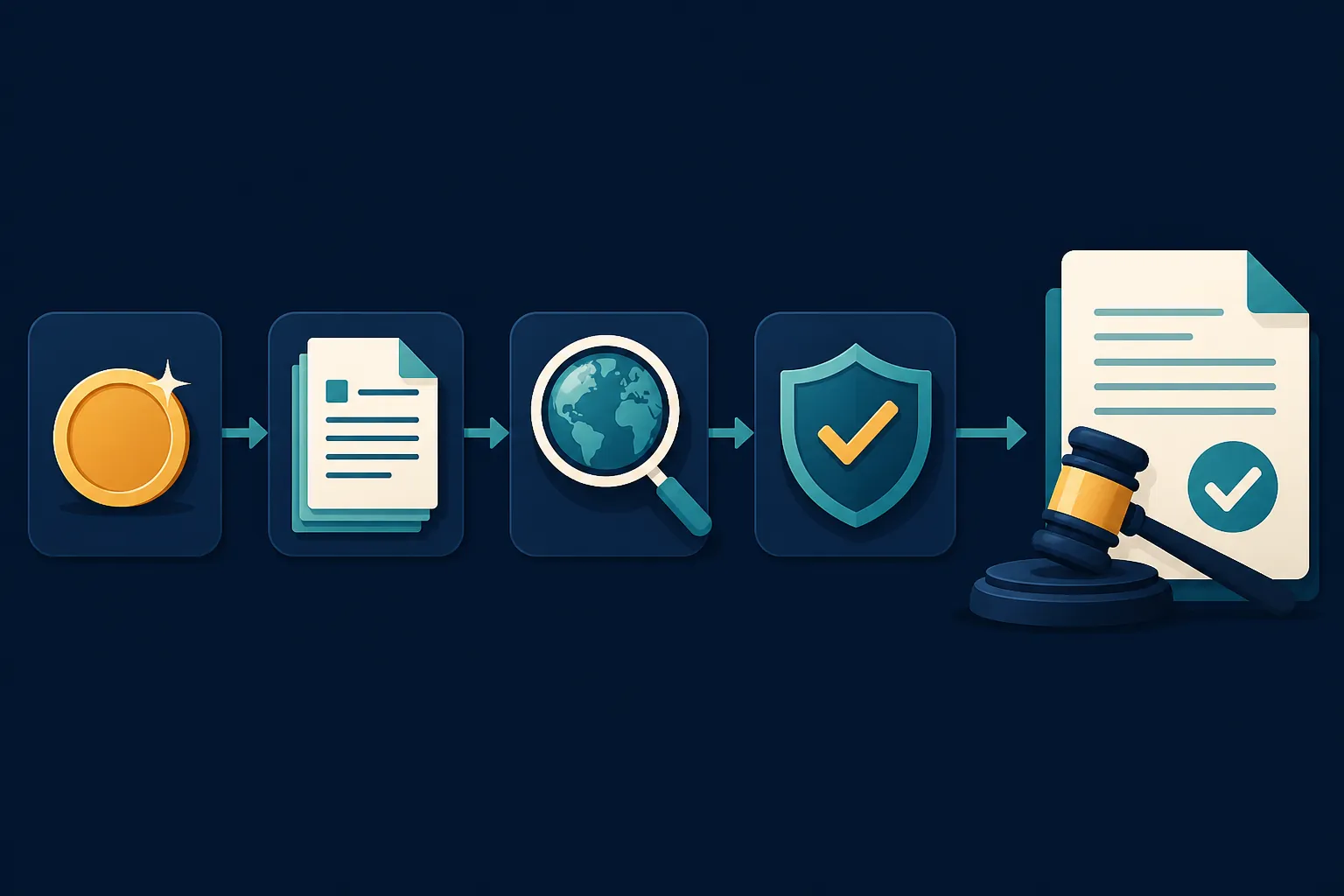
A defensible procurement memo can still like Gemini 3.7 Flash. Low latency and low API rates are valuable. But the decision metric for a legal AI tool should be the cost of a verified answer, because that is the unit a lawyer, client, or risk committee actually consumes.
- Model tokens: input, output, and any output-side thinking-token effect.
- Document handling: especially PDF and DOCUMENT tokens billed at the image token rate.
- Grounding: search-grounding requests after the shared 5,000-request monthly allowance.
- Caching: cached-input and storage charges where the application reuses large context.
- Verification: lawyer, research attorney, KM, or tool-based review needed before the answer can be relied on.
- Remediation: re-runs, escalation, citation correction, or human rewrite when the first answer fails review.
The most useful pilot spreadsheet is therefore not a token calculator alone. It should track how many generated answers become usable without revision, how many need citation repair, how many need a senior reviewer, and how many are discarded. That is where a cheap model call either remains cheap or stops being cheap.
For firm-level tool selection, the same control belongs beside security, privilege, data-retention, and practice-area suitability. A broader procurement framework is covered in How to Choose AI Tools for Your Law Firm in 2026, while risk-graded Gemini use cases are mapped in Which Gemini AI Use Cases Are Safe for Legal Work?.
Procurement judgment for Q3 2026
Gemini 3.7 Flash can be a low-cost model to call. It is not automatically a low-cost legal answer to rely on.
Use the $0.75-per-1M input rate as an input to the model, not as the decision metric. Re-run the financial model before the January 1, 2027 rate change. Compare vendors on the combined cost of tokens, document handling, search grounding, cache design, and verification labor or tooling.
Pricing last verified against Google’s Gemini Developer API pricing page updated August 13, 2026. Any procurement memo used after the January 2027 cliff should refresh the official rate-card lines before approval. [1]
References
- Gemini Developer API pricing — Google AI for Developers, August 13, 2026.
- Google: Gemini 3.7 Flash — OpenRouter.
- Legal Research Bench — Vals AI.
- AI on Trial: Legal Models Hallucinate in 1 out of 6 (or More) Benchmarking Queries — Stanford HAI.
- Hallucination-Free? Assessing the Reliability of Leading AI Legal Research Tools — Stanford RegLab.
- Gemini 3.7 Flash Model Card — DeepMind.
- Harvey LAB-AA — Artificial Analysis.
Chronological incident history
No sanction cases have named this tool in the tracked record set to date. This does not imply the tool is safe — see Risk Digest for ongoing monitoring.
← Compare peer toolsReport a correction or tip
Spotted an outdated figure, a misstated fact, or a ruling this tool profile should reflect? Public comments are disabled for this content given the professional cost of a misreported case outcome, penalty amount, or rule text — use the structured correction channel instead.
Report a correction or tip for this record →