
What Legal Work Can Gemini 3.7 Flash Actually Handle?
Gemini 3.7 Flash passes 90.7% of Harvey's Legal Agent Benchmark criteria but completes only 8.75% of legal-agent tasks end-to-end on Vals AI's HLAB. This evaluation maps which legal work is safe to route, where verification is mandatory, and why the headline score is not a practice-readiness signal.
- Tool
- Gemini 3.7 Flash
- Benchmark source
- Harvey LAB-AA; Vals AI HLAB
- Hallucination rate
- Not measured / undisclosed
- Test methodology
- Harvey LAB measures criterion pass rate; Vals HLAB measures all-pass end-to-end task resolution requiring 100% of criteria to pass.
- Test date
- Aug 19, 2026
The two legal scores that cannot be averaged
For legal teams mapping Gemini 3.7 Flash legal work use cases, the starting point is a mismatch: the model passes 90.7% of criteria on Harvey’s Legal Agent Benchmark as reported in the DeepMind model card and Artificial Analysis, while Vals AI’s HLAB snapshot of Aug. 19, 2026 shows 8.75% end-to-end task resolution, ranked 10th of 52 models and well behind the 25.42% leader, Muse Spark 1.2. Those are not competing descriptions of the same thing. They measure different legal failure standards, and legal teams should treat them differently. [1][2][3]
The 90.7% figure is useful. It says Gemini 3.7 Flash can satisfy many individual legal-work criteria in a structured benchmark. The 8.75% figure is also useful. It says that when the job is judged as a complete legal-agent task, where every required criterion must pass, the model usually does not finish the work cleanly enough to count. A supervising lawyer, risk lead, or knowledge-management team cannot substitute one number for the other.
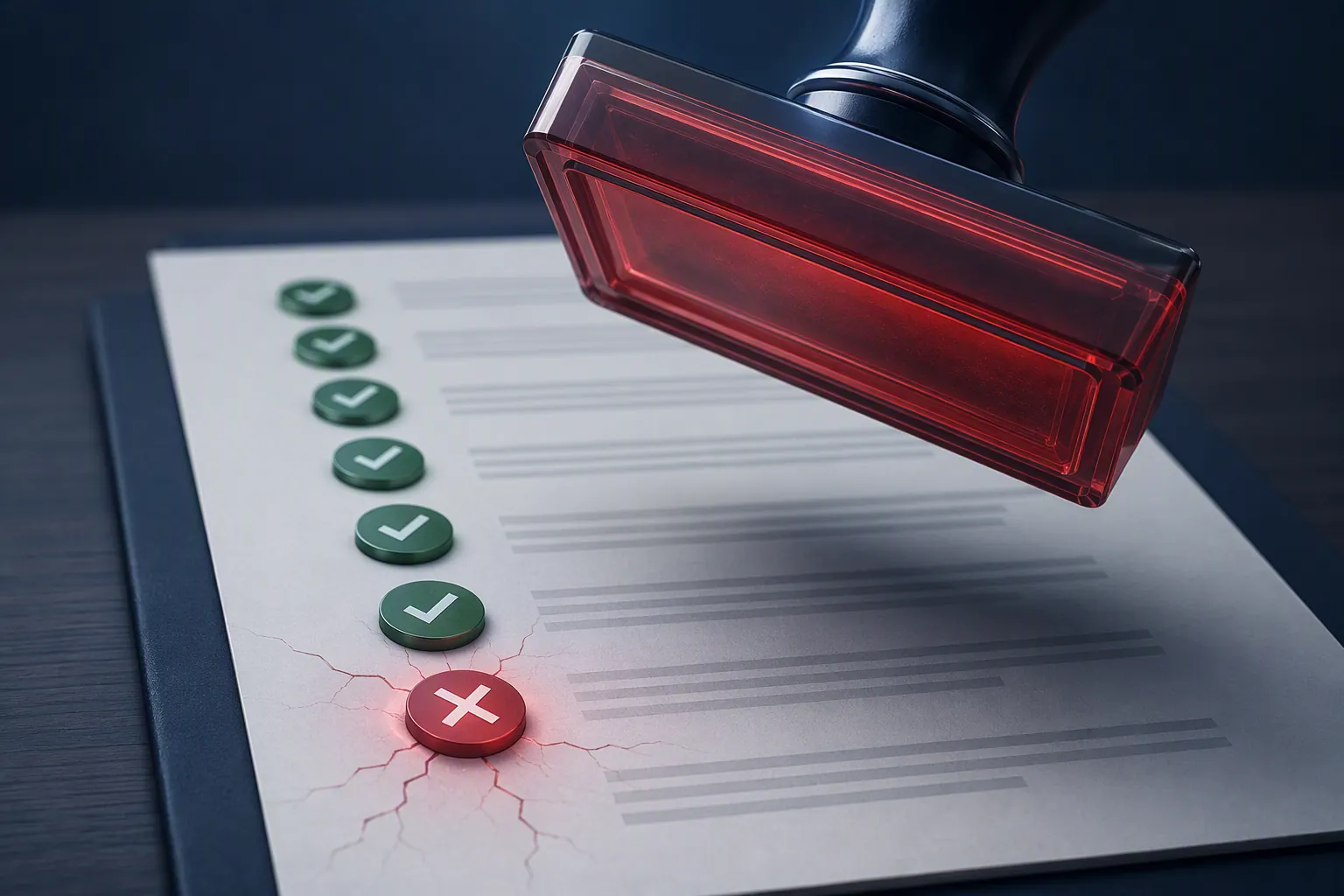
That distinction matters because legal work often punishes partial completion more harshly than ordinary enterprise review. A model that extracts most key terms from a lease may still be helpful if a human reviewer checks the missed field. A model that drafts a filing-ready legal conclusion with one fabricated authority has created a different problem. The first workflow can absorb correction. The second may export the error to a client, court, regulator, or counterparty.
What Gemini 3.7 Flash is, before the legal claims begin
Google announced Gemini 3.7 Flash on Aug. 13, 2026, positioning it as a fast, cost-efficient member of the Gemini family rather than as a specialist legal model. For legal operations, the commercially interesting facts are straightforward: the model has a 1 million-token context window, is priced at $0.75 per 1 million input tokens and $3.75 per 1 million output tokens, and carries a knowledge cutoff of March 2026, with some domains limited to January 2025. [4][5][1]
Those are not minor deployment details. A 1 million-token context window changes what a knowledge-management team can attempt with document-heavy matters. Lower latency and lower token cost affect whether a diligence workflow is used by a deal team or abandoned after a pilot. But the DeepMind model card also states that Gemini 3.7 Flash “may exhibit some of the general limitations of foundation models, such as hallucinations.” That warning is not a footnote when the output is legal work. [1]
The model is also new. As of Aug. 26, 2026, it has been public for less than two weeks. The available legal-work evidence is valuable, but it is still vendor-, partner-, or benchmark-adjacent: Google and DeepMind model materials, Harvey benchmark materials, Box’s enterprise evaluation, Artificial Analysis aggregation, and Vals AI’s leaderboard. There is not yet an independent long-run legal evaluation showing how Gemini 3.7 Flash behaves across months of messy legal practice.
Why 90.7% is a diligence signal, not a practice-readiness score
Harvey’s LAB-AA result gives Gemini 3.7 Flash a strong component-performance signal. The reported 90.7% criterion-pass rate is above Gemini 3.6 Flash’s 85.1%, slightly above Claude Sonnet 5’s 90.1%, and above GPT-5.6 Terra’s 85.2%. That comparison is useful for orientation, especially for teams comparing low-latency models for repeatable review work. It should not be turned into a claim that the model can independently complete legal matters. [1][2]
The reason is methodological, not semantic. A criterion-pass score counts whether the model satisfied individual requirements within benchmark tasks. An end-to-end task-resolution score asks whether the whole task passed. On Vals AI’s HLAB, top models can satisfy most individual criteria while still showing low task resolution because the task passes only if 100% of required criteria pass. Gemini 3.7 Flash’s 8.75% end-to-end result is therefore not a contradiction of its 90.7% criterion score; it is the consequence of applying a stricter legal completion standard. [3]
That stricter standard is much closer to how legal review feels in practice. If a diligence memo identifies governing law, assignment clauses, and consent mechanics but misses one change-of-control trigger, the review is not “mostly complete” for the person signing off. It is incomplete. The model may have reduced work. It has not discharged responsibility.
Harvey’s earlier Legal Agent Benchmark initial results point in the same direction. In May 2026, Harvey reported that frontier models completed less than 10% of tasks end-to-end, that Gemini 3.5 Flash reached 0.8% all-pass, that the top of the leaderboard cost roughly $50 per task and took more than 20 minutes, and that no single model led every practice area. Those facts make the Gemini 3.7 Flash improvement meaningful without making it a release valve for unsupervised legal work. [6]
The model still deserves credit. A 90.7% criterion-pass result is not trivial. It supports using Gemini 3.7 Flash as a fast document comprehension and extraction engine where the legal team can define the question, inspect the answer, and catch omissions. It does not support handing the model an open-ended legal objective and treating its final output as the answer.
The enterprise-workhorse evidence is real, but narrower than legal autonomy
Box’s Complex Work Eval is useful because it tests the sort of enterprise knowledge work that often sits adjacent to legal operations. Box reported that Gemini 3.7 Flash improved the Legal category by 12 points to 70% and reduced task time from about 115 seconds to about 73 seconds. That is exactly the kind of result that makes a model attractive for internal review queues, contract repositories, policy libraries, and repetitive document analysis. [7]
The important word is “adjacent.” Faster document work is not the same as reliable legal judgment. A legal department may care deeply about a model that can read long document sets cheaply and quickly. It still needs to decide where the model’s work product is evidence for a reviewer and where it becomes a legal conclusion. The first category is deployable sooner. The second demands verification before use.
Where Gemini 3.7 Flash can be routed
A risk-aware routing decision should start with the shape of the task, not the prestige of the model. The safest Gemini 3.7 Flash legal work use cases are bounded, reviewable, and reversible before they leave the organization. For a broader version-agnostic map, the companion analysis on Gemini AI use cases for legal work covers the family-level pattern; the 3.7 Flash evidence points to a narrower verdict.
| Task type | Routing verdict | Why the benchmark evidence supports that verdict |
|---|---|---|
| Diligence-style extraction from contracts, policies, or matter files | Routable with human verification | The 90.7% criterion-pass signal supports component-level extraction, but omissions still need reviewer checks. |
| Document comprehension over large record sets | Routable with scoped instructions and source inspection | The 1 million-token context window and enterprise evaluation results make long-document review plausible where the answer can be traced back to documents. |
| Issue spotting for internal review queues | Routable as triage, not as final judgment | The model can reduce reviewer search time, but the all-pass score does not support treating missed issues as acceptable. |
| Legal research conclusions | High risk unless independently verified | A plausible answer is not enough; authorities, jurisdiction, currency, and negative treatment must be checked. |
| Filing-ready drafting | Do not delegate end-to-end | One unsupported citation, omitted standard, or wrong procedural statement can invalidate the output. |
| Unsupervised agentic legal tasks | Not supported by current evidence | The 8.75% HLAB end-to-end result is too low for autonomous completion where every criterion must pass. |
The favorable lane is not glamorous, but it is operationally valuable. A law firm can use Gemini 3.7 Flash to extract notice periods from a document set, summarize recurring termination rights, flag possible assignment restrictions, compare policy language against a checklist, or prepare a first-pass chronology from records. Those are useful tasks if the instructions are constrained and a reviewer can inspect the cited source text.
The unfavorable lane is any workflow where the model’s answer is the legal act. “Can the buyer terminate?” “Is this filing compliant?” “Does this authority control?” “What should we tell the regulator?” These questions may be supported by AI-assisted review, but they should not be completed by Gemini 3.7 Flash without lawyer verification. The benchmark gap is exactly the warning: many criteria may pass while the complete task still fails.
The verification finding matters more than another leaderboard comparison
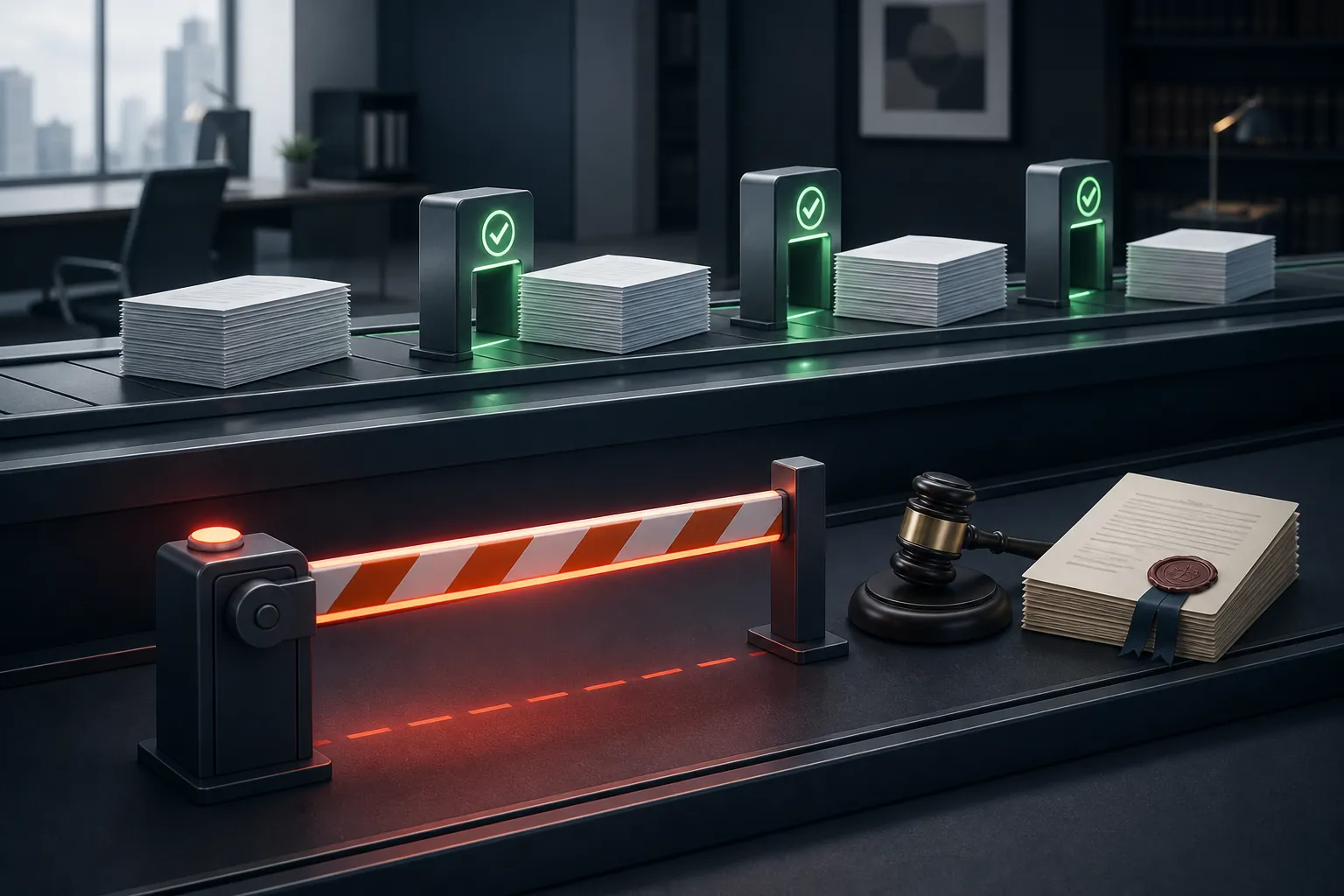
The most useful operational fact in Harvey’s LAB analysis is not another model ranking. It is the workflow result: post-draft validation added 0.8 points of all-pass performance, revise-after-check added 1.5 points, and drafting without review cost 1.2 points. In other words, the benchmark evidence supports a draft-check-revise loop, not a draft-and-release loop. [6]

That finding translates cleanly into procurement and rollout design. If a team uses Gemini 3.7 Flash for legal support work, the workflow should force source inspection after generation. It should require a human reviewer to compare extracted claims against the source document. It should separate a model’s proposed legal conclusion from the approved legal conclusion. It should record what was checked, not merely that a lawyer “reviewed” the output.
The verification step also needs to match the risk of the task. For extracted contract metadata, a reviewer may sample low-risk fields and fully check high-risk fields such as consent, termination, exclusivity, or indemnity. For legal research, sampling is not enough. Authorities need citation-level validation, jurisdictional checking, and currency review. For filing-ready work, the reviewer must treat the AI draft as untrusted work product until every material proposition is supported.
This is not a generic “humans in the loop” slogan. The loop has to change the output. If the reviewer only skims the model’s prose, the workflow is still betting on the model’s end-to-end reliability. If the reviewer checks the source, corrects the output, and records the correction, the workflow is using Gemini 3.7 Flash where its benchmark profile is strongest: high-volume component work that becomes safer after inspection.
The same pattern appears across other legal-AI reliability records. The deploy-or-verify analysis for GPT-5.5 legal work, the compliance comparison of Claude Opus 5 and Fable 5, and the benchmark-reading notes on Qwen abstention and Qwen 3.8 Max all point to the same procurement habit: route tasks by failure consequence, not by the model’s best-looking benchmark.
The legal-risk layer: no named Gemini sanction, but the failure mode is familiar
There is no need to imply that a court order has named Gemini 3.7 Flash. The model is too new, and the available record does not support that claim. The risk is broader and more ordinary: a confident system can generate an unsupported legal statement, a user can fail to verify it, and the error can be filed, sent, or relied on before anyone checks the authority.
That is why ethics and sanctions discussions belong at the workflow level. The duties of competence, supervision, candor, and verification do not disappear because a model is faster or cheaper. The practical compliance layer is covered in The Double-Compliance Burden, AI Hallucinations and Attorney Ethics, and From Ethics Opinions to Enforcement. The recent Bianco ballot citation-fabrication record is the kind of failure the verification workflow exists to prevent.
A practical routing rule for Q3 2026
The clean rule is this: route Gemini 3.7 Flash to legal support work when the task is bounded, the source set is known, the expected answer can be checked, and the output will be corrected before it reaches a client, court, regulator, or counterparty. Do not route work to it end-to-end when the output itself is the legal answer.
That means Gemini 3.7 Flash is a plausible tool for diligence extraction, document comprehension, review triage, knowledge-base querying, internal summaries, and first-pass checklists. It is not, on current evidence, a safe autonomous legal researcher, filing drafter, negotiation decision-maker, or legal-agent executor for tasks requiring all-pass reliability.
Read the 90.7% Harvey LAB-AA number as evidence of improved component performance and diligence utility. Read the 8.75% Vals HLAB number as the current warning against autonomous legal-agent use. Until independent long-run legal evaluation exists, that is the responsible way to treat Gemini 3.7 Flash in legal work.
References
- Gemini 3.7 Flash Model Card, DeepMind
- Harvey LAB-AA, Artificial Analysis
- HLAB, Vals AI
- Introducing Gemini 3.7 Flash, Google Blog, Aug. 13, 2026
- Gemini Flash, DeepMind
- Legal Agent Benchmark: Initial Results, Harvey, May 2026
- Gemini 3.7 Flash: Real Enterprise Knowledge Work, Box Blog
Chronological incident history
No sanction cases have named this tool in the tracked record set to date. This does not imply the tool is safe — see Risk Digest for ongoing monitoring.
← Compare peer toolsReport a correction or tip
Spotted an outdated figure, a misstated fact, or a ruling this tool profile should reflect? Public comments are disabled for this content given the professional cost of a misreported case outcome, penalty amount, or rule text — use the structured correction channel instead.
Report a correction or tip for this record →