
Verify AI claims on personality & impulse-control sentencing
A five-step primary-source checklist that helps litigators and in-house counsel verify AI-generated claims about how personality defects and impulse control disorders are treated at federal sentencing before they reach a brief, motion, or risk memo. Each step is anchored in USSG §5H1.3, §5H1.4, and §5K2.13 and adapts the Stanford RegLab incorrect-versus-misgrounded distinction to flag the failure modes that recur in AI research output.
- Applicable role
- Litigators and in-house counsel
- Workflow stage
- pre-filing
- Primary source
- USSG §§5H1.3, 5H1.4, 5K2.13; 18 U.S.C. §§3553(a), 17
Verification Workflows record. Not legal advice. Legal-background review: Mara Venn, J.D. Last verified: 2026-08-02 UTC. Scope: federal U.S. sentencing verification workflow. UK and Australian materials are treated only as comparative checks, not as U.S. federal sentencing rules.
The live problem is usually not an obviously invented sentence. It is an AI-generated or opponent-supplied proposition that sounds usable: “personality defects are never mitigating,” “impulse-control disorders qualify under diminished capacity,” or “gambling addiction can support a downward departure.” Before that sentence reaches a brief, someone has to decide what legal layer it belongs to and whether the cited source actually says it.
For claims about sentencing criteria for personality defects and impulse control disorders in criminal law, the controlling warning is simple: “personality defect” is not itself the federal sentencing rule. Translate the phrase into a specific guideline, statute, diagnostic classification, jurisdiction, date, procedural posture, and holding. In the federal guideline materials that matter here, the recurring anchors are USSG §5H1.3, §5H1.4, §5K2.13, 18 U.S.C. §3553(a), and, only when the claim is really about criminal responsibility rather than sentencing, 18 U.S.C. §17.

The five-step trace
Use this as an intake checklist before any AI-generated mental-health sentencing proposition is copied into a filing, research memo, client update, or knowledge-management note.
| Step | Verification action | Failure mode it catches |
|---|---|---|
| 1 | Capture the exact claim, including the quoted AI language, cited authority, jurisdiction, and requested use. | A softened paraphrase hides that the original claim was categorical. |
| 2 | Identify the legal layer: §5H1.3, §5H1.4, §5K2.13, §3553(a), §17, or state/comparative law. | A sentencing variance, departure, and insanity-defense proposition are treated as interchangeable. |
| 3 | If §5K2.13 is invoked, test the definition and the express bars before reading cases expansively. | A volitional-capacity sentence becomes broader than the guideline permits. |
| 4 | Check the diagnostic assumption and DSM edition, especially for gambling disorder and older “impulse-control” language. | A medical classification that changed is presented as current law. |
| 5 | Compare each citation against the proposition it is being asked to support, then record the verification date and reviewer. | A real citation is used for a proposition it does not hold. |

Step 1: preserve the exact sentence before improving it
Do not begin by rewriting the AI output into a more defensible version. Save the generated text, the user query if available, the cited authorities, the date, and the use case. A proposition offered as “personality defects are never mitigating” is not the same verification task as “a personality disorder diagnosis was held insufficient on this record under §5H1.3.” The first is a categorical rule. The second may be a record-bound holding.
The intake record should also identify who is expected to rely on the answer. A junior associate checking a sentencing memorandum, an appellate lawyer responding to an opponent’s departure argument, and a risk team testing an AI research workflow may need the same source trace, but the consequences of an unverified sentence differ.
Step 2: put the claim in the right guideline layer
Most bad answers in this area start by collapsing separate lanes. Federal sentencing materials do not ask one general question called “does the defendant’s personality defect mitigate?” They ask more specific questions: whether a mental or emotional condition is relevant to a departure, whether physical condition or addiction language blocks a particular argument, whether diminished capacity under §5K2.13 is available, whether the court is varying under §3553(a), or whether the issue is actually criminal responsibility under §17.
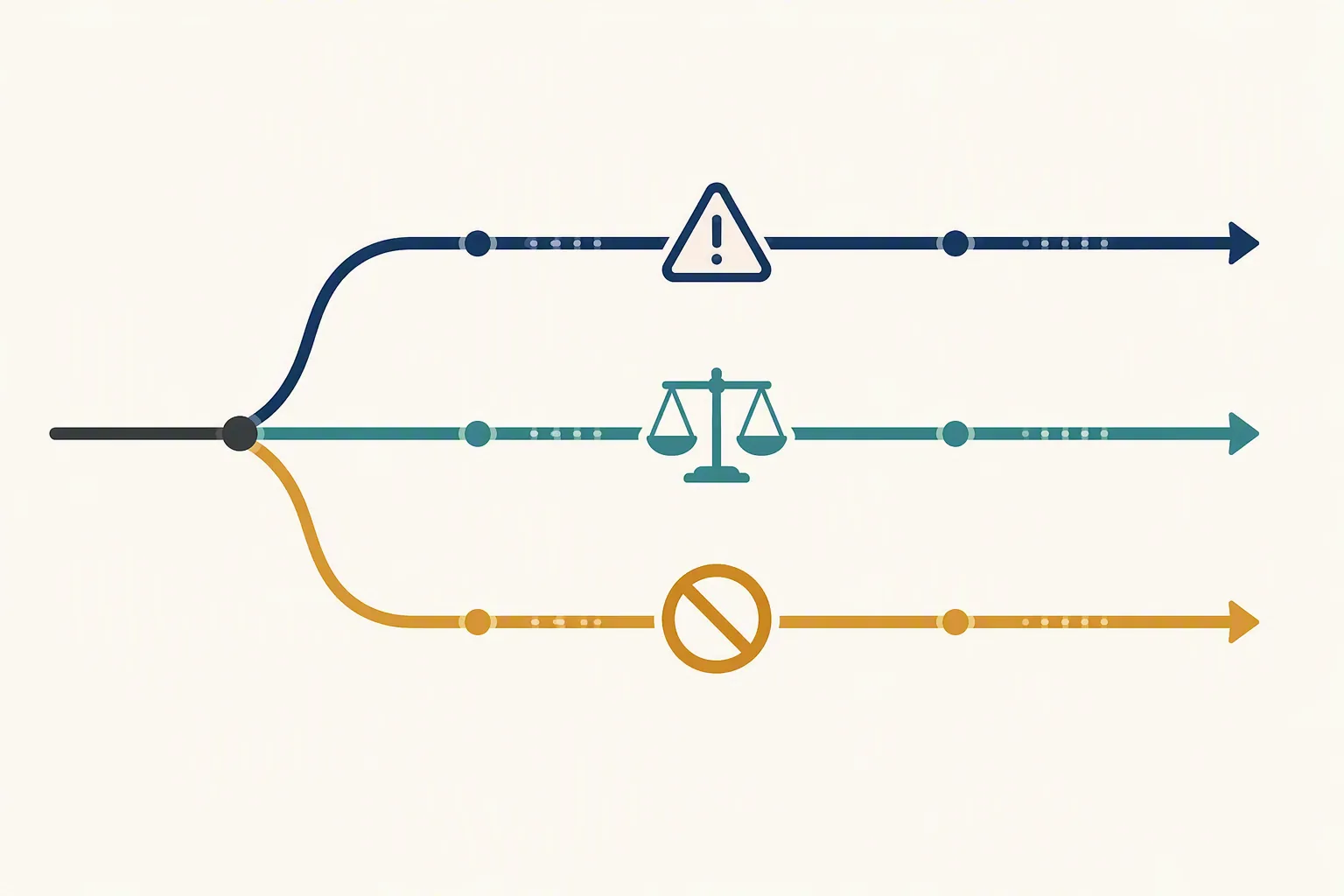
USSG §5H1.3 says mental and emotional conditions “are not ordinarily relevant” in deciding whether a departure is warranted, except as provided in Chapter Five, Part K, Subpart 2. It also recognizes a specific treatment-purpose path where a defendant’s mental and emotional condition, individually or in combination with other offender characteristics, is present to an unusual degree and distinguishes the case from typical cases covered by the guidelines. “Not ordinarily relevant” is not “never.” It is a threshold phrase that forces the lawyer to show why the condition matters in the permitted way, on the record, under the governing guideline structure. [1]
USSG §5H1.4 is a different lane. It deals with physical condition, including drug or alcohol dependence or abuse, and includes the gambling-addiction sentence added by emergency amendment 651: “Addiction to gambling is not a reason for a downward departure.” The amendment was effective November 1, 2003. That text matters, but it does not by itself answer every later argument involving gambling disorder, diminished capacity, or a variance under §3553(a). [1][2]
USSG §5K2.13 is the diminished-capacity departure provision. It permits a downward departure where the defendant committed the offense while suffering from a significantly reduced mental capacity and that reduced capacity contributed substantially to the commission of the offense, subject to express exclusions. The definition includes both cognitive and volitional capacity: a significantly reduced ability to understand the wrongfulness of the behavior or to exercise the power of reason, or a significantly reduced ability to control behavior the defendant knows is wrongful. [1]
Section 3553(a), by contrast, is the advisory sentencing-factor framework. A court considering the history and characteristics of the defendant, the nature and circumstances of the offense, the need for treatment, deterrence, public protection, and the other statutory factors is not doing the same thing as granting a guideline departure under §5K2.13. A variance citation cannot be used as if it were a guideline-departure holding without saying so. [3]
Section 17 is narrower still. It is the federal insanity-defense statute. It asks whether, as a result of a severe mental disease or defect, the defendant was unable to appreciate the nature and quality or wrongfulness of the acts. The text does not contain §5K2.13’s separate volitional-control prong. A source discussing insanity doctrine is therefore a poor substitute for a sentencing diminished-capacity analysis unless the proposition is carefully limited. [4]
A quick lane map for common AI claims
| AI or opponent proposition | First place to check | Immediate caution |
|---|---|---|
| “Personality defects are never mitigating.” | §5H1.3 and the cited case holding. | Federal guideline text says “not ordinarily relevant,” not “never.” |
| “Impulse-control disorder supports diminished capacity.” | §5K2.13. | The diagnosis is not enough; test significantly reduced mental capacity, substantial contribution, and all express bars. |
| “Gambling addiction is barred as a sentencing argument.” | §5H1.4, then §5K2.13 and §3553(a). | The departure ban in §5H1.4 cannot be allowed to erase distinct diminished-capacity or variance arguments. |
| “The defendant could not control himself, so §17 applies.” | §17 and, separately, §5K2.13. | Volitional-control language belongs naturally in §5K2.13, not in the federal insanity statute. |
| “UK or Australian sentencing guidance supports this rule.” | The foreign framework as comparative material only. | Comparative authority is not a U.S. federal sentencing rule. |
Step 3: if the claim invokes diminished capacity, read §5K2.13 before the cases
Cases are easier to misread when the reader has not first written down the §5K2.13 elements. The claim must clear the guideline’s definition and its express exclusions. The reduced capacity must be significant. It must exist at the time of the offense. It must contribute substantially to the offense. And even then, the departure is barred if the significantly reduced mental capacity was caused by voluntary use of drugs or other intoxicants; if the facts and circumstances of the offense indicate a need to protect the public because the offense involved actual violence or a serious threat of violence; if the defendant’s criminal history indicates a need to incarcerate to protect the public; or if the defendant was convicted of specified offenses under chapters 71, 109A, 110, or 117 of title 18. [1]
That is why the volitional language in §5K2.13 cannot be casually imported into §17 and cannot be reduced to a diagnostic label. In United States v. Pullen, Judge Posner described the guideline distinction directly: “A person who knows what he is doing and that it is wrong but cannot control himself is deficient in mental capacity.” The opinion is useful for the volitional point, but it still sits inside the diminished-capacity departure framework and its then-applicable limitations, including the nonviolent-offense constraint. [5]
A verification note should therefore separate three sentences that AI systems often blur: a diagnosis may be clinically relevant; a diagnosis may support a factual argument about reduced ability to control known wrongful behavior; and a diagnosis may or may not satisfy §5K2.13 after the contribution requirement and exclusions are applied. Only the last sentence is the sentencing-rule conclusion.
Step 4: check the diagnostic classification the proposition assumes
Diagnostic vocabulary moves. Legal databases preserve older vocabulary. AI tools often blend the two. The gambling example is the cleanest warning.

DSM-5 moved pathological gambling out of the impulse-control-disorders category and classified it as gambling disorder in the substance-related and addictive-disorders chapter. A proposition that treats gambling disorder as a current impulse-control disorder may be relying on older diagnostic language, older case framing, or an AI model’s blended summary. That does not automatically make the legal argument wrong, but it changes what must be verified. [6]
The federal sentencing trap is related but distinct. Section 5H1.4’s gambling-addiction sentence blocks gambling addiction as a reason for a downward departure under that guideline language. It should not be allowed to swallow §5K2.13 if the argument is that a significantly reduced mental capacity substantially contributed to the offense, and it should not be used as though it bars every §3553(a) variance argument. Quinn and Dikiara are useful examples of that separation as discussed in the ABA Criminal Justice Magazine treatment: Quinn recognized that §5H1.4 does not foreclose a §5K2.13 diminished-capacity departure where the required contribution is shown, while Dikiara involved a §3553(a) variance to 15 months against a guideline range of 41 to 51 months. [7]
The verification record should state the DSM edition assumed by the source and the legal consequence being claimed. “Gambling disorder is no longer classified as an impulse-control disorder in DSM-5” is a classification statement. “Gambling disorder supports this federal sentencing outcome” is a legal proposition that still needs a guideline or statutory route.
Step 5: test each citation against the proposition, not against the topic
A citation can be real, relevant, and still misgrounded. That is the useful distinction from the Stanford RegLab/HAI “Hallucination-Free?” benchmark. The study did not merely ask whether legal research AI tools fabricated authorities; it separated incorrect answers from answers that were grounded in sources that did not support the conclusion. On a preregistered benchmark of more than 200 legal queries, the RegLab publication page reports that Lexis+ AI and Ask Practical Law AI were incorrect more than 17% of the time, while Westlaw AI-Assisted Research fell between 17% and 33%. [8]
The discrepancy in public summaries is itself a small verification exercise. Stanford HAI’s news coverage described Westlaw AI-Assisted Research as hallucinating at more than 34%, while the RegLab publication page gives the 17% to 33% range. For a filing-facing memo, cite the controlling publication page or preprint, note the inconsistent secondary summary if it matters, and do not round the conflict into a cleaner number. [8][9]
Apply the same discipline to personality-disorder and impulse-control sentencing claims. A case may contain the words “antisocial personality disorder,” “borderline personality disorder,” “impulse control,” or “gambling,” but that does not mean it adopted the rule being asserted. The holding may be about procedural reasonableness, abuse of discretion, sufficiency of explanation, admissibility, competency, insanity, supervised-release conditions, or a state-law sentencing scheme.
For each cited authority, write a one-line support test:
- Source: full citation and court.
- Procedural posture: sentencing, appeal from sentence, collateral review, competency, insanity, or another posture.
- Legal layer: §5H1.3, §5H1.4, §5K2.13, §3553(a), §17, state law, or comparative law.
- Diagnosis or label: as used by the source, with DSM edition if the proposition depends on classification.
- Actual holding: the narrow rule the court applied.
- Proposition match: supports, partially supports, background only, or does not support.
This is where the confident half-rule usually breaks. “Personality defects are never mitigating” may become “this appellate court affirmed refusal to depart on this record.” “Impulse-control disorders qualify under diminished capacity” may become “the guideline contains a volitional prong, but the defendant still had to satisfy contribution and avoid the bars.” “Gambling addiction can support a departure” may become “not under §5H1.4 as gambling addiction alone, but a separate §5K2.13 or §3553(a) argument may require different analysis.”
Use empirical studies as record descriptions, not sentencing rules
Empirical studies are helpful when the claim is about what published opinions or appellate records show. They are not substitutes for guideline text or case holdings.
Young et al. 2019 reviewed 1,399 published opinions from 1980 through 2016 involving Cluster B personality disorders. The study reported that personality-disorder evidence was unsuccessful overall in 68.4% of cases, with lower success figures for antisocial personality disorder at 27.0% and narcissistic personality disorder at 18.6%. Those figures can support a cautious statement about outcomes in the published-opinion sample. They do not create a rule that any personality-disorder diagnosis is aggravating, mitigating, or irrelevant in a particular federal sentencing proceeding. [10]
Thomaidou, Patel, Xie, and Berryessa’s 2024 appellate-case study examined 710 cases across 46 states and found personality-disorder evidence to be the most aggravating type of mental-health evidence in that sample. That is a warning against assuming mitigation. It is not a federal sentencing criterion and not a holding under §5H1.3, §5K2.13, or §3553(a). [11]
Older or adjacent clinical-criminal-law literature can also be useful only if labeled accurately. For example, Blum and Grant reported study-based prevalence figures for criminal activity in gambling disorder and arrest or incarceration figures in kleptomania, but those figures do not answer whether a particular defendant satisfies §5K2.13 or receives a variance. [12]
Comparative material: useful check, wrong authority
UK and Australian sentencing materials can alert a reviewer that another jurisdiction treats mental disorder evidence through a different framework. They cannot be cited as U.S. federal sentencing criteria. The Sentencing Council guideline on sentencing offenders with mental disorders, developmental disorders, or neurological impairments took effect on October 1, 2020, but it is an England and Wales guideline, not a federal U.S. guideline. [13]
Australian Verdins-style principles raise a similar boundary problem. Comparative sources may help a lawyer spot the need to ask how culpability, deterrence, treatment, and public protection are being balanced, but they do not answer the federal U.S. question unless the memo expressly frames them as comparative law. [14]
What not to overclaim
Do not write that federal sentencing law treats “personality defects” as a single term of art. It does not, at least not in the federal guideline provisions this workflow verifies. Use the legal term the authority actually uses: mental and emotional conditions, diminished capacity, addiction to gambling, severe mental disease or defect, history and characteristics, or the diagnosis named in the record.
Do not use an insanity-defense case as though it were a guideline sentencing case without explaining the transfer. Torniero, for example, belongs in the older insanity-defense background lane, not as a controlling advisory-guidelines sentencing proposition.
Do not claim that there is a documented AI-sanctions case specifically involving a hallucinated personality-disorder sentencing rule unless you have found and verified that order. The present risk point is narrower: legal AI tools have documented incorrect and misgrounded-answer problems, and general citation-fabrication sanctions exist, but this workflow does not rely on a located sanction ruling with this exact fact pattern.
Close the file with a dated verification record
The final product should be short enough to attach to an internal file, risk memo, or drafting checklist. It should not read like a law-review survey. It should show that the person signing the brief can see the exact claim, the governing layer, the diagnostic assumption, the source trail, and the reviewer’s conclusion.
| Field | Entry |
|---|---|
| Claim verified | Quote the AI output or opponent proposition exactly. |
| Intended use | Brief, motion, sentencing memo, client risk memo, KM note, or internal research. |
| Jurisdiction and layer | Federal U.S.; §5H1.3, §5H1.4, §5K2.13, §3553(a), §17, state, or comparative. |
| Primary text checked | List the exact guideline or statute and date checked. |
| Diagnostic assumption | State the diagnosis label and DSM edition if classification matters. |
| Citation support | For each source: supports, partially supports, background only, or does not support. |
| Reviewer | Name and legal-background role. |
| Last verified | Date and time zone. |
| Filing recommendation | Use as written, use only with narrowed language, replace authority, or do not use. |
For broader AI research controls, connect this record to the site’s AI legal research verification workflow, the AI legal research accuracy-data page, the practice-area research context guide, and the site’s source-verification failure examples. If a team is tempted to excuse a weak citation because the tool was used “only for research,” the same control should also be cross-checked against the research-only risk discussion.
These sentencing claims are not impossible to verify. They are unsafe until each one has been traced through the correct legal layer, the diagnostic assumption it depends on, and the actual holding of the source being cited.
References
- Guidelines Manual: Chapter Five, Part H and Part K, United States Sentencing Commission.
- Amendment 651, United States Sentencing Commission.
- 18 U.S. Code § 3553 - Imposition of a sentence, Legal Information Institute.
- 18 U.S. Code § 17 - Insanity defense, Legal Information Institute.
- United States v. Pullen, 89 F.3d 368 (7th Cir. 1996), Justia.
- Highlights of Changes from DSM-IV-TR to DSM-5, American Psychiatric Association, 2013.
- Gambling Disorder in the Criminal Justice System, Criminal Justice Magazine, American Bar Association, Fall 2015.
- Hallucination-Free? Assessing the Reliability of Leading AI Legal Research Tools, Stanford RegLab.
- AI on Trial: Legal Models Hallucinate in 1 out of 6 (or More) Benchmarking Queries, Stanford HAI.
- Cluster B Personality Disorders in the Courts: Legal Outcomes and Judicial Reasoning, Young et al., 2019.
- Mental Health Evidence and Criminal Sentencing in Appellate Cases, Thomaidou, Patel, Xie & Berryessa, 2024.
- Impulse Control Disorders and Criminal Responsibility, Journal of the American Academy of Psychiatry and the Law, 2017.
- Sentencing offenders with mental disorders, developmental disorders, or neurological impairments, Sentencing Council, effective October 1, 2020.
- Mental Disorder and Sentencing: Principles and Practice, Walvisch et al., 2022.
Grounded in
This procedure is grounded in USSG §§5H1.3, 5H1.4, 5K2.13; 18 U.S.C. §§3553(a), 17, independent of any single documented case. See the Regulation tracker for the governing text.
Cases this step would have prevented
No cases have been explicitly linked to this checklist yet. See Risk Digest for documented incidents generally.
← Back to WorkflowsReport a correction or tip
Spotted an outdated figure, a misstated fact, or a ruling this workflow checklist should reflect? Public comments are disabled for this content given the professional cost of a misreported case outcome, penalty amount, or rule text — use the structured correction channel instead.
Report a correction or tip for this record →