
The legal problem for AI compute and data center regulation is no longer whether states are paying attention to server farms. They are. The harder question is what kind of law each state is actually making. In early 2026, state lawmakers introduced more than 300 data-center-related bills across 30 states in the first six weeks alone, but those bills did not aim at one object or use one legal instrument.[1][2] Some would alter electricity pricing. Some would require water-use disclosure. Some would pause construction. Others would revisit tax incentives already used to attract the same facilities now being treated as a fiscal or infrastructure burden.
That variety matters more than the bill count. A special tariff in California or Texas raises a different set of questions than a Minnesota water-reporting requirement, a New York or Maine moratorium, or an incentive rollback in Virginia, Georgia, or Indiana.[1][2] Calling all of this “data center regulation” is convenient, but it conceals the legal work. The first litigation fights will not ask whether AI compute is good policy. They will ask whether a particular state tool has the evidentiary record, statutory authority, constitutional footing, and prospective application needed to survive review.
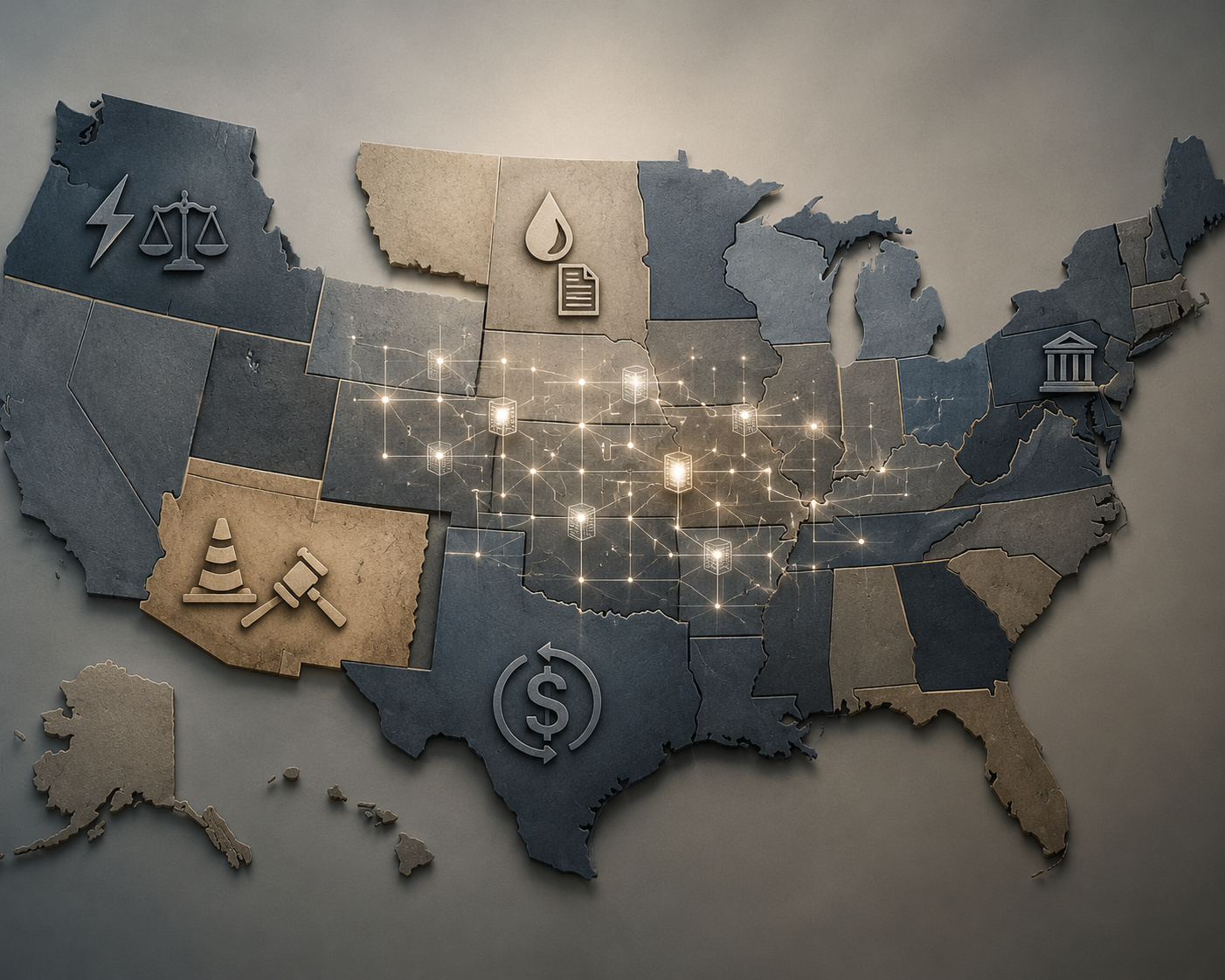
The Same Facility Class, Different Legal Triggers
A data center may look like one category to a planning board or a political campaign. In litigation, it fragments quickly. Electricity regulation turns on utility-rate principles and federal-state jurisdiction. Water disclosure turns on reporting authority and environmental or resource-management statutes. A moratorium sounds in land use, police power, and sometimes preemption. A tax-incentive rollback can raise reliance, contract, and retroactivity questions that are mostly absent from a prospective siting rule.
The 2026 state wave is therefore not one regulatory trend with one constitutional defense. It is a series of mechanisms that happen to converge on the same infrastructure. California S.B. 886 and Texas S.B. 6 are cited in 2026 surveys as examples of special tariff approaches; Minnesota appears as a water-reporting example; New York A.B. 10141 and Maine as moratorium examples; and Virginia, Georgia, and Indiana as states considering or pursuing incentive rollbacks.[1][2] Those measures may share political pressure from AI-related load growth, but their legal vulnerabilities do not line up neatly.
| State mechanism | Core legal question | Likely theory cluster |
|---|---|---|
| Special electricity tariff | Is the rate distinction supported by cost-of-service evidence and within state authority? | Equal Protection, Federal Power Act, state utility law |
| Water-use reporting or disclosure | Does the state have a resource-management basis and a workable reporting standard? | State police power, administrative law, possible commerce burdens |
| Construction moratorium | Is the pause temporary, evenhanded, and tied to a record the state can defend? | Dormant Commerce Clause, Takings, Telecommunications Act §253 |
| Tax incentive rollback | Does the measure disturb settled expectations or apply retroactively to existing facilities? | Contract Clause, Takings, Due Process, state tax law |
This is why the legal risk assessment should start with mechanism, not mood. A state may be anxious about grid strain, water consumption, land use, or foregone tax revenue. Anxiety does not decide the doctrine. The form of the state action does.
Equal Protection Is Available, But Rational Basis Does Real Work
Industry-side commentary understandably starts with the intuition that singling out data centers for higher charges or special conditions looks discriminatory. That intuition may have political force. In court, however, an Equal Protection claim against economic regulation usually runs into rational-basis review. Unless a protected class or fundamental right is implicated, the state does not need to prove the best policy. It needs a rational relationship between the classification and a legitimate public purpose.
That does not make Equal Protection irrelevant. It changes where the evidentiary pressure falls. If a state or utility commission imposes a data-center-specific tariff, the record will matter. A rate distinction tethered to cost causation, infrastructure upgrade costs, load characteristics, or risk allocation is easier to defend than a label-driven surcharge adopted because data centers are politically visible. WilmerHale identifies rate differentials untethered to cost-of-service evidence as one likely Equal Protection battleground in the state data center wave.[1]
The careful point is not that operators are likely to win Equal Protection challenges whenever a state treats data centers differently. The careful point is that a state seeking to price a specific facility class should expect later review of the administrative record. A legislature can describe AI infrastructure as unusually demanding, but a rate case or tariff defense will still ask what costs are being recovered, from whom, and why.
Federal Power Act Preemption Will Turn on the Boundary Between Retail Control and Federal Jurisdiction
Special tariffs also invite preemption arguments under the Federal Power Act. The attraction of the theory is plain: electricity markets are already divided between state retail authority and federal oversight of wholesale sales and transmission. If a state measure reaches beyond retail ratemaking or produces an allegedly unduly discriminatory structure affecting federally regulated activity, challengers will try to move the dispute out of ordinary state policy debate and into federal statutory conflict.
The available sources treat this as a live and contested area, not a settled answer. WilmerHale’s alert maps Federal Power Act theories against state-imposed tariffs and discriminatory rate treatment.[1] That map is useful, but it is also a client-alert map prepared from an advocacy posture. State commissions will have their own account: that they are allocating retail costs, protecting ratepayers, and responding to extraordinary load additions through tools historically within state competence.
For counsel, the practical distinction is between a tariff that merely asks a large new retail customer to bear demonstrable local costs and a tariff that can be characterized as distorting interstate wholesale arrangements, transmission access, or federally regulated market participation. The same dollar figure can look different depending on the record beneath it.
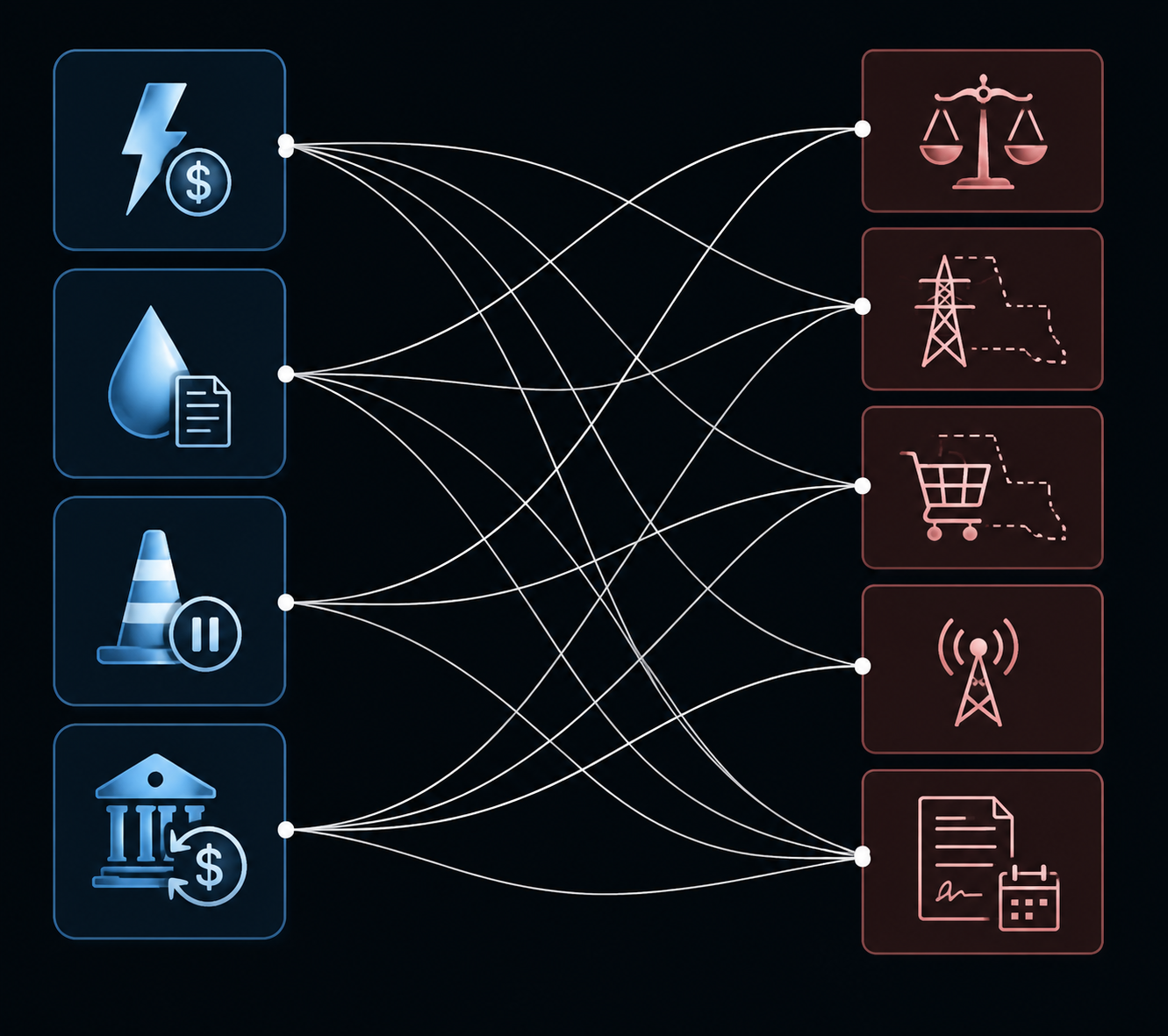
Telecommunications Act §253 Is a Powerful Argument, Not a Universal Key
The Telecommunications Act §253 theory is more aggressive, and in some settings more interesting. Section 253 restricts state and local legal requirements that prohibit or have the effect of prohibiting the ability of an entity to provide telecommunications services. WilmerHale’s analysis identifies §253 preemption as a possible challenge to state or local rules that effectively block infrastructure builds tied to communications and compute deployment.[1]
That argument will depend heavily on what the facility does, who owns it, how it connects to communications services, and whether the challenged law regulates telecommunications activity or a broader land-use, energy, or resource concern. A blanket construction pause affecting AI data centers may invite a different §253 argument than a generally applicable water-disclosure rule. A siting restriction that prevents network facilities from being deployed will look different from a tax provision that changes the economics of a project but does not directly bar service.
The federal landscape may also shift. An FCC notice of proposed rulemaking could affect the preemption analysis.[1] Until that develops, §253 should be treated as a serious screening issue rather than a ready-made answer. It may matter most where a state or local rule does more than slow a project and can be framed as effectively preventing deployment of covered infrastructure.
Moratoriums Put Police Power and Commerce Burdens in the Same Record
Construction moratoriums are the most visible state response because they are easy to explain: stop or pause new facilities while the jurisdiction studies energy, water, land-use, or community impacts. New York A.B. 10141 and Maine are identified in the 2026 sources as examples of moratorium approaches, and Troutman Pepper Locke’s analysis describes policymakers considering temporary pauses on AI data center construction.[1][4]
A moratorium can be lawful. Temporary land-use pauses have a long regulatory pedigree when tied to planning, infrastructure capacity, or environmental review. But a pause is not insulated simply because it is temporary. The more a state burdens interstate deployment of AI infrastructure, discriminates in practical effect, or blocks facilities serving out-of-state customers, the more likely litigants are to test it under the Dormant Commerce Clause.
The Dormant Commerce Clause inquiry will not reduce to whether the measure annoys a national operator. Courts will look at discrimination, local benefits, and burdens on interstate commerce. A state with a developed record on grid planning, water availability, or land-use sequencing is in a different position from a state that appears to have selected data centers as a politically convenient proxy for AI anxiety.
Readers looking for state-specific treatment can separate that question from this national framework. The New York moratorium, for example, deserves its own bill-level analysis; broader zoning disputes raise a different body of land-use litigation issues. Those details are better handled in focused resources on New York’s data center moratorium and data center zoning litigation.
Retroactivity Changes the Temperature of Tax and Incentive Disputes
Tax incentive rollbacks sit in a different posture from prospective siting limits. If a state changes incentive policy for future projects, operators may complain, but the state’s position is comparatively clean. If a state revisits benefits on which existing facilities relied, the dispute becomes harder. Virginia, Georgia, and Indiana appear in the 2026 sources as examples of states considering or pursuing incentive rollbacks.[1][2]
The Contract Clause and Takings theories enter here because operators may argue that the state impaired settled commitments or appropriated value after investment decisions were made. Those theories are not automatic winners. Much depends on the language of the incentive, whether the benefit was statutory or contractual, whether the state reserved amendment authority, whether the measure applies retroactively, and how directly it burdens existing property or investment-backed expectations.
This is the point at which a legislative committee’s fiscal narrative may not be enough. If the state induced large capital deployment through a defined tax structure and later narrows that structure for already-built or already-committed facilities, the defense will need more than a generalized claim that data centers no longer deserve public subsidy. The legal question will be what the state promised, what the operator reasonably relied on, and what the rollback actually changes.
Water Disclosure Is Less Dramatic, But It Still Needs a Defensible Fit
Water reporting laws may be less vulnerable than tariff surcharges or retroactive incentive changes because disclosure requirements often fall comfortably within state resource-management authority. Minnesota is identified in the 2026 sources as an example of water reporting directed at data centers.[1][2] A disclosure rule that gathers usage data, applies prospectively, and fits within a broader water-planning program is not the same legal animal as a moratorium or a penalty.
Still, disclosure rules deserve more than a shrug. A state has to define who reports, what counts as covered water use, how confidential or security-sensitive information is handled, and whether the reporting duty is proportionate to the planning purpose. A poorly drawn rule can create administrative-law problems even when the constitutional challenge is weak.
The point is modest: water reporting may be one of the more defensible state tools, but defensibility depends on fit, scope, and implementation. It should not be lumped together with construction bans or rate discrimination merely because all three appear in the same political debate.
The U.S. Patchwork Is Part of a Broader Anxiety, But the Lawsuits Will Be Local
The pressure to restrict or condition data center development is not uniquely American. Reuters has tracked authorities outside the United States restricting data centers amid the AI boom, reflecting global concern over energy, water, and land-use strain.[5] That context is useful, but it should not blur the U.S. legal question. In the United States, these disputes will move through state utility commissions, local zoning records, state tax statutes, federal preemption arguments, and constitutional claims shaped by specific state action.
The federal government’s own AI infrastructure ambitions also do not erase state resistance. MultiState has separately described federal AI data center policy meeting resistance from state lawmakers.[3] That is the setting in which preemption arguments may become more attractive to operators and more provocative to states. A federal push for compute capacity can coexist with state insistence on ratepayer protection, water planning, local land-use control, and tax-base discipline.
How to Classify the Next Bill Before the Lawsuit Arrives
The next state proposal should not be filed mentally under “data center regulation” and left there. The more useful first pass is narrower:
- Regulatory mechanism: tariff, disclosure rule, zoning control, moratorium, tax change, environmental review, or incentive condition.
- Source of authority: legislature, utility commission, local government, tax agency, environmental regulator, or delegated administrative process.
- Evidentiary record: cost-of-service evidence, water-capacity findings, grid-planning analysis, fiscal record, or land-use study.
- Temporal effect: prospective only, applied to pending applications, or retroactive as to existing facilities or incentives.
- Federal-law conflict: wholesale-power implications, telecommunications deployment effects, interstate-commerce burdens, or federal infrastructure policy tension.
That classification does not predict the winner. It tells counsel which fight they are actually in. A data-center-specific electricity charge without a rate record points toward utility-law, Equal Protection, and Federal Power Act questions. A temporary construction pause points toward land-use authority, Dormant Commerce Clause balancing, and possibly §253. A rollback of an already-promised tax benefit moves the analysis toward Contract Clause, Takings, Due Process, and state-law reliance arguments.
The near-term risk is fragmented litigation, not one national answer. The 2026 volume matters because it multiplies venues. The diversity matters because it multiplies theories. Operators, public agencies, and their counsel will be dealing with a constitutional patchwork built from particular records: one tariff docket, one moratorium finding, one incentive statute, one water-reporting scheme at a time. That patchwork is no longer just a political inconvenience for AI infrastructure. It is the litigation architecture.
References
- State Regulation of Data Centers, WilmerHale, Feb. 2026.
- State Regulation of Data Centers in 2026: A Shifting Landscape, AFS Law.
- Federal AI Data Center Policy Meets Resistance from State Lawmakers, MultiState.
- Policymakers Consider Temporary Pause on AI Data Center Construction, Troutman Pepper Locke.
- Where authorities are restricting data centres amid AI boom, Reuters.
Comments
Join the discussion with an anonymous comment.