
The legal justification for US airstrikes on Iran does not turn on whether Iran was dangerous. A state can be dangerous, hostile, repressive, and legally protected from preventive attack at the same time. The narrower question is whether the Trump administration’s February 28, 2026 strikes fit within anticipatory self-defense under Article 51 of the UN Charter, as that doctrine has evolved from a clock-based idea of imminence into a more contextual inquiry.
That is the administration’s strongest doctrinal move. In its April 21, 2026 State Department Office of the Legal Adviser memorandum, “Operation Epic Fury and International Law,” the government did not merely say Iran was a long-term strategic threat. It located the strikes in self-defense and argued that modern imminence analysis can account for nuclear threats, intelligence uncertainty, and a closing operational window rather than requiring visible proof that an attack is hours away.[1]
That move is legally intelligible. It is also where the difficulty begins. If imminence now means the last feasible opportunity to act before a grave threat matures, the dispositive question becomes whether Iran in late February 2026 had crossed that line. The public record, as of July 20, 2026, does not answer that question cleanly.

The doctrine the administration chose
The inherited formula is the Caroline test: necessity must be “instant, overwhelming, leaving no choice of means, and no moment for deliberation.”[2] Read literally, that language sounds inhospitable to strikes against a nuclear program that has not yet produced an armed attack. But very few serious contemporary lawyers treat Caroline as a stopwatch. The harder question is how much elasticity the formula can bear before anticipatory defense becomes prevention.
The Obama administration’s 2016 legal and policy framework is important because it stated the modern US view without abandoning the vocabulary of necessity. It described imminence as a context-sensitive assessment, including the nature and immediacy of the threat, the probability of an attack, whether the anticipated attack is part of a concerted pattern, the likely scale of harm, and the likelihood that other opportunities to disrupt the threat would arise.[3] That is not a blank check. It is an attempt to preserve the discipline of necessity where threats are not always announced by mobilized divisions crossing a border.
Tallinn Manual 2.0 pushed in the same direction in the cyber context. The majority position there framed imminence around the “last feasible window of opportunity” to defend against an attack, not simple temporal proximity.[4] Cyber operations made the point vivid, but the logic is not confined to cyber. Some threats mature quietly; some become practically irreversible before the final act is observable. Nuclear latency is the strongest version of that problem because the visible evidence of danger may lag behind the strategic point at which military options narrow.
The Bethlehem Principles likewise tried to adapt self-defense doctrine to nontraditional and potentially catastrophic threats, including circumstances involving weapons of mass destruction.[5] Their importance here is not that they settle the law. They do not. Their importance is that they show the administration was not inventing the entire architecture of its argument in 2026. The unresolved issue is application: whether Iran’s nuclear status, inspection gaps, and regional military posture created the kind of necessity these evolved formulations require.
Why Iran presented the hard case for contextual imminence
The administration’s case had more to work with than a generic allegation of future danger. The New York Times, citing IAEA data, reported in February 2026 that Iran had roughly 970 pounds of uranium enriched to 60 percent, a level far below weapons-grade but close enough that further enrichment to 90 percent was described in terms of days rather than months.[6] That fact matters legally because a nuclear latency case is not principally about whether a bomb already exists. It is about whether the state being targeted is approaching a point at which waiting for clearer evidence would make defensive action far more costly or ineffective.
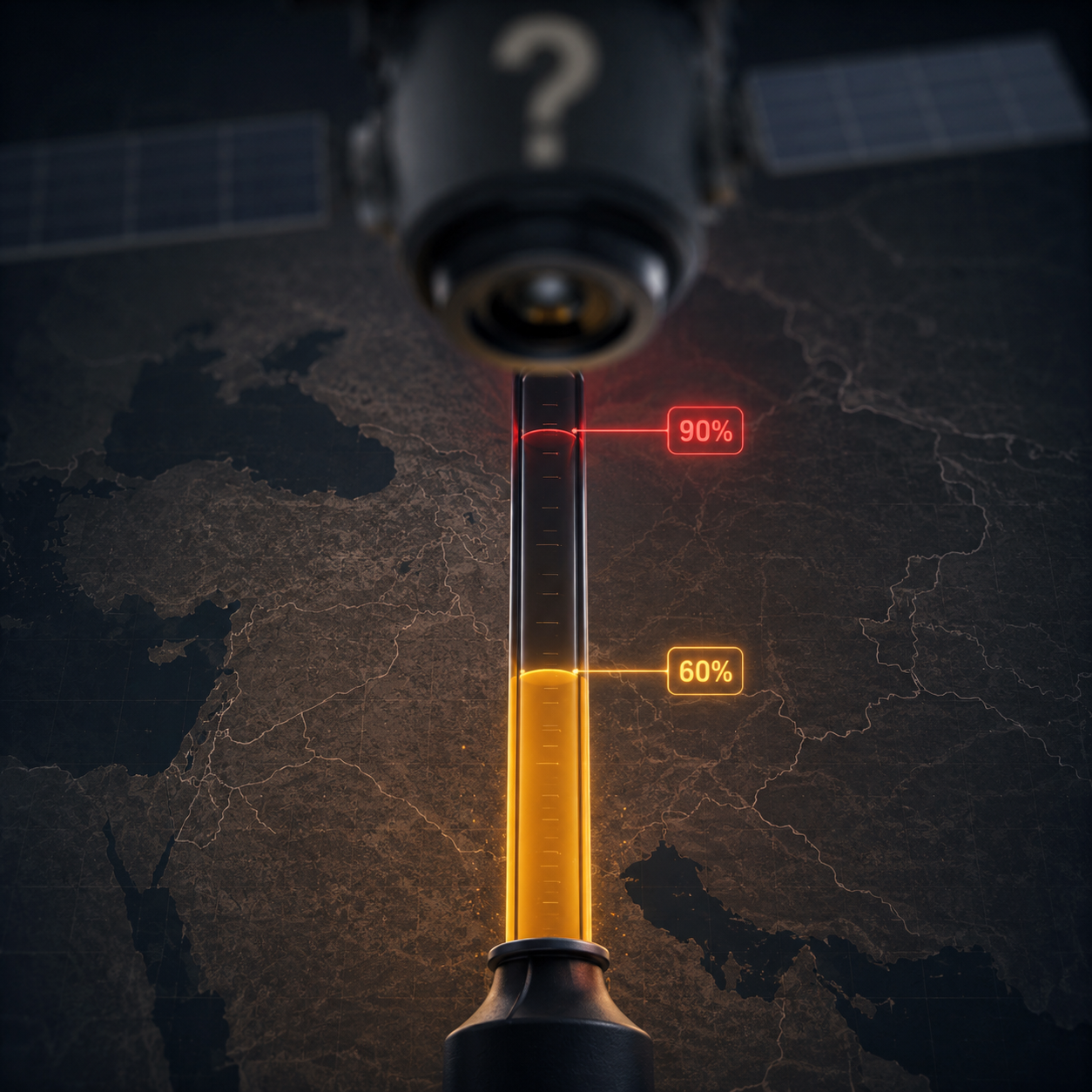
The inspection problem sharpened that argument. On March 2, 2026, IAEA Director General Rafael Grossi said of the relevant nuclear material, “we hope it has not been removed,” after the agency could no longer verify its location.[7] That sentence should not be inflated into proof that Iran had diverted material to a weaponization pathway. It is not that. But it is exactly the kind of verification gap that contextual imminence analysis takes seriously: the evidentiary picture can deteriorate at the same time the technical timeline compresses.
A third point was operational rather than nuclear. Maj. Gen. Charles Dunlap’s Duke Lawfire analysis identified anticipatory self-defense under an evolved imminence standard as one of three plausible legal justifications, alongside arguments tied to an ongoing armed conflict and humanitarian intervention.[8] In the administration’s favor, advocates argued that Iran’s degraded air defenses created a narrowing window in which US forces could strike nuclear-related targets with acceptable risk. If that window were expected to close, the legal inquiry would not be indifferent to it. Necessity has always asked whether there was a choice of means.
The difficulty is that a narrowing military opportunity is not the same thing as an imminent armed attack. The former can support necessity only if it is tethered to a qualifying threat. Otherwise, it would reward states for attacking when the target is temporarily vulnerable. That is precisely the danger the UN Charter system was designed to resist.
The counter-evidence is not peripheral
The strongest objections to the administration’s theory do not depend on pretending the Caroline formula froze in 1837. They arise inside the evolved doctrine itself. Director of National Intelligence Tulsi Gabbard testified that Iran had not weaponized and that it would need until “before 2035” to develop intercontinental ballistic missiles.[9] Those points do not eliminate every possible regional nuclear threat theory, but they cut against a claim that the United States faced an imminent strategic attack from a completed Iranian nuclear weapon.
Carnegie’s Federica D’Alessandra made the point more directly, finding “no evidence of an imminent Iranian attack” in the public materials then available.[10] That conclusion does not prove the administration lacked classified intelligence. It does mean that the public legal defense must carry a substantial gap: the facts disclosed show nuclear latency and uncertainty, not an identified armed attack in motion.
The Osirak precedent is an awkward comparator for the United States. In 1981, after Israel struck Iraq’s Osirak reactor, the Security Council adopted Resolution 487 condemning the attack, and the United States voted in favor.[11] The legal lesson usually drawn from Osirak is not that nuclear facilities are immune from attack in all circumstances. It is narrower and more damaging to broad preventive theories: military capacity, even dangerous nuclear capacity, is not by itself enough to justify defensive force before an armed attack is imminent.
Allen Weiner’s Stanford analysis therefore had a straightforward path to its conclusion that the February 2026 attack was “quite clearly illegal” because no armed attack had occurred.[12] That view is stricter than the administration’s, but it is not unserious formalism. It reflects the central anxiety of the Charter order: if threshold capability plus hostile intent is enough, then anticipatory self-defense becomes a repeatable template for attacking adversaries before the legal threshold is reached.
Ongoing conflict and humanitarian intervention do less work
The anticipatory self-defense argument deserves the center of the analysis because the alternatives are thinner. Brian Finucane’s Just Security critique argued that the administration’s own earlier statements treating the June 2025 war as ended undermined any claim that the February 2026 strikes were simply part of an ongoing armed conflict.[13] If the prior conflict had legally terminated, the government needed a fresh jus ad bellum basis for force.
Humanitarian intervention or responsibility-to-protect reasoning is even less load-bearing. Duke’s survey included it as one possible theory, but humanitarian intervention without Security Council authorization remains a minority position in international law scholarship and state practice.[8] It also does not answer the nuclear-imminence question. At most, it supplies a separate moral and legal claim about preventing atrocity; it cannot convert nuclear latency into Article 51 necessity.
The distinction matters because jus ad bellum and jus in bello answer different questions. Whether the United States had a lawful basis to use force is not the same as whether particular targets, precautions, or effects complied with the law of armed conflict. For that conduct-of-hostilities question, including strikes affecting critical infrastructure, see the separate analysis of Iran critical infrastructure strikes under international law. For the broader Charter argument against the strikes, see Why the US airstrikes on Iran violated international law, and for the Article 51 notification problem, see US-Israeli strikes on Iran and the UN Charter self-defense test.
What the imminence test can and cannot absorb
A useful way to test the administration’s claim is to separate three propositions that often blur together.
| Proposition | Legal significance |
|---|---|
| Iran had a large stockpile of 60%-enriched uranium and could further enrich quickly. | Supports concern about nuclear latency, but does not itself prove weaponization or an imminent armed attack. |
| The IAEA could not verify whether relevant material had been removed. | Supports uncertainty and urgency, but uncertainty must still be connected to necessity rather than speculation. |
| Iran’s air defenses were degraded, creating a temporary military opportunity. | May bear on feasibility and necessity, but cannot substitute for the imminence of the underlying threat. |
The administration’s best version links all three. Iran allegedly possessed a stockpile that shortened the enrichment timeline; inspectors could no longer reliably verify the material; and the United States faced a closing window to prevent the threat from becoming much harder to disrupt. On that account, waiting for unmistakable evidence of a completed weapon or launched attack would misunderstand how nuclear danger matures.
The best objection is equally doctrinal. Evolved imminence does not discard the requirement of an attack that is actually impending in a legally meaningful sense. It adjusts how imminence is assessed when threats are concealed, fast-moving, or catastrophic. If the known evidence shows capability without weaponization, uncertainty without proof of diversion, and opportunity without an identified attack plan, then the analysis begins to look preventive rather than anticipatory.
This is why the February 2026 strikes are a harder case than slogans on either side allow. A strict Caroline-only account underreads modern practice. A pure executive-judgment account overreads it. The law has moved toward context, but context is not a solvent for the Charter’s anti-prevention rule.
A provisional answer as the conflict continues
As of July 20, 2026, the conflict is still unfolding, with ceasefire breakdowns reported as recently as July 8, 2026.[10] Later disclosures could matter, especially if they identify operational plans, weaponization steps, or intelligence unavailable in the public record. But a legal assessment cannot simply reserve judgment forever because classified facts may exist.
On the public record, the imminence doctrine makes the US argument more coherent than a rigid 1837 reading would allow. The uranium stockpile, the compressed enrichment timeline, the IAEA verification gap, and the claimed closing military window are all legally relevant under the contextual approach reflected in the 2016 framework and Tallinn Manual 2.0. They are not makeweight facts.
But relevance is not sufficiency. Gabbard’s testimony on weaponization and ICBMs, the Osirak precedent, Carnegie’s finding of no evidence of an imminent Iranian attack, and the lack of a publicly identified armed attack leave the administration’s Article 51 theory unsettled. The doctrine has evolved far enough to make the argument intelligible. It has not evolved so far that nuclear latency, inspection uncertainty, and a favorable strike window automatically become lawful imminence.
References
- Operation Epic Fury and International Law, U.S. Department of State, April 21, 2026.
- The Caroline Case, The Avalon Project.
- Report on the Legal and Policy Frameworks Guiding the United States’ Use of Military Force and Related National Security Operations, The White House, December 2016.
- Tallinn Manual 2.0 on the International Law Applicable to Cyber Operations, Cambridge University Press, 2017.
- Principles Relevant to the Scope of a State’s Right of Self-Defense Against an Imminent or Actual Armed Attack by Nonstate Actors, Daniel Bethlehem, 2012.
- IAEA data on Iran’s enriched uranium stockpile, The New York Times, February 2026.
- IAEA Director General Grossi March 2, 2026 press conference, International Atomic Energy Agency, March 2, 2026.
- Three Independent Justifications, Duke Lawfire, March 13, 2026.
- DNI Gabbard testimony on Iran weaponization and ICBMs, Office of the Director of National Intelligence.
- Operation Epic Fury and the International Law on the Use of Force, Carnegie Endowment for International Peace, March 2026.
- Resolution 487 (1981), United Nations Security Council, 1981.
- Allen Weiner analysis of the Iran strikes, Stanford Law, March 3, 2026.
- Brian Finucane critique of State Department memo, Just Security.
Comments
Join the discussion with an anonymous comment.