
Deep Sea Mining Regulation Delay Becomes a Conflict of Laws
- Authority
- International Seabed Authority
- Rule type
- regulation
- Jurisdiction scope
- International; US federal
- Source text
- Read primary rule text ↗
Assess legal exposure under both U.S. domestic permitting and UNCLOS/ISA/ITLOS tracks before relying on either.
Legal information only. This article is not legal advice and should not be used as a substitute for jurisdiction-specific advice on permitting, sponsorship, securities disclosure, financing conditions, or treaty obligations.
Record last verified: Aug. 1, 2026, UTC. Legal-background review: Elena Park, J.D. Scope: this update separates the U.S. domestic permitting pathway under DSHMRA and NOAA rules from the UNCLOS/ISA/ITLOS pathway for activities in the Area. It does not cover national exclusive economic zone regimes except where that distinction matters.

The delay is no longer the whole legal story
As of Aug. 1, 2026, the useful question is not simply when the International Seabed Authority will adopt exploitation regulations. The more immediate question is which legal track a company, sponsor state, contractor, or lender is relying on, and against whom that reliance is expected to matter.
One track now has concrete U.S. administrative-law signals: a NOAA final rule effective Jan. 21, 2026, an executive-order-backed permitting push, a consolidated application fee, a target for certification review, and a reported NOAA finding that TMC USA’s application is fully compliant. The other track has not gone quiet: the ISA continues to assert the common-heritage legal position for the Area, ITLOS has issued provisional-measures orders in disputes tied to an ISA compliance inquiry, and an Article 191 advisory-opinion request is before the ISA Assembly.
| Track | What changed by Aug. 1, 2026 | What it does not settle |
|---|---|---|
| U.S. domestic permitting | NOAA’s revised deep seabed mining rule took immediate effect on Jan. 21, 2026; it sets a $350,000 consolidated application fee and a 100-day target for determining whether an application is complete for certification. Reporting says TMC USA’s application, filed in April 2025 and later amended from roughly 25,000 km2 to roughly 65,000 km2, has been found fully compliant by NOAA. [1][2] | A compliant application is not a commercial recovery permit, and TMC’s reported Q1 2027 permit expectation is the company’s expectation, not a NOAA commitment. [2] |
| UNCLOS/ISA/ITLOS pathway | The ISA states that mineral resources in the Area are the common heritage of humankind under Article 137 and says the United States remains bound as a signatory to the 1994 Agreement and by customary international law. Reporting after the July 2026 meetings said the Mining Code still had not been adopted, while ITLOS orders of July 18, 2026 allowed the ISA inquiry process to continue subject to due-process protections, and an Article 191 advisory request appears on the Assembly track. [3][4][5][6] | The ITLOS provisional-measures orders are not a merits ruling and should not be described as authorizing or prohibiting unilateral mining. [4][5] |
That is the conflict-of-laws problem in practical form. A U.S. applicant can point to a domestic permitting statute and implementing regulations. The ISA and UNCLOS-facing actors can point to common-heritage rules, sponsorship obligations, institutional procedures, and pending tribunal or advisory processes. A lender credit committee does not get to collapse those into one yes-or-no answer without deciding which enforcement exposure it is underwriting.
What the U.S. track actually gives an applicant
The U.S. track matters because it has moved from policy posture into filing posture. NOAA’s Jan. 21, 2026 final rule revised regulations for exploration licenses and commercial recovery permits under the Deep Seabed Hard Mineral Resources Act. The rule took immediate effect, consolidated the application fee at $350,000, and set a target of 100 days for NOAA to certify whether an application is complete. NOAA’s rulemaking record also reported 24,441 comments, of which 24,156 opposed the changes. [1]
Those numbers do different legal work. The fee and certification target are administrable conditions: they tell counsel what the applicant must pay and when the agency intends to make a threshold completeness determination. The comment record is not a plebiscite, but it is not irrelevant either. A record with overwhelming opposition can become litigation context, political context, and lender diligence context, particularly where environmental review, agency reasoned decision-making, and public-interest findings may later be scrutinized.
The rule was also tied to the U.S. executive-branch decision to accelerate domestic review. Executive Order 14285 was issued on April 24, 2025, and the NOAA rulemaking forms part of the resulting domestic pathway for deep seabed mining applications. [1] That matters for sequencing. A company is no longer only telling investors that it is waiting for an ISA Mining Code. It may be telling them that it has a U.S. administrative process available, with specific agency milestones and a paper trail.
The TMC USA filing is the live example. Reporting in June 2026 said TMC USA filed its application in April 2025, initially covering about 25,000 km2, later amended the application to about 65,000 km2, and received a NOAA determination that the application was fully compliant. The same reporting said a draft environmental impact statement was expected next and that TMC expected a permit around Q1 2027. [2]
The phrase “fully compliant” should be kept in its procedural lane. It is an important domestic-law signal because an agency has accepted the filing as satisfying application requirements. It is not the same thing as a recovery permit, a completed environmental review, a finding that all international objections have disappeared, or a financing-grade conclusion that the asset is legally de-risked.
For counsel, the practical diligence questions on the U.S. side are therefore narrow but consequential:
- Which entity is the applicant, and which parent, affiliate, contractor, or offtaker is being asked to rely on the U.S. permit path?
- What is the exact agency action already taken: application receipt, completeness certification, environmental review step, draft permit, final permit, or operating condition?
- Which financing documents treat NOAA milestones as conditions precedent, representations, covenants, or events that require updated disclosure?
- Does the deal documentation assume that U.S. domestic authorization resolves international-law objections, or does it allocate that risk separately?
That last question is where many internal risk memos become too tidy. A U.S. permit, if ultimately issued, would be a powerful domestic authorization. It would not bind the ISA, the Seabed Disputes Chamber, other states, or counterparties that have made UNCLOS compliance a contractual or policy condition.
Why the international track has not gone dormant
The stalled Mining Code still matters, but not because delay equals legal silence. The ISA’s public legal position is that no state may claim or exercise sovereignty or sovereign rights over any part of the Area or its resources, and that the resources of the Area are the common heritage of humankind. The ISA FAQ updated July 1, 2026 also states the ISA’s position that the United States remains bound as a signatory to the 1994 Agreement and by customary international law. [3]
Those are institutional positions, not final adjudications of every issue a U.S. applicant might raise. But they are not press-release atmospherics either. They are the legal objections a sponsor state, tribunal-facing team, contractor, insurer, or financier must expect to see if a unilateral permitting strategy is tested outside the United States.
The ITLOS proceedings make the point sharper. On July 18, 2026, the Seabed Disputes Chamber issued provisional-measures orders in the NORI and TOML disputes arising from an ISA compliance inquiry. Reporting described the orders as allowing the ISA inquiry to continue, subject to due-process protections, while the ISA stressed that the orders did not address the merits. [4] The ITLOS case record for the NORI matter places the dispute before the Seabed Disputes Chamber as a case concerning an inquiry by the International Seabed Authority. [5]
That procedural posture should not be inflated. The orders are not an ITLOS blessing of unilateral mining. They are also not an ITLOS injunction shutting it down. They keep the compliance inquiry alive and preserve process protections while the underlying legal issues remain to be decided or advised on elsewhere.
The Assembly track adds another layer. The ISA’s 31st session page places an Article 191 advisory-opinion request, ISBA/31/A/8, on the Assembly’s July 27-31, 2026 agenda. [6] Article 191 advisory proceedings are not the same thing as enforcement proceedings against a company, but they can shape the legal background against which sponsor states, contractors, and financiers evaluate conduct in the Area.
Readers who want the narrower tribunal-focused treatment of the July orders can use the site’s earlier Regulation & Ethics analysis, ITLOS Orders Reshape Deep Sea Mining Regulation in 2026. The point here is the added transaction problem: a company can now be alive on a U.S. permit calendar while also being exposed to an international-law calendar that is moving through inquiries, provisional measures, and advisory-opinion procedure.
The old Mining Code chronology still explains the pressure
The current posture did not arrive out of nowhere. The two-year rule deadline expired on July 9, 2023, and the ISA Council later adopted a non-binding July 21, 2023 decision setting a 2025 target for completing exploitation regulations. At the ISA Council’s 31st session Part I in March 2026, delegates discussed 29 of 32 outstanding issues, while questions such as resource scope and sequencing of standards and guidelines remained unresolved. [7]
That history is useful because it shows why the July 2026 non-adoption cannot be dismissed as routine slippage. Each missed target changes bargaining power. Applicants and contractors look for alternative legal footholds. Sponsor states face pressure from companies and from other states. The ISA faces institutional pressure not only to complete text, but to preserve the authority of the common-heritage framework while negotiations continue.
Contemporary reporting after the July 2026 meetings said the regulator again delayed final rules while extending a criticized NORI exploration contract. [4] That combination is legally awkward. An extension keeps the ISA contract architecture operating, even as exploitation regulations remain unfinished and an inquiry process remains in dispute. It gives different actors something to cite, but not the same thing to cite.
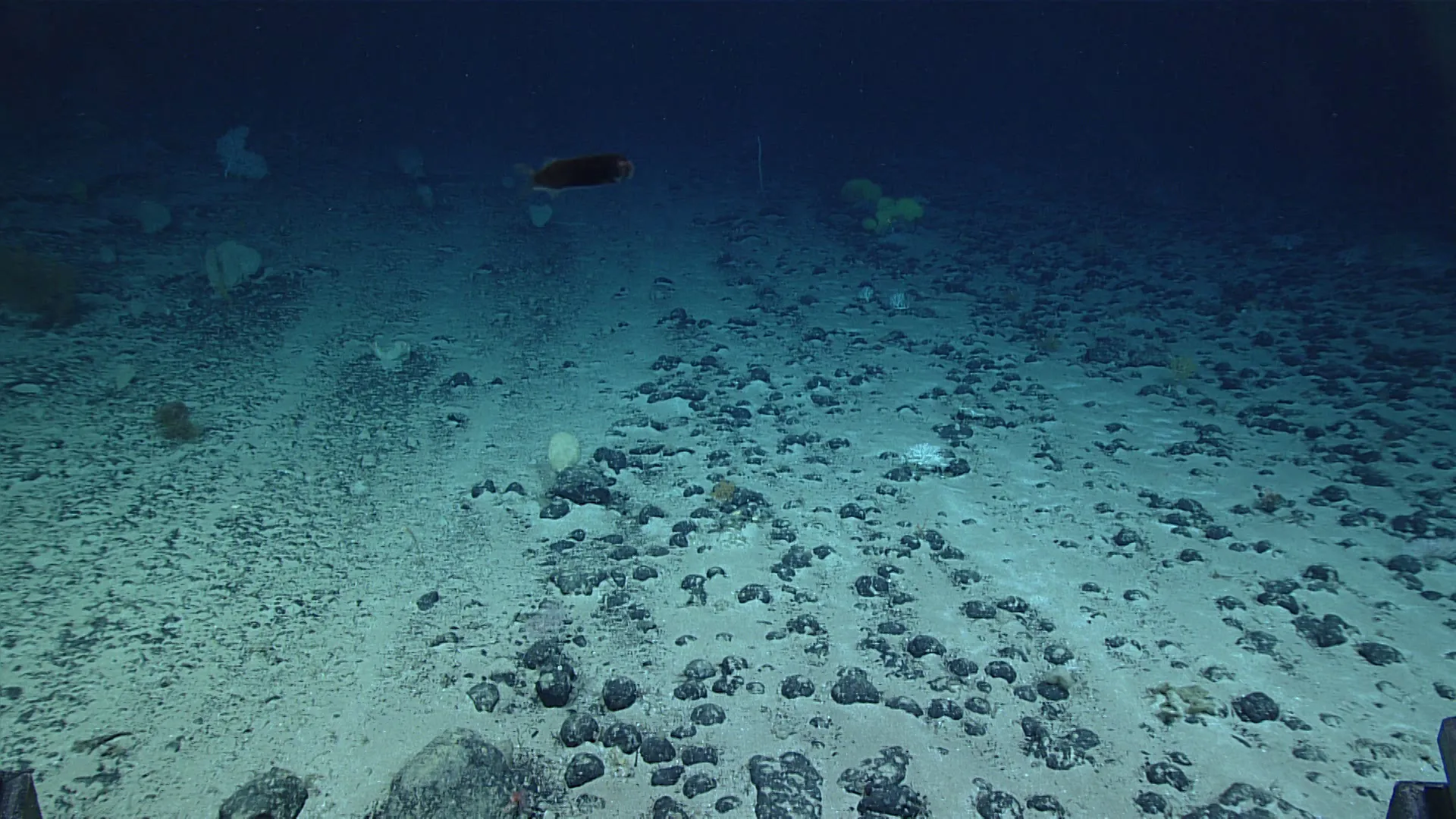
The resource itself is not divided into neat legal boxes. Polymetallic nodules on the abyssal seafloor can sit inside a deal model, an environmental impact statement, an ISA contract file, a NOAA permit record, and a tribunal brief at the same time. Jurisdiction is doing the separating work.
Against whom each legal position matters
The cleanest way to brief a board or lender is not to ask whether the rules are delayed. It is to identify the audience for each legal claim.
| Actor | U.S. track question | International track question |
|---|---|---|
| Applicant or operating subsidiary | Has NOAA accepted the application as complete or compliant, and what remaining steps exist before any commercial recovery permit? | Will conduct in the Area be challenged as inconsistent with the ISA’s common-heritage position or with sponsor-state obligations? |
| Non-U.S. parent or affiliate | Is the parent relying on the U.S. subsidiary’s domestic authorization for disclosure, financing, offtake, or contractor commitments? | Could the parent face reputational, contractual, or litigation exposure in jurisdictions that treat UNCLOS/ISA compliance as a condition of lawful participation? |
| Sponsor state | Does the U.S. process affect the state’s own sponsorship position, if any, or the representations made by the contractor? | How do Article 139-style responsibility questions, ISA inquiry powers, and any advisory opinion affect the state’s supervision file? |
| Financier | Which NOAA milestones are conditions precedent, draw conditions, or disclosure triggers? | Do loan documents, export-credit policies, ESG screens, insurance exclusions, or default provisions assume the ISA track is resolved when it is not? |
| Contractor or offtaker | Does the commercial contract require only a U.S. permit, or does it require broader legality opinions? | Can performance be suspended if an ISA, ITLOS, sponsor-state, or advisory-opinion development changes the risk profile? |
The Area-versus-national-jurisdiction distinction should stay explicit in those memos. A coastal state mineral regime in an exclusive economic zone raises different hooks than activities in the Area. For adjacent jurisdictional comparisons, see the site’s pieces on Cook Islands deep-sea minerals law and Japan’s lawful rare earth mining and UNCLOS. Those examples do not answer the Area question; they help prevent counsel from importing the wrong jurisdictional assumption.
Financing documents should not treat delay as a single risk factor
The financing problem is usually less dramatic than the public debate. It is also less forgiving. A lender does not need to decide whether the ISA or NOAA has the better theory in order to decide that the borrower’s conditions precedent are under-specified.
If a term sheet says “receipt of required permits,” counsel should ask which required permits. If a representation says the project complies with applicable law, counsel should ask whose law is being treated as applicable for conduct in the Area. If a covenant requires maintenance of permits, counsel should ask whether an ISA inquiry, ITLOS order, advisory opinion, or sponsor-state notice can trigger a reporting obligation even before a final adverse ruling.
The same discipline applies to public-company disclosure. A company may be able to say that a U.S. application has been found compliant, if that is accurately described and sourced. It should not turn that into a statement that international-law risk has been eliminated. The record as of Aug. 1, 2026 supports a narrower statement: the U.S. administrative pathway has advanced, while the UNCLOS/ISA/ITLOS pathway remains contested and procedurally active.
The practical legal judgment
The ISA Mining Code delay is material, but it is no longer the only material fact. NOAA’s rule and TMC USA’s reported compliance finding give the U.S. pathway a concrete filing calendar. The ISA’s common-heritage position, the July 18 ITLOS provisional-measures orders, and the pending Article 191 advisory request keep the international-law pathway active.
Sponsors, contractors, financiers, and counsel should therefore test obligations and enforcement exposure under both tracks before relying on either. The safest memo is not the one that predicts which institution will move first. It is the one that states which legal authority is being relied on, which audience is expected to accept it, and what happens if the other track refuses to treat that authority as enough.
References
- Deep Seabed Mining; Revisions to Regulations for Exploration License and Commercial Recovery Permit — Federal Register, Jan. 21, 2026.
- Mining companies may soon bypass UN rules and mine the deep sea — The Conversation, June 2026.
- FAQ for Media — International Seabed Authority, updated July 1, 2026.
- UN regulator delays deep-sea mining rules, but extends criticized exploration contract — Mongabay, July 29, 2026.
- Case concerning an inquiry by the International Seabed Authority (Nauru Ocean Resources Inc. v. International Seabed Authority) — International Tribunal for the Law of the Sea.
- 31st Session 2026 — International Seabed Authority, 2026.
- International Seabed Authority Council (Part I) Summary, 9-19 March 2026 — Earth Negotiations Bulletin, March 2026.
Operationalizing workflow
No workflow has been explicitly linked to this obligation yet. See Workflows generally.
Illustrative cases
No illustrative case is currently tracked for this obligation. See Risk Digest for documented incidents generally.
← Back to RegulationReport a correction or tip
Spotted an outdated figure, a misstated fact, or a ruling this regulation entry should reflect? Public comments are disabled for this content given the professional cost of a misreported case outcome, penalty amount, or rule text — use the structured correction channel instead.
Report a correction or tip for this record →