
What Italy's Schengen Suspension Means for Travel to Spain
- Authority
- Italian Interior Ministry (Viminale)
- Rule type
- regulation
- Jurisdiction scope
- EU / Schengen Area
- Effective date
- Aug 1, 2026
- Source text
- Read primary rule text ↗
Targeted document checks for non-EU nationals arriving in Italy from Spain by air or sea; carry valid passport, visa/EES status, and short-stay proof.
Current status, last verified August 2, 2026
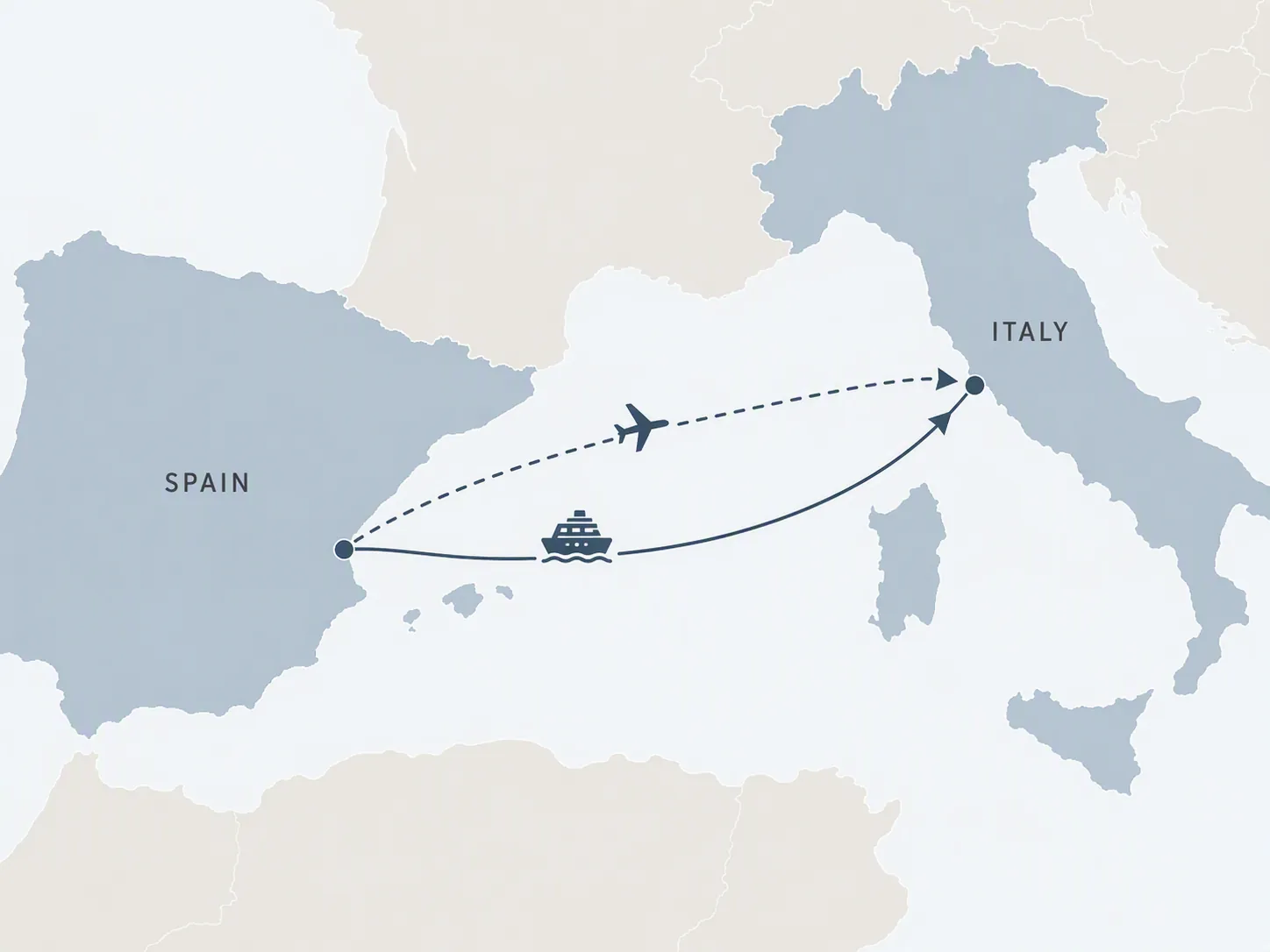
Italy’s August 1, 2026 measure is a targeted internal-border document-check regime for third-country nationals arriving in Italy from Spain by air or sea. It is not a Schengen visa suspension, not a travel ban, not a closure of flights or ferries, and not a rule aimed at EU citizens. Italian Interior Ministry framing reported by ANSA, Sky TG24, and Reuters describes the checks as “targeted and selective,” effective from August 1 for one month and renewable, with EU citizens outside the stated scope. [1][2][3]
The legal hook matters because Article 25a(1) of the Schengen Borders Code is an immediate-action route for temporary internal border controls: the initial period is limited to one month, and prolongations under that route may not exceed a total of three months. [4] As of verification on August 2, 2026, the European Commission’s public temporary-reintroduction page did not visibly list an Italy–Spain entry; it did list Italy’s separate Slovenia land-border control and other member-state controls, while contemporaneous reporting noted that Italy had not yet formally notified partners at close. [5][6]
| Field | Current record |
|---|---|
| Issuing authority | Italian Interior Ministry / Viminale, as reported by ANSA, Sky TG24, and Reuters. Government-confirmed reporting; formal EU notification not visibly listed on the Commission page as of August 2, 2026. [1][2][3][5] |
| Legal basis | Article 25a(1) of Regulation (EU) 2016/399, the Schengen Borders Code immediate-action track for temporary internal border control. [4] |
| Effective date | August 1, 2026. [1][2][3] |
| Initial duration | One month. [1][2][3] |
| Renewal ceiling under Article 25a | Renewable, but the Article 25a immediate-action route is capped at a total of three months. [4] |
| Persons affected | Third-country nationals, meaning non-EU nationals, arriving in Italy from Spain by air or sea. EU citizens are reported as unaffected by the measure. [1][2][3] |
| Routes covered | Spain-to-Italy air and sea arrivals. The measure is not described as applying to Italy-to-Spain travel. [1][2][3] |
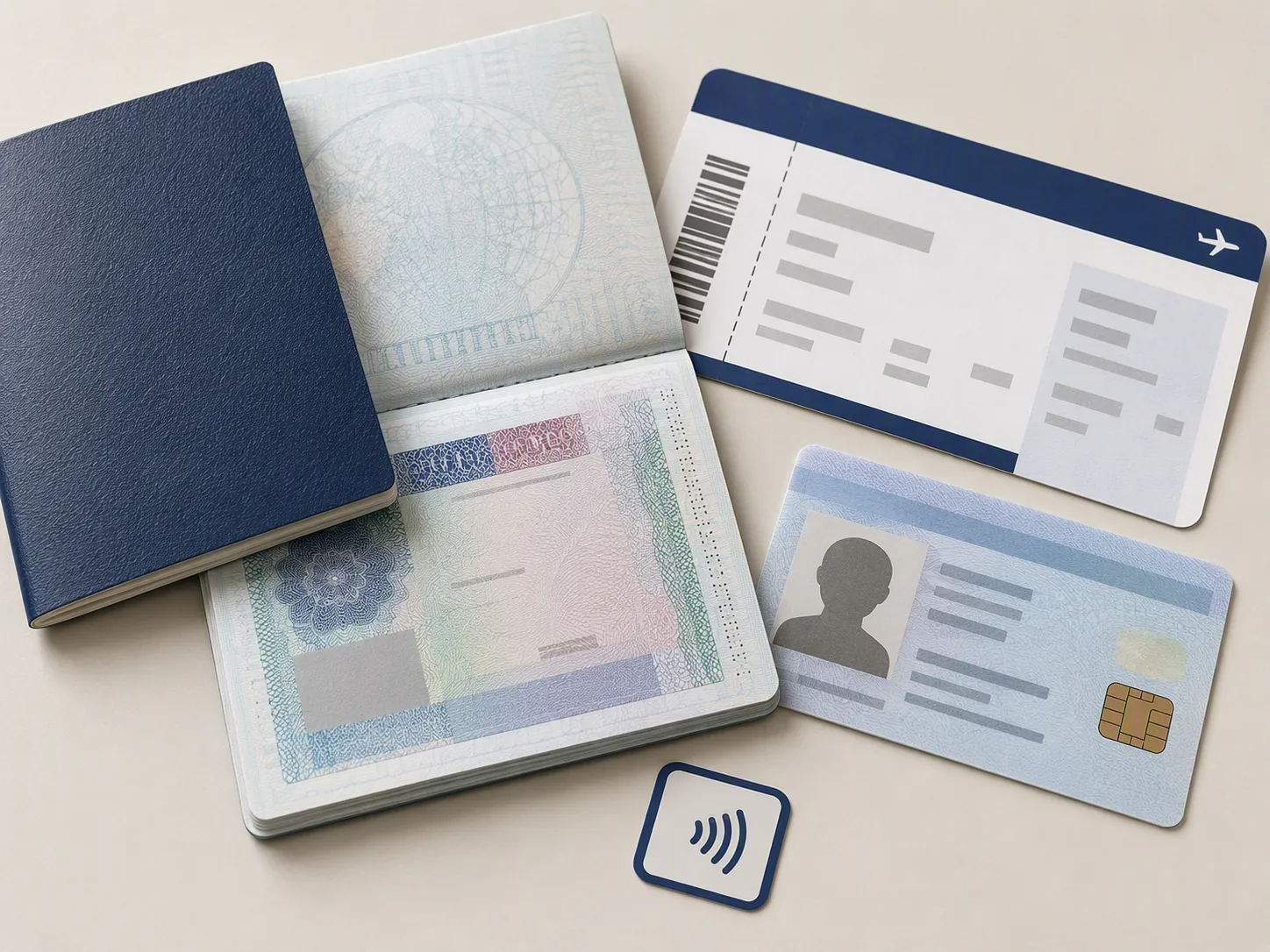
| Documents to have ready | Passport or identity document valid for expatriation where applicable; valid Schengen visa if the traveler is visa-required; Entry/Exit System status where applicable; and proof that any visa-exempt stay remains within the 90-days-in-any-180-day allowance. [1][2][7] |
| What has not changed | Schengen visas are not canceled; visa-free nationality rules are not replaced; EU citizens are not the stated target; and ordinary carrier document checks still remain separate from the Italian internal-border measure. |
| Last verified | August 2, 2026, UTC, against the Commission temporary-reintroduction page and the available public reporting. [5][6] |
This record is a compliance and legal-risk note, not individualized legal advice. The practical question is narrow: whether a traveler between Spain and Italy after August 1 should expect an extra document check, and whether that check changes the traveler’s underlying right or permission to travel. On the materials available as of August 2, the answer is that some non-EU arrivals into Italy from Spain should prepare for an additional document-control step; the underlying Schengen visa, visa-exempt allowance, EU citizenship status, and ordinary entry-condition analysis still do the legal work.
Who should expect a check
The affected traveler class is not “everyone traveling from Spain.” The reported Italian measure concerns third-country nationals arriving in Italy from Spain by air or sea. That means the person most likely to need a calm, document-by-document answer is the non-EU employee flying Madrid–Rome, the visa-exempt national taking a ferry from Barcelona toward Italy, or the assistant confirming papers for a non-EU executive whose itinerary enters Italy from Spain. [1][2][3]
The direction is part of the rule. Spain-to-Italy is not the same as Italy-to-Spain. The available public descriptions point to arrivals into Italy from Spain by air and sea; they do not establish a new Italian rule for a traveler departing Italy for Spain. A carrier may still inspect identity documents, visas, residence cards, or boarding eligibility in the ordinary course, but that is not the same legal event as Italy reintroducing internal border control on Spanish-origin arrivals.
| Traveler or itinerary | How to read the August 1 measure |
|---|---|
| EU citizen traveling Spain to Italy | Reportedly outside the stated scope of the targeted checks; still carry a valid passport or national ID as ordinary travel documentation. [1][2] |
| Non-EU national flying Spain to Italy | Within the reported class of travelers who may face targeted and selective document checks. [1][2][3] |
| Non-EU national traveling Spain to Italy by ferry or other sea route | Within the reported air-and-sea route scope. [1][2][3] |
| Traveler going Italy to Spain | Not the direction described in the available Italy–Spain measure reporting. |
| Visa-required non-EU national with a valid Schengen visa | The visa is not reported as canceled or suspended; the traveler should carry the valid visa and satisfy ordinary entry and stay conditions. |
| Visa-exempt non-EU national | No new visa requirement is created by the reported measure, but the traveler must still remain within the Schengen short-stay allowance and be able to show entry-condition compliance. [7] |
Documents affected travelers should have ready
For a third-country national arriving in Italy from Spain by air or sea, the working assumption should be that the Italian officer may ask for documents that already mattered before the August 1 measure. The check does not create a new Schengen visa category. It brings an internal-border control point back into the journey.
- Passport, or where legally acceptable, an identity card valid for expatriation.
- Valid Schengen visa, if the traveler’s nationality requires one.
- Residence permit or long-stay documentation, if the traveler is relying on that status rather than a short-stay visa or visa exemption.
- Entry/Exit System status where applicable; Fragomen’s Schengen internal-checks tracker describes EES as fully applicable since April 2026. [7]
- For visa-exempt nationals, evidence that the traveler remains within the 90-days-in-any-180-day Schengen short-stay allowance. [7]
- Travel itinerary and accommodation or onward-travel evidence, where useful to answer ordinary entry-condition questions.
There is a difference between being checked and being newly barred. A traveler who needed a visa on July 31 still needs the correct visa on August 1. A visa-exempt traveler who had already used too many Schengen days does not get a new allowance because the check is internal. A traveler with a valid visa or residence basis does not lose it merely because Italy has reintroduced targeted internal document controls.
What the headline does not mean
“Schengen suspended” is too blunt for client advice. The useful distinctions are these:
- It does not mean Schengen visas issued by Italy, Spain, or another Schengen state are canceled.
- It does not mean Spain-to-Italy flights or ferries are prohibited.
- It does not mean EU citizens are the stated target of the measure; the Italian framing reported by ANSA and Sky TG24 says EU citizens are unaffected. [1][2]
- It does not mean Italy has imposed a new visa requirement on all travelers coming from Spain.
- It does not mean the same rule applies in the reverse direction, from Italy to Spain, on the facts currently available.
The better label is temporary internal border control on a defined route and traveler class. For the general legal mechanics of when Schengen states may reintroduce internal border controls, see the existing framework note on Schengen suspension rules and conditions. This Italy–Spain record is the dated implementation note; it should not be read as a replacement for the general Article 25/25a framework.
Why Article 25a makes the status time-limited
Article 25a of the Schengen Borders Code is the provision for action where a member state considers that a serious threat to public policy or internal security requires immediate action. Under Article 25a(1), the member state may exceptionally reintroduce border control at internal borders immediately, but the initial duration is limited to one month; if the serious threat persists, Article 25a allows prolongation, with the total period capped at three months. [4]
That ceiling is why “one month, renewable” needs both halves. The announced checks are not open-ended on the immediate-action track, but they also should not be treated as guaranteed to disappear after the first month. For travel planning, the safer assumption is that Spain-to-Italy air and sea arrivals by third-country nationals may remain checkable during the initial month and, if renewed within the Article 25a limit, for a longer but still capped period.
The provisional part is the public-notification record. The Commission page is the central public list to check for temporary reintroductions of border control. As of August 2, 2026, it showed Italy’s separate internal land-border control with Slovenia running from June 19 to December 18, 2026, and controls by Austria, France, Germany, the Netherlands, Norway, Poland, and Sweden; it did not visibly show an Italy–Spain entry. [5] That absence should not be inflated into “the measure does not exist,” because multiple reputable reports quote or relay the Italian government’s position. It does mean the exact Article 27 notification content, date, border points, and stated threat basis should be rechecked before a formal client memo is sent.
Ceuta explains the trigger; it is not the boarding rule
Italy’s stated security concern is linked to the Ceuta migration crisis, which is the factual trigger reported around the July 31 announcement. [1][3] That background matters because it explains why Italy invoked internal-security concerns. It does not change the operational answer at an Italian airport or port: the traveler-facing rule is still a targeted document check for third-country nationals arriving from Spain by air or sea.
Readers who need the root-cause chain should separate three topics. First, the Ceuta crisis itself and the Spanish Supreme Court context are covered in the Ceuta Supreme Court ruling risk digest. Second, Ceuta and Melilla have special border-law features, including pre-existing exit checks, addressed in the Ceuta border law and asylum regimes note. Third, the August 1 Italian measure is not a Ceuta/Melilla exit-control rule; it concerns arrivals into Italy from Spain.
The distinction is not academic. Article 41 of the Schengen Borders Code preserves specific arrangements connected with Ceuta and Melilla, including controls under Spain’s accession arrangements. [4] Those arrangements predate this Italy–Spain measure. They should not be merged with Italy’s new air-and-sea arrival checks, and neither should Italy’s separate Slovenia land-border control, which appears on the Commission page with its own dates and route scope. [5]
The broader EU context is uncomfortable but secondary for this record. In June 2026, the Commission issued opinions recommending that internal border controls by nine member states should phase out, a reminder that repeated internal checks are under EU scrutiny even when member states invoke security grounds. [8] That context may matter for policy risk, but it does not answer whether a non-EU traveler can board a Spain-to-Italy flight with a valid visa. The boarding answer remains document-based.
Before travel or client advice
Before sending advice, distinguish the traveler’s legal basis from the inspection event. The inspection event is the possible targeted check on arrival in Italy from Spain. The legal basis is the traveler’s passport, citizenship, visa, residence status, EES record, and short-stay day count.
- Check the European Commission temporary-reintroduction page again for a visible Italy–Spain notification, any Article 27 details, and any renewal or end date. [5]
- Check the Italian Interior Ministry position or consular/carrier guidance for the current route scope and document expectations.
- Confirm whether the traveler is an EU citizen, a visa-required third-country national, a visa-exempt third-country national, or a residence-permit holder.
- For visa-required travelers, confirm that the Schengen visa is valid for the planned dates and use.
- For visa-exempt travelers, count the 90-days-in-any-180-day allowance and check EES status where applicable. [7]
- For recurring internal travel-check files, apply the same evidence discipline as a travel-document verification file; the passport and visa-free verification workflow is a useful model even where the nationality and route are different.
The safe wording for August 2026 is therefore precise: Italy has announced targeted and selective internal document checks for third-country nationals arriving from Spain by air or sea, starting August 1 for one month and renewable within the Article 25a ceiling. That is materially different from saying that Schengen visas are suspended or that travel between Italy and Spain has been banned.
References
- L'Italia sospende Schengen con la Spagna. Meloni: "Tutelata la sicurezza nazionale" — la cronaca, ANSA, July 31, 2026
- Cosa succede ora che l'Italia ha sospeso il trattato di Schengen con la Spagna, Sky TG24, July 31, 2026
- Italy reimposes border controls on Spain after Ceuta migrant surge, Reuters, July 31, 2026
- Regulation (EU) 2016/399 of the European Parliament and of the Council of 9 March 2016 on a Union Code on the rules governing the movement of persons across borders (Schengen Borders Code), EUR-Lex, consolidated version October 12, 2025
- Temporary Reintroduction of Border Control, European Commission
- Cueta, Spain, Morocco, Italy migration Schengen Europe latest news updates, The Guardian, July 31, 2026
- European Union/Schengen Area: Internal Schengen Border Checks Situation, Fragomen
- Commission: Internal Border Controls by Nine Member States Should Phase Out, eucrim
Operationalizing workflow
No workflow has been explicitly linked to this obligation yet. See Workflows generally.
Illustrative cases
No illustrative case is currently tracked for this obligation. See Risk Digest for documented incidents generally.
← Back to RegulationReport a correction or tip
Spotted an outdated figure, a misstated fact, or a ruling this regulation entry should reflect? Public comments are disabled for this content given the professional cost of a misreported case outcome, penalty amount, or rule text — use the structured correction channel instead.
Report a correction or tip for this record →