
What changed in Silver Alert criteria and requirements
- Authority
- Michigan Legislature; New Mexico Legislature
- Rule type
- statute
- Jurisdiction scope
- US state
- Effective date
- Jul 23, 2026
- Source text
- Read primary rule text ↗
Michigan allows direct public cell-phone Silver Alerts; New Mexico bill text would require independent DPS determination, no-cost carrier dissemination, and per-alert records.
Last verified: August 3, 2026, 00:00 UTC. Scope: U.S. Silver Alert law for missing-elderly and vulnerable-adult cases, with current-cycle attention to Michigan SB 456, New Mexico HB 0301, and the absence of an enacted federal Silver Alert standard. Legal-background review: source-level review against the cited official releases, bill text, and federal materials. This article is informational and is not legal advice.
The current change in Silver Alert criteria and legal requirements for missing elderly people is not a single national update. Michigan’s July 23, 2026 signing of SB 456 is a verified enacted event: the governor’s office describes the law as allowing Michigan State Police to send Silver Alerts directly to cell phones through the state’s emergency alert system.[1] That is a delivery-route change. It matters because the prior Michigan channel, as described by Sen. Mallory McMorrow’s office during Senate passage, notified first responders but did not alert the general public.[2] New Mexico’s HB 0301 points to a different kind of movement: its 2025 bill text would amend NMSA 29-15-3.2 by changing the eligibility gate, assigning an independent Department of Public Safety determination, requiring no-cost carrier dissemination, and recording specific per-alert data.[3]
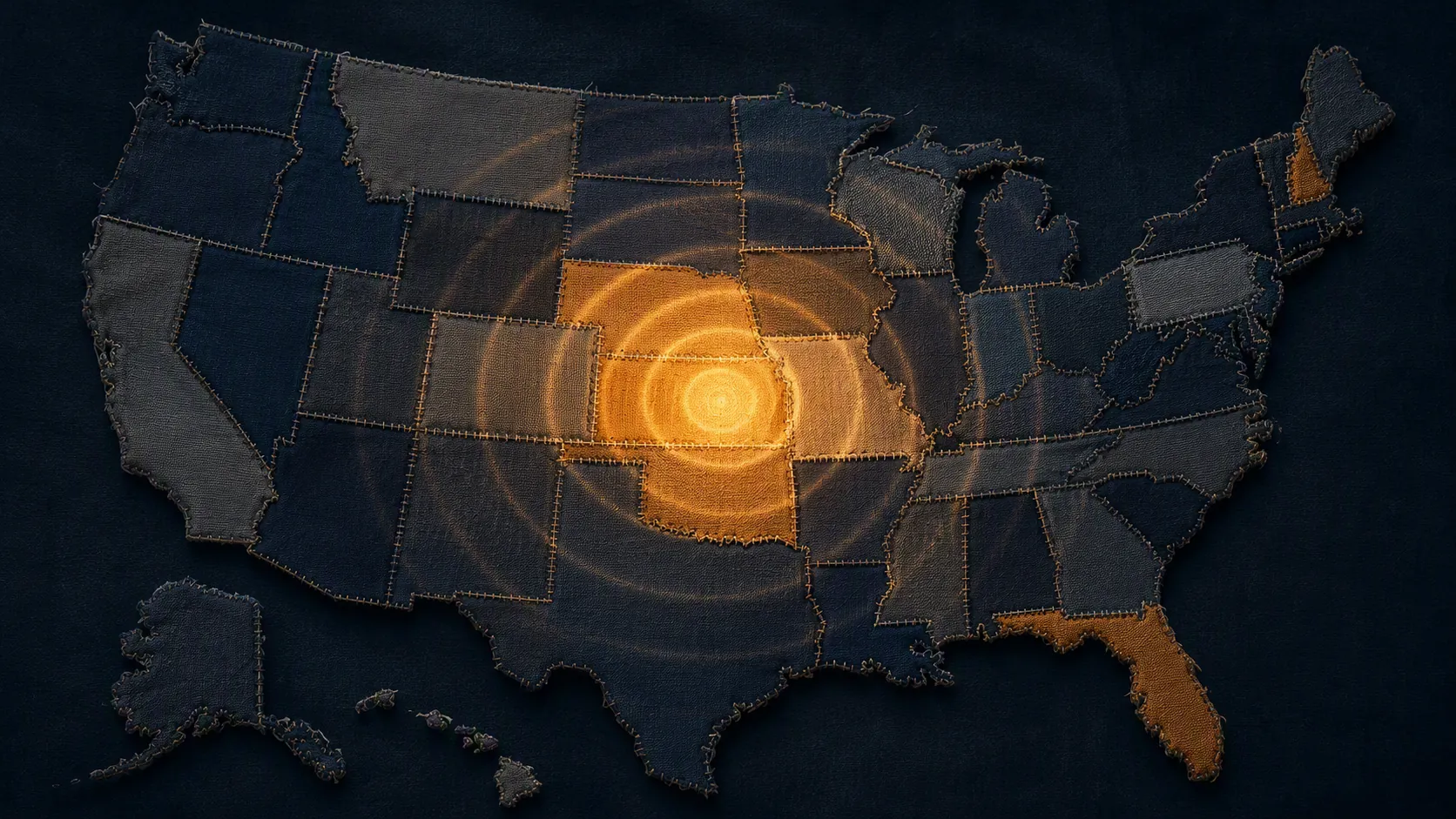
Those are not interchangeable updates. One state changed who receives an alert. Another bill text would change who qualifies and what the administering agencies and carriers must do after the decision is made. For families, reporters, counsel, and public-safety staff, the operative question is therefore narrower than “does the state have a Silver Alert?” It is: what legal threshold must be met, which public agency decides, and what delivery obligation follows?
| Change dimension | Michigan SB 456 | New Mexico HB 0301 bill text |
|---|---|---|
| Verified status in this record | Signed July 23, 2026; treated here as enacted based on the governor’s release.[1] | Enactment was not independently verified in the supplied source set; treated here as bill text describing what the amendment would do.[3] |
| Main legal delta | Dissemination channel: from first-responder-only notices under the prior Mozelle Act description to public cell-phone alerts.[1][2] | Eligibility and administration: replacement of a formal-diagnosis gate with an independent DPS determination, plus dissemination and recordkeeping mechanics.[3] |
| Actor under pressure | Michigan State Police, which may send the alert directly to cell phones once statutory criteria are satisfied.[1] | Department of Public Safety decision-makers and participating cellular or paging carriers; the text also creates per-alert records.[3] |
| Public-facing consequence | People in the alert area can receive the message on their phones instead of the notice remaining inside first-responder channels.[1][2] | If enacted as written, carrier text dissemination would be required at no cost, and the system would track fields such as municipality, age, gender, report date, alert date, and recovery date.[3] |
Michigan’s clean change: the alert leaves the responder-only lane
Michigan is the sharper 2026 example because the before-and-after is easy to locate. The older route, as described during the 2025 Senate passage announcement, placed notices with first responders rather than the public.[2] SB 456, signed in July 2026, changes that operational posture by letting Michigan State Police send alerts directly to cell phones.[1]
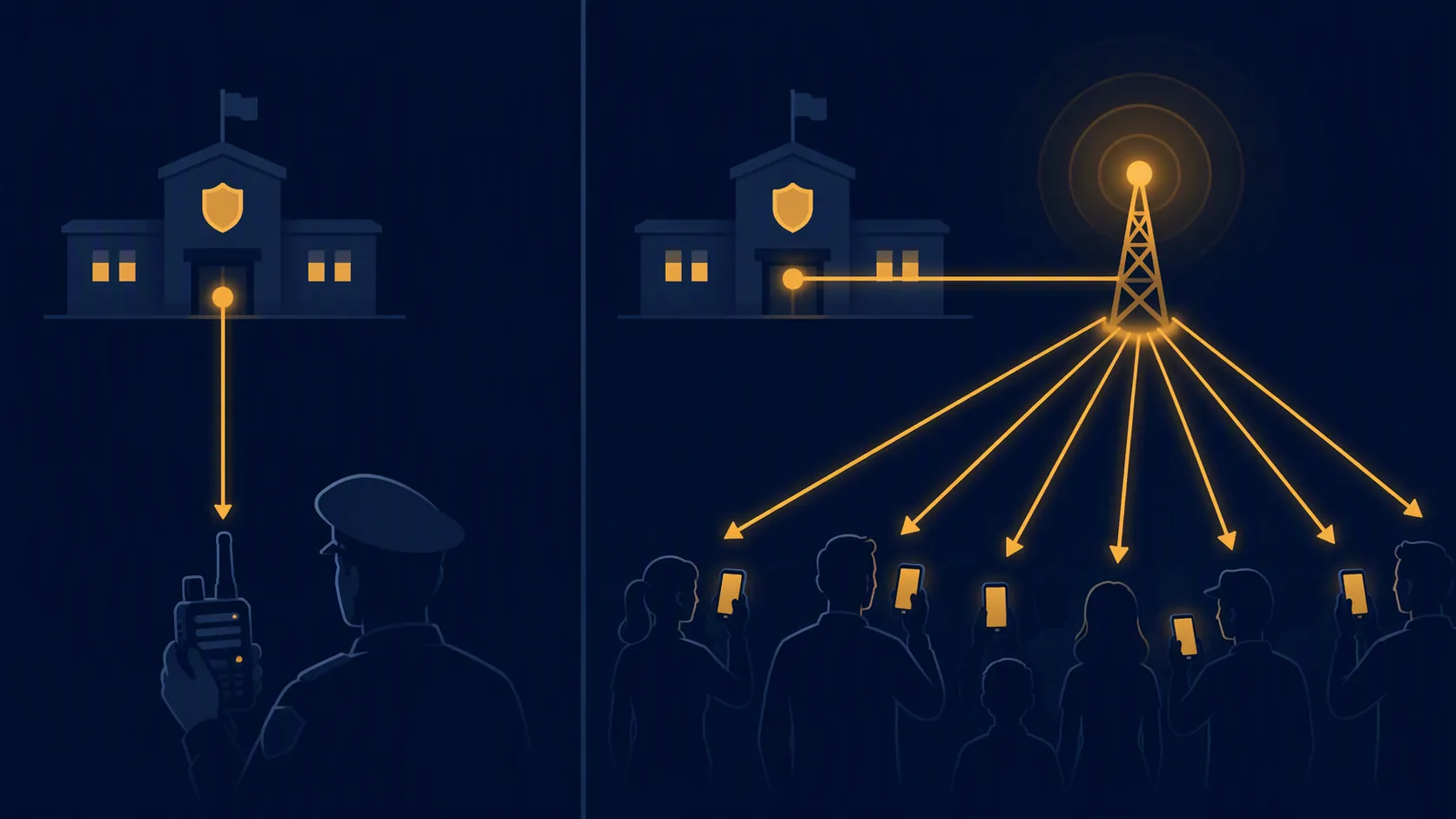
For the person entering the alert, that is not ceremonial language. It changes the consequence of the approval decision. A first-responder-only notice asks trained agencies to watch, search, and share within professional channels. A direct-to-cellphone alert reaches people who may be driving, shopping, working at a front desk, walking a dog, or standing near a transit stop. The same missing-person report can now create a public interruption.
That added reach is the point of the law, but it also raises the stakes of the threshold decision. The Michigan State Police unit has to decide whether the statutory criteria are met before the message goes out to phones. If the criteria are too hard to satisfy, the alert arrives late or not at all. If the criteria are treated too loosely, phones receive more alerts, more personal details circulate, and the system risks training the public to ignore notices that need immediate attention.
Nothing in the cited Michigan materials supports describing SB 456 as a national standard, or even as a change in every state’s missing-elderly alert criteria. It is a Michigan delivery-law change. Readers who need the broader state-by-state eligibility inventory should use the static Silver Alert criteria by state reference rather than assuming Michigan’s new public-facing route exists elsewhere.
New Mexico HB 0301 moves the gate, then writes down the duties
New Mexico’s HB 0301 should be read more cautiously in this record. The supplied primary source is the 2025 bill text, and enactment was not independently verified here. For that reason, the operative language is “would amend,” not “now requires.”
The text is still important because it shows a different legislative instinct from Michigan’s. Instead of focusing first on whether the alert reaches the public, HB 0301 would alter the threshold for eligibility. The bill text would replace a formal-diagnosis gate with an independent Department of Public Safety determination.[3] In practice, that kind of change can matter when a person appears to be at risk but the family, officer, or agency does not have a neat diagnostic document in hand.

That is not a small drafting move. A formal-diagnosis requirement puts the gate outside the immediate alert workflow: someone must be able to point to a qualifying diagnosis. An independent DPS determination moves more judgment into the alert system itself. The agency does not merely transmit a decision already made by medical records; it evaluates whether the statutory standard is met for the missing-person alert.
The bill text also turns that eligibility judgment into dissemination and tracking duties. HB 0301 would require cellular telephone and paging carriers to transmit the alert text at no cost, and it would require records for each alert, including the municipality, age, gender, date the person was reported missing, date of the alert, and date of recovery.[3] Those fields are not just clerical details. They decide what the agency can later audit: where alerts were used, how quickly the alert followed the report, and whether recovery information was captured.
The carrier language also changes who has a legal task after the alert is approved. A Silver Alert statute can say a person qualifies, but that does not by itself tell a carrier employee or public-safety communications unit what must be transmitted, whether a fee may be charged, or what record must exist after the person is found. HB 0301’s text addresses those mechanics directly.[3]
The privacy and over-notification concern sits inside the mechanics. A broader eligibility gate can help families who cannot immediately prove a formal diagnosis. It can also put more personal information into a public alert channel. The statute’s safeguard is not good intentions; it is the written threshold, the named decision-maker, and the record that survives the incident.
Why these state deltas matter: Congress has not supplied the baseline
The Michigan and New Mexico materials matter because there is no enacted federal Silver Alert statute that standardizes the missing-elderly criteria, approval actor, or delivery channel across states. Federal Silver Alert bills have appeared repeatedly, but the cited materials do not show enactment into a national standard.
The federal history is enough to explain the gap without turning this record into a legislative archive. Wikipedia’s Silver Alert entry reports that H.R. 6064 passed the House in 2008 and H.R. 632 passed the House in 2009; it also reports, citing the Congressional Budget Office, an estimated cost of $59 million over five years.[4] In 2013, Sen. Chris Coons announced reintroduction of National Silver Alert legislation to help locate missing seniors.[5] In 2014, H.R. 5361 again proposed a National Silver Alert Act.[6] None of those cited federal efforts supplies an enacted national standard for the 2025–2026 state changes discussed here.
That federal absence is why Michigan can move on dissemination while New Mexico’s bill text moves on eligibility, carrier dissemination, and recordkeeping. It is also why AMBER Alert comparisons can mislead if they are used too quickly. For readers comparing the federal framework around AMBER and Silver Alerts, the separate AMBER and Silver Alert legal requirements explainer is the better routing point.
The same routing problem appears in search. Some readers arrive at “Silver Alert” looking for AI incident-notification rules rather than missing-person alerts. Those are different legal conversations. The missing-person alert record here should not be blended with the site’s Silver Alert and AI notification rules clarification.
The compliance answer is state, date, trigger, actor, channel
A missing-elderly case does not begin with federal uniformity. It begins with the state rule in force on the day the report is made. In Michigan after the July 2026 signing, the key new obligation is the public-facing cellphone delivery route through Michigan State Police, compared with the previously described first-responder-only channel.[1][2] For New Mexico, this record can only say that HB 0301’s text would change the gate to an independent DPS determination and would add no-cost carrier dissemination and per-alert recordkeeping, unless and until enactment is independently confirmed.[3]
Anyone advising a family, drafting agency policy, reporting on a disappearance, or tracking carrier and public-safety duties should check the current law of the state and the date of its last legislative action. The practical checklist is not long, but it is unforgiving: identify the eligibility trigger, identify the deciding agency, identify whether the alert is internal or public-facing, identify who must transmit it, and identify what record must remain after recovery. There is no enacted federal Silver Alert standard to fill in those blanks.
References
- Whitmer Signs Bills to Keep Vulnerable Michiganders Safe and Strengthen Public Safety Infrastructure, Michigan Governor Gretchen Whitmer, July 23, 2026.
- Missing Seniors, Michigan Senate Democrats / Sen. Mallory McMorrow, October 21, 2025.
- House Bill 301, New Mexico Legislature, 2025.
- Silver Alert, Wikipedia.
- Senator Coons, colleagues introduce Silver Alert bill to help locate missing seniors, Office of U.S. Senator Chris Coons, December 17, 2013.
- H.R.5361 - National Silver Alert Act of 2014, Congress.gov, 2014.
Operationalizing workflow
No workflow has been explicitly linked to this obligation yet. See Workflows generally.
Illustrative cases
No illustrative case is currently tracked for this obligation. See Risk Digest for documented incidents generally.
← Back to RegulationReport a correction or tip
Spotted an outdated figure, a misstated fact, or a ruling this regulation entry should reflect? Public comments are disabled for this content given the professional cost of a misreported case outcome, penalty amount, or rule text — use the structured correction channel instead.
Report a correction or tip for this record →