
What Would End Turkey's S-400 'Possession' for the F-35?
- Authority
- U.S. Congress
- Rule type
- statute
- Jurisdiction scope
- US federal
- Effective date
- Dec 20, 2019
- Source text
- Read primary rule text ↗
Certify Turkey no longer possesses the S-400 or successor system to waive the F-35 transfer bar under Section 1245.
The live legal problem is a verb. Section 1245 of the FY2020 National Defense Authorization Act conditions any waiver of the F-35 transfer bar, in relevant part, on a certification that Turkey “no longer possesses” the S-400 system or a successor system.[1] As reported by Kathimerini, the State Department told Congress in a July 22, 2026 letter that Turkey “has not yet met these conditions.”[2] The statute is public law. The letter, at least in the materials available here, is reported correspondence rather than a publicly posted agency document. That difference matters, but it does not make the reported position casual.
No court or agency construction of “possesses” has been identified in the current record. That absence is not a technical footnote. It is the reason every floated S-400 disposition should be read as an argument about statutory meaning, not as a completed legal cure.
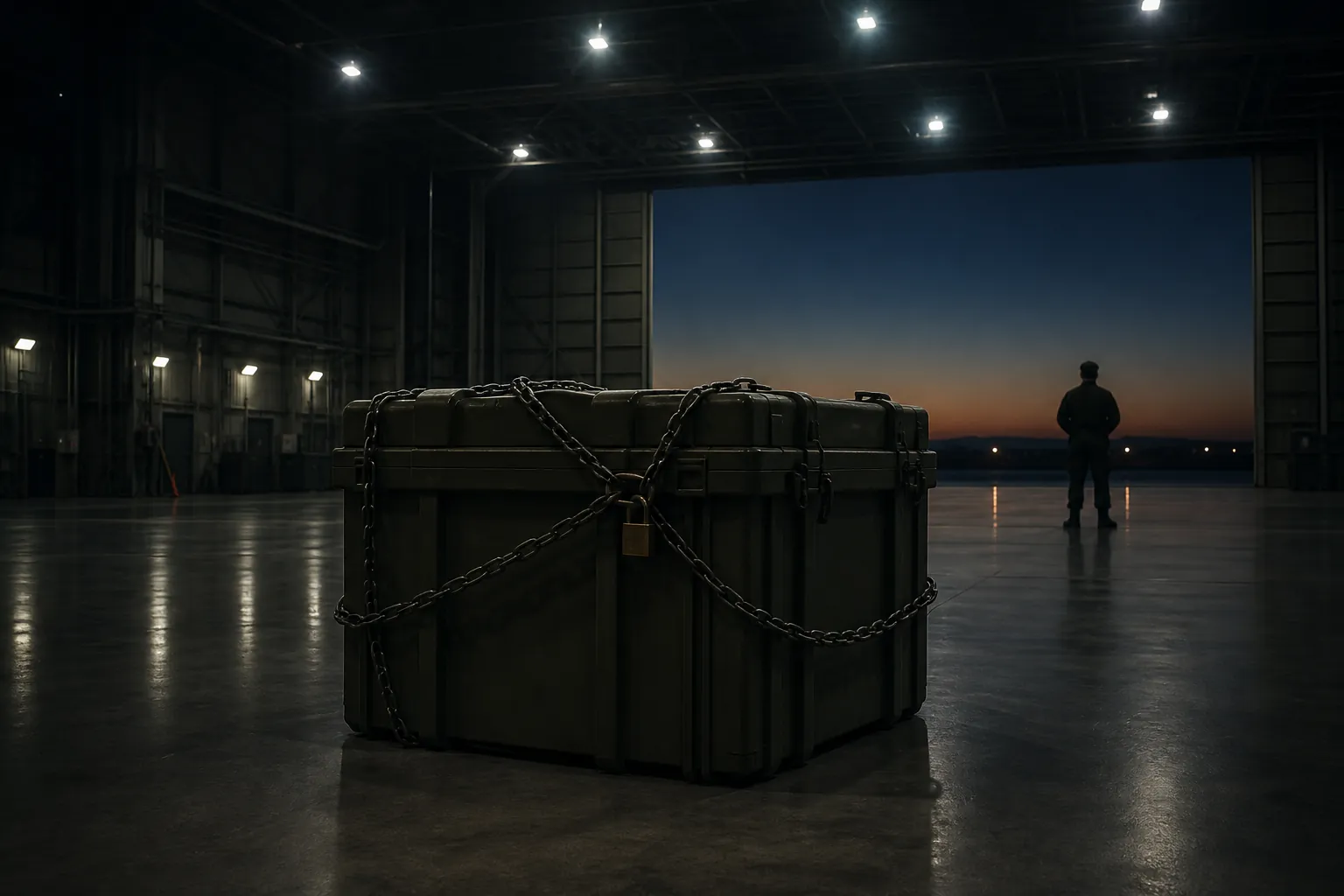
The three workarounds all try to answer the same statutory question
The proposals now circulating do not create three separate legal gates. They are three ways of saying that Turkey would, or might, no longer “possess” the system for purposes of Section 1245. That is a narrower and more useful frame than asking whether a proposal is diplomatically elegant, militarily tolerable, or politically saleable.
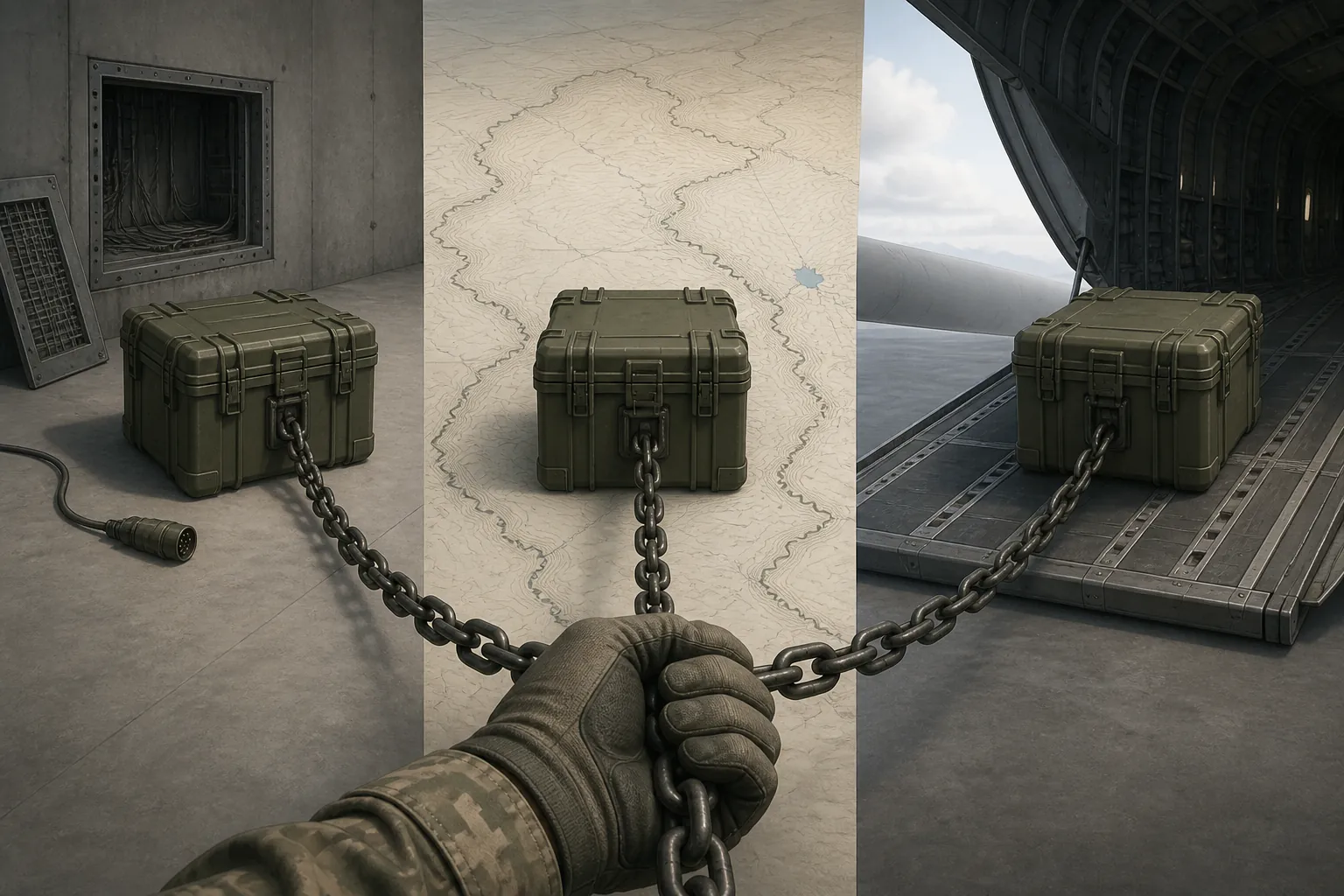
| Floated disposition | What it changes | What remains unresolved under Section 1245 |
|---|---|---|
| Declare the S-400 inoperable | The system is reportedly disabled by removing a component, while the equipment remains under Turkish control. | If possession turns on custody, a reversible disablement does not necessarily end possession. |
| Box or store the batteries in Turkey, including at Incirlik or another in-country location | The system is not being used, or is placed somewhere operationally inconvenient. | If the batteries remain on Turkish sovereign territory and in Turkish hands, storage may not change the legal relationship. |
| Transfer the system to a third country | Physical custody may move outside Turkey. | A transfer must be real enough to end Turkey’s possession, may relocate rather than remove intelligence concerns, and reportedly may require Russian consent. |
The distinction is especially important because the broader Turkey-F-35 legal file has more than one layer. CAATSA relief, the FY2020 NDAA’s Section 1245 certification, Arms Export Control Act congressional notification, and any eventual Foreign Military Sales process are not the same step. Those layers are covered separately in the site’s Turkey F-35 sale legal requirements record, the two-laws blocker record, and the CAATSA-only analysis. The narrow question here is the possession prong, because that is where the workaround language does its work.
“Inoperable” is not the same legal claim as “no longer possessed”
AEI reported in September 2025 that a proposal under discussion would have Turkey declare the S-400 “inoperable” to help reopen a path toward F-35 acquisition. The reported mechanism was not destruction, divestment, or permanent disablement; it was removal of a component, described as reversible.[3] That makes the proposal legally interesting and legally exposed for the same reason.
A system can be off, incomplete, locked, crated, or inconvenient to reactivate while still being someone’s property, under someone’s custody, and available for that person’s later use. Section 1245 does not say “operates,” “activates,” or “deploys.” It says “possesses.”[1] If the certifying theory is that possession ends when a radar battery cannot presently function, the certification would need to defend why Congress used a custody-sounding word but should be read to mean operational status.
JINSA’s July 2026 analysis takes the custody reading directly: “possesses,” in its view, is about custody rather than activation. On that reading, a crated or inactive S-400 remains possessed if Turkey retains control over it.[4] That is not a binding agency interpretation. It is, however, the cleanest sourced legal reading in the present public debate, and it fits the ordinary compliance instinct that a reversible technical condition rarely does the work of a divestiture.
The evidentiary burden would also be awkward. A certification based on inoperability would not merely need to show that a part was removed on a given day. It would need to explain why the removed component could not be replaced, why Turkey’s continuing access to the remaining system did not count as possession, and why a future reversal would not make the original certification misleading. Section 1245 separately contemplates assurances against future delivery or reacquisition-type conduct, but the immediate possession representation would still have to be true when made.[1]
In-country storage changes use, not necessarily custody
The Incirlik-style storage concept has a different surface appeal. Instead of asking whether a disconnected system is still a system, it asks whether placing the batteries in a restricted, monitored, or politically sensitive location inside Turkey can satisfy the statutory condition. JINSA rejects that approach as well, reasoning that a battery stored at Incirlik on sovereign Turkish territory would remain in Turkish hands for possession purposes.[4]
That conclusion is not inevitable as a matter of binding law, because no authoritative construction of the word has been issued. A future executive-branch lawyer could try to build a more granular control test: who holds the keys, who may access the equipment, who may move it, who may inspect it, who may order reactivation, and what legal instruments constrain those acts. But the mere fact that the batteries are boxed, parked, or stored somewhere inconvenient does not answer those questions.
This is where nouns become dangerous. “Storage” sounds final until someone asks who can retrieve the stored thing. “Custody arrangement” sounds reassuring until the arrangement is read against sovereign control, contract rights, base access, and revocability. If Turkey can still decide the system’s fate, the case for non-possession is thinner than the physical imagery suggests.
A third-country transfer may solve one custody problem and create another
A genuine transfer out of Turkey is the strongest of the three concepts if the statutory problem is custody. If Turkey no longer owns, controls, can retrieve, or can direct the S-400, the possession argument begins to look materially different from a crate in a Turkish warehouse. That is why reports and analyses about possible destinations — including Qatar, the UAE, or India — matter more than the inoperability proposal as a legal structure.[4][5]
But a transfer is not self-validating. The first question would be whether Turkey’s legal and practical control actually ends. A nominal sale with side rights, repurchase understandings, Turkish personnel access, or retained operational influence would invite the same possession problem in a different file folder. Section 1245 asks whether Turkey no longer possesses the system, not whether the system has crossed a border for a transaction label.[1]
FDD’s July 2026 analysis adds a separate point: moving the S-400 to a third country may relocate, rather than eliminate, the underlying intelligence concern. Its example is a transfer to Qatar or the UAE, where a Russian air-defense system could still sit near U.S. military equities, including facilities such as Al Udeid.[5] That is not the same question as the statutory possession prong, and it should not be smuggled into the wording of Section 1245. It does explain why a lawyer could clear one textual hurdle and still leave policymakers with an unattractive security record.
There is also the reported Russian-consent problem. FDD, citing Bloomberg’s July 2026 reporting, says Turkey has been seeking Russia’s consent to transfer the system and that the Kremlin had previously signaled openness to buying the S-400s back.[5] The underlying 2017 Rosoboronexport contract is not public in the materials available here, so the consent right should be treated as reported contract constraint, not primary text. Still, if the original seller has approval rights over an onward transfer, that issue arises before the U.S. certification question is even cleanly reached.
The source hierarchy is doing real work here
The record is uneven, and the unevenness affects the confidence level of any conclusion. Section 1245 is enacted law. It is the anchor.[1] The reported July 22, 2026 State Department letter is important because it states the department’s current position to Congress as reported, but the text has not been treated here as a publicly posted agency interpretation.[2] AEI’s inoperability account is a reported proposal, based on unnamed-source reporting; it is evidence that a workaround was being discussed, not evidence that a workaround was adopted.[3]
JINSA and FDD supply legal and policy analysis, not binding law.[4][5] Their value is that they expose the weak points a certification would have to survive: custody versus activation, Turkish territorial control versus mere storage, and third-country transfer versus retained influence or relocated exposure. Their conclusions should not be cited as if they were an Office of Legal Counsel opinion, a State Department regulation, or a court decision. They are better used as a map of the objections that would meet any clever drafting.
That distinction is not caution for its own sake. In sanctions and export-control practice, the risk often sits in the sentence someone signs. “The system is inoperable” is a different representation from “Turkey is not using the system.” Both are different from “the system is stored under agreed restrictions.” And all three are different from “Turkey no longer possesses the system.” A certification can incorporate facts, conditions, and assurances, but it cannot make an unresolved statutory word disappear by choosing a more comfortable noun.
Status as of late July 2026
The narrow status is this: no floated disposition has been shown in the public record to have been formally adopted; no court or agency has supplied an authoritative construction of “possesses” for Section 1245; and the reported State Department position as of the July 22, 2026 letter is that Turkey has not yet met the relevant legal conditions.[2]
On the strongest current public analyses, custody is the controlling concept. A reversible “inoperable” declaration leaves custody untouched. In-country storage changes access and use, but may leave Turkish control intact. A third-country transfer could be more legally significant, but only if it truly ends Turkey’s control and does not preserve rights that look like continuing possession. It would also have to pass through Russia’s reported consent rights under the nonpublic 2017 Rosoboronexport contract before the U.S. certification problem is resolved.[5]
References
- National Defense Authorization Act for Fiscal Year 2020, GovInfo, December 20, 2019.
- Turkey doesn’t meet legal conditions to rejoin F-35 program, State Department tells Congress, Kathimerini.
- Scoop: Turkey to Declare S-400 Inoperable to Gain F-35 Stealth Fighter Deal, American Enterprise Institute, September 30, 2025.
- After Ankara: Lifting CAATSA Doesn’t Unlock the F-35 for Turkey, Jewish Institute for National Security of America, July 9, 2026.
- Selling the S-400 to Qatar or the UAE Solves Turkey’s Problem, Not Washington’s, Foundation for Defense of Democracies, July 10, 2026.
Operationalizing workflow
No workflow has been explicitly linked to this obligation yet. See Workflows generally.
Illustrative cases
No illustrative case is currently tracked for this obligation. See Risk Digest for documented incidents generally.
← Back to RegulationReport a correction or tip
Spotted an outdated figure, a misstated fact, or a ruling this regulation entry should reflect? Public comments are disabled for this content given the professional cost of a misreported case outcome, penalty amount, or rule text — use the structured correction channel instead.
Report a correction or tip for this record →