
Andre Sayles inherits Seattle police chief's AI-risk ledger
Seattle/King County's AI-in-policing risk in one dated, source-linked record: SPD's enforcement actions from Truleo's 2023 end through the OPA's 2026 unapproved-ChatGPT finding and the CCTV/ALPR pause, as Andre Sayles becomes interim chief. The three open items he inherits — an SPD-wide AI policy, the privacy/data-governance audit, and the permanent chief search — set the city's near-term risk posture.
- Jurisdiction
- US-WA (Seattle/King County)
- Court
- Office of Police Accountability (OPA)
- AI tool named
- ChatGPT, Perplexity, Truleo
- Ruling date
- Jul 30, 2026
- Source document
- View primary court order ↗
- Last verified
- Aug 3, 2026
Lex Machina Review is an independent risk-tracking and reference resource. Nothing on this site is legal advice, and using it does not create an attorney-client relationship. Every record is reviewed against primary sources but may not reflect the most current status of a matter — always verify directly against the cited court order, rule text, or a licensed attorney before relying on it.
Companion explanation — secondary to the source document above
On July 30, 2026, Mayor Katie Wilson accepted Chief Shon Barnes’ resignation and named Deputy Chief Andre Sayles interim chief of the Seattle Police Department, days after the July 26 Bite of Seattle shooting at Seattle Center left three people dead and five wounded.[1] That leadership change is the risk trigger here. Sayles’ move into the chief’s office does not, by itself, answer whether Seattle’s police AI controls are adequate. It changes who now owns the department’s unfinished ledger.
This is a Risk Digest jurisdiction-risk assessment, last reviewed in Q3 2026. It is not legal advice and it is not an appointment profile. The record is limited to dated public materials on Seattle police AI use, AI-adjacent surveillance tools, and named enforcement or pause actions. Where the record supports only a narrower conclusion—such as a prosecutor’s rejection posture for AI-assisted criminal narratives, or an OPA finding about unapproved tools—it is treated narrowly.
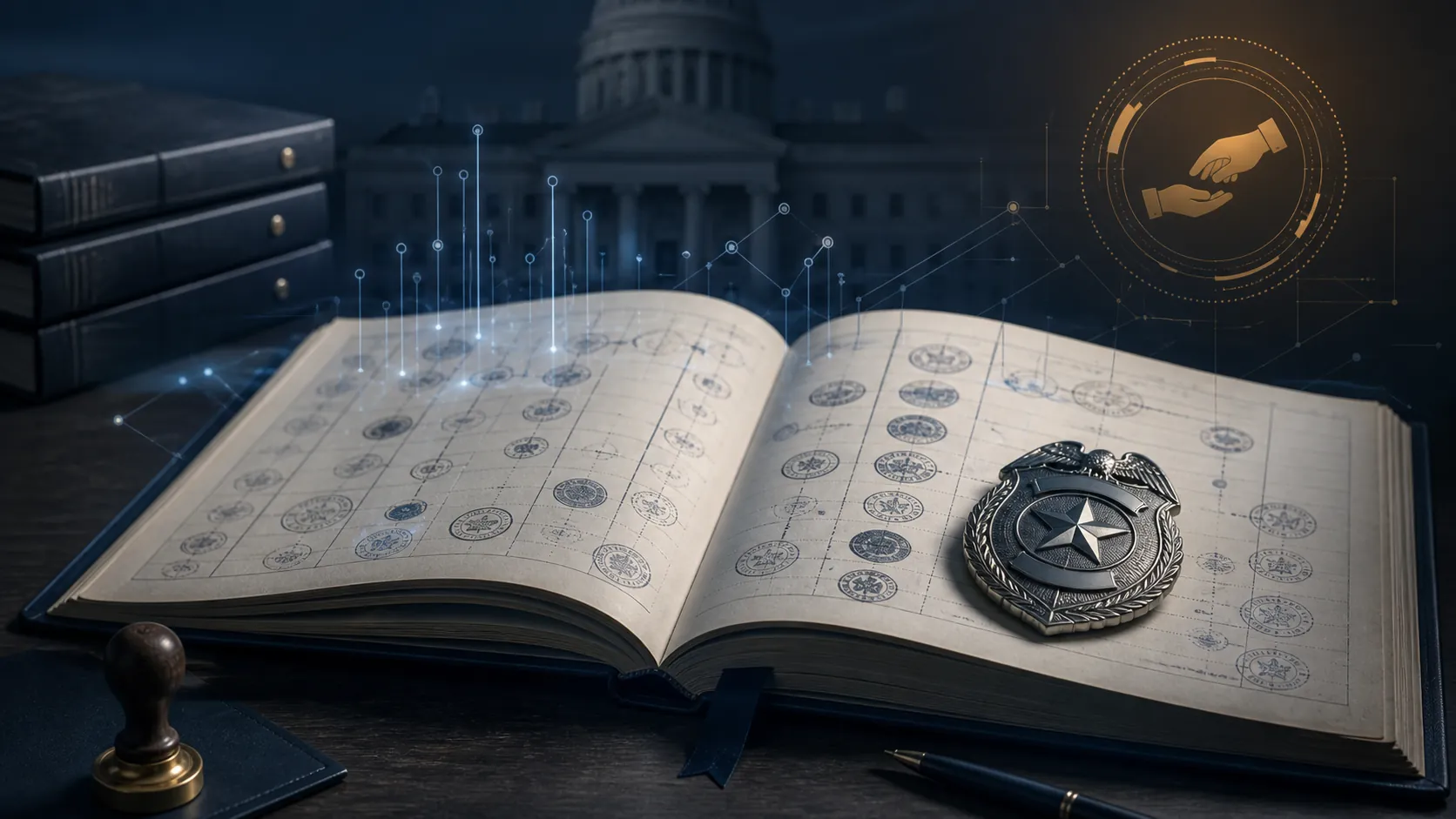
The dated ledger Sayles inherits
The public record is not a single AI procurement controversy. It is a sequence of tools, objections, policies, after-the-fact findings, and pauses:
| Date | Event | Risk significance |
|---|---|---|
| February 2023 | SPD ended its Truleo body-camera behavior analytics program after objections from the Seattle Police Officers Guild.[3] | Early marker that AI or analytics tools used around officer conduct could be constrained by labor and governance objections, not only by procurement preference. |
| September 2024 / late 2024 | The King County Prosecuting Attorney’s Office rolled out a policy, later reflected in a memo, that it would not accept police report narratives produced with AI assistance.[4] | Evidence-integrity issue for criminal cases: prosecutor acceptance turned on report provenance and authorship, not on whether a tool was popular or efficient. |
| April 4, 2025 | OPA sent Chief Barnes a letter after reviewing a sergeant’s ChatGPT-assisted Blue Team reports and emails, stating that SPD Policy 12.040 gave no guidance on employee AI use and that the city’s Generative AI Policy was not referenced in the SPD Policy Manual.[4] | The clearest public policy-gap document: citywide AI rules existed, but the police manual did not anchor them for SPD employees. |
| September 2025 | Seattle City Council voted 7-2 to expand CCTV into the Stadium District, Capitol Hill nightlife area, and the Garfield High School area, with automated license-plate reader retention set at 90 days and CCTV retention up to 30 days, typically five.[6] | Moved the record beyond generative AI into surveillance, retention, real-time camera infrastructure, and policy enforceability. |
| March 19, 2026 | Mayor Wilson paused the CCTV pilot expansion and all ALPR use pending a privacy and data-governance audit with NYU’s Policing Project.[7] | Converted surveillance objections into an executive pause tied to enforceable policy and data governance. |
| June 2026 | OPA found that SPD’s communications director used ChatGPT and Perplexity—neither approved for city use—for seven work products, and that use without acknowledgment violated city policy; city IT confirmed unapproved AI software was blocked on city devices.[5] | Shows the same control pattern: unapproved tools first, then finding, acknowledgment issue, and technical blocking. |
| July 30, 2026 | Andre Sayles became interim chief after Barnes’ resignation.[1] | The open AI-policy, surveillance-audit, and leadership-selection issues moved to the interim command period. |
Sayles’ biography matters only to the extent it places him inside that ledger. SPD lists him as having joined the department in September 2025 as Deputy Chief of Administration and Investigations, after serving as police chief in Beloit, Wisconsin, from 2021 to 2025.[2] The city’s announcement made him interim chief on July 30, not the permanent chief.[1] That distinction matters because two governance tracks now overlap: operational command and the permanent chief search.
The July 26 shooting is the immediate leadership context, not the center of this record. Its separate AI-evidence implications are covered in the related Space Needle shooting AI-risk record. Here, the question is what Seattle and King County’s documented controls require other people to do with police-generated material after the fact.
The policy gap was already written down
The April 4, 2025 OPA letter is the document that gives this record its shape. OPA was not announcing a citywide theory of artificial intelligence. It was reviewing specific SPD work: a sergeant’s use of ChatGPT in connection with Blue Team reports and emails. In doing so, OPA stated that SPD Policy 12.040 did not provide guidance on employee AI use, and that Seattle’s citywide Generative AI Policy—including an attribution requirement—was not referenced in the SPD Policy Manual.[4]
That is not a cosmetic gap. A police manual is where an officer, supervisor, OPA reviewer, prosecutor, defense lawyer, and city risk manager look when a report has to be explained months later. If the city has one AI rule and the police manual does not carry it into the department’s own operating language, the downstream reviewer is left reconstructing authority from scattered documents.
OPA’s recommendations were correspondingly practical: create an SPD AI policy, disclose AI use in any report, and coordinate with stakeholders before adopting AI tools for report writing.[4] Those recommendations go to attribution and admissibility workflows, not just employee discipline. A report that looks ordinary on its face but was drafted, revised, or summarized with an undisclosed tool gives counsel a different set of questions: who authored the narrative, what prompts or outputs existed, whether any generated text was retained, and whether the final report can be treated as the officer’s own account.
King County’s prosecutor line is narrower, and more useful because it is narrower
The King County Prosecuting Attorney’s Office position should not be blended into the OPA letter as if they were the same decision. The prosecutor policy, rolled out in September 2024 and later reflected in a late-2024 memo reproduced by FOX 13, was that the office would not accept police report narratives produced with AI assistance.[4] That is a criminal-case intake and evidence-integrity posture. The April 2025 OPA matter involved non-criminal internal reports and emails, which is why OPA did not find a violation of the PAO policy on that point.[4]
For litigators, that distinction is the useful part. The prosecutor’s concern is not merely whether an AI product is approved by city IT. It is whether a criminal narrative offered to support prosecution was generated or assisted by AI. The OPA letter, by contrast, shows what happens when internal police records are touched by AI before the department has placed a clear rule in its own manual. One affects whether a prosecutor will accept a report narrative; the other affects how an accountability file is reviewed.
The same report-integrity thread appears in other jurisdictions, but Seattle’s record is unusually document-driven. For comparison, the Twin Falls shooting verification record and the Palazuelos Pima County AI-risk record show how AI-assisted police report drafting can create Brady-Giglio, verification, and procurement questions. Seattle adds a local prosecutor rule and an OPA policy-gap letter to the same basic problem.
The June 2026 finding shows post-hoc enforcement, not a solved control system
OPA’s June 2026 finding against SPD’s communications director is best read as confirmation of the same control pattern. PubliCola reported that the communications director used ChatGPT and Perplexity for seven work products, that neither tool was approved for city use, and that use without acknowledgment violated city policy.[5] City IT also confirmed that unapproved AI software was blocked on city devices.[5]
That finding is not an evidence case in the way an AI-assisted police narrative would be. The work products were communications materials, not criminal reports. But the mechanics are familiar: an employee used unapproved public AI tools; the acknowledgment problem surfaced later; the policy consequence arrived after the work had already been created; and the technical control was described after the fact. For a public agency, that sequence matters because the artifact already exists by the time reviewers ask whether it can be relied on, disclosed, archived, or corrected.
If the April 2025 letter exposed the manual gap, the June 2026 finding exposed the enforcement gap. The city could identify a violation, and IT could block tools on city devices. What the record still does not show is a codified SPD-wide AI policy that tells employees, supervisors, and outside reviewers how AI use must be approved, labeled, retained, and disclosed across police functions.
Surveillance governance widened the issue beyond report writing
Seattle’s AI-in-policing posture cannot be measured only by ChatGPT incidents. The surveillance record brings in automated license-plate readers, CCTV, retention rules, real-time camera infrastructure, and the question of whether operational protections are enforceable policy or just procedures.
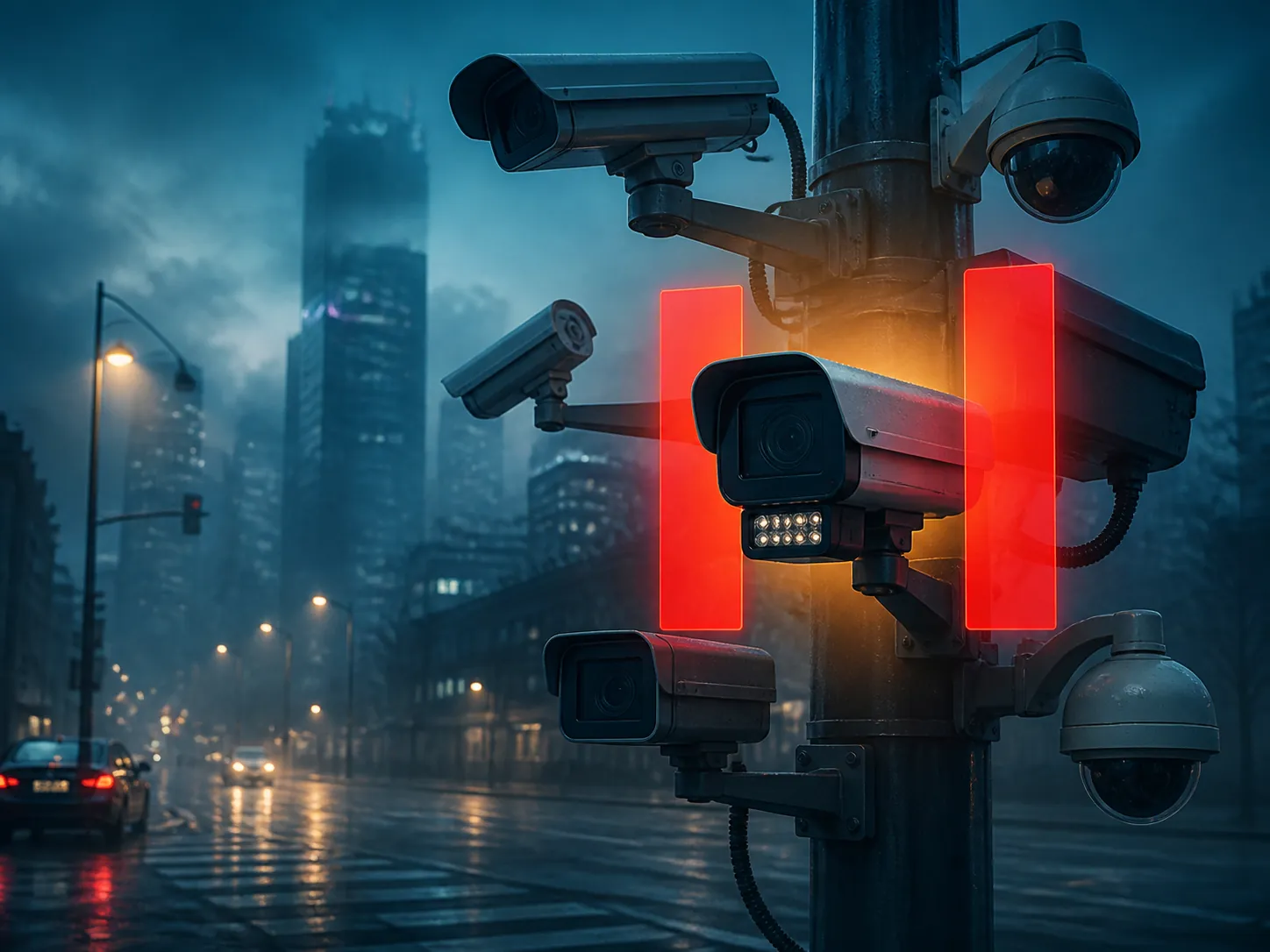
In September 2025, the City Council voted 7-2 to expand CCTV into the Stadium District, the Capitol Hill nightlife area, and the Garfield High School area. The expansion drew opposition from more than 100 people or organizations and 16 state legislators, and the reported rules included ALPR retention for 90 days and CCTV retention for up to 30 days, typically five. The same reporting described a 62-camera Real Time Crime Center launch.[6]
Those details are easy to treat as a technology fight. They are more useful as governance markers. Retention periods determine what can later be searched, disclosed, subpoenaed, audited, or misused. Camera placement determines which communities and events become routinely visible to police systems. A Real Time Crime Center changes the speed at which surveillance output can influence deployment decisions.
On March 19, 2026, Mayor Wilson paused the CCTV pilot expansion and all ALPR use pending a privacy and data-governance audit with NYU’s Policing Project, with a University of Pennsylvania evaluation overseen by the Office of Inspector General.[7] The mayor’s office stated that the pause was necessary because protections “rely on standard operating procedures rather than clear, enforceable policy.”[7]
That sentence belongs in the same ledger as the OPA AI letter. In one place, SPD’s manual did not tell employees how to use AI. In another, surveillance protections were described as resting on procedures rather than enforceable policy. Different tools, same downstream problem: reviewers inherit records and outputs whose legal and operational status depends on controls that were not yet cleanly anchored.
The earlier Truleo episode still matters, but only as an early marker
Truleo should not be overstated as a current SPD AI program. KUOW reported that SPD’s body-camera analysis program ended in February 2023 after Seattle Police Officers Guild objections.[3] Its relevance in 2026 is chronological and institutional: before the ChatGPT policy-gap letter and before the surveillance pause, SPD had already seen an analytics tool around body-camera behavior run into formal resistance.
Historical Clearview AI disputes are even less central to this record. Public reporting and litigation from the 2020–2022 period are useful background for facial-recognition concerns, but the materials used here do not establish current SPD Clearview use. They therefore do not carry the assessment. The current ledger rests on the documented 2023 Truleo end, the 2024 prosecutor policy, the 2025 OPA letter, the 2025 surveillance expansion, the 2026 surveillance pause, the 2026 OPA finding, and the July 2026 command transition.
What counsel should take from the transition
The practical consequence of Sayles’ interim appointment is not that Seattle’s AI risk rises or falls overnight. It is that open control failures now sit inside a new command period. For defense counsel, the record supports targeted questions about whether police narratives, internal reports, summaries, public statements, surveillance outputs, or camera-derived leads were created or revised with AI assistance. For prosecutors, it supports intake discipline around report provenance and officer attribution. For city lawyers and risk managers, it points to the distance between citywide AI rules, SPD manual language, and enforceable surveillance policy.
A useful file review in a Seattle matter now separates at least four things:
- Criminal police report narratives, because King County’s prosecutor posture is specifically about not accepting narratives produced with AI assistance.[4]
- Internal accountability records, including Blue Team materials, because the April 2025 OPA letter involved AI-assisted internal reports and emails.[4]
- Public communications and administrative work products, because the June 2026 OPA finding involved unapproved ChatGPT and Perplexity use for seven work products.[5]
- Surveillance outputs and retention chains, because the ALPR and CCTV pause was tied to privacy, data governance, and enforceable-policy concerns.[7]
Those buckets should not be collapsed. A prosecutor’s refusal to accept an AI-assisted narrative does not automatically answer whether an internal affairs report violates city policy. An IT block on public AI tools does not answer whether older work products were properly acknowledged. A surveillance pause does not answer whether previously collected footage or plate data was retained, searched, or disclosed under the rules in effect at the time.
The three open items
As of Q3 2026, Seattle’s near-term AI-in-policing risk posture turns on three unresolved items Sayles inherits.
- An SPD-wide AI policy. The April 2025 OPA letter recommended one after finding that SPD Policy 12.040 did not guide employee AI use and that the city’s Generative AI Policy was not referenced in the SPD manual.[4]
- The privacy and data-governance audit. The March 19, 2026 pause on CCTV expansion and all ALPR use remains the key surveillance-governance control point, especially because the mayor’s office tied the pause to the lack of clear, enforceable policy.[7]
- The permanent chief search. Sayles was named interim chief after Barnes’ resignation.[1] Until permanent leadership is resolved, the policy owner for long-term AI and surveillance controls remains part of the governance question.
The transition does not cure the ledger. It assigns it.
References
- Seattle Mayor Katie Wilson Names Andre Sayles Interim Chief of the Seattle Police Department, SPD Blotter, July 30, 2026
- Command Staff, Seattle Police Department
- What could the end of SPD’s body-camera analysis program mean for, KUOW
- SPD policy around AI use, FOX 13 Seattle
- SPD’s Chief Spokesperson Asked AI For Help With Interview Prep, Rewriting Blog Posts, and More, PubliCola, June 5, 2026
- Seattle surveillance technology: cameras, license plates, CCTV, Axios Seattle, October 14, 2025
- Mayor Wilson Announces Next Steps on Surveillance Pilot Project, Office of the Mayor, March 19, 2026
Related records
Tool profile
How to Read Legal AI Benchmarks Ahead of the OpenAI IPOGoverning regulation
Browse the obligations tracker →Preventive workflow
Browse verification workflows →
Report a correction or tip
Spotted an outdated figure, a misstated fact, or a ruling this case record should reflect? Public comments are disabled for this content given the professional cost of a misreported case outcome, penalty amount, or rule text — use the structured correction channel instead.
Report a correction or tip for this record →