
Palazuelos wrongful detention claim vs Pima County AI risk
The Pima County Sheriff's Department facing Carlos Palazuelos' $3.25M wrongful-detention claim is also publicly trialing AI report-drafting tools, but no public record ties those tools to his detention. This record keeps the verified case posture separate from the AI rollout, flags what is reported versus confirmed, and links both to documented false-arrest risk patterns.
- Jurisdiction
- Arizona (US)
- Court
- Pima County Superior Court
- AI tool named
- Axon Draft One
- Ruling date
- Jul 27, 2026
- Source document
- View primary court order ↗
- Last verified
- Aug 2, 2026
Lex Machina Review is an independent risk-tracking and reference resource. Nothing on this site is legal advice, and using it does not create an attorney-client relationship. Every record is reviewed against primary sources but may not reflect the most current status of a matter — always verify directly against the cited court order, rule text, or a licensed attorney before relying on it.
Companion explanation — secondary to the source document above
Risk Digest status: reported notice of claim, not confirmed lawsuit
For the search phrase “carlos palazuelos wrongful detention lawsuit pima county,” the first correction matters: as last verified on Aug. 2, 2026, the public record supports a reported pre-suit notice of claim, not a confirmed filed civil complaint. NBC News reported that Carlos Palazuelos and two others filed a notice of claim against the Pima County sheriff over their detention in the Nancy Guthrie investigation, seeking a combined $3.25 million; that is a live liability signal, not yet a lawsuit posture established by a docketed complaint. [1]
The second correction is just as important: no public source reviewed for this record ties Axon Draft One, AI identification software, or any named Pima County Sheriff’s Department tool to Palazuelos’s detention. The search-warrant application is reported to be sealed, the claim allegations challenge the basis for the warrant, and PCSD’s separate AI rollout coverage does not mention Palazuelos. The two threads belong in the same risk file because they involve the same agency and the same category of civil-liability concern. They do not yet form a causal chain.
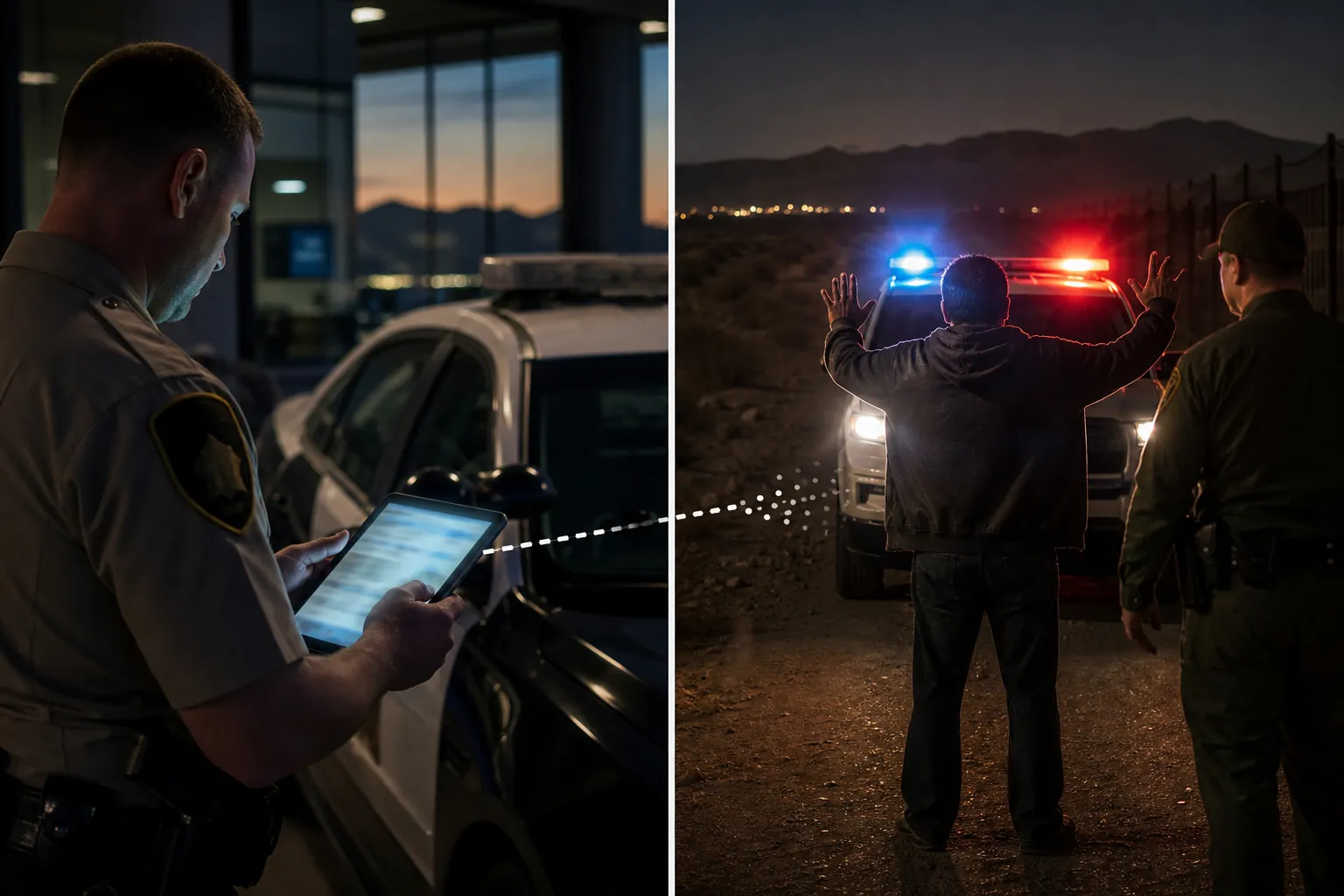
Arizona’s notice-of-claim statute gives the procedural frame. A person with a claim against a public entity must file a notice within 180 days after the cause of action accrues, and a claim is deemed denied if the public entity does not approve it within 60 days after filing. [2] If the Palazuelos notice was filed on July 27, 2026, as reported, that response window is still running as of this record date. [1]
Readers who need the claim-status chronology itself should start with the site’s Palazuelos case-status record. This record is narrower: what PCSD’s public AI activity adds to the agency-risk picture, and what it does not prove about this detention.
The PCSD AI record that belongs in the file
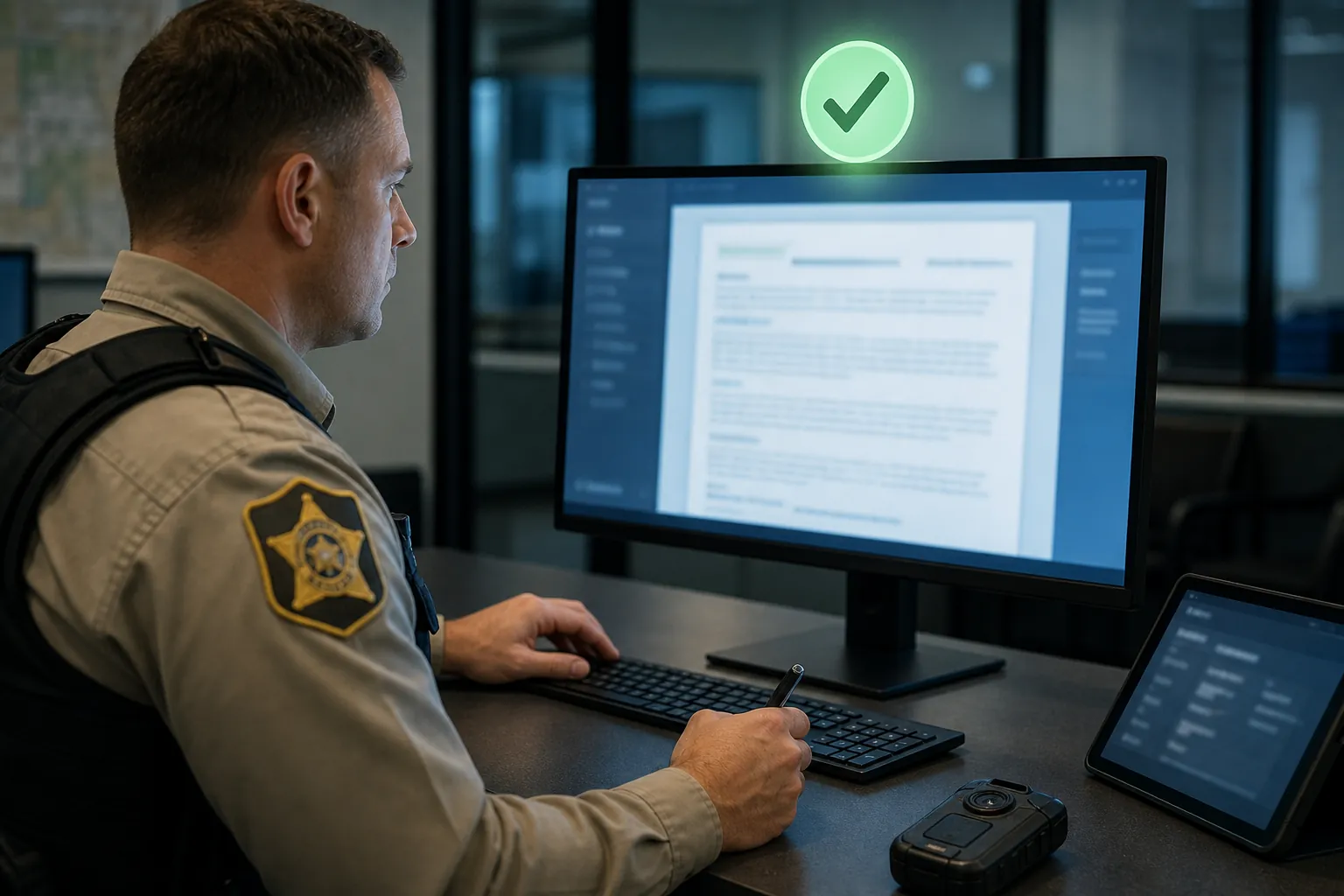
Fox News reported that the Pima County Sheriff’s Department has been trialing Axon’s Draft One, a ChatGPT-based system for drafting incident reports, since the start of 2026. The pilot involved 20 deputies. Capt. Derek Ogden was described as reviewing the program’s use, and the department emphasized that deputies must review the AI-generated reports before submission. [3]
That human-review step is relevant, but it is not a spell. In procurement language it is a control. In litigation language it becomes a fact question: what the reviewer saw, what source material the reviewer compared, what the system omitted or inserted, and whether supervisors treated the generated draft as a convenience or as a presumptively reliable narrative.
The same Fox News account also reported a separate PCSD use of AI to identify a deceased unidentified person. That is a different operational category from report drafting. Draft One affects the written record after an incident; identification tools can affect investigative direction before a person is stopped, detained, searched, or cleared. Collapsing those tools into one generic “AI” bucket hides the very differences that matter in a false-arrest analysis. [3]
The warning attached to the rollout was not abstract. Max Isaacs of NYU’s Policing Project told Fox News that flawed AI data “can lead to false arrests” and wasted investigative resources, and he also noted the lack of rigorous data showing AI’s policing benefits. [3] That does not say PCSD’s tools caused any particular detention. It does say a sheriff’s office adopting AI tools should expect plaintiffs, defense lawyers, judges, and county risk managers to ask what validation, audit, disclosure, and correction mechanisms exist before AI-shaped material becomes police action.
The department’s public position that humans remain responsible may help it explain its process. It does not end the inquiry. A reviewer can miss an error. A supervisor can overtrust a draft. A prosecutor can receive a polished report without seeing the uncertainty that preceded it. A judge can evaluate a warrant application without knowing whether a factual sentence came from a person’s notes, an automated summary, or a chain of digital inferences. Those are record-integrity issues before they are ideology.
The Palazuelos claim sits beside that record, not inside it
The reported detention facts are severe enough without importing an unproven AI cause. NBC News reported that Palazuelos, Daniel Maddox, and Josefina Maddox were stopped near Rio Rico on Feb. 10, 2026, about 60 miles south of Tucson, in connection with the Guthrie investigation. The men were allegedly detained at gunpoint, held for roughly seven to eight hours, and released without charges. [1]
The notice of claim reportedly alleges assault, false arrest, negligence, defamation, and false imprisonment. It also alleges that the warrant was obtained on a sealed application based on “false or baseless evidence.” Because the application remains sealed in the public reporting, the record does not yet show what evidence was presented, how it was verified, or whether any digital tool shaped it. [1]
| Claimant | Reported amount sought | Record posture |
|---|---|---|
| Carlos Palazuelos | $2.5 million [1] | Notice of claim reported; no confirmed filed civil complaint as of Aug. 2, 2026 |
| Daniel Maddox | $500,000 [1] | Notice of claim reported; no confirmed filed civil complaint as of Aug. 2, 2026 |
| Josefina Maddox | $250,000 [1] | Notice of claim reported; no confirmed filed civil complaint as of Aug. 2, 2026 |
| Total | $3.25 million [1] | Reported demand amount, not a judgment or settlement |
The notice also reportedly says Sheriff Chris Nanos’s social-media post about the detention was not retracted. [1] That matters for damages and defamation allegations, but it still does not identify the evidence path that led to the stop. The public posture remains: a reported high-dollar claim, a serious alleged detention, a sealed warrant record, no charges, and no verified AI-tool connection.
Digital evidence in the Guthrie investigation is context, not a shortcut to causation
The Guthrie investigation has drawn reporting about modern digital evidence, including AI and deepfake analysis. NPR reported on the role that AI and deepfakes could play in the search. [4] NBC News separately described digital-forensics work that could include recovered Nest doorbell-camera data, cell-tower geotracking, and genetic genealogy as tools for helping investigators “paint a picture of truth.” [5]
Those facts explain why lawyers watching the case are alert to technology-mediated evidence. They do not identify the basis for the Palazuelos warrant. A doorbell-camera recovery, a cell-tower lead, a genealogy comparison, a deepfake review, and an AI-generated police report would raise different authentication, reliability, disclosure, and Fourth Amendment questions. Treating them as interchangeable would make the liability analysis worse, not sharper.
The sealed-warrant posture is the hard stop. If the application later shows a mistaken witness account, a misread digital trail, an overextended inference from location data, or some other conventional error, the AI-risk file should not be rewritten to claim otherwise. If it later shows reliance on an AI-generated lead or AI-shaped report language, the analysis changes. As of now, that bridge is not public.
Where the false-arrest pattern becomes relevant
The reason PCSD’s AI rollout still belongs in the same risk digest is that false arrests rarely depend on a machine acting alone. The legal problem usually appears when a digital lead hardens into a police conclusion: an uncertain match becomes a suspect name, a generated narrative becomes a report, an analyst’s caveat disappears, or a reviewer signs off without reconstructing the path from source data to coercive action.
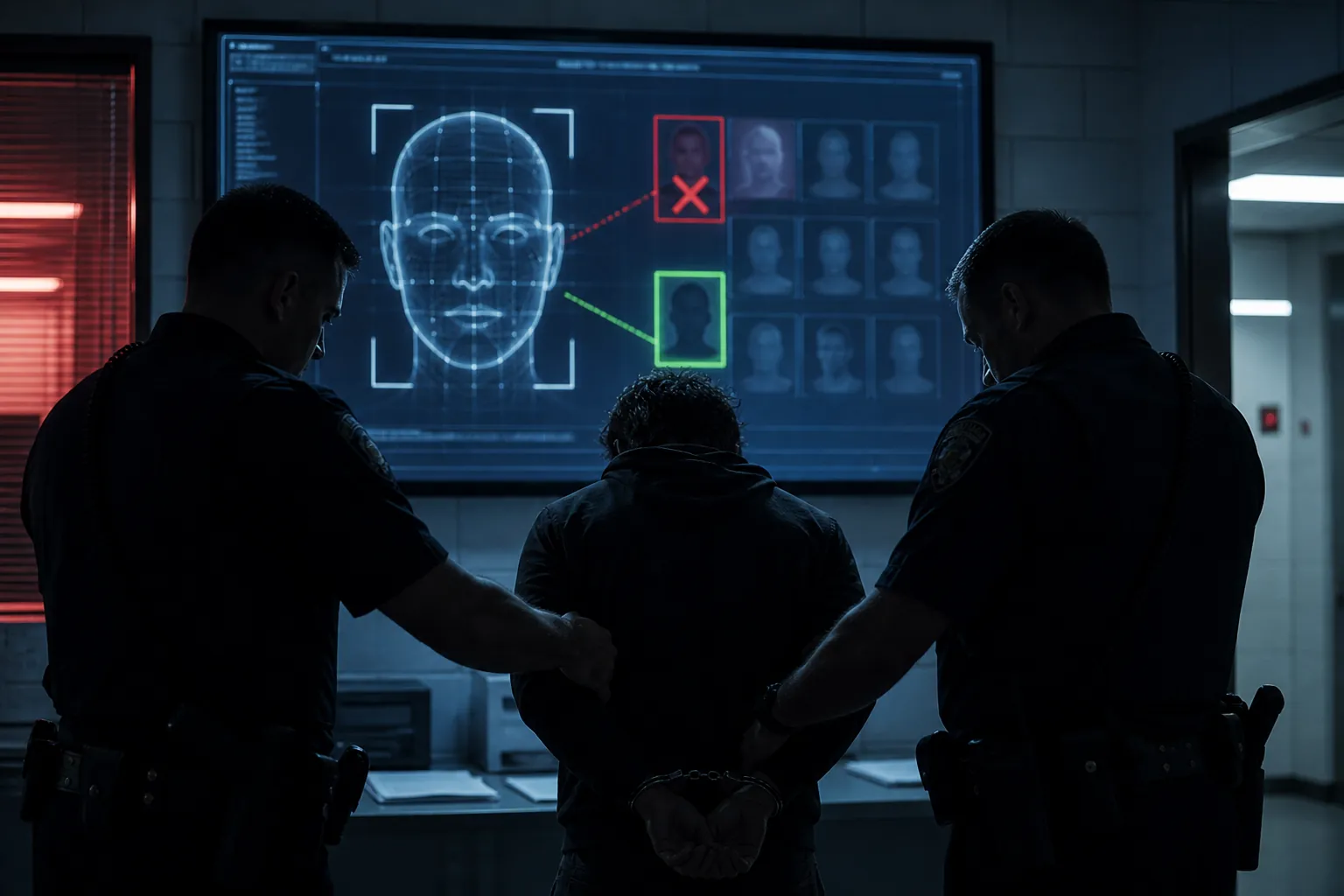
That pattern is documented in the site’s Seattle facial-recognition false-arrest record, where AI-adjacent identification leads and automation bias are treated as evidence-chain problems rather than as cartoon stories about a robot arresting someone. The same distinction matters here. A system can be relevant to liability even when a deputy, detective, supervisor, or judge is the final human actor.
For criminal-defense teams, the working questions are practical: Was an AI tool used to generate, summarize, rank, match, enhance, translate, or identify evidence? Was the output disclosed? Were confidence limits preserved? Could the defense test the model, source data, input instructions, audit trail, or human edits? Those questions sit behind the site’s broader criminal-defense AI identification evidence guide, especially where Daubert, Brady, and Fourth Amendment challenges turn on whether the technology was merely a lead-generation artifact or part of the evidentiary basis for seizure.
The same lead-versus-proof line appears in records on AI age-progression evidence, AI-processed audio authentication, and fabricated AI evidence and wrongful-arrest risk. The recurring civil-liability issue is not that every technical artifact is unreliable. It is that uncertainty must remain visible long enough for humans to test it before someone is detained.
What county risk managers should be watching now
For Pima County, the immediate exposure is the notice of claim. The AI rollout adds a separate monitoring burden. If the county rejects the claim or lets it be deemed denied, any later complaint may seek discovery into the detention record, warrant materials, communications, report drafts, and investigative tools. Whether AI appears in that discovery is unknown. The county should already know the answer internally.
- Preserve Draft One audit information, even if the department believes the tool was unrelated to the Palazuelos matter.
- Separate report-drafting tools from identification, video-analysis, location, and forensic tools in any litigation hold or procurement review.
- Document whether any AI-generated or AI-assisted material entered warrant narratives, incident reports, public posts, or investigative summaries.
- Avoid relying on “human review” as the whole answer; identify what the human reviewer checked against.
- Treat sealed-warrant uncertainty as a reason for caution, not as an invitation to fill the gap with assumptions.
For plaintiffs and defense counsel, the discipline runs in the other direction. A serious detention allegation against an agency using AI tools is enough to justify targeted questions. It is not enough to plead or publish that “the algorithm did it” unless the record can identify the tool, the output, the human reliance, and the causal step.
The record therefore stops in an uncomfortable but necessary place. PCSD’s AI rollout is relevant to procurement, audit, disclosure, and civil-liability monitoring because expert commentary warns that flawed AI policing data can contribute to false arrests. Palazuelos’s notice of claim is relevant because it is a live, high-dollar wrongful-detention allegation against the same sheriff’s department. The public bridge between those facts remains unverified while the county’s statutory response window runs.
References
- Men detained in Guthrie investigation file notice of claim against Pima County sheriff, NBC News.
- A.R.S. § 12-821.01, Arizona Legislature.
- Arizona sheriff's office turns to AI to speed up paperwork, Fox News.
- How the use of AI and "deepfakes" plays a role in the search for Nancy Guthrie, NPR.
- Digital forensics could be the tool that helps "paint a picture of truth" in the Guthrie case, NBC News.
Related records
Tool profile
Browse tool evaluations →Governing regulation
Browse the obligations tracker →Preventive workflow
Browse verification workflows →
Report a correction or tip
Spotted an outdated figure, a misstated fact, or a ruling this case record should reflect? Public comments are disabled for this content given the professional cost of a misreported case outcome, penalty amount, or rule text — use the structured correction channel instead.
Report a correction or tip for this record →