
Why Arctic icebreaker no-bid contracts rest on FAR 6.302-7
The roughly $6.8 billion in no-bid Arctic Security Cutter awards were justified under FAR 6.302-7, CICA's rarely used public interest exception, which requires agency-head approval, clear-and-convincing individual findings, and 30-day advance Congressional notice. Because none of those elements is publicly verifiable from available records, the supportable verdict is latent legal risk, not proven illegality.
- Jurisdiction
- US Federal
- Court
- U.S. Court of Federal Claims
- AI tool named
- No AI tool implicated
- Ruling date
- Jul 2, 2026
- Source document
- View primary court order ↗
- Last verified
- Aug 2, 2026
Lex Machina Review is an independent risk-tracking and reference resource. Nothing on this site is legal advice, and using it does not create an attorney-client relationship. Every record is reviewed against primary sources but may not reflect the most current status of a matter — always verify directly against the cited court order, rule text, or a licensed attorney before relying on it.
Companion explanation — secondary to the source document above
The useful place to start with the Arctic icebreaker no-bid contracts is not the dollar figure. It is the procurement code. The SAM.gov contract record for the Arctic Security Cutter work is tagged as “implemented by Public Interest FAR 6.302-7,” which means the Coast Guard’s no-bid path was not the ordinary urgency exception and not a loose claim that competition would have been inconvenient. It was CICA’s public-interest exception, one of the narrowest doors in federal procurement law. [1]
That distinction matters for anyone trying to evaluate arctic icebreaker no-bid contracts legal issues. A noncompetitive award can be operationally understandable and still procedurally exposed. It can also be difficult to verify from public records without being unlawful. The public record currently supports the first half of the legal analysis — which exception the government invoked — much better than the second half: whether the required findings, approvals, and notice were actually completed in the form CICA requires.

The contract code points to FAR 6.302-7
FAR 6.302-7 is the “public interest” exception to full and open competition. In the CRS description of the framework, it requires an agency-head determination, written findings supported clearly and convincingly, application on an individual basis rather than a class-wide basis, and notice to Congress at least 30 days before award. [2]
That is a different legal animal from the more familiar urgency exception. Urgency can turn on the government’s time problem: a mission need, a deadline, a risk from delay. The public-interest exception asks something more institutional. It requires the head of the agency to determine that using procedures other than full and open competition is necessary in the public interest, and it attaches procedural predicates that are harder to wave away after the fact. [2]
The requirement that findings be made “clearly and convincingly” is not just decorative procurement prose. It signals that the file should do more than recite a preference for speed or cite Arctic strategy at a high level. A reviewing body would want to see why this particular award, to this particular contractor, on these particular terms, had to move outside competition. The “individual basis” requirement cuts in the same direction: a general statement that icebreakers are important is not the same thing as a justification for each noncompetitive procurement action. [2]
The 30-day Congressional notice requirement also matters because it places the exception partly in an oversight channel before the award is made. If the notice exists, it would be one of the most important stabilizing facts in the record. If it does not exist, or if it was sent late, the issue would not be cured by the mere operational urgency of Arctic capability. From the public materials reviewed here, that notice cannot be confirmed or refuted.

What can be verified, and what cannot
The public record is strong enough to identify the legal hook. It is not strong enough to audit the compliance file. The full justification-and-approval document was not accessible through the SAM.gov interface available for this review; the visible fact is the metadata tying the award to FAR 6.302-7. [1]
| FAR 6.302-7 element | What the public record shows | Legal significance |
|---|---|---|
| Use of the public-interest exception | Visible: the SAM.gov record is coded to Public Interest FAR 6.302-7. | This identifies the CICA exception the government appears to have invoked. |
| Agency-head determination | Not publicly verified from the accessible materials. | The exception depends on approval at the agency-head level, not an ordinary contracting-office preference. |
| Clear-and-convincing individual findings | Not publicly verified because the underlying justification text was not accessible. | A challenge would likely focus on whether the file supports each award individually, not merely the icebreaker program generally. |
| 30-day advance Congressional notice | Not publicly confirmed or disproved from the reviewed public sources. | The notice requirement is a mandatory procedural condition under the public-interest exception. |
| Public national-security rationale | Indirectly supported by the White House memorandum on Arctic Security Cutter construction. | Helpful context, but not a public substitute for the CICA procurement justification. |
That table is deliberately unsatisfying. Procurement records often are. The absence of a visible justification is not proof that no justification exists. It is proof only that outsiders cannot verify the decisive compliance elements from the accessible public record. That is enough to create latent legal risk; it is not enough to make a responsible illegality claim.
The White House memorandum helps explain the policy decision, not the whole procurement file
The October 8, 2025 presidential memorandum on construction of Arctic Security Cutters made a national-security finding under 14 U.S.C. 1151(b), allowing foreign construction of the cutters. It framed the effort in national-security terms and addressed a separate statutory obstacle: where the vessels could be built. [3]
That memorandum is plainly relevant. If a procurement file needed to explain why Arctic Security Cutter construction served an urgent national interest, the memorandum would be natural supporting material. But it does not publicly show the specific FAR 6.302-7 predicates: agency-head approval for the procurement action, clear-and-convincing individual findings, and 30-day Congressional notice. CRS describes those as requirements of the public-interest exception itself. [2][3]
There is also an awkward drafting point. The memorandum says it creates no enforceable right or benefit. That is common language in presidential directives, but it sits beside a procurement statute that requires a documented justification if the government bypasses competition under this exception. [2][3]
The clean way to read the two documents together is not to treat the memorandum as irrelevant, and not to treat it as a magic key. It may support the national-security rationale. It does not, from the public record alone, prove that the acquisition file met FAR 6.302-7.
The award chronology is large, but the legal question stays narrow
The Coast Guard announced on February 12, 2026 that it had completed contract awards for 11 Arctic Security Cutters. [4] DHS then announced on July 2, 2026 that the Coast Guard had finalized six Arctic Security Cutter contracts. [5] Bloomberg Law reported that one of the deals, with Davie, was valued at $3.5 billion. [6] Taken together, the reported Arctic Security Cutter award package is roughly $6.8 billion. [4][5][6]
Those figures explain why this will not remain a quiet file if questions persist. They do not, by themselves, answer whether the awards were lawful. CICA does not prohibit every noncompetitive award. It requires the government to walk through the correct exception and preserve the record showing why that exception applies.
For suppliers and shipyard compliance teams, the practical question is less dramatic than the public argument. They need to know whether the contracts are stable enough for workforce, financing, and supply-chain commitments. A procurement defect in a multi-year shipbuilding award can create downstream uncertainty even if nobody has yet filed a protest.
Why the Coast Guard had pressure to move
The operational pressure is real. GAO reported that the Coast Guard bought the Aiviq for $125 million without a detailed cost estimate and left open a recommendation that the Coast Guard develop a fleet-wide cost estimate and sequencing plan. [7] That does not prove a flaw in the Arctic Security Cutter awards. It does show why cost reasonableness and acquisition sequencing would be obvious subjects for any later review of a noncompetitive icebreaker file.
The Polar Security Cutter backdrop adds to the pressure. gCaptain, reporting on GAO-26-108118, said the lead Polar Security Cutter had reached about $3.4 billion, with delivery expected in March 2033 and full capability in March 2039. Because the underlying GAO PDF required authentication during this review, those figures should be treated here as gCaptain-attributed reporting, not as independently reviewed GAO text. [8]
CRS has described a Coast Guard icebreaker requirement in the range of 8 to 9 polar icebreakers, alongside the Polar Security Cutter and Arctic Security Cutter program baseline. [9] In that setting, the government’s interest in finding a faster acquisition route is not hard to understand. The legal question is whether the faster route was supported with the required FAR 6.302-7 record.
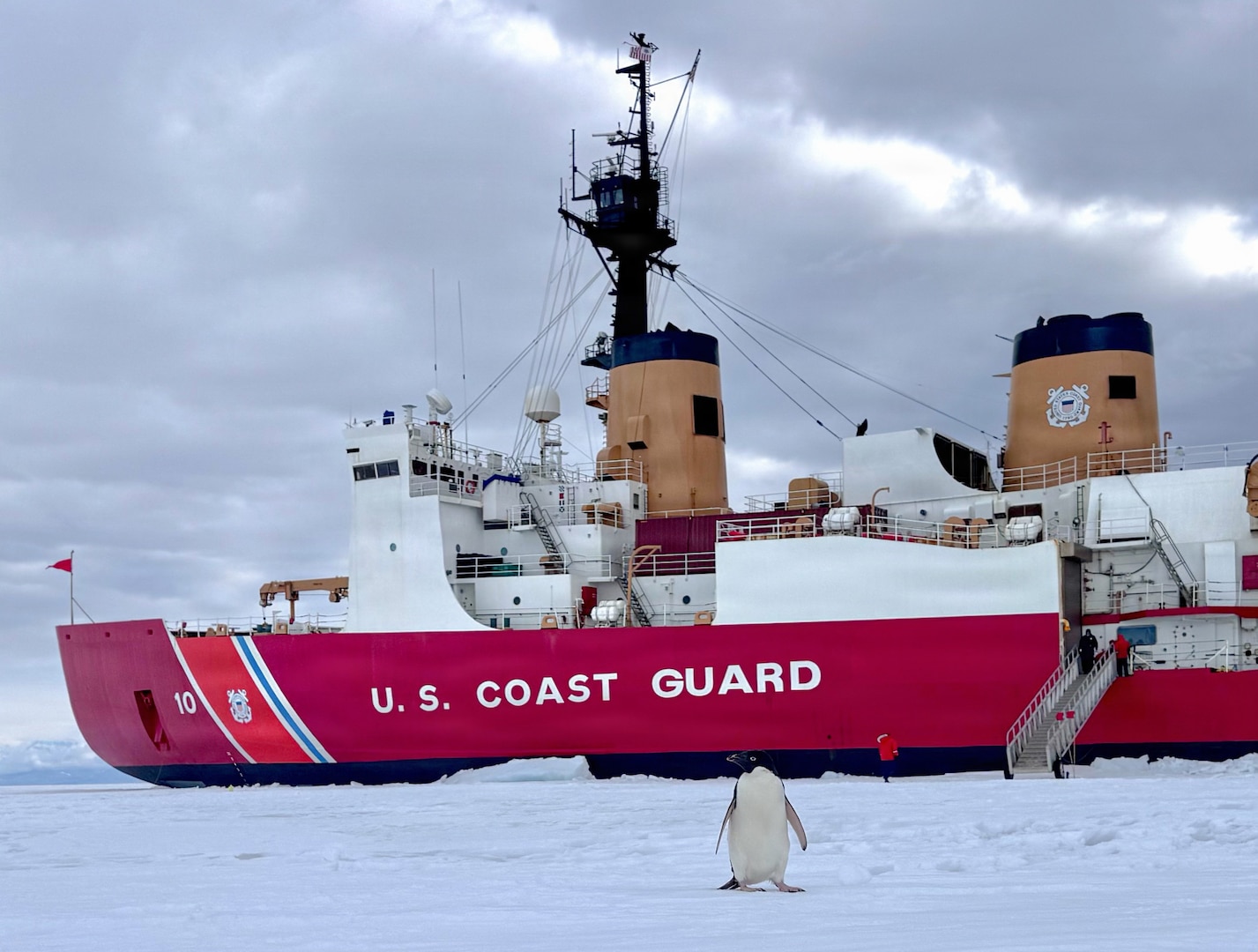
No-bid spending context sharpens oversight, but it should not be mixed into the wrong exception
There is broader oversight heat around noncompetitive contracting. CRS reported that DHS obligated $16.9 billion under the separate urgency exception in the first half of FY2026, representing 92% of government-wide urgency-exception spending and a 29-fold jump over DHS’s $585.5 million in FY2025 urgency-exception obligations. [2]
That statistic should not be used as if it describes the icebreaker awards. The Arctic Security Cutter record reviewed here points to FAR 6.302-7 public interest, not FAR 6.302-2 unusual and compelling urgency. [1][2] The DHS urgency numbers explain why Congress, competitors, and watchdogs may be more attentive to no-bid awards generally. They do not establish a defect in these awards.
Outside DHS, the Center for Western Priorities summarized a POGO analysis describing a broader no-bid trajectory of about $263 billion in FY2025 and about $300 billion in FY2026. [10] That is ambient risk context, not a procurement-law finding about the cutters.
This is also where comparisons can mislead. A separate site analysis of the Reflecting Pool no-bid contract concerns litigation and scrutiny around a different noncompetitive authority, FAR 6.302-2 urgency. The contrast is useful only because it shows how quickly the analysis changes when the cited CICA exception changes.
What a real challenge would likely test
No publicly indexed bid protest or Court of Federal Claims case challenging the Arctic Security Cutter awards was found in the reviewed materials. Any remedies discussion is therefore theoretical. The point is not that a challenge is pending; it is what such a challenge would probably need to reach.
A protest theory would not win much by saying only “no bid.” The government has already identified a no-bid exception in the public metadata. The harder questions would be whether the agency-head determination exists, whether it was made at the right level, whether the findings are individualized, whether the “clear and convincing” support is more than broad Arctic-policy language, whether Congress received the required advance notice, and whether the file supports price reasonableness and sequencing in light of the Coast Guard’s broader icebreaker acquisition record.
At GAO, a protest would have to clear the usual interested-party and timeliness barriers before anyone reached those merits. At the Court of Federal Claims, the familiar Tucker Act path would frame the question as whether the procurement decision was arbitrary, capricious, an abuse of discretion, or otherwise contrary to law. For a broader discussion of that forum in a defense-procurement setting, see the site’s Court of Federal Claims analysis in the Air Force One controversy.
Oversight could move differently from litigation. Congress does not need to wait for a disappointed offeror if it wants the agency-head determination, the J&A, the notice record, or the price-analysis materials. Legislative attention to large procurement files can also travel through appropriations, reporting requirements, or hearings rather than a bid-protest docket. The site’s discussion of the Air Force One overrun oversight thread is a useful comparison for that institutional route, though the contract facts are different.
The defensible verdict
The Arctic Security Cutter awards carry legal risk because the decisive FAR 6.302-7 compliance materials are not publicly verifiable. The SAM.gov record identifies the public-interest exception. The White House memorandum supplies national-security context. The Coast Guard’s icebreaker gap explains why officials may have reached for a noncompetitive mechanism. None of those public facts, standing alone, shows the agency-head determination, the clear-and-convincing individualized findings, or the 30-day Congressional notice.
That is not the same as saying the awards are illegal. The missing public J&A is a verification problem, not conclusive evidence of noncompliance. If a protest, lawsuit, or oversight inquiry ever puts the file under review, the case will turn on the underlying justification record — not on the mere fact that the Coast Guard bypassed competition.
References
- Contract opportunity record, SAM.gov
- R48980, Congressional Research Service via EveryCRSReport
- Construction of Arctic Security Cutters, The White House, Oct. 8, 2025
- Coast Guard completes contract awards for 11 Arctic Security Cutters, U.S. Coast Guard, Feb. 12, 2026
- U.S. Coast Guard Finalizes Contracts for Six Arctic Security Cutters, Department of Homeland Security, July 2, 2026
- US Coast Guard Seals $3.5 Billion Icebreaker Deal With Davie, Bloomberg Law
- Coast Guard: Improved Reporting on Domestic Icebreaking Performance Could Clarify Resource Needs and Tradeoffs, U.S. Government Accountability Office
- U.S. Polar Security Cutter Delayed to 2033 as Costs Top $6 Billion, GAO Warns, gCaptain
- Coast Guard Polar Security Cutter (Polar Icebreaker) Program: Background and Issues for Congress, Congressional Research Service
- Trump admin spends record amount of taxpayer money on no-bid contracts, Center for Western Priorities, July 2026
Related records
Tool profile
How Meta's AI Spending Reshapes Law Firm ProfitabilityGoverning regulation
Browse the obligations tracker →Preventive workflow
Browse verification workflows →
Report a correction or tip
Spotted an outdated figure, a misstated fact, or a ruling this case record should reflect? Public comments are disabled for this content given the professional cost of a misreported case outcome, penalty amount, or rule text — use the structured correction channel instead.
Report a correction or tip for this record →