
Was F1 made by AI? The legal obligations behind the claim
Jodie Foster's claim that Apple's F1 was 'made by AI' isn't supported by the public production record — but the counterfactual is now legally consequential. The obligations that would attach to a genuinely AI-made film run from performer consent and disclosure rules to copyright registration and awards eligibility, with US and EU regimes separated by source and effective date.
- Jurisdiction
- United States; European Union
- Court
- No court proceeding
- AI tool named
- Unspecified generative AI
- Ruling date
- Aug 2, 2026
- Source document
- View primary court order ↗
- Last verified
- Aug 4, 2026
Lex Machina Review is an independent risk-tracking and reference resource. Nothing on this site is legal advice, and using it does not create an attorney-client relationship. Every record is reviewed against primary sources but may not reflect the most current status of a matter — always verify directly against the cited court order, rule text, or a licensed attorney before relying on it.
Companion explanation — secondary to the source document above
“Made by AI” is a convenient phrase until someone has to decide what it means. In a film-production dispute, an awards submission, a copyright registration, or a performer-consent review, the phrase cannot simply mean “looked synthetic,” “used visual effects,” or “involved unusual cameras.” It has to point to a workflow, a generated output, a consent record, a disclosure duty, or a human-authorship question.
That is the useful legal perspective on Jodie Foster’s AI comment about F1. At the Aspen Ideas Festival session “Who Owns the Future of Hollywood?,” Foster appeared with former Sony CEO Michael Lynton; entertainment coverage reported that she described Apple’s F1 as a movie that “was made by AI,” then softened the assertion with “Wasn’t it?”[1][2] Last verified August 4, 2026: the materials reviewed here support only a late-June-2026 timing for the panel, not a more precise public date. They also do not document a response from Apple, Joseph Kosinski, or the studio.

The remark should not be inflated into a scandal, and it should not be treated as proof of anything. It is better read as a test of how much verification the words “made by AI” now require. On the public production record, the strongest supportable conclusion is narrow: there is no documented generative-AI use in the public materials describing how F1 was made. That is not the same as proving that no AI system touched any post-production task. It is enough, however, to reject the public shorthand that the film itself was generatively made.
The production record points to cameras, cars, and VFX, not a generated film
The available production account is not ambiguous in the way the phrase “AI-made” is ambiguous. Formula1.com describes a film built around physical racing infrastructure: six real F2 cars rebuilt with Mercedes-AMG engineering, filming at real 2023 and 2024 Grand Prix weekends, quarter-size Sony camera systems small enough to mount on race cars, and a workflow in which Framestore re-skinned real vehicles into the fictional APXGP cars. The public film summary also describes a large conventional production and post-production apparatus, including 2,500 visual-effects shots.[3][4]
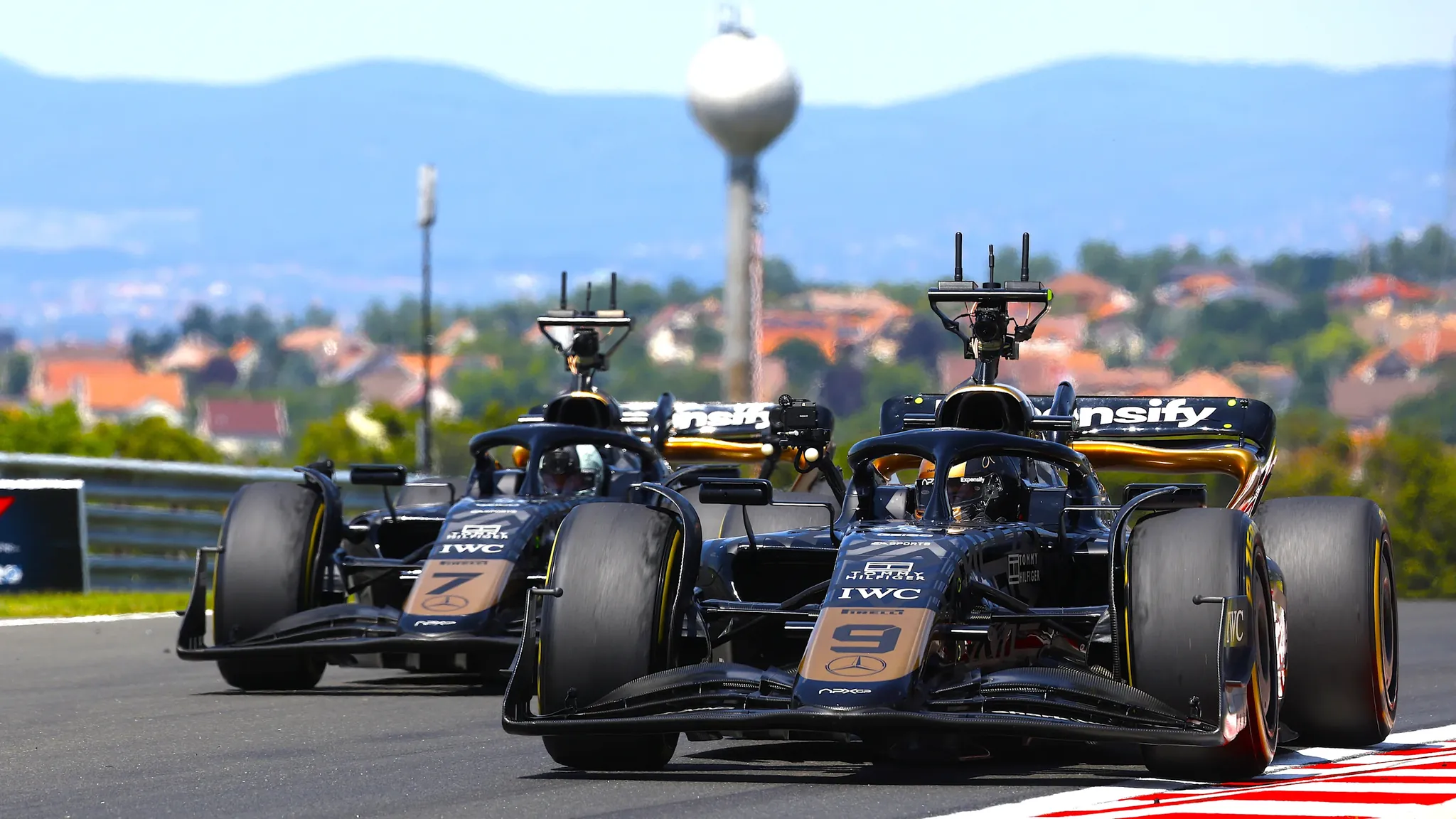
That record matters because a camera rig is not a generative model. A compositing pipeline is not automatically an AI pipeline. A VFX-heavy car sequence may be heavily mediated, but legal analysis does not get to collapse practical photography, CGI, digital cleanup, simulation, and generative synthesis into one category because the audience experiences all of them as artificial.
A better first question is: generated what, from whose material, under which contract, and for which territory? If the answer is “cars were physically built and shot, then digitally altered,” the obligations are different from a film that generated a performer’s face, voice, body movement, screenplay passages, crowd extras, advertisements, or final shots through a GenAI system.
| Public claim | What the record supports | Legal consequence |
|---|---|---|
| F1 was “made by AI.” | The public production record documents real cars, real race-weekend shooting, custom camera systems, Framestore re-skinning, and conventional VFX; it does not document generative-AI use.[3][4] | Do not treat the AI-made characterization as established fact. |
| F1 used advanced digital production. | That is supported, including large-scale VFX and digital alteration of filmed cars.[3][4] | Advanced digital production alone does not trigger every GenAI-specific consent, disclosure, copyright, or awards rule. |
| No AI was used anywhere. | The reviewed public record does not prove that absolute negative. | The defensible statement is narrower: no documented generative-AI use in the public production record. |
If a major studio film really were GenAI-produced, the first stop would be performer consent
The counterfactual is the part that now carries legal weight. A genuinely GenAI-produced studio film would not be evaluated only as a matter of taste or marketing accuracy. It would force a record review: whether living performers consented to digital replicas, whether deceased performers’ estates authorized uses, whether advertising disclosures were required, whether copyright registration separated human authorship from AI-generated material, and whether awards submissions could withstand eligibility review.
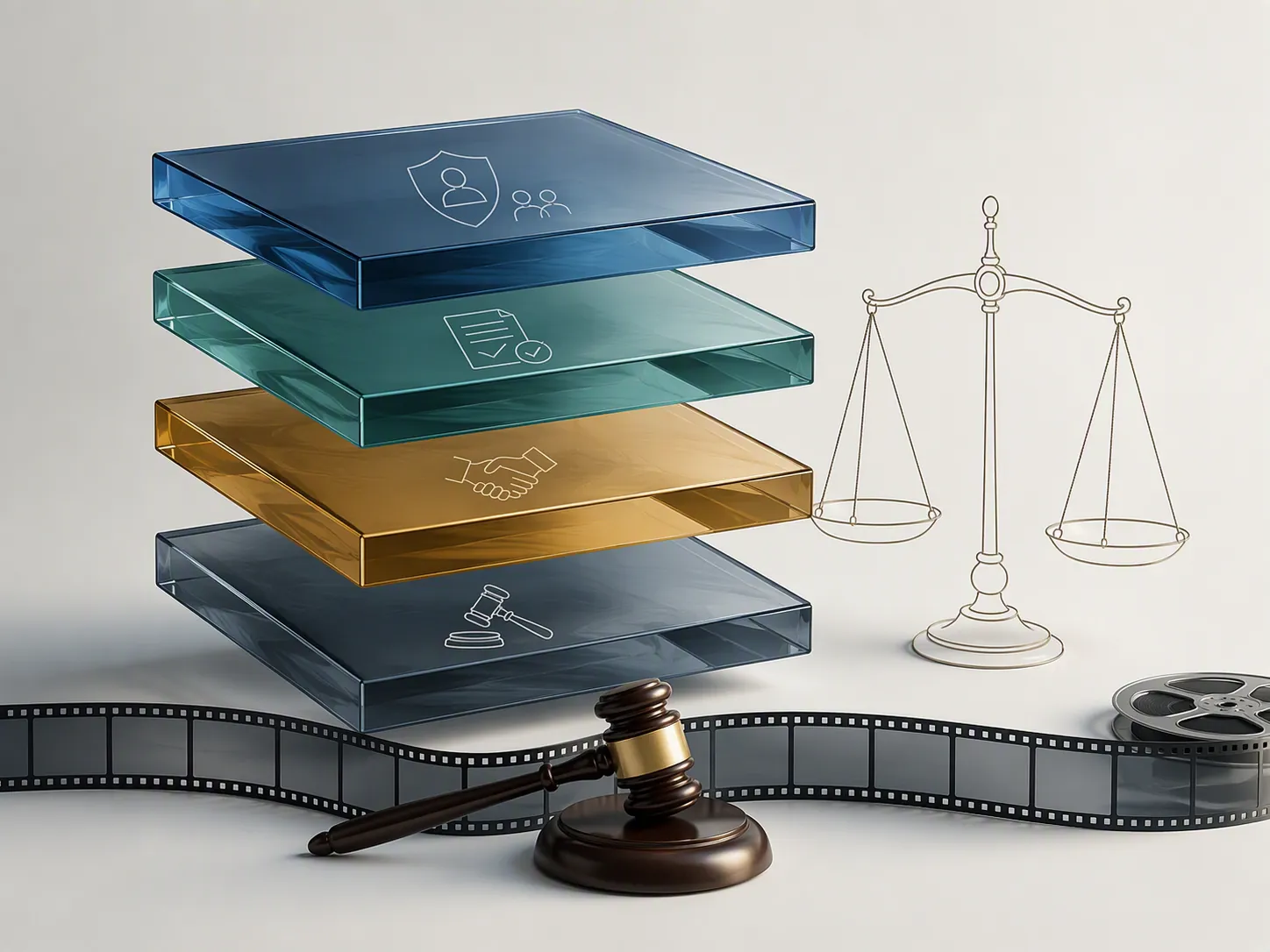
For performers, the contract and publicity-rights layer is no longer theoretical. Practitioner summaries of the 2023 SAG-AFTRA TV/Theatrical agreement describe digital-replica provisions directed at the creation and use of performer replicas. California then added statutory pressure. AB 2602, signed September 17, 2024 and codified at California Labor Code § 927, applies to performances fixed on or after January 1, 2025; the summaries describe requirements including a reasonably specific description of intended digital-replica use and counsel or union representation for the performer.[5][6]
AB 1836 addresses deceased performers. The same summaries describe an estate-consent regime for unauthorized digital replicas of deceased personalities and penalties of at least $10,000.[5][6] In a hypothetical GenAI-made F1, a studio could not answer the consent question by saying only that the output was fictional or that the model was technically impressive. The record would have to show whose performance, face, voice, body, or prior footage was being replicated, and under what authority.
That inquiry is separate from whether the film is good. It is also separate from whether the audience noticed the replica. The performer-consent problem arises because a production may be substituting, extending, altering, or reanimating a human performance. The lawyer’s question is not whether the image looks real; it is whether the production obtained the rights it needed for the use it actually made.
Federal law may eventually add a broader layer, but it should not be described as already in force on this record. Holland & Knight reported that the NO FAKES Act, S.4591, advanced unanimously by Senate Judiciary Committee voice vote on June 18, 2026. The bill would create a federal voice and visual-likeness right, include a DMCA-style notice-and-takedown process, and impose a $25,000 penalty for knowing false counter-notifications.[7] As of this article’s August 4, 2026 date, that is a legislative risk horizon, not a completed federal cause of action.
For a nearby application of those publicity and synthetic-performer issues outside feature production, see the site’s analysis of AI celebrity advertising liability. The overlap is not perfect, but the same records matter: identity, consent, territory, medium, and the difference between a live legal rule and a bill moving through Congress.
Disclosure duties depend on the audience, the medium, and the territory
Transparency rules are easy to overstate because “AI disclosure” sounds like one obligation. By August 2026, it is already a stack of narrower duties.
In the European Union, AI Act Article 50 imposes transparency obligations for certain AI-system outputs, including deepfakes. The provision contains an important artistic and fictional-work qualification: where the content is part of an evidently artistic, creative, satirical, fictional, or analogous work, the transparency obligation may be satisfied through disclosure “in an appropriate manner that does not hamper the display or enjoyment of the work.” Article 50’s application date is listed as August 2, 2026.[8]
That language does not say that every fictional use is exempt. It changes the form and placement of disclosure. A theatrical film, trailer, streaming page, press kit, and paid advertisement may not all be treated the same way. The obligation also turns on whether the content is a deepfake or otherwise falls within the covered output categories, not on the loose proposition that the movie “used AI.”
New York adds a more targeted advertising rule. Governor Kathy Hochul announced that, effective June 9, 2026, New York required disclosure when advertisements include AI-generated synthetic performers, describing it as a first-in-the-nation law.[9] That is not the same as a general disclosure rule for every AI-assisted film scene. It matters most when the AI-generated performer appears in promotional material, where the ad itself is the regulated communication.
The same distinction appears in other commercial AI-image contexts. The disclosure stacking discussed in the site’s piece on Amazon AI product-images legal implications is useful here because it keeps the regulated object in view: product image, advertisement, platform listing, or creative work. Creator-facing disclosure norms, including the reputational and audience-trust layer discussed in the Hank Green AI backlash analysis, may travel with the same facts, but they are not identical to statutory disclosure duties.
Copyright registration would ask what a human actually authored
A film described as AI-made would also create a copyright-registration problem. The U.S. Copyright Office’s March 16, 2023 registration guidance for works containing AI-generated material, and its January 2025 Part 2 report on copyrightability, center the inquiry on human authorship and disclosure of AI-generated material.[10]
For a feature film, that question would not be answered at the level of the press quote. A registrar or rights lawyer would need to separate script, score, images, edits, performances, shot selection, production design, VFX elements, and final compilation. Some of those elements might be human-authored. Some might be AI-generated. Some might involve human selection or arrangement of AI material. The registration record would need to say enough for the Office to evaluate the claim being made.
This is why “made by AI” can be too broad even when a production really used GenAI. If a model generated temporary concept art, that is one kind of fact. If a model generated final frames, another. If a model generated dialogue later rewritten by humans, another. If a model generated a performer’s synthetic voice, the copyright question may sit beside contract, publicity, and union questions rather than replacing them.
Awards rules now treat AI use as an eligibility record, not gossip
The Academy’s recent rules show the institutional turn. For the 98th Oscars, rules approved April 21, 2025 stated that generative-AI and other digital tools would “neither help nor harm” eligibility, while branches would consider the degree of human authorship when selecting nominees.[11] That rule did not make AI irrelevant. It placed human contribution at the center of branch judgment.
For the 99th Oscars, Variety reported rule changes announced May 1, 2026: acting eligibility was limited to roles “demonstrably performed by humans with their consent,” screenplays had to be human-authored, and the Academy reserved the right to request AI-use information.[12] Those are private eligibility rules, not statutes. Still, they are legally adjacent because they require the same sort of production file that lawyers would want: consent records, authorship records, and a truthful account of where AI was used.
The awards point should not become Oscar handicapping. It matters because it confirms that “AI-made” has moved from criticism into administration. If a film’s campaign, category placement, or acting submission depends on whether a human performed the role with consent, a casual description of the workflow can become a document request.
The practical obligations map
A studio, insurer, distributor, or awards administrator confronting a real AI-made-film claim would not need a philosophical definition of cinema. It would need a source-by-source obligations map.
| Source of obligation | Status by August 4, 2026 | What it would ask in a genuinely GenAI-produced film |
|---|---|---|
| SAG-AFTRA contract and California Labor Code § 927 | 2023 union provisions described in practitioner summaries; AB 2602 signed September 17, 2024 and applicable to performances fixed on or after January 1, 2025.[5][6] | Was a living performer’s digital replica created or used, was the use described with reasonable specificity, and did the performer have required counsel or union representation? |
| California AB 1836 | Estate-consent regime described in practitioner summaries, including penalties of at least $10,000.[5][6] | Did the production use a digital replica of a deceased performer, and did the estate authorize that use? |
| NO FAKES Act, S.4591 | Advanced unanimously by Senate Judiciary Committee voice vote on June 18, 2026; not treated here as enacted law.[7] | If enacted, did the production implicate a federal voice or visual-likeness right, and how would notice-and-takedown or counter-notice procedures apply? |
| EU AI Act Article 50 | Article 50 listed as applicable August 2, 2026.[8] | Did the film or related material include covered AI-generated or deepfake content, and was disclosure provided in a manner compatible with the artistic or fictional-work carve-out? |
| New York synthetic-performer advertising disclosure law | Effective June 9, 2026, according to the Governor’s announcement.[9] | Did an advertisement include an AI-generated synthetic performer requiring disclosure? |
| U.S. Copyright Office registration practice | AI registration guidance issued March 16, 2023; Part 2 copyrightability report issued January 2025.[10] | What material was AI-generated, what human authorship is claimed, and what must be disclosed or excluded in registration? |
| Academy rules | 98th-Oscars rules approved April 21, 2025; 99th-Oscars changes reported May 1, 2026.[11][12] | Could the production demonstrate human performance with consent, human-authored screenplay material, and AI-use information if requested? |
The date discipline matters. A rule effective in June 2026 may affect an advertisement released after that date but not necessarily the underlying production shoot. A California rule applying to performances fixed on or after January 1, 2025 asks a different question from an awards rule governing a specific ceremony year. A Senate bill moving in committee is not a live federal statute. A European disclosure duty may matter for EU distribution even where a U.S. copyright registration analysis asks a different question.
That is also why the F1 production record is not a footnote. The obligations turn on facts. If a production used real cars, real drivers, real locations, and conventional VFX, the legal review starts there. If it used GenAI to create final expressive content, synthetic performers, or reportable deepfakes, the review changes. The same film can contain both kinds of facts, and each fact has to be assigned to the right legal regime.
What can be said about the Foster comment
The safe statement is modest. Foster made a hedged public comment in late June 2026 that entertainment outlets reported. The public production record for F1 does not support the conclusion that the film was made by generative AI. It supports a different, more concrete account: physical F2-based cars, Mercedes-AMG engineering, Grand Prix-weekend shooting, small Sony camera rigs, digital re-skinning, and thousands of VFX shots.
The comment is still useful because it shows where ordinary speech has outrun the legal categories. “AI-made” now has consequences for performer consent, deceased-performer estates, federal publicity-right proposals, EU and New York disclosure duties, copyright registration, and awards eligibility. Before the phrase is repeated as fact, the work has to be done at the level of primary production materials and rule text. On the present record, F1 is not documented as a GenAI-made film; a film that truly was GenAI-made would require exactly the layered consent, disclosure, registration, and eligibility analysis that the phrase too often skips.
References
- Who Owns the Future of Hollywood? — Aspen Ideas Festival
- Jodie Foster Claims Brad Pitt’s ‘F1’ Was ‘Made by AI,’ Written by a Computer — Variety
- How the Apple Original Films F1 movie filmed its thrilling car sequences — Formula1.com
- F1 (film) — Wikipedia
- California’s New AI Laws Limit Uses of Digital Likeness — Fenwick
- State Laws Regulating AI in Entertainment Industry — Davis Wright Tremaine, March 2025
- Senate Judiciary Committee Advances Legislation to Protect Name, Image, Likeness and Voice from AI Deepfakes — Holland & Knight, June 2026
- Article 50: Transparency Obligations for Providers and Deployers of Certain AI Systems — EU Artificial Intelligence Act
- Governor Hochul Announces First-in-the-Nation Law Requiring Disclosure When Advertisements Include AI-Generated Synthetic Performers — New York Governor, June 9, 2026
- Copyright and Artificial Intelligence — U.S. Copyright Office
- Awards Rules and Campaign Promotional Regulations Approved for 98th Oscars — Academy of Motion Picture Arts and Sciences, April 21, 2025
- Oscars Rule Changes: AI, Acting Nominations, International Feature Film and More — Variety, May 1, 2026
Related records
Tool profile
How Meta's AI Spending Reshapes Law Firm ProfitabilityGoverning regulation
Browse the obligations tracker →Preventive workflow
Browse verification workflows →
Report a correction or tip
Spotted an outdated figure, a misstated fact, or a ruling this case record should reflect? Public comments are disabled for this content given the professional cost of a misreported case outcome, penalty amount, or rule text — use the structured correction channel instead.
Report a correction or tip for this record →