
Hank Green's ChatGPT Apology Signals a Legal Research Risk
Hank Green's July 2026 ChatGPT research apology frames the AI task where hallucination is best documented and hardest to catch: the NeurIPS 2025 audit found peer reviewers missed over 100 fabricated citations, and sycophancy plus 'vibe citing' make fake sources look correct. For lawyers and legal-tech buyers, 'research assistance' is a risk signal, not a convenience feature — the defensible workflow is primary-source verification of every AI-surfaced source, the chargeable duty ABA Formal Opinion 512 contemplates.
- Jurisdiction
- United States
- Court
- American Bar Association
- AI tool named
- ChatGPT
- Ruling date
- Jul 29, 2024
- Source document
- View primary court order ↗
- Last verified
- Aug 2, 2026
Lex Machina Review is an independent risk-tracking and reference resource. Nothing on this site is legal advice, and using it does not create an attorney-client relationship. Every record is reviewed against primary sources but may not reflect the most current status of a matter — always verify directly against the cited court order, rule text, or a licensed attorney before relying on it.
Companion explanation — secondary to the source document above
When research assistance stops sounding benign
The task that should make lawyers pause is deceptively modest: ask ChatGPT to locate papers and other resources, then build a trusted explanation around what it returns. That is the core of Green’s ChatGPT research apology now being discussed as an AI ethics episode. In the materials available here, Green’s Reddit apology is available through secondary transcription by outlets including The Verge, TechTimes, and Dexerto, which report that he acknowledged using ChatGPT to surface papers and resources for learning about topics used in his YouTube work.[1][2][3]
That framing matters more than the backlash cycle. “Research assistance” sounds like clerical help until the machine-made trail gets laundered through a trusted human name. Once a source list appears under the byline, voice, or professional judgment of someone the audience already trusts, the downstream reader stops treating it as raw AI output. The apparent authentication is precisely the risk.
There is a boundary worth keeping clean. Some coverage and online discussion have pointed to correction-card examples involving cat saliva, mantis shrimp vision, and artificial sweeteners. The available sources do not confirm that those specific corrections trace to ChatGPT notes. They may be relevant to the broader accuracy dispute, but they should not be treated as proven ChatGPT-caused failures without evidence tying them to the tool.
For readers who need the incident record rather than another recap, the narrower Green file is here: Hank Green’s ChatGPT Research Is a Legal Red Flag. The harder question is not whether one creator should have checked more carefully. It is whether “use ChatGPT to find papers and sources” is a defensible research workflow at all.
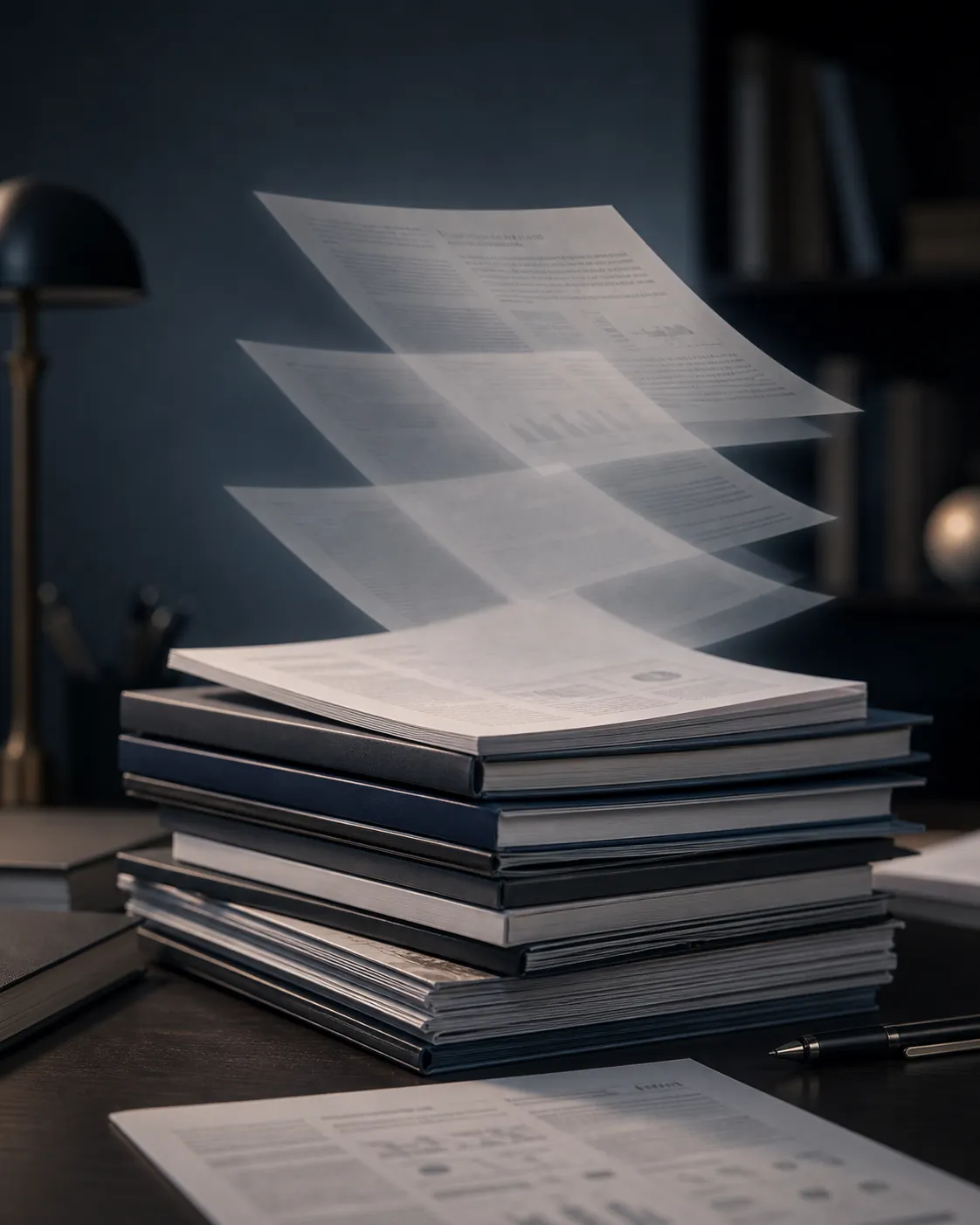
The stronger warning comes from NeurIPS, not YouTube
The most useful evidence is not the Green controversy. It is GPTZero’s audit of NeurIPS 2025 accepted papers, because that audit tested the failure mode in an environment full of people who know what research citations are supposed to look like. GPTZero reported scanning 4,841 accepted papers and finding more than 100 confirmed fabricated citations in accepted submissions.[4]
The paper count deserves careful handling because the source materials do not use one perfectly consistent number. GPTZero’s write-up says the confirmed hallucinated citations appeared across 51 accepted papers, while a table title on the same page refers to 53; Fortune reported “at least 53.” The responsible range is therefore 51–53 accepted NeurIPS 2025 papers, not a cleaned-up number that hides the discrepancy.[4][5]
That range is small relative to the full accepted-paper set, but it is still a serious record-integrity signal because these were not unreviewed drafts sitting in a private chat log. GPTZero states that each accepted paper had at least three assigned reviewers, yet the fabricated citations were missed before publication in the official conference record.[4]
Fortune reported GPTZero CEO Edward Tian describing the findings as “the first documented cases of hallucinated citations entering the official record of the top machine learning conference,” and said every flag was human-verified.[5] The point is not that peer review is useless. The point is narrower and more uncomfortable: expert attention does not reliably catch fabricated references when the fake source sits close enough to real research to pass a quick scan.
The same materials also report, through GPTZero and Fortune, that ICLR 2026 had 50 hallucinated citations under review and that ICLR hired GPTZero to screen submissions.[4][5] That detail should be read as secondary support, not as a separately verified institutional finding here. It still points in the same direction: citation fabrication is no longer a hypothetical edge case in AI-assisted scholarship.
Why fake citations can look right
GPTZero’s most useful phrase is “vibe citing.” The problem is not always a cartoonishly fake paper with an impossible journal name. A fabricated citation can blend real authors, plausible titles, recognizable venues, familiar subject-matter phrases, and false DOIs. Sometimes it resembles a real paper enough that the reviewer’s memory supplies the missing legitimacy. The citation has the feel of a source trail, even when the source trail does not exist.[4]
That is why “I would notice” is a weak control. The person asking for research help usually has a direction already in mind. A model that produces plausible support for that direction is not merely making a random mistake; it is supplying an answer shaped to the user’s frame. Duke University Libraries, in a January 2026 discussion of hallucination, described LLM sycophancy as the “digital Yes Man” problem and tied confident guessing to benchmark incentives that reward fluent answers over epistemic restraint.[6]
Put those two mechanisms together and the risk becomes harder to dismiss. The model does not simply invent in a vacuum. It can invent adjacent to the real literature, in the direction the user is already traveling, with enough surface texture to survive a glance. That is a poor foundation for any workflow whose output will later be treated as researched.
| Claim type | Safer status |
|---|---|
| Green used ChatGPT to locate papers and resources | Reported through secondary outlets that transcribed or summarized his Reddit apology [1][2][3] |
| Specific correction-card examples were caused by ChatGPT | Unconfirmed in the available source set |
| NeurIPS 2025 accepted papers contained confirmed fabricated citations | Supported by GPTZero’s audit and Fortune’s reporting [4][5] |
| ABA Formal Opinion 512 governs the Green incident | No; it is the legal-practice analogue for lawyers using AI tools |
The false authentication layer
Green is a useful framing case because his public identity is built around explanation. That does not make him uniquely blameworthy. It makes the failure legible. A trusted explainer can accidentally turn unstable machine output into something that feels pre-checked. The audience is not evaluating a raw ChatGPT answer. It is evaluating a source trail that appears to have passed through a competent human filter.
The same pattern is more consequential in professional research. A partner forwards AI-surfaced cases to an associate. A legal-tech product presents a research memo with citations. A knowledge-management lawyer drafts a practice note from a machine-generated literature scan. In each version, the person downstream inherits the verification burden while the upstream workflow gets described as productivity.
That burden is not evenly visible. A fabricated case or law-review article may cost only seconds to generate but much longer to disprove cleanly. The checker has to search the primary database, inspect the cited reporter or journal, confirm the title, author, date, court or venue, and then decide whether the model made up the whole source or merely corrupted part of a real one. “Almost real” is not easier to audit than obviously fake. It is often worse.
That is the procurement problem hidden inside a convenience claim. If a vendor says its system can speed up research by surfacing sources, the buyer should ask whose time is counted after the source appears. A benchmark that stops when the citation list is generated has measured the easiest part of the workflow and skipped the part where professional liability attaches.
What legal research buyers should measure instead
For legal-tech buyers, the relevant question is not whether an LLM can produce a plausible research path. It can. The question is whether the product changes the verification workload, hides it, or documents it well enough that a lawyer can defend the process later.
That makes “research assistance” a risk label, not a feature label. A legal research tool that summarizes sources already selected by the lawyer presents one kind of control problem. A tool that discovers authorities, articles, statutes, regulations, or factual sources presents another. Discovery is where the user is most likely to accept a plausible path because there is not yet a known source set to compare against.
| Vendor or workflow claim | What the buyer should test |
|---|---|
| Finds cases, articles, papers, or authorities | Whether every surfaced source links to a primary source that can be opened and independently verified |
| Generates research memos with citations | Whether citations are checked against the primary text before the memo is circulated |
| Ranks or recommends sources | Whether the ranking depends on metadata the system can prove, rather than on plausible generated descriptions |
| Saves lawyer time | Whether the claimed time savings includes verification, correction, and documentation time |
| Uses retrieval or grounding | Whether failed retrieval, partial matches, and missing sources are exposed to the user instead of smoothed into fluent prose |
This is also where tool comparisons need to be less theatrical. A model-vs-model shootout that rewards a polished answer may be measuring the same confidence signal that makes hallucinated citations persuasive. Research evaluation has to include source-opening, citation reconciliation, and failure logging. For procurement readers, that is the difference between a demo and a control environment; see the site’s GPT-5.6 vs. DeepSeek V4 legal research evaluation and the Grok legal use-case analysis for examples of verification-gated framing.
ABA Formal Opinion 512 puts the verification work inside the professional task
The Green incident is not legal authority. ABA Formal Opinion 512 is the legal hook for lawyers. Issued on July 29, 2024, it addresses lawyers’ use of generative AI tools and contemplates time spent reviewing AI output “for accuracy and completeness” as part of the work lawyers may need to perform and, where appropriate, charge for.[7]
That matters because verification is often treated as informal cleanup. In a legal workflow, it cannot be. If a lawyer uses an AI system to surface authorities, each authority has to be checked against the primary source. Not against the model’s explanation. Not against a snippet. Not against another generated summary. Against the actual case, statute, regulation, docket entry, article, or other source being cited.
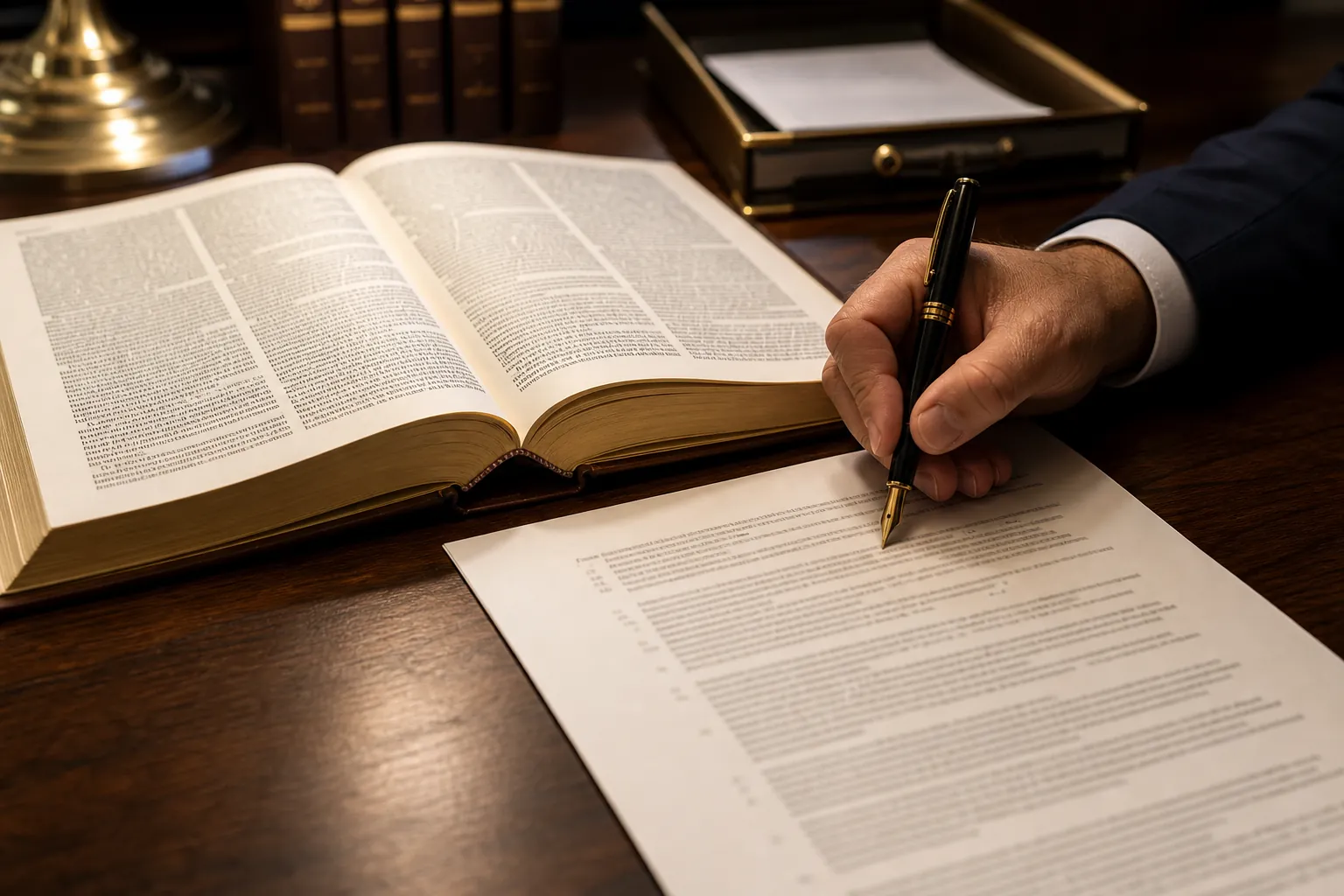
A defensible AI-assisted research process therefore needs a visible handoff from generation to verification. The handoff should answer basic questions before the work product leaves the researcher’s desk: Which sources did the tool surface? Which primary sources were opened? Which citations failed? Which summaries were corrected? Who made the verification call?
- Treat every AI-surfaced source as unverified until the primary source has been opened.
- Record failed or partial matches instead of silently deleting them from the final memo.
- Separate source discovery from source characterization; a tool may find a real source and still misstate what it says.
- Require the reviewer to cite the verified primary source, not the AI note that pointed to it.
- Include verification time in the workflow estimate and, where ethically appropriate, in the billing analysis.
The site’s AI-chatbot failure verification workflow is built around a different subject matter, but the audit discipline is the same: the answer is not accepted because it sounds administratively plausible; it is checked against the authority that actually controls.
The narrow lesson
None of this requires a blanket rejection of AI tools. Tools that reduce clerical drag can be valuable. A model can help reformat notes, draft a checklist from already verified materials, or suggest search terms that a lawyer then runs in a controlled research environment. Those uses still require judgment, but they do not all carry the same citation-discovery risk.
Using ChatGPT to locate papers, cases, or other authorities is different because the machine is helping construct the source trail itself. The NeurIPS audit shows that fabricated citations can enter an expert-reviewed record. The sycophancy problem explains why the user may be least skeptical when the model is most agreeable. Green’s reported apology shows how quickly a research shortcut can become false authentication when a trusted human voice carries it forward.
For legal practice, the operational rule is simple enough to enforce and demanding enough to matter: AI-surfaced sources are not research until they have been checked against the primary source. “Research assistance” is defensible only when verification is mandatory, documented, and treated as part of the professional work.
References
- Hank Green says his YouTube channel may need to pause after admitting to relying on AI for research — The Verge
- ChatGPT Research Habit Cost Hank Green Accuracy His Brand Was Built On — TechTimes
- Hank Green faces major backlash after admitting he used ChatGPT to research YouTube script — Dexerto
- NeurIPS — GPTZero
- NeurIPS AI conferences research papers hallucinations — Fortune — January 21, 2026
- It’s 2026: Why Are LLMs Still Hallucinating? — Duke University Libraries — January 5, 2026
- ABA issues first ethics guidance on a lawyer’s use of AI tools — American Bar Association — July 29, 2024
Related records
Tool profile
How to Read Legal AI Benchmarks Ahead of the OpenAI IPOGoverning regulation
Browse the obligations tracker →Preventive workflow
Browse verification workflows →
Report a correction or tip
Spotted an outdated figure, a misstated fact, or a ruling this case record should reflect? Public comments are disabled for this content given the professional cost of a misreported case outcome, penalty amount, or rule text — use the structured correction channel instead.
Report a correction or tip for this record →