
Grok's Legal Use Cases, Tiered by Risk
xAI markets Grok for five legal workflows, but its headline figures lack published methodology. The 2026 evidence — benchmark runs and failure-mode studies — supports only a tiered deployment: low-risk drafting and extraction, verification-gated research synthesis, and no court-bound work without an independent citation check.
- Tool
- Grok
- Benchmark source
- HAQQ, Percipient, Legal Benchmarks, Snorkel AI, Suprmind
- Hallucination rate
- 54%
- Test methodology
- Benchmark-specific independent runs; blind attorney grading, 3,000-answer legal-area grading, contract-drafting reliability tasks, GDPval+ with xAI Grok Build, and hallucination-benchmark aggregation.
- Test date
- Jan 1, 2026
The practical question in Q3 2026 is not whether Grok has legal capabilities. It does. The question is which legal use cases for Grok can survive the ordinary failure of an AI system: a wrong clause, a missed privilege signal, a fake citation, or a confident summary that drops the one fact a lawyer needed.
This is a tool-evaluation record, not legal advice. xAI’s five marketed legal workflows — contract analysis, legal research, compliance monitoring, document drafting, and due diligence — are useful as the starting checklist, but the headline figures on the same page are still vendor claims. xAI says Grok can deliver 80% faster contract review, 10x document throughput, and 50% fewer compliance gaps; the public page does not publish the test design, sample, baseline, review protocol, or error definition behind those figures.[1]
That matters because legal deployment is not bought at model level. It is approved at workflow level. A firm can sensibly pilot Grok for first-draft contract work and still block it from preparing a court filing. It can use Grok to sort documents and still require a lawyer to verify every legal proposition in a research memo. The control has to match the failure.
The Five Claimed Workflows, Translated Into Risk
| xAI marketed workflow | Current permission level | What the workflow can include | Required verification condition |
|---|---|---|---|
| Contract analysis | Tier 1 for extraction and redlining support; Tier 2 if the output states legal effect | Clause extraction, issue spotting for internal review, redline suggestions, obligation summaries | Attorney or contract manager reviews against the source document before reliance |
| Legal research | Tier 2; Tier 3 if court-bound without independent cite-checking | Research synthesis, first-pass memo outlines, authority maps | Named reviewer checks every citation and legal proposition against primary authority |
| Compliance monitoring | Tier 2 only; Grok-specific evidence is thin | Internal summaries, policy-gap triage, control mapping drafts | Subject-matter owner verifies rule sources, jurisdiction, date, and applicability |
| Document drafting | Tier 1 for internal first drafts; Tier 2 for advice-bearing or citation-bearing drafts | Contract drafts, internal templates, clause alternatives, non-final client work product | Human reviewer owns the final language and checks cited or incorporated law |
| Due diligence | Tier 1 for classification and extraction; Tier 2 for findings or risk conclusions | Document sorting, clause tables, change-of-control extraction, diligence memo drafts | Deal lawyer or diligence lead validates source coverage and conclusions |

Tier 1 is not “no risk.” It is work where the output is an input to a human process and the source material remains available: first drafts, clause extraction, document classification, and internal summaries. Tier 2 is work where Grok may help, but only behind a named verification step: research synthesis, memos citing authority, compliance summaries, and diligence conclusions. Tier 3 is the do-not-file zone: anything submitted to a court, client-facing legal conclusions, or citation-bearing drafting without independent cite-checking.
Capability Evidence Is Real, but It Is Uneven
The most generous reading of the 2026 evidence is that Grok belongs in legal pilots. The less convenient reading is that the pilot has to be fenced by task.
HAQQ’s 2026 benchmark is the broadest legal-capability signal in the record. It graded 3,000 AI answers across 51 legal practice areas and reported that Grok won 13 of those areas. Grok’s stronger scores included IP/technology at 30.2, environmental/ESG at 30.8, and compliance/due diligence at 31.4.[2]
Those are not throwaway numbers. They are exactly the kind of results that should make a knowledge-management lawyer ask where Grok can reduce repetitive research and review load. But HAQQ is also a legal-AI vendor, and its own product ranks first on its leaderboard. That does not make the results useless. It does mean they should be treated as capability evidence, not procurement clearance.[2]
The same benchmark also reported a failure category that should matter more than a leaderboard rank: across the 3,000-task run, 24% of frontier-model answers cited or applied law that did not support the claim being made.[2] For internal triage, that may be caught downstream. For a memo sent to a client, it becomes a professional-risk transfer. For a filing, it is exactly the failure class that cannot be averaged away.
That is why the practice-area scores should not be turned into a model-wide verdict. A good signal in IP/technology does not prove safe use in litigation research. A good compliance/due-diligence score does not prove that a monitoring workflow can identify changed law in a regulated business without source verification. It proves that Grok deserves a narrower test in those areas.
The Contract Signal Is Stronger Than the Document-Review Signal
Percipient’s attorney-graded work is more useful for deployment than a single aggregate rank because it separates tasks that buyers too often collapse into “legal review.” Its rubrics were set by lawyers averaging more than 25 years of experience, and the grading was blind.[3]
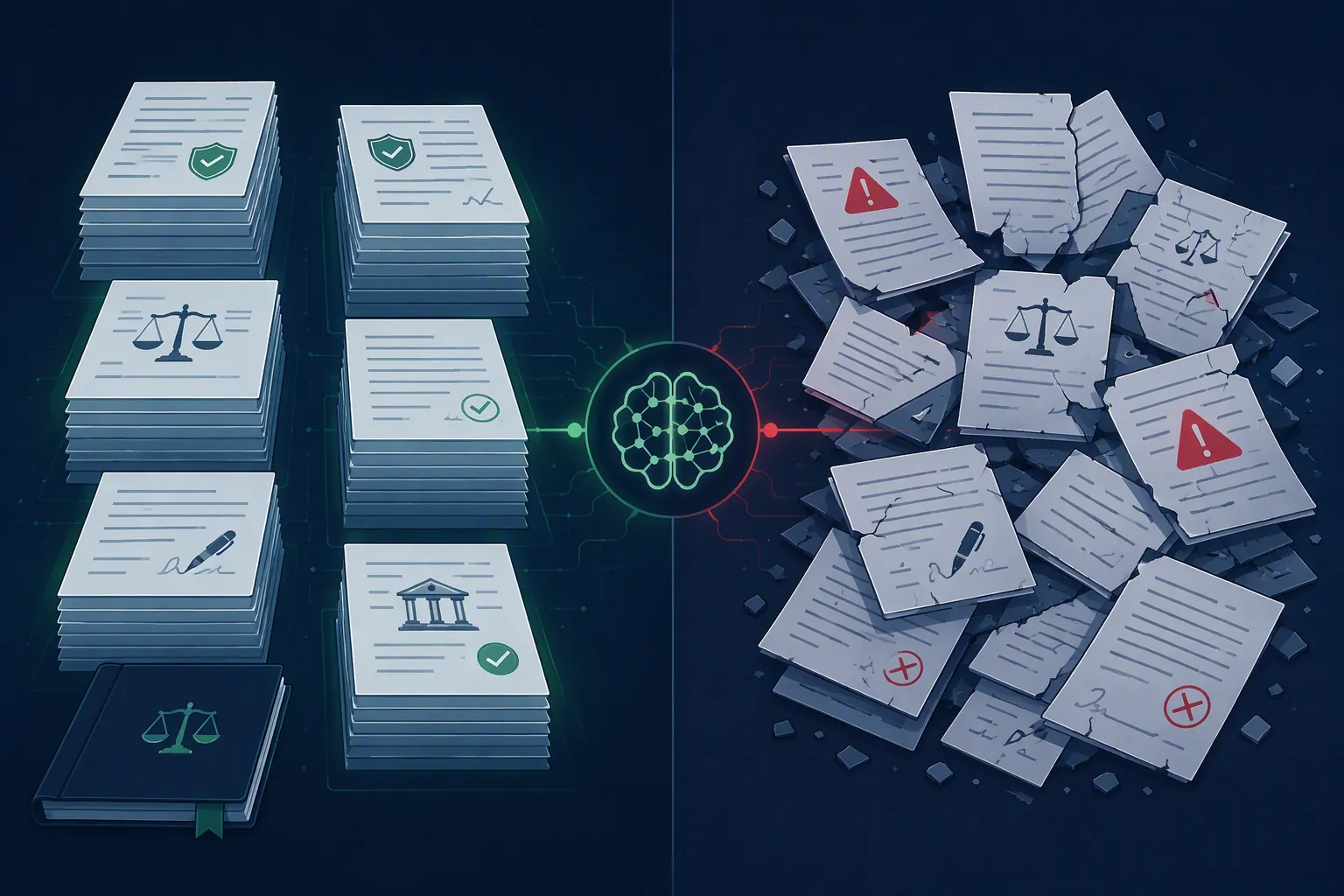
On contract redlining, Grok scored 79.25 out of 100.[3] That supports a Tier 1 pilot for redline suggestions, fallback clause drafting, and clause-risk spotting where a lawyer or contract reviewer still controls the final mark-up. It is not a reason to let the model negotiate, approve, or explain legal effect without review.
The contrast is document review. On Percipient’s document-review task, Grok scored 63.6 out of 100, the lowest of ten variants, while nine of ten models scored between 89 and 97.[3] That spread is the point. A procurement deck that says “Grok is good at legal work” hides the exact operational fact that matters: the same model can look useful in one legal task and weak in another.
For litigation support and investigations, that difference changes the approval path. Clause extraction from a known contract set can be checked against source text. Document review can involve relevance, privilege, chronology, intent, and issue coding across a messy record. If the model underperforms there, the cleanup burden lands on associates, contract reviewers, paralegals, and KM staff who inherit the output after someone else has already counted the savings.
First-Draft Contract Drafting Is the Clearest Pilot
The Legal Benchmarks contract-drafting leaderboard gives the cleanest support for cautious drafting use. Grok 4.5 posted 58.8% reliability across 34 contract-drafting tasks at about $0.19 per task, tied with Kimi K3 as the strongest non-Anthropic drafter below Claude Opus 4.8 at 67.6%.[4]
A 58.8% reliability score is useful enough to justify experimentation and nowhere near strong enough to remove review. The likely value is in the dull middle of contract operations: turning a term sheet into a first draft, generating clause alternatives, conforming defined terms, preparing an internal comparison table, or producing a starting redline for a human negotiator.
The approval condition should be simple: no Grok-generated contract language becomes final unless a human reviewer checks it against the business instruction, the template position, and any governing legal requirement. In high-volume contracting, that can still be economically worthwhile. Review time is not eliminated; it is moved to the part of the workflow where a person catches variance before reliance.
Professional-Work Scores Help, but the Harness Caveat Matters
Snorkel’s GDPval+ testing is encouraging for Grok 4.5 as a professional-work system. In the legal slice, Grok 4.5 reached a 40% pass rate, compared with 27% to 28% for GPT-5.5 and Claude Opus 4.8.[5]
That result should stay in the file, but not as an apples-to-apples model ranking. Snorkel disclosed that Grok was run with xAI’s Grok Build agent at xAI’s request, while GPT-5.5 and Claude Opus 4.8 used a different harness, Stirrup.[5] In legal operations terms, the result may tell buyers something valuable about a Grok-based system. It does not isolate the base model in the same way across vendors.
That caveat is not pedantry. If a firm is buying an application-layer workflow, the harness may be part of what it is buying. If the firm is deciding whether lawyers may paste research questions into a general model interface, the harness result may overstate what the permitted workflow can reproduce.
This is also the same pattern behind the site’s parallel evaluation of GPT-5.6 and DeepSeek V4 for legal research: benchmark strength may justify testing, but it does not create filing clearance.
Research and Citation Work Need a Hard Verification Gate
The research-risk evidence is less forgiving. Suprmind’s July 2026 aggregation reported Grok 4.5 at 52% accuracy and 54% hallucination on AA-Omniscience, roughly doubling hallucination compared with Grok 4.3’s 25% high and 16% medium hallucination measures. The same aggregation reported Grok-3 at a 94% citation-hallucination rate on the CJR test.[6]
Those figures should not be blended with contract-redlining scores. Citation work is a different failure mode. A clause suggestion can be compared with the contract on screen. A research memo can contain an authority that looks plausible, is formatted correctly, and still fails the proposition. The person who catches that error needs access to the primary source, not just a second model’s reassurance.
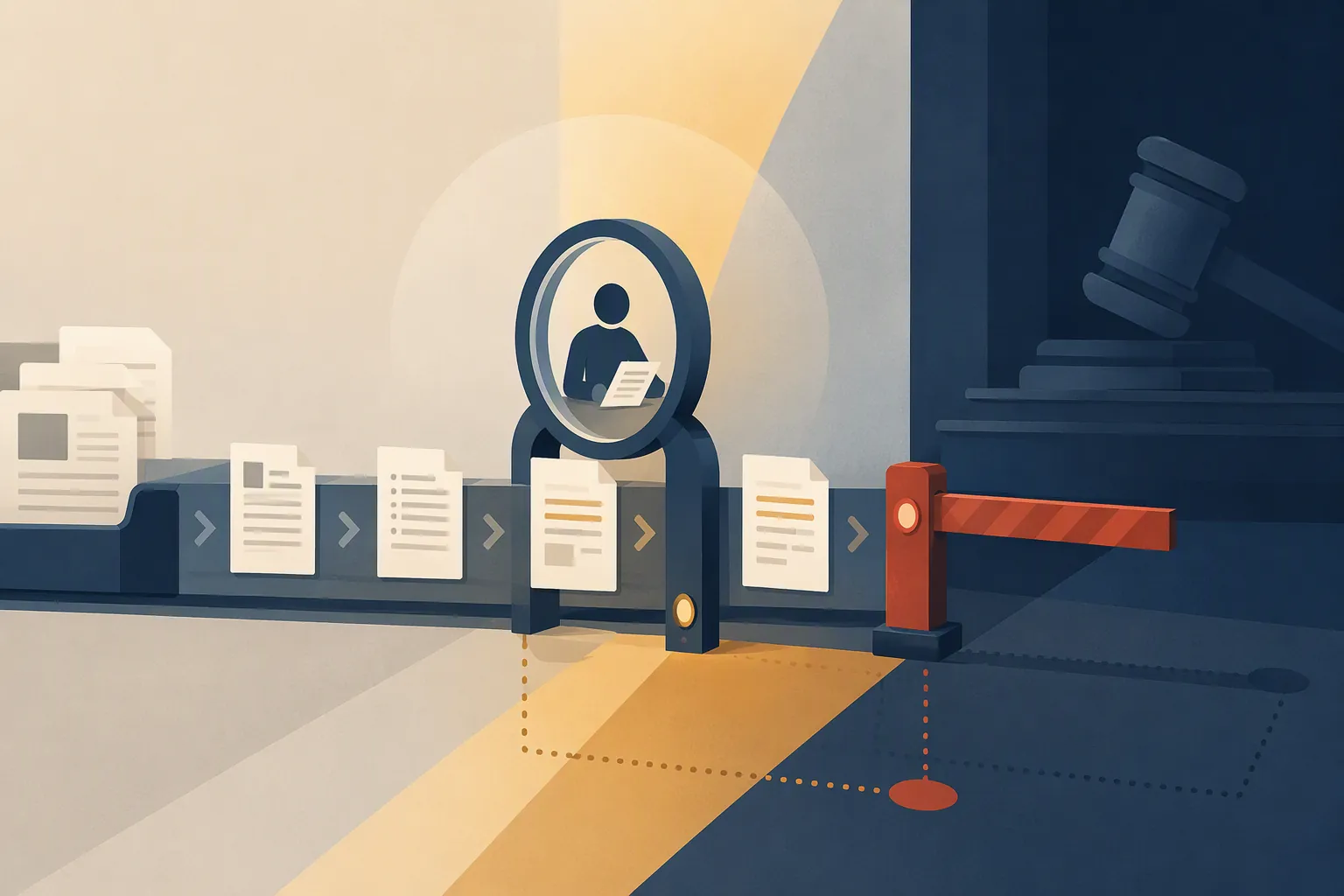
For Tier 2 research synthesis, the verification step should be named in the workflow, not left as a cultural expectation. A research memo can start with Grok only if the final reviewer checks each cited case, statute, regulation, rule, and quoted passage against primary authority; confirms that the authority supports the sentence it is attached to; and verifies jurisdiction, date, procedural posture, and negative treatment where relevant.
That is the same operational lesson behind risk-digest records on AI output verification and research-only defenses. The risky act is not merely asking the tool. It is letting the answer travel farther than the verification process can support.
Compliance Monitoring and Due Diligence Should Not Borrow Confidence From Contracts
Compliance monitoring and due diligence are attractive Grok use cases because they are document-heavy, repetitive, and expensive. They are also the easiest places to overread the evidence.
HAQQ’s compliance/due-diligence score is a positive signal, and xAI markets compliance and due diligence as legal workflows.[1][2] But the available record does not contain Grok-specific, workflow-level evidence showing that Grok reliably monitors live compliance obligations, detects regulatory change, or produces diligence risk conclusions across a real deal room. The safer conclusion is narrower: Grok may help classify, extract, compare, and summarize materials inside those workflows, but the legal conclusion needs human ownership.
In compliance, that means Grok can draft a gap table for review, not decide that a control satisfies a rule. The reviewer should identify the rule source, confirm the effective date, check jurisdiction and business applicability, and mark whether the source was actually in the model’s supplied materials.
In due diligence, Grok can help pull assignment clauses, change-of-control terms, termination rights, data-processing language, and unusual indemnities. It should not be the last reader of the diligence report. The diligence lead needs to know whether the extraction covered the full population, whether exceptions were sampled or exhaustively reviewed, and whether the conclusion is legal, commercial, or merely textual.
Failure Modes to Build Around
Micro1 Realm did not test Grok, so it should not be used as Grok-specific evidence. Its value is different: it describes the kind of legal reasoning failures that make verification gates necessary.
On Realm, strong models scored higher on issue spotting, in the 0.56 to 0.68 range, than on rule identification, where scores fell to 0.20 to 0.37. The benchmark also found degradation on revision when facts changed.[7] That is a dangerous pattern for legal work because the polished-looking answer often depends on exactly those two skills: identifying the governing rule and revising the analysis when a fact changes.
For Grok deployment, the lesson is not “Realm says Grok fails.” It does not. The lesson is to treat rule selection, changed facts, and citation support as verification points. Those are the places where a lawyer should slow the workflow down instead of accepting a neat answer because the model performed well on a different legal task.
A Permission Map for Q3 2026
A firm that wants to pilot Grok can do it without pretending the tool is safe everywhere. The deployment policy should say which outputs may be created, who reviews them, and what cannot leave the system without an independent check.
Tier 1: Permit for Internal Drafting, Extraction, and Classification
- Contract first drafts from approved templates or business terms, with attorney review before circulation.
- Clause extraction, obligation tables, and comparison charts where the reviewer can trace every entry to source text.
- Document classification for internal triage, with sampling and escalation rules for ambiguous documents.
- Internal summaries of supplied materials, clearly marked as draft work product and not legal advice.
Tier 1 is where Grok’s cost-sensitive drafting and extraction value is easiest to capture. The common feature is traceability. A reviewer can compare output with a contract, a document set, or a template instruction before anyone relies on it.
Tier 2: Permit Only With Named Verification
- Legal research synthesis, with every authority checked against primary sources.
- Memos citing statutes, regulations, cases, or agency materials, with a named attorney responsible for citation support.
- Compliance summaries, with source, jurisdiction, effective date, and applicability confirmed by the compliance owner.
- Due-diligence findings, with coverage, exceptions, and legal conclusions validated by the deal team.
The verification step should be visible in the matter record. A policy that says “lawyers remain responsible” is weaker than a workflow that assigns cite-checking to a person, requires source links or database identifiers, and blocks final delivery until the verification field is complete. The site’s verification workflow format is useful here because it turns abstract AI risk into review questions that someone must answer.
Tier 3: Do Not File or Deliver Without Independent Cite-Checking
- Court filings, briefs, declarations, exhibits, or letters submitted to a tribunal.
- Client-facing legal conclusions that cite authority or state the legal effect of facts.
- Citation-bearing drafts where no reviewer has checked the authority against primary sources.
- Research outputs used to meet a deadline when no one has time to verify the citations and propositions.
This is the boundary that should be hardest to negotiate away. If a Grok output is going to court, to a client as legal advice, or into a record where a citation carries professional significance, every citation and every legal proposition needs independent checking against primary authority. A second AI pass is not enough.
The same buyer-side discipline applies to vendor claims more broadly. Performance numbers are inputs to a deployment decision, not replacements for one. That is why application-layer risk, rather than model enthusiasm, also drives the site’s record on AI investment shifting legal-tech risk to buyers.
The Safe-Use Boundary
Grok’s legal-use record is good enough for a serious pilot and not good enough for blanket permission. The 2026 evidence supports low-risk drafting, clause extraction, classification, and internal summaries where a human reviews the source material before reliance. It supports research synthesis, compliance summaries, and diligence outputs only when the verification step is named, assigned, and completed.
It does not support court-bound or citation-bearing legal work without independent cite-checking. That is the operational rule a legal team can actually use: pilot Grok where the output is traceable and reviewable; gate it where it states law or applies law to facts; and keep it out of filings unless every citation and legal proposition has been checked against primary authority.
References
- Legal Solutions, xAI
- Best AI for Legal Work in 2026? We Graded 3,000 Answers, HAQQ
- How Frontier AI Models Perform on Real Legal Work, Percipient
- Leaderboard, Legal Benchmarks
- Grok 4.5 Testing Results: How SpaceX/AI's New Model Performs on Real Professional Work, Snorkel AI
- AI Hallucination Rates and Benchmarks, Suprmind, July 2026
- Realm Legal, Micro1
Chronological incident history
← Compare peer toolsReport a correction or tip
Spotted an outdated figure, a misstated fact, or a ruling this tool profile should reflect? Public comments are disabled for this content given the professional cost of a misreported case outcome, penalty amount, or rule text — use the structured correction channel instead.
Report a correction or tip for this record →