
Harris's 13-Justice Supreme Court Expansion, Explained
Kamala Harris called for a 13-justice Supreme Court on July 31, 2026, but the proposal's legal record differs from its political headline. The exact quote and venue, the constitutional and statutory mechanics behind the number 13, and the verified legislative status as of early August 2026 are documented — including the pending term-limits bill and the absence of any located 13-justice expansion bill in the 119th Congress.
- Jurisdiction
- U.S. federal
- Court
- U.S. Supreme Court
- AI tool named
- No AI tool named
- Ruling date
- Jul 31, 2026
- Source document
- View primary court order ↗
- Last verified
- Aug 2, 2026
Lex Machina Review is an independent risk-tracking and reference resource. Nothing on this site is legal advice, and using it does not create an attorney-client relationship. Every record is reviewed against primary sources but may not reflect the most current status of a matter — always verify directly against the cited court order, rule text, or a licensed attorney before relying on it.
Companion explanation — secondary to the source document above
What Harris actually said
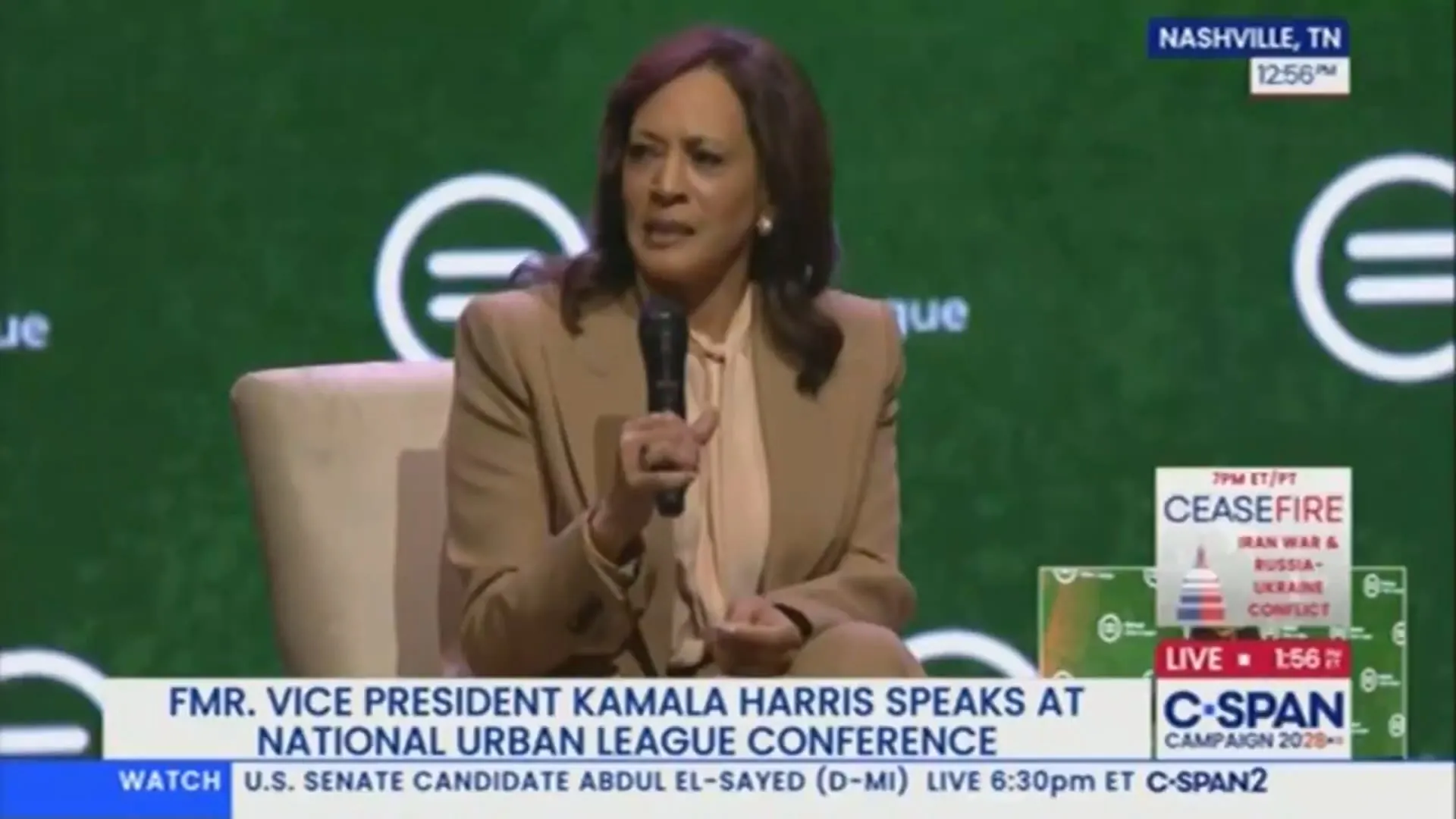
Kamala Harris did call for a 13-justice Supreme Court. The useful version of the story starts there, with the exact line and the exact setting: on July 31, 2026, at the National Urban League annual conference in Nashville, she said, “We need to revisit the point of expanding the court to 13 justices like we have 13 district courts.” The remark came in a set of democracy-reform comments that also included reviewing the Electoral College and statehood for Puerto Rico and Washington, DC.[1]
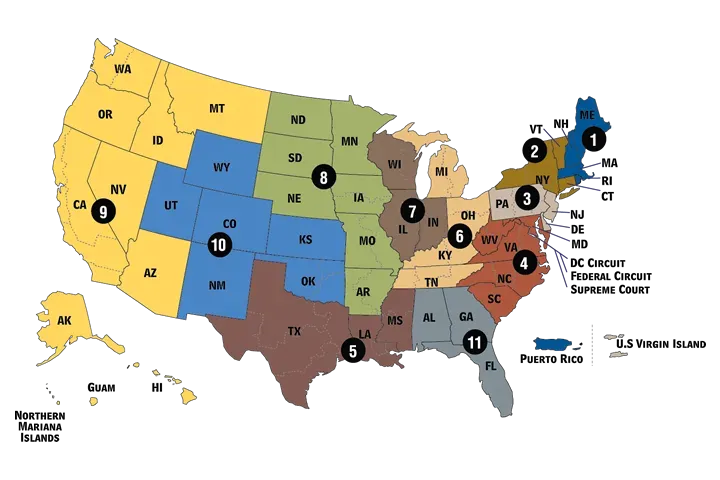
The wording matters because Harris’s institutional noun was wrong. The federal judiciary has 13 courts of appeals, commonly described as 13 circuit courts, and 94 district courts. The 13-justice proposal is built around the circuit count — one justice for each federal appellate circuit — not around the number of trial-level district courts.[1]
That correction does not make the remark disappear. It does keep the proposal in the right box. “Thirteen” is not a free-floating campaign number; it comes from a long-running court-expansion argument advanced in prior Judiciary Act materials by Democratic reformers, including Rep. Hank Johnson, Rep. Jerrold Nadler, Sen. Ed Markey, and allies, who have framed 13 seats as a way to match the number of federal circuits and, in their view, restore legitimacy to the Court.[2][3]
So the short answer is this: yes, Harris publicly endorsed revisiting expansion to 13 seats; no, “13 district courts” is not the legally accurate explanation; and no, the statement itself does not move the Court from nine justices to 13.
The legal mechanism is statutory, not rhetorical
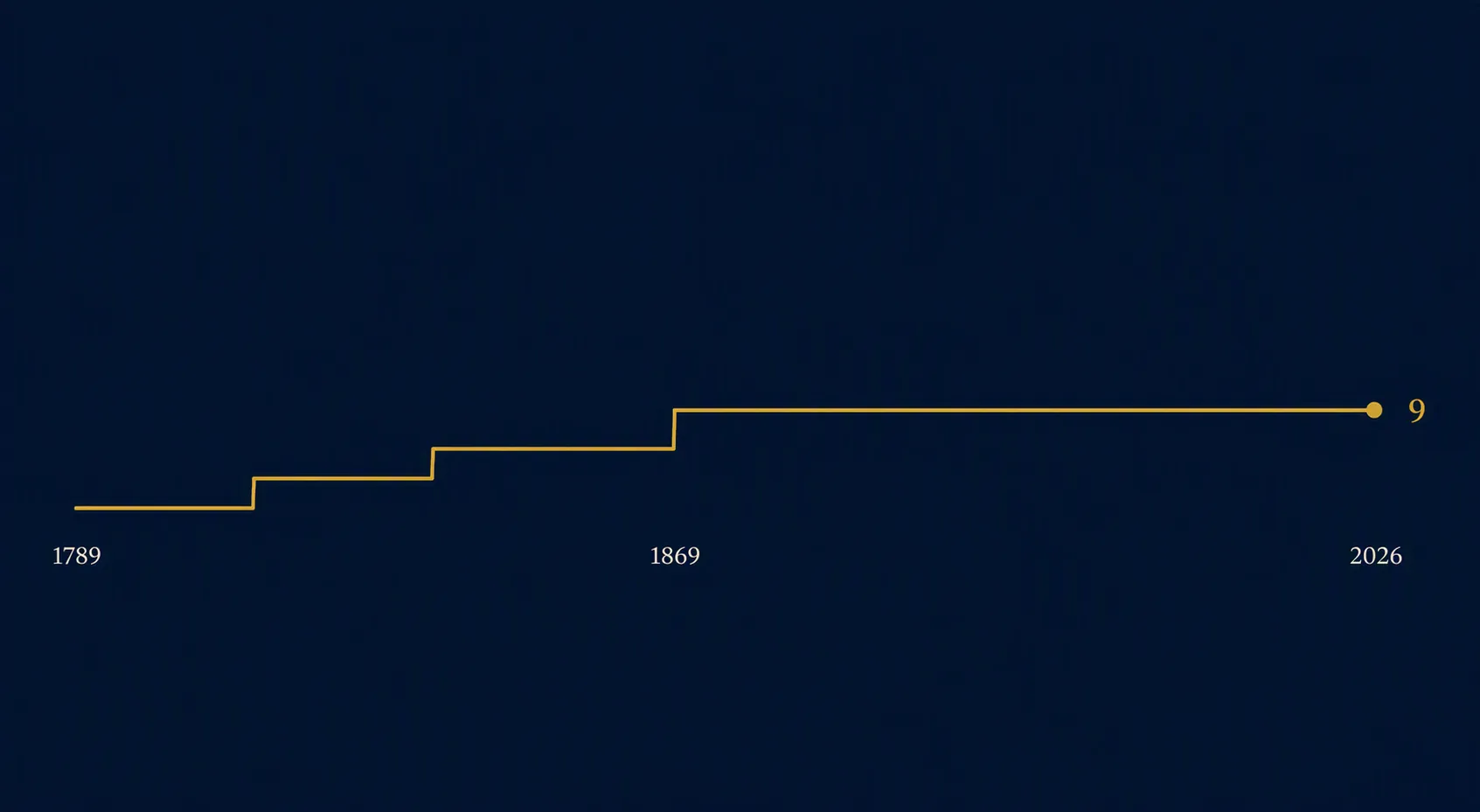
Article III creates “one supreme Court,” but it does not set the number of justices. Congress has set and changed that number by statute. Congressional Research Service materials describe Congress as having broad authority to alter the Court’s size through ordinary legislation, and historical summaries identify seven changes in the Court’s size: 1789, 1801, 1807, 1837, 1863, 1866, and 1869. The number has remained nine since 1869.[4][5]
That is the cleanest part of the legal analysis. If Congress wanted to expand the Supreme Court from nine to 13 seats, the ordinary route would be a bill changing the number of authorized justices, passage by Congress, and presidential signature or enactment over a veto. It would be politically explosive, but the core vehicle would be legislation.
Term limits and age limits sit in a different legal category. CRS materials distinguish court-size legislation from proposals that would limit the tenure of sitting or future justices; those proposals raise separate constitutional issues and, depending on the design, would likely require a constitutional amendment rather than a simple statute.[4]
| Proposal | Legal vehicle | Status in the record reviewed here |
|---|---|---|
| Expand the Court to 13 justices | Ordinary legislation could change the number of seats | No 13-justice expansion bill was located in the 119th Congress materials reviewed as of Aug. 2, 2026 |
| Impose Supreme Court term limits | Legally distinct from expansion; constitutional issues are more difficult | H.R. 1074, the Supreme Court Term Limits and Regular Appointments Act of 2025, is the located pending bill |
| Fix the Court permanently at nine justices | Constitutional amendment | Advanced by the House Judiciary Committee on June 3, 2026 |
That table is deliberately narrow. It does not say no expansion bill could be introduced later in the 119th Congress. It says that, as of the Aug. 2, 2026 record reviewed for this article, the located federal bill is H.R. 1074, a term-limits measure, not a bill adding four seats to the Court.[6]
Congress has recently moved in the opposite direction
The most important congressional fact is not a new expansion bill. It is the House Judiciary Committee’s June 3, 2026 vote to advance Rep. Andy Biggs’s proposed constitutional amendment permanently limiting the Supreme Court to nine justices. Reuters reported that the committee vote was 15-8 along party lines.[7]
That does not mean the amendment is close to becoming part of the Constitution. It does mean that the only located committee movement in this record points against expansion, not toward it. For anyone trying to separate political salience from legislative posture, that June vote is a hard fact.
The earlier 13-justice bills still matter, but mainly as lineage. They explain why Harris’s number was immediately intelligible to court-reform advocates and why the proposal did not have to be invented from scratch in 2026. The 2021 and 2023 materials framed expansion as a response to perceived legitimacy damage and the modern Court’s ideological composition.[2][3]
Lineage is not enactment momentum. Advocacy press releases can fairly supply reformers’ stated rationale; they cannot substitute for a live bill number, a committee report, a floor schedule, or a vote count.
Why the politics are loud anyway
The political oxygen is not mysterious. The Supreme Court currently has a 6-3 conservative majority: six of the nine justices were appointed by Republican presidents, including three appointed by Donald Trump.[1] For Democrats who view recent terms as proof of a legitimacy crisis, changing the Court’s structure is not a fringe procedural curiosity; it is a proposed remedy.
But public opinion does not collapse into a single pro-expansion number. The Marquette Law School Poll conducted May 20-26, 2026, as summarized by SCOTUSblog, found Americans evenly split on adding justices — 50% approve and 50% disapprove — while 79% supported term limits for Supreme Court justices.[8]
Pew Research Center measured a different thing: favorability toward the Court. In polling conducted July 6-12, 2026, Pew found 45% of Americans had a favorable view of the Supreme Court and 53% had an unfavorable view, with favorable views 20 percentage points lower than in April 2021.[9] Gallup’s July 2026 measure was also distinct: it recorded 33% job approval for the Supreme Court, the lowest in Gallup’s 26-year trend.[10]
Those figures explain why reform rhetoric travels. They do not establish that Americans have endorsed a 13-justice Court as a concrete legislative program. The expansion question, the term-limits question, favorability, and job approval are separate measurements.
What is actually true as of Aug. 2, 2026
Harris’s July 31 remarks are a significant Democratic political marker. A former vice president and 2024 Democratic nominee publicly said the Court should be revisited for expansion to 13 seats, and she did so in a public civil-rights venue as part of a broader democracy-reform argument.[1]
The legal record is more constrained. The Constitution does not freeze the Court at nine, and Congress has changed the size of the Court before. But Congress has not changed that number since 1869, the located pending 119th Congress bill concerns term limits rather than expansion, and the House Judiciary Committee recently advanced a proposed amendment that would fix the Court at nine.[4][5][6][7]
For readers tracking constitutional process, this belongs with other primary-source records such as What Are the Constitutional Theories for a Third Trump Term? and the legal process that determines who fills a Senate vacancy: the operative question is not whether the statement is politically interesting, but which institution has authority to act and what the public record shows that institution has done.
Last verified against the cited record on Aug. 2, 2026. This article is legal information, not legal advice, and the absence of a located expansion bill should be rechecked on Congress.gov before relying on it as a final legislative-status statement.
References
- Harris calls for expanding Supreme Court to 13 justices, CNN, July 31, 2026.
- Nadler, Johnson, Jones, Markey Introduce Legislation to Expand Supreme Court, Restore Legitimacy, Office of Rep. Jerrold Nadler.
- Sen. Markey, Rep. Johnson Announce Legislation to Expand Supreme Court, Restore Its Legitimacy Alongside Sen. Smith, Reps. Bush and Schiff, Office of Sen. Ed Markey, May 16, 2023.
- CRS R47382, Congressional Research Service.
- Idea of changing the number of Supreme Court justices is hardly new, National Constitution Center.
- H.R.1074 - Supreme Court Term Limits and Regular Appointments Act of 2025, Congress.gov.
- House Republicans advance constitutional amendment to prevent US Supreme Court expansion, Reuters, June 3, 2026.
- Do Americans support expanding the court?, SCOTUSblog, June 5, 2026.
- Favorable views of Supreme Court remain near historic low, Pew Research Center, July 30, 2026.
- Supreme Court, Gallup.
Related records
Tool profile
How Meta's AI Spending Reshapes Law Firm ProfitabilityGoverning regulation
Browse the obligations tracker →Preventive workflow
Browse verification workflows →
Report a correction or tip
Spotted an outdated figure, a misstated fact, or a ruling this case record should reflect? Public comments are disabled for this content given the professional cost of a misreported case outcome, penalty amount, or rule text — use the structured correction channel instead.
Report a correction or tip for this record →