
AI Know-Your-Rights Scripts Now Carry ICE Sanction Risk
AI-drafted ICE know-your-rights scripts carry documented sanction risk. Lnu v. Blanche, Dec v. Mullin, and EOIR PM 25-40 share the standard: verification failure, not AI use.
- Jurisdiction
- US - Ninth Circuit
- Court
- U.S. Court of Appeals for the Ninth Circuit
- AI tool named
- ChatGPT
- Ruling date
- Jun 3, 2026
- Source document
- View primary court order ↗
- Last verified
- Aug 4, 2026
Lex Machina Review is an independent risk-tracking and reference resource. Nothing on this site is legal advice, and using it does not create an attorney-client relationship. Every record is reviewed against primary sources but may not reflect the most current status of a matter — always verify directly against the cited court order, rule text, or a licensed attorney before relying on it.
Companion explanation — secondary to the source document above
Non-advice notice: this Risk Digest record is for legal-risk and workflow analysis. It is not legal advice for any individual encounter with ICE, an airport arrest, detention, questioning, removal proceedings, or any other specific matter. Last verified: Aug. 4, 2026, UTC. Legal-background reviewer: [publication to insert named reviewer before release]. Primary records for this update include the Ninth Circuit order in Lnu v. Blanche, EOIR Policy Memorandum 25-40, and the best available public account of Dec v. Mullin pending primary-record verification. [1][2][3]
The practical question is no longer abstract. A lawyer, clinic director, or KM lead has an AI-drafted ICE airport know-your-rights handout, phone-bank script, filing insert, or client alert and wants to know whether the sanction risk is real. The answer is narrower, and more useful, than the usual AI panic: the documented 2026 record does not make AI use itself sanctionable. It makes unverified reliance on AI output sanctionable when a lawyer adopts the work as legal authority, legal quotation, or legal guidance.
For immigration counsel, that distinction matters twice. A hallucinated case in a federal filing can draw court sanctions. A hallucinated legal-rights claim in immigration practice can also move into EOIR discipline territory when counsel drafts, approves, or distributes it as legal guidance. No source in this record shows a court sanctioning a lawyer specifically for an AI-generated airport know-your-rights script. The risk is an exposure analysis drawn from the same verification duty now appearing in court orders and immigration-practice guidance.
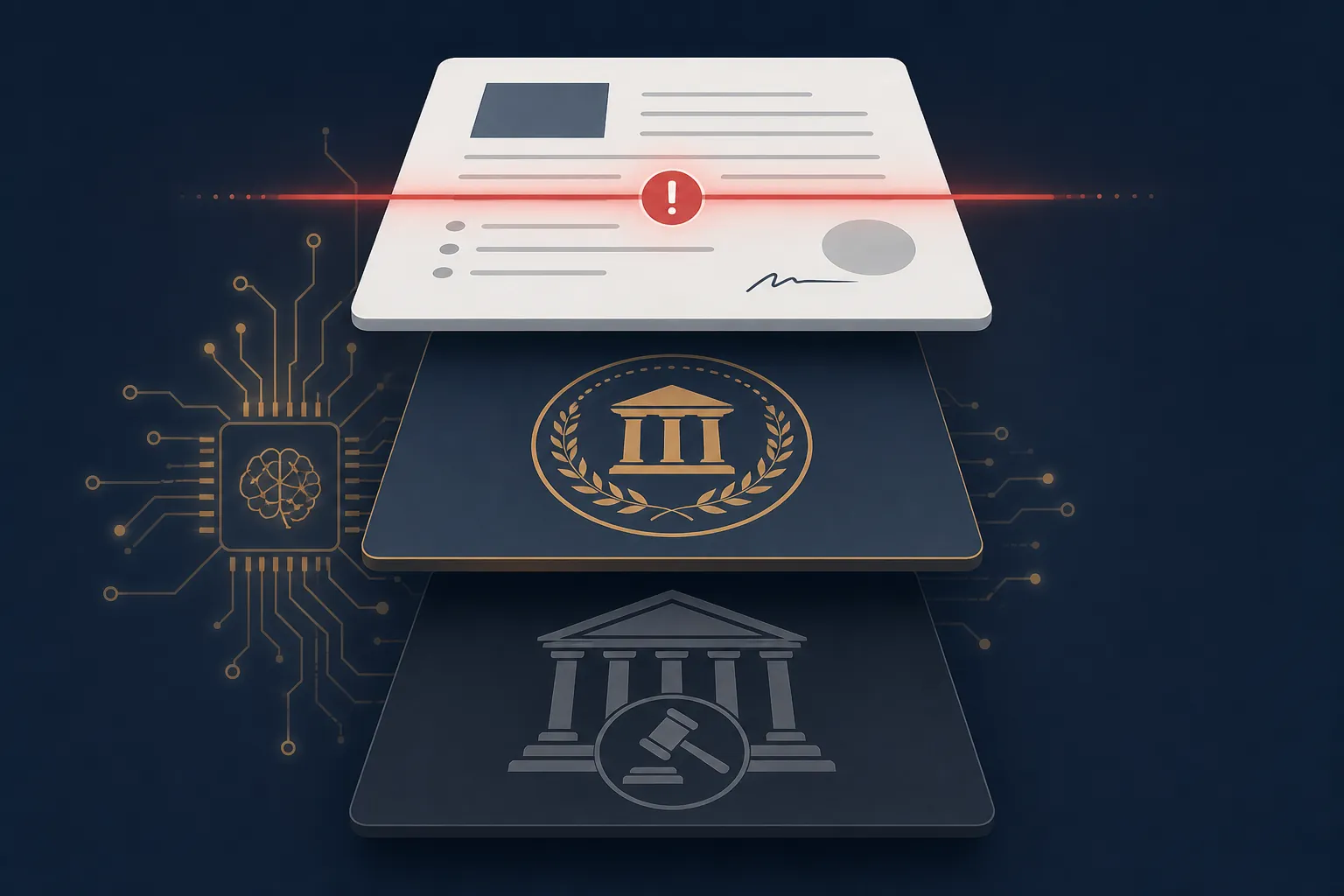
Lnu v. Blanche is a verification case, not an AI morality play
The load-bearing record is Lnu v. Blanche, No. 24-4790. On June 3, 2026, the Ninth Circuit sanctioned two attorneys $2,500 each and suspended them from Ninth Circuit practice for six months after a filing contained citations to nonexistent opinions and fabricated quotations. The court’s order traced the work back to an unlicensed law school graduate who used unauthorized AI assistance in drafting the brief. The attorneys signed or adopted the filing, and their initial explanation characterized the defects as “typos.” [1]
That chain is the part that should make a firm’s template library feel less safe. The failure did not begin and end with a chatbot generating clean-looking nonsense. It moved through a drafting delegation, into a court-facing document, and then into lawyer adoption. By the time the filing reached the court, the words had the institutional authority of attorney signatures behind them. The later effort to minimize fabricated authorities as clerical mistakes did not help; it made the verification failure look less accidental and more professionally evasive.
The Ninth Circuit was careful about the operative standard. It said it was not punishing the use of generative AI as such. The misconduct was the failure to verify output before presenting it to the court. The order also warned that AI “inaccuracies may prove more dangerous to our profession in the long run,” a line that is easy to overquote and still worth taking seriously because it is tied to a concrete sanction record, not a panel’s passing distaste for new tools. [1]
This site’s earlier Reuters-based record on the same Ninth Circuit matter, Why ICE Airport Detention Counsel Face AI Citation Sanctions, treated the case as an emerging alert. The new reason to revisit it is the order itself. The primary record gives risk teams enough to separate the defensible lesson from the louder one: courts are not announcing a ban on AI-assisted drafting, but they are refusing to treat AI hallucination as a softer category of false authority.
The Seventh Circuit’s point is the same: lawyers check citations and quotations
Dec v. Mullin adds confirmation from another circuit, though it should not be overstated. The currently available public account describes a Seventh Circuit admonishment involving two nonexistent cases and a false quotation. The court’s concern, as reported, was not that AI existed somewhere in the drafting process but that lawyers failed to check the accuracy of legal citations and quotations in their filings: “our concern lies with trained lawyers failing to check the accuracy of legal citations and quotations in their filings.” [3]
That is enough to use Dec as a cross-circuit warning on professional verification. It is not enough, on this record, to call Dec an immigration removal case or to build immigration-specific facts around it. Until the primary appeal record is checked, the safer use is exactly the narrower one: another appellate court treated fabricated legal support as a lawyer-checking problem, not as a technology excuse.
EOIR PM 25-40 brings the same duty into immigration practice
The immigration overlay is not speculative. EOIR Policy Memorandum 25-40, signed Aug. 8, 2025, addresses AI use in immigration practice and ties practitioner conduct to an independent verification duty. The memo points to potential discipline under 8 CFR § 1003.102(c), (k)–(o), (s), and (u), giving immigration counsel a second forum of consequence beyond the court that receives a brief. [2]
That is the bridge from appellate hallucination orders to ICE and airport-rights materials. A know-your-rights script is often not a filed brief. It may be a one-page handout, a clinic slide, a hotline script, or a client alert summarizing what a traveler should or should not say. But when immigration counsel drafts it, approves it, or lets it circulate under the organization’s legal authority, the document is no longer just “content.” It is legal guidance that someone may rely on in a high-consequence encounter.
The risk does not depend on whether the material explains ordinary rights correctly in broad terms. It turns on whether counsel can show that each legal claim was independently checked against primary law, current agency materials, and controlling jurisdictional limits before distribution. For ordinary substantive background on enforcement authority, use a dedicated authority map rather than smuggling traveler advice into a sanctions record; this site separately tracks ICE authority questions in its ICE enforcement-authority map and ICE enforcement scorecard.
Why a client-facing rights script sits inside the risk zone
The dangerous document is not always the one with a caption and a signature block. A client-facing airport script can produce the same practical failure in a different setting: an AI system states a legal proposition too broadly, invents a case, quotes a rule that does not say what the script says, or collapses a jurisdictional distinction. The lawyer then cleans up the prose, removes obvious chatbot fingerprints, and publishes the material because it now looks professional.
That last step is the adoption point. If the script tells a traveler what legal rights they have during ICE questioning at an airport, the audience will not experience it as brainstorming. They will experience it as legal guidance. If the guidance is wrong because AI output was never checked, the problem is not that the original draft came from a model. The problem is that a lawyer or legal organization let the unchecked sentence acquire authority.
CLINIC’s live ChatGPT example is useful because it shows the failure mode in immigration language rather than in a generic litigation hypothetical. In that example, ChatGPT supplied an invented immigration citation, “Campbell v. Barr, 956 F.3d 542, 553 (2d Cir. 2020),” and admitted the citation was fake only after being challenged. [4]
The lesson is not that every model output is useless. It is that confidence is not a legal source. A fabricated citation can arrive with the tone, formatting, and doctrinal placement of real authority. Nonlawyer staff may catch some of this if they are trained and given time, but the professional burden cannot be quietly transferred to the person formatting the flyer at 6 p.m. before a clinic event.
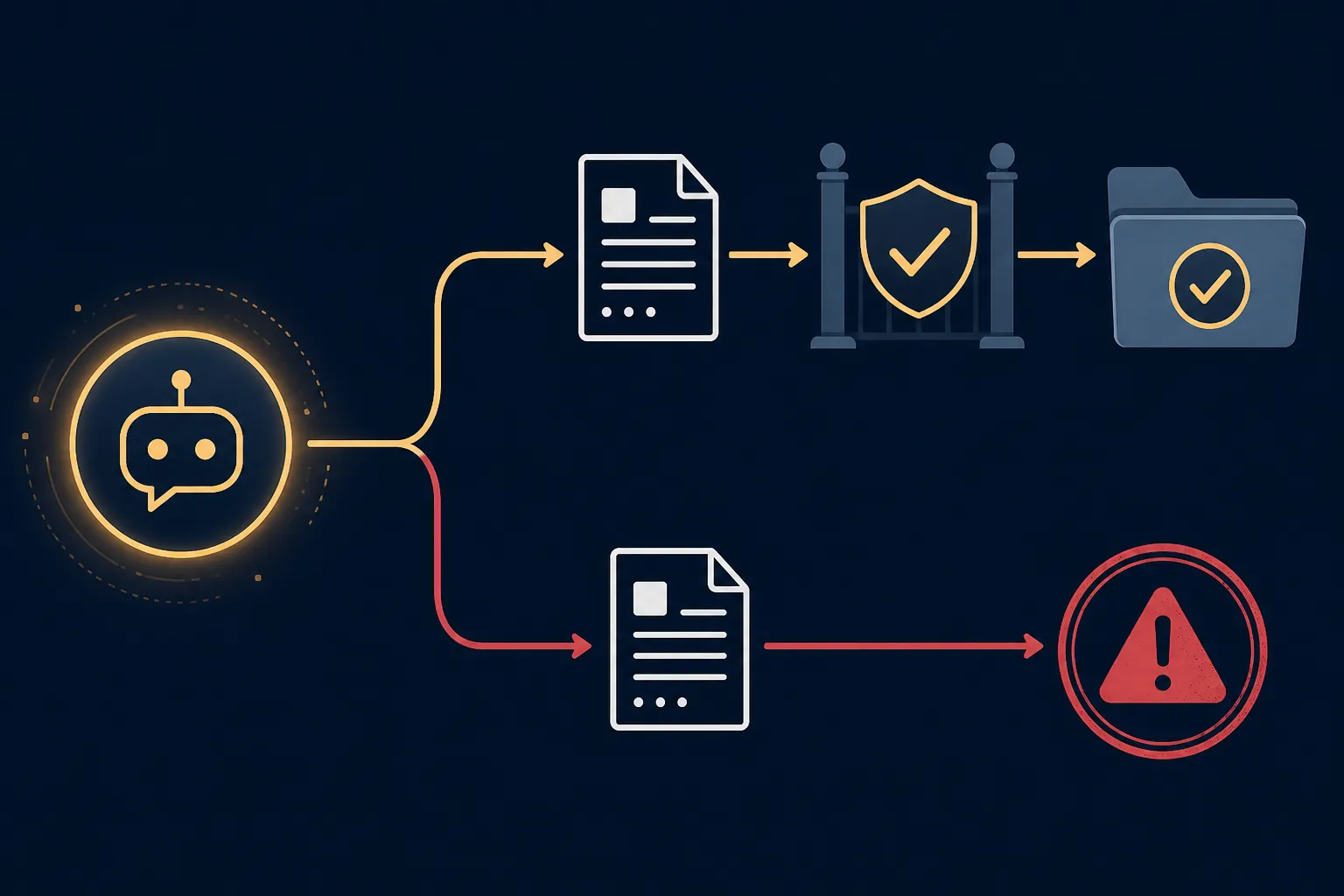
A defensible AI-assisted workflow has to leave evidence
A firm does not need a theatrical AI policy to reduce this risk. It needs a workflow that makes verification visible before a filing, handout, phone script, client alert, or training deck is adopted. The verification step has to be independent of the tool that generated the first draft.
| Workflow point | Minimum defensible practice |
|---|---|
| AI use identified | Mark whether AI assisted the draft, research framing, citation collection, translation, or summarization. |
| Authority locked | Collect the primary statutes, regulations, cases, agency materials, and local rules that actually support each legal claim. |
| Independent legal review | Have a qualified reviewer check every citation, quotation, paraphrase, and rights statement without relying on the AI system’s assurance. |
| Version control | Record the review date, reviewer, source set, jurisdictional limits, and changes made after review. |
| Adoption decision | Require an attorney or authorized legal supervisor to approve the final text before filing or distribution. |
| Public-facing boundary | Label the material’s date, scope, and non-advice limits where appropriate, especially for general ICE or airport-rights content. |
The same discipline should apply to materials that never reach a docket. For a client alert, that means source-checking the legal claims and preserving the review trail. For a hotline script, it means limiting the answer to reviewed language and creating an escalation path when facts change. For a flyer or slide deck, it means treating each rights statement as a legal claim, not as outreach copy.
If the organization already uses an AI-citation checklist, this is where it belongs. A checklist modeled on citation-verification failures, such as this site’s AI legal research pitfalls record, should be extended to client-facing immigration materials rather than limited to briefs. The ethics overlay can also be mapped against the site’s ABA Formal Opinion 512 obligations tracker, but the operative habit is simpler than the policy memo: do not let a generated legal statement leave the building until a human has checked it against law.
What not to say after the error is found
The Lnu record is especially unforgiving on post-error framing. Calling nonexistent authorities and fabricated quotations “typos” is not a harmless instinct; it tells the tribunal that counsel may not understand the difference between a typographical mistake and a false legal source. That matters to sanctions analysis because the response becomes part of the court’s view of lawyer responsibility. [1]
The better correction record is plain: identify the AI involvement if it matters, identify the unverified propositions, withdraw or correct the affected material, notify the necessary audience, and document how the review process changed. A lawyer does not improve the file by anthropomorphizing the tool, blaming support staff, or describing fabricated legal support as a formatting problem.
Counsel can use AI in drafting immigration materials, including ICE and airport-rights content. They cannot outsource verification to the tool. The minimum defensible workflow is documented independent review against primary legal sources before any filing, script, or client-facing rights material is adopted or distributed. This record is a documented risk warning and workflow analysis, not legal advice for any individual encounter with ICE.
References
- Order, Lnu v. Blanche, No. 24-4790 — U.S. Court of Appeals for the Ninth Circuit, June 3, 2026.
- EOIR Policy Memorandum 25-40 — Executive Office for Immigration Review, Aug. 8, 2025.
- Seventh Circuit Addresses Counsel’s Obligations When AI-Generated Hallucinations — The National Law Review, June 2, 2026.
- “I’m Sorry, I Just Hallucinated”: ChatGPT’s Apologies Won’t Protect You — Catholic Legal Immigration Network, Inc.
Related records
Tool profile
How to Read Legal AI Benchmarks Ahead of the OpenAI IPOGoverning regulation
Browse the obligations tracker →Preventive workflow
Browse verification workflows →
Report a correction or tip
Spotted an outdated figure, a misstated fact, or a ruling this case record should reflect? Public comments are disabled for this content given the professional cost of a misreported case outcome, penalty amount, or rule text — use the structured correction channel instead.
Report a correction or tip for this record →