
Max Miller restraining order case details from the docket
The Max Miller restraining-order headlines collapse at least five court actions across two Cuyahoga County tracks into one story, with outlets conflicting on dates and order terms. This record works through the docket action by action, separating confirmed court orders from reported filings and citing each to a primary source.
- Jurisdiction
- Ohio, United States
- Court
- Cuyahoga County Court of Common Pleas
- Judge
- Debra L. Boros; Joy Kennedy
- AI tool named
- No AI tool named
- Source document
- View primary court order ↗
- Last verified
- Aug 2, 2026
Lex Machina Review is an independent risk-tracking and reference resource. Nothing on this site is legal advice, and using it does not create an attorney-client relationship. Every record is reviewed against primary sources but may not reflect the most current status of a matter — always verify directly against the cited court order, rule text, or a licensed attorney before relying on it.
Companion explanation — secondary to the source document above
Read the Max Miller restraining-order record as separate court actions, not as one headline. The available materials point to two Cuyahoga County tracks moving at once: a domestic-relations protection-order/custody track before Visiting Judge Debra L. Boros, and a common-pleas defamation track, Miller v. Moreno et al., Case No. 26-138810, before Judge Joy Kennedy. The safest version of the record is therefore docket-first: confirmed orders apart from reported filings, affidavit allegations apart from judicial findings, and party-side advocacy apart from neutral court action.
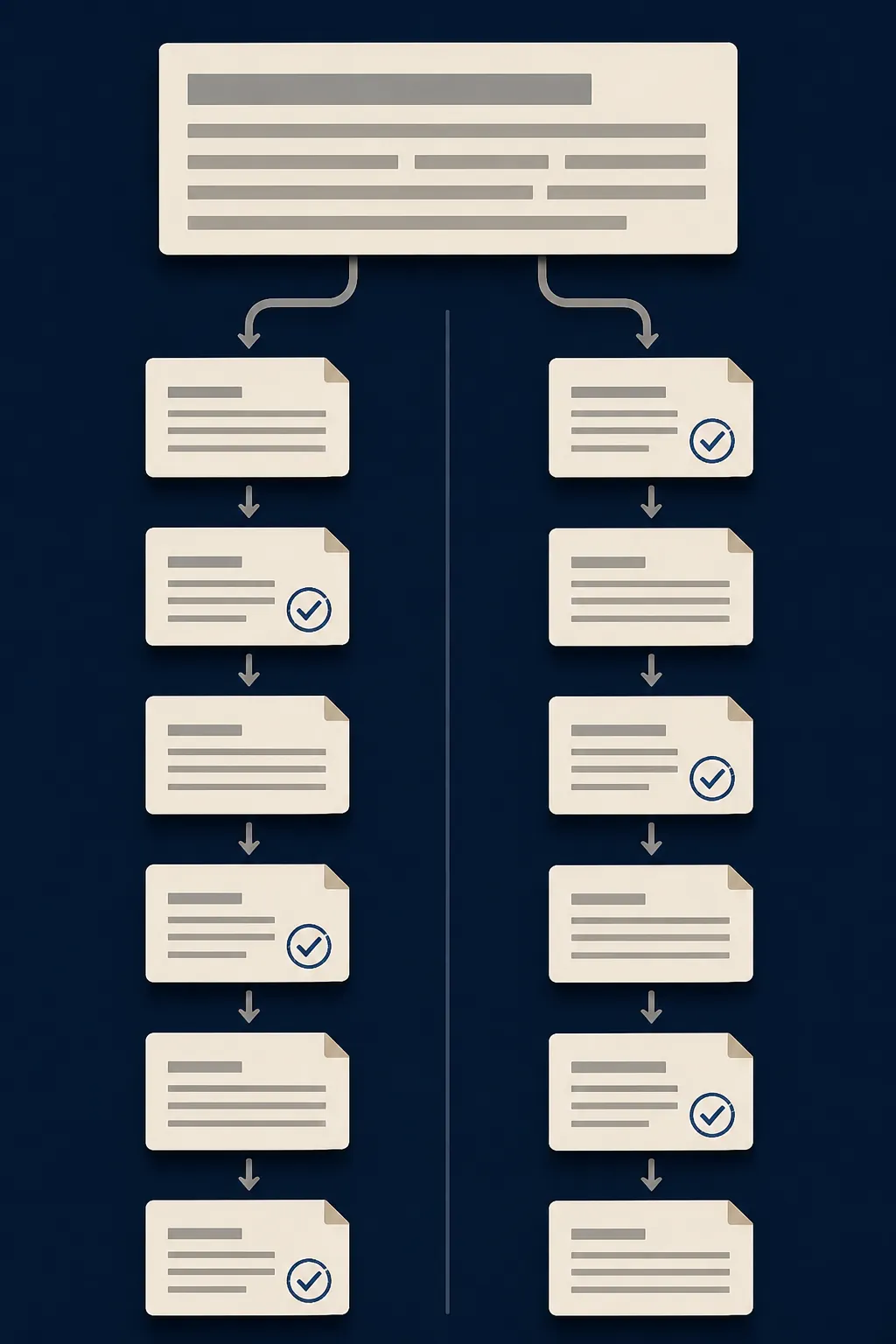
Action-by-action record
The date conflict on the CPO dismissal is not a side issue. The New York Post reported that Miller’s civil protection order petition was dismissed Wednesday, July 29, 2026; People reported the request was dropped Tuesday, July 28, 2026. That is exactly why the record has to be read action by action rather than by headline shorthand.[1][2]
| Track | Action | Date / status | Evidentiary tier | What the record safely supports |
|---|---|---|---|---|
| Domestic relations / CPO | Miller’s civil protection order petition against Moreno | Filed Feb. 27, 2026; reported dismissed the week of July 28–29, 2026 | Reported filing; dismissal language quoted from order | Miller brought the CPO petition. The reported dismissal order attributed to Visiting Judge Debra L. Boros says Miller “was not under any apparent infirmity and did not appear to have been threatened by or in fear of” Moreno. NY Post places the dismissal on July 29; People places the dropped request on July 28.[1][2] |
| Domestic relations / temporary order | Mutual temporary restraining order | Issued June 1, 2026 | Confirmed order terms as reported and quoted | The order restricted both parties from disparaging each other in front of the minor child and from using social media, electronic devices, or third parties to threaten, harass, or annoy the other.[3] |
| Domestic relations / enforcement | Contempt motion and motion to compel | Reported filed June 5, 2026 | Reported filings | Moreno’s side reportedly sought contempt and compulsion after Miller gave interviews and released secretly recorded audio to the New York Post within days of the June 1 order.[4] |
| Common pleas / defamation | Miller v. Moreno et al., Case No. 26-138810 | May–July 2026 posture; Judge Joy Kennedy | Confirmed docket posture and party-hosted filings | The defamation action is separate from the domestic-relations track. Judge Kennedy denied Miller’s emergency discovery motion on July 7, 2026, leaving the UPEPA anti-SLAPP discovery stay in place; Zashin was dismissed without prejudice on July 20, 2026, while claims against Moreno remained pending.[5][6] |
| Domestic relations / counsel-contact request | Moreno’s July 30 filing concerning alleged contact with counsel | Filed July 30, 2026; no ruling reported in the available source set as of Aug. 1, 2026 | Reported affidavit allegations; unresolved request | Moreno sought an order barring Miller from contacting her counsel Andrew Zashin and prior counsel, alleging Miller physically grabbed Zashin after the July 28 hearing and quoting Miller’s counsel Larry Zukerman as saying Miller “just can’t control himself.”[7] |
| Domestic relations / custody | Custody trial setting | Trial dates begin Nov. 5, 2026 | Confirmed scheduling order as reported | The custody matter is set to begin two days after the election, which makes it procedurally distinct from both the dismissed CPO petition and the defamation docket.[6] |
The domestic-relations track is where “restraining order” becomes imprecise
The phrase “Max Miller restraining order case details” can point to more than one thing. It can point to Miller’s own Feb. 27 CPO petition against Moreno. It can point to the June 1 mutual temporary restraining order. It can point to alleged violations of that June 1 order. It can also point to Moreno’s later July 30 request about Miller’s alleged contact with her lawyers. Those are not interchangeable procedural events.
Miller’s own CPO petition is the action that was reportedly dismissed in late July. The quoted dismissal language matters because it is judicial language, not simply an opposing party’s characterization: Judge Boros reportedly wrote that Miller “was not under any apparent infirmity and did not appear to have been threatened by or in fear of” Moreno.[1] That does not adjudicate every allegation in the broader domestic-relations case. It does tell a reader what the judge reportedly found on the CPO petition before her.
The June 1 mutual temporary restraining order is a different instrument. It applied to both parties. Its reported terms barred disparagement in front of the minor child and barred the use of social media, electronic devices, or third parties to threaten, harass, or annoy the other party.[3] For anyone checking possible legal obligations, that order is more operationally important than the headline label. It supplies the conduct rules that later filings claimed had been violated.
The June 5 contempt motion and motion to compel sit on top of that order. The New York Post reported that Moreno’s side filed them after Miller gave interviews and released secretly recorded audio to the Post within days of the June 1 restrictions.[4] The filing’s existence, as reported, is not the same as a contempt finding. A reader citing this record should say reported contempt-related filings, not contempt adjudication. For a general explanation of what protective-order violations can trigger, see the site’s separate guide to domestic violence protective order violation consequences.
The July 30 filing is another distinct event. CNN reported that Moreno sought a restraining order barring Miller from contacting Andrew Zashin and prior counsel, based on an affidavit alleging that Miller physically grabbed Zashin after the July 28 hearing. The same report quoted the filing as saying Miller’s own counsel, Larry Zukerman, said Miller “just can’t control himself.”[7] Those are serious allegations. They are also affidavit allegations in a reported filing, not a ruling on the requested order in the available source set.

Underlying allegations remain part of the record, but not at the same tier
The domestic-relations filings include allegations of abuse, child-related concerns, and a girlfriend-witness/doorbell-camera claim that Miller’s own team later retracted, according to later reporting.[1][8] Those allegations should not be erased from the record merely because they are unadjudicated. They explain why the case generated emergency filings, custody litigation, and protective-order requests.
At the same time, unadjudicated allegations should not be written as findings. Mother Jones reported on a large body of filings and police reports, including allegations that had not resulted in criminal charges; the source set also states that DCFS closed its investigation as unsubstantiated.[9] Neither point should be overstated. Closure of an agency investigation and the absence of criminal charges are not a civil merits ruling in Miller’s favor; they are narrower procedural facts.
The defamation case is a separate common-pleas track
The common-pleas defamation action is easy to collapse into the restraining-order story because it involves overlapping people, lawyers, and July filings. It should not be collapsed. Miller v. Moreno et al., Case No. 26-138810, is before Judge Joy Kennedy, not Judge Boros. It is not the CPO petition, not the June 1 mutual temporary restraining order, and not Moreno’s July 30 counsel-contact request.
The defamation complaint reportedly sought damages in excess of $25,000.[10] Moreno’s side invoked Ohio’s UPEPA anti-SLAPP procedure, and Judge Kennedy denied Miller’s July 7 emergency discovery motion, leaving the discovery stay in place.[5] That procedural posture matters because it limits what should be inferred from the fact that one side wanted discovery. A denied emergency discovery motion is not a ruling that the alleged defamatory statements were true or false.
Zashin’s July 20 dismissal without prejudice also belongs on the defamation track. Cleveland.com reported that claims against Zashin were dismissed without prejudice while claims against Moreno remained pending.[6] That is a different dismissal from the late-July CPO dismissal attributed to Judge Boros. Treating both as a single “restraining order case” outcome loses the court, the judge, the claim type, and the procedural effect.
For the anti-SLAPP discovery-stay record, the cleaner place to work from is the site’s separate Ohio Anti-SLAPP Law Tested in Max Miller Defamation Case entry. This record only needs the boundary: the anti-SLAPP fight is common-pleas defamation litigation, not the domestic-relations protection-order docket.
Counsel advocacy is useful, but it is not neutral narration
Chandra Law materials are useful for locating the UPEPA motion, the discovery-stay dispute, and hosted filings. They are also materials from Moreno’s counsel. They should be cited as party-side advocacy or party-hosted filings, not as an independent account of the whole controversy.[5][11]
The same care applies to media summaries. The July news cycle carried enough overlapping events that a sentence can be technically sourced and still be procedurally muddy. “Restraining order dismissed,” “new restraining order sought,” “defamation defendant dismissed,” and “custody trial scheduled” are four different procedural statements. A record keeper should not let one noun do all of that work.
What is outside this record
The Hill reported that House Ethics was urged to investigate and that the committee declined comment.[12] That item belongs in the public record, but it does not change the status of the CPO petition, the June 1 order, the July 30 request, or the defamation docket.
The available source set does not verify an AI-generated-imagery claim tied to the Miller–Moreno record. It also does not support importing a TAKE IT DOWN Act theory into this docket. If later filings add such a claim, it would need its own source trail. As of this record, it is not part of the case details.
Current procedural reading
As of the available source set through Aug. 1, 2026, the reliable reading is narrow. Miller’s Feb. 27 CPO petition was reportedly dismissed in late July, with a date conflict between outlets. The June 1 mutual temporary restraining order imposed conduct restrictions on both parties. June 5 contempt-related filings were reported, not adjudicated in the materials reviewed here. Moreno’s July 30 counsel-contact request rests on reported affidavit allegations and awaited reported court action. The defamation case remains a separate common-pleas action, with Zashin dismissed without prejudice and claims against Moreno pending. Custody trial dates begin Nov. 5, 2026.[1][2][3][4][6][7]
That is the usable form of the Max Miller restraining-order record: separate docket actions across two Cuyahoga County tracks, with confirmed orders kept apart from reported filings and new affidavit allegations awaiting court action.
References
- Rep. Max Miller drops domestic violence case against senator's daughter after judge finds no evidence of harm by ex-wife, New York Post, July 30, 2026
- People report on Miller CPO request dropped July 28, People, July 30, 2026
- New court order reveals Rep. Max Miller and ex-wife must stop disparaging each other in front of child, New York Post, June 3, 2026
- Rep. Max Miller accused of violating restraining order after releasing secretly recorded audio, New York Post, June 7, 2026
- Judge denies Miller's 'emergency' discovery motion, Chandra Law, July 7, 2026
- Max Miller domestic relations and defamation case update, cleveland.com, July 31, 2026
- Lawyer for Ohio congressman's ex-wife seeks restraining order against the lawmaker over alleged grabbing incident, CNN, July 30, 2026
- CBS report on Max Miller domestic-relations filings, CBS News, July 31, 2026
- Mother Jones report on Max Miller filings and police reports, Mother Jones, July 2026
- AP/First Amendment Watch report on Miller defamation complaint, AP / First Amendment Watch, May 15, 2026
- Chandra Law-hosted May 27, 2026 UPEPA motion PDF, Chandra Law, May 27, 2026
- The Hill report on House Ethics investigation request, The Hill, July 30, 2026
Related records
Tool profile
How Meta's AI Spending Reshapes Law Firm ProfitabilityGoverning regulation
Browse the obligations tracker →Preventive workflow
Browse verification workflows →
Report a correction or tip
Spotted an outdated figure, a misstated fact, or a ruling this case record should reflect? Public comments are disabled for this content given the professional cost of a misreported case outcome, penalty amount, or rule text — use the structured correction channel instead.
Report a correction or tip for this record →