
Dru Ramsamy's Madlanga testimony centers the call recording
Dru Ramsamy's part-heard Madlanga Commission testimony (Days 151–152) placed a contested call recording at the center of the record, but no finding has been made and former IDAC head Andrea Johnson has not yet answered from the stand. The risk signal for counsel is the authentication battleground around recorded-call evidence — not an AI hallucination or sanction event.
- Jurisdiction
- South Africa
- Court
- Criminal Justice Commission (Madlanga Commission)
- Judge
- Justice Madlanga
- AI tool named
- No AI tool implicated
- Ruling date
- Jul 30, 2026
- Source document
- View primary court order ↗
- Last verified
- Aug 3, 2026
Lex Machina Review is an independent risk-tracking and reference resource. Nothing on this site is legal advice, and using it does not create an attorney-client relationship. Every record is reviewed against primary sources but may not reflect the most current status of a matter — always verify directly against the cited court order, rule text, or a licensed attorney before relying on it.
Companion explanation — secondary to the source document above
The live record in Dru Ramsamy's Madlanga Commission testimony is not, at this stage, an AI case. It is a recorded-call case. On the commission's official hearing page, the relevant sitting appears under the 30 July 2026 hearing record; press coverage places Ramsamy's part-heard evidence across 30-31 July 2026 in Pretoria, with the former IDAC head Andrea Johnson still expected to answer the fresh claims from the stand.[1]
That distinction matters. A recording was played. Ramsamy gave an account of what it meant. Johnson has not yet had her recalled answer. The commission has not made findings. All named persons remain presumed innocent. For counsel tracking Risk Digest issues, the present status flag is reported/unverified: authentication risk around recorded-call evidence, with no sanction, no confirmed AI tool, and no hallucinated-citation event.
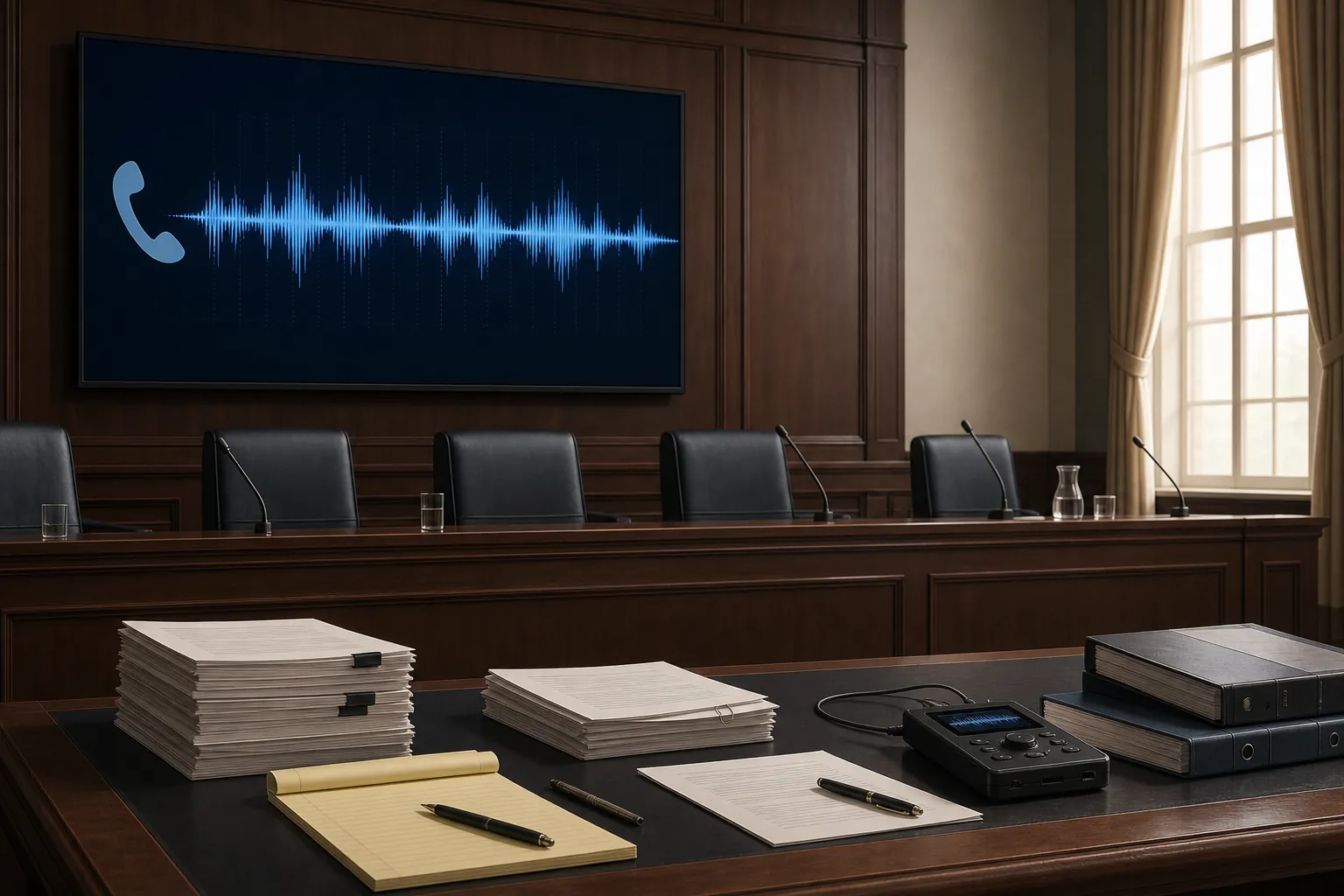
The call recording is the procedural center
The reported evidence was a call recording involving Johnson. EWN reported that the recording captured Johnson allegedly telling Ramsamy that, if called, he should "leave the country," and describing the inquiry as "a shitshow."[2] SABC likewise reported that audio played before the commission revealed Johnson urging Ramsamy to leave South Africa if called to testify.[3]
Those are reported accounts of what was played and said in the hearing coverage. They are not findings. They also should not be converted into a free-standing conclusion about Johnson before her recalled evidence is heard. The immediate legal value is narrower: the commission record now has a contested or contestable piece of recorded audio around which witness credibility, prior statements, and possible obstruction concerns may be organized.
eNCA reported a sharp exchange in which Justice Madlanga put to Ramsamy that Johnson's version appeared to be "a lie," and Ramsamy replied: "It is a straight lie."[4] That quote is important because it shows how quickly the recording moved from background material to a credibility axis. It is also exactly the kind of quote that should be checked against the official transcript before being used in pleadings, client alerts, or partner briefings.
The commission's later handling of Ramsamy's safety adds seriousness without proving the allegations. EWN reported on 1 August 2026 that the commission was prepared to provide protection for Ramsamy pending a threat analysis after his testimony.[5] That is a material procedural development. It does not authenticate the call, establish the truth of Ramsamy's account, or decide Johnson's position. It does show that the forum treated the witness's situation as more than ordinary evidentiary disagreement.
What is verified, and what is still pending
The usable posture can be stated without dramatizing it. The hearing record exists. A recording was reported as having been played. Ramsamy gave evidence about Johnson. Johnson is expected to be recalled to respond to fresh claims, according to eNCA.[6] No commission finding has been cited in the available material.
| Record point | Current status |
|---|---|
| Ramsamy testimony | Part-heard press record from the 30-31 July 2026 sitting window; official transcript should be checked before relying on exact wording. |
| Johnson call recording | Reported as played before the commission; content reported by multiple outlets, but authentication and weight remain for the forum. |
| Johnson response | Expected recall reported; no final answer from the stand in the available material. |
| AI relevance | Limited to authentication-pattern risk because another commission witness previously disclaimed recordings as AI-generated. |
| Legal outcome | No finding, sanction, or confirmed AI-tool use reported in Ramsamy's testimony. |
The risk is not that a lawyer will fail to understand the political gravity of the allegations. The risk is that a lawyer will brief the recording as if its meaning, authenticity, and procedural weight have already been resolved. They have not.
The Sibiya disclaimer is the relevant AI marker
The AI issue enters through the commission's own prior record, not through Ramsamy's testimony. In February 2026, EWN reported that another witness, Lieutenant-General Shadrack Sibiya, claimed evidence suggesting he had received antelopes or impalas from Vusimuzi "Cat" Matlala was "AI generated" and false evidence.[7] Business Day separately reported that the Madlanga inquiry had pressed Sibiya's denials in that evidentiary context.[8]
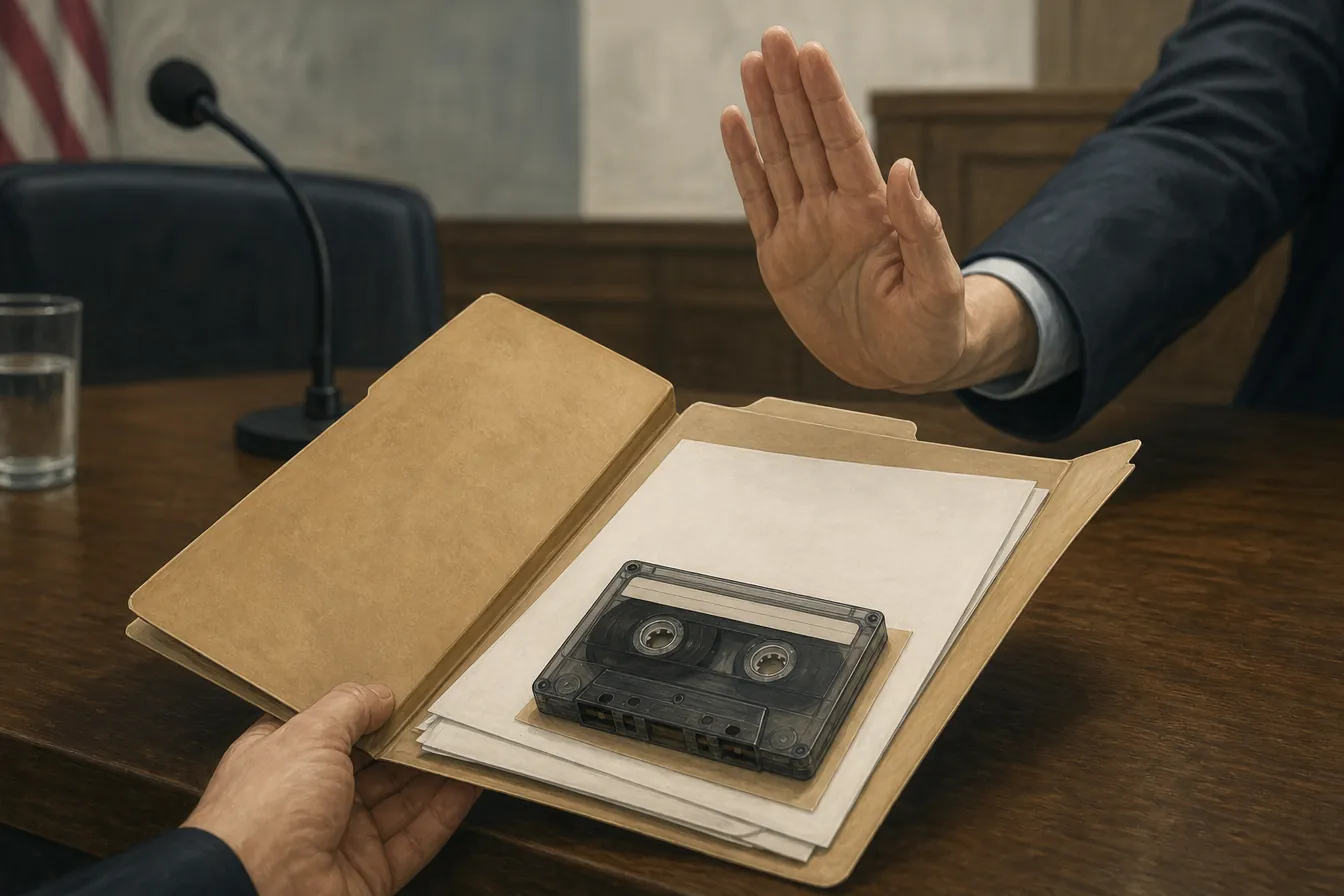
That does not make the Johnson recording AI-generated. It does not even suggest that an AI tool was used in relation to Ramsamy's evidence. It does something more limited and more useful for risk classification: it shows that, inside this same commission environment, recorded or documentary material can be met with an AI-authenticity denial.
Counsel should read those two moments together only at the level of evidentiary pattern. In one part of the commission record, a witness reportedly disclaimed material as AI-generated. In another, a call recording became central to Ramsamy's evidence against Johnson. The bridge between them is not a factual link. It is the predictable litigation behavior around digital evidence: once audio becomes decisive, authentication becomes a live battleground.
Why the classification should stay narrow
This record belongs in risk-digest because it affects how lawyers evaluate recorded evidence in live proceedings. It should not be filed as an AI hallucination matter, because there is no reported fake legal authority, fabricated citation, or generative output submitted as legal research. It should not be filed as a sanctions matter, because no sanction appears in the available record. It should not be described as a confirmed deepfake dispute, because no source in the research set confirms a tool, model, vendor, or forensic result tied to the Johnson recording.
The closer analog is a docket-status record such as the Shiloh Hendrix appeal-status entry: the point is not to resolve the merits ahead of the tribunal, but to preserve the live procedural posture and prevent later readers from mistaking an allegation, denial, or press quote for an adjudicated fact.
It also sits near the evidence-gap logic discussed in the OpenAI Astra legal-applications record: where the underlying technology or evidence trail is not yet tested in the forum, the gap itself becomes the risk signal. Here, that gap is not procurement due diligence. It is chain, source, transcript, and authentication.
The working file counsel should keep
A cautious brief on the Dru Ramsamy Madlanga Commission testimony in 2026 legal proceedings should separate four things that press coverage can easily collapse into one narrative.
- Source proximity: distinguish the official hearing page from press accounts and any non-official trackers.
- Quote status: verify reported language such as "leave the country," "a shitshow," and "It is a straight lie" against the official transcript before relying on it.
- Authentication posture: treat the Johnson call as recorded-call evidence whose admissibility, provenance, and weight may still be challenged.
- AI scope: mention the Sibiya AI-generated disclaimer only as an in-forum precedent for attacking recorded or documentary material, not as proof about the Johnson recording.
- Harm classification: record the protection offer as a serious witness-safety development, not as proof of the underlying allegations.
The most useful next document is not another commentary layer. It is the official transcript and any later ruling or ruling-like direction on how the commission treats the recording: whether it is admitted without contest, challenged by Johnson, tested through metadata or witness foundation, discounted, or used only for a limited credibility purpose.
Until then, the record should stay where it is: Ramsamy's account is live and serious, Johnson's answer is pending, the commission has made no cited finding, and the durable legal-AI signal is authentication risk around recorded-call evidence.
References
- Hearings 2026/07/30, Criminal Justice Commission, 30 July 2026.
- Secret recording played at Madlanga Commission exposes former IDAC head Johnson, EWN, 30 July 2026.
- Audio reveals Johnson urged Ramsamy to leave SA if called to testify, SABC News.
- Straight lie: Ramsamy tells Madlanga Andrea Johnson's testimony, eNCA.
- Madlanga Commission prepared to provide protection for IDAC's Ramsamy following explosive testimony, EWN, 1 August 2026.
- Madlanga Commission to recall Andrea Johnson over fresh claims, eNCA.
- Sibiya claims evidence suggesting he received antelopes or impalas from Matlala AI, EWN, 24 February 2026.
- Madlanga inquiry pokes holes at Sibiya's denials, Business Day, 23 February 2026.
Related records
Tool profile
How Meta's AI Spending Reshapes Law Firm ProfitabilityGoverning regulation
Browse the obligations tracker →Preventive workflow
Browse verification workflows →
Report a correction or tip
Spotted an outdated figure, a misstated fact, or a ruling this case record should reflect? Public comments are disabled for this content given the professional cost of a misreported case outcome, penalty amount, or rule text — use the structured correction channel instead.
Report a correction or tip for this record →