
The State Department AI map error's legal fallout, so far
As of July 31, 2026, no lawsuit, sanction, or penalty over the State Department's AIDS 2026 AI map error has been identified. This verified incident record documents the real consequences — the internal probe, the staffer-attributed apology, OMB AI-compliance exposure, and diplomatic fallout — and the FTCA exceptions any private claim would face.
- Jurisdiction
- US federal
- Court
- No court filing identified
- AI tool named
- OpenAI
- Ruling date
- Jul 26, 2026
- Source document
- View primary court order ↗
- Last verified
- Jul 31, 2026
Lex Machina Review is an independent risk-tracking and reference resource. Nothing on this site is legal advice, and using it does not create an attorney-client relationship. Every record is reviewed against primary sources but may not reflect the most current status of a matter — always verify directly against the cited court order, rule text, or a licensed attorney before relying on it.
Companion explanation — secondary to the source document above
As of July 31, 2026, no lawsuit, court sanction, agency penalty, or official enforcement action has been identified over the State Department’s AIDS 2026 map mislabeling. The verified fallout is narrower than the public embarrassment: an internal accountability review, a staffer-attributed apology, federal AI-governance compliance questions, and diplomatic repair work after a public-health diplomacy event displayed a map of Africa that no attentive review should have cleared.
That status matters because the incident has two records running at once. One is the public record of a map error at a global HIV conference. The other is the legal record, and that one has not yet produced a docket, sanction order, penalty notice, inspector-general finding, or published employee-discipline outcome.
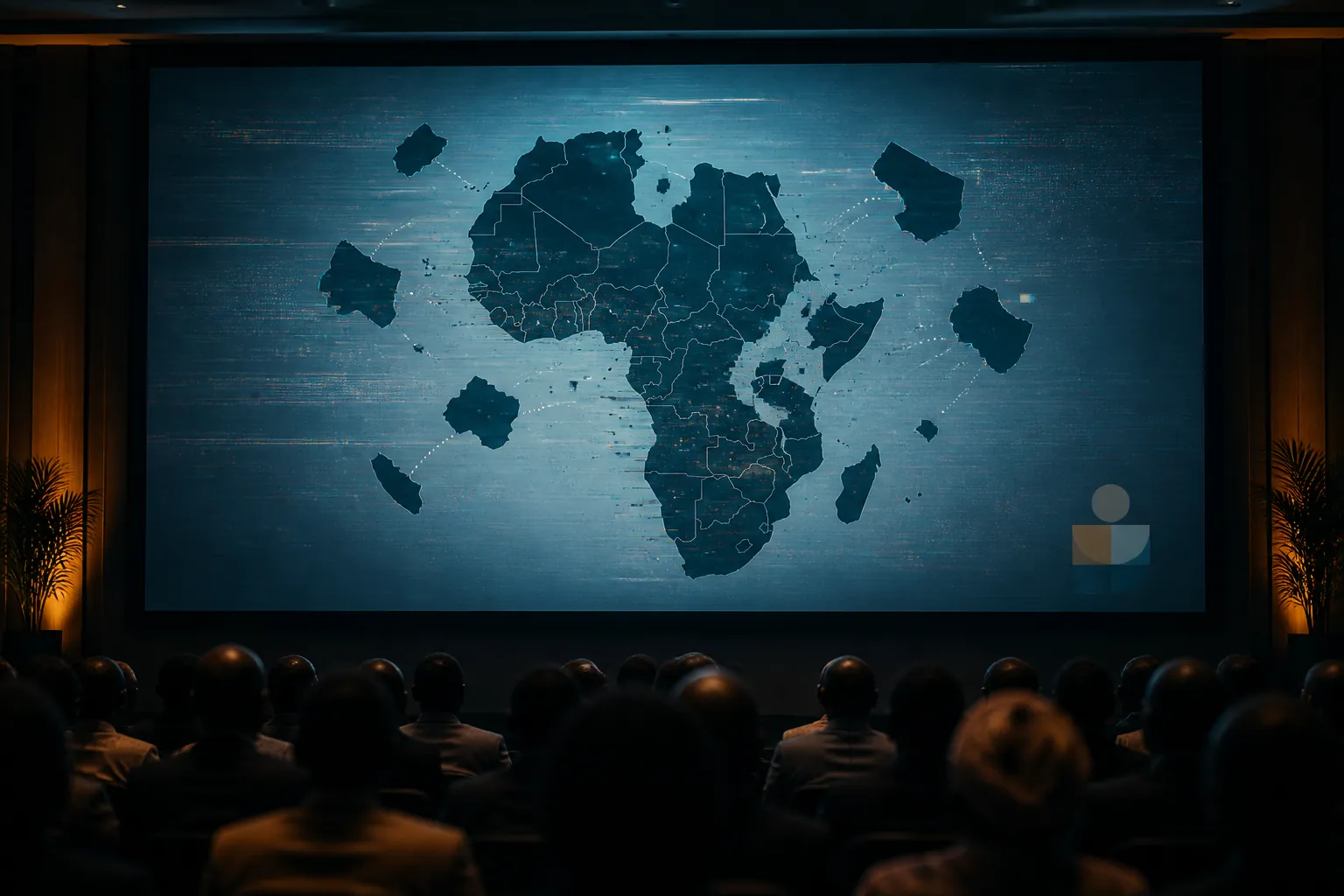
Incident record, last verified July 31, 2026
| Field | Verified or reported record |
|---|---|
| Event date | July 26, 2026. The slide appeared during AIDS 2026 in Rio de Janeiro. [1] |
| Presentation context | A U.S. government session titled “Transforming health assistance: Implementing U.S. government MOUs for sustainable HIV programs.” [1] |
| Agency component | State Department Bureau of Global Health Security and Diplomacy, commonly referred to as GHSD in the incident reporting. [1] |
| What was wrong | The slide’s Africa map mislabeled the countries it identified. Reports highlighted Nigeria shown landlocked in the Sahara, Mozambique moved to the Horn of Africa, and Côte d’Ivoire placed on the wrong side of the continent. [1] |
| First public eyewitness record | Emily Bass published an eyewitness post describing the State Department map error at AIDS 2026. [2] |
| Mismatch count caveat | Major coverage described all six identified countries as incorrectly labeled, while the original eyewitness description contains narrower visual details about a disconnected line and an unnamed country. This record treats “six identified countries wrong” as the reported mainstream formulation, not an independently remeasured cartographic audit. [2][3] |
| AI-tool evidence | Reuters reported that its analysis found an AI watermark indicating OpenAI tools. The Independent and SCMP reported that OpenAI was investigating. [1][4][6] |
| Official response | The State Department said it took “full responsibility” and described the episode as “an unfortunate error caused by a team member who hastily altered the slide deck immediately before the presentation.” [1][5] |
| Case-status flag | No identified lawsuit, court sanction, penalty, or enforcement action as of July 31, 2026. |
| Open issues | Whether the use, if confirmed, appeared in State’s AI inventory; whether OpenAI produced a public finding; whether employee discipline occurred; whether any later claim, oversight action, or inspector-general review appears after July 31, 2026. |
What appeared on the slide
The map was not a stray social-media graphic. It appeared in a U.S. government presentation at a global HIV conference, in a session about implementing U.S. government memoranda of understanding for sustainable HIV programs. That setting is why the error carries more weight than a malformed illustration: the audience included people whose work depends on the United States being able to identify, respect, and work with African partner countries in public-health programs.
The visible mistakes were not subtle. Reuters reported that the map mislabeled every country it identified, including Nigeria placed as landlocked in the Sahara, Mozambique shifted to the Horn of Africa, and Côte d’Ivoire put on the wrong side of the continent. CNN’s syndicated report through KETV likewise described six countries as incorrectly identified. [1][3]
Bass’s original post gave the incident its first public record from inside the AIDS 2026 setting. The story then moved into Reuters, CNN’s syndicated coverage through KETV, The Independent, The Guardian, and SCMP. That path matters for verification: the original observation anchors what attendees saw, while the wire and mainstream coverage added the agency response, AI-watermark reporting, and the first public framing of an internal probe. [2][1][3][4][5][6]
The AI point is material, but it is not the whole incident. Reuters reported that its analysis found an AI watermark indicating OpenAI tools. The Independent and SCMP reported that OpenAI was investigating. No public OpenAI conclusion has been identified for this record, and the available reporting does not establish, by itself, who supplied the instructions, who approved the output, or whether the image passed through any required internal AI-use disclosure process. [1][4][6]
The accountability that has actually happened
The documented accountability record begins with the State Department apology. The department said it took “full responsibility” and attributed the error to a team member who “hastily altered the slide deck immediately before the presentation.” Reuters and The Guardian both carried the full-responsibility language. [1][5]
That explanation may be true and still incomplete. Last-minute slide changes are a common failure point in public institutions because authority, review, and deadline pressure collapse into the same few minutes. But the legal and compliance question is not whether one staffer made a bad edit. It is whether a bureau presenting on U.S. public-health partnerships had a review process capable of catching a glaring geographic error before it reached foreign officials and conference attendees.
The Independent reported that State blamed a staffer while probing whether the map was made by AI. That is the more important accountability channel than the public apology alone. An internal probe can examine tool use, approval chain, review steps, and whether any internal or government-wide AI-governance obligations were triggered. It is not, however, a penalty or legal finding unless the department or an oversight body later publishes one. [4]
The outside expert reaction also points to institutional supervision rather than tort liability. Cameron Hudson, a former State Department and National Security Council Africa official, linked the episode to a weakened department and under-supervised junior staff in CNN’s syndicated coverage. Matt Petit of the Atlantic Council told Reuters that whoever created and approved the slide “did not care to check their work.” [3][1]
Those are not legal findings. They are still useful because they identify the kind of fact pattern oversight lawyers would look for: rushed production, junior staffing, unclear approval authority, and a failure of human review at the last step before public release.
The AI-governance exposure is more concrete than a lawsuit theory
Two days before the AIDS 2026 presentation, State released a Generative AI Playbook, according to Nextgov/FCW. The department’s playbook is not a lawsuit trigger by itself, but the timing is awkward: a public-facing conference slide now sits beside a newly published internal framework for generative-AI use. [7][8]
The federal-government baseline is OMB Memorandum M-25-21, “Accelerating Federal Use of AI through Innovation, Governance, and Public Trust.” The memo sets agency AI-governance expectations including chief AI officer responsibilities, public AI use-case inventories, minimum-risk-management practices, testing, and periodic human review for covered uses. [9]
A conference slide does not automatically become a high-impact AI use merely because it was embarrassing or diplomatic. The narrower compliance question is whether an AI system was used in a way that State’s own policies or OMB’s inventory and governance rules required to be tracked, reviewed, or controlled. If the image was produced or materially altered with a generative-AI tool, the relevant record should identify who authorized the use, what review occurred, and whether the use belonged in any public or internal inventory category.
That inventory question is not academic. EPIC’s summary of a GAO report said 15 of 20 reporting agencies filed inaccurate AI inventories. That finding does not prove State mishandled this particular slide, but it gives compliance reviewers a reason not to treat the absence of a public inventory entry as conclusive proof that no relevant AI use occurred. [10]
The clean review path is therefore practical: identify the tool, identify the human reviewer, identify whether the use was logged, and identify whether State’s newly published playbook would have required a different approval step. For similar agency-AI implementation risk questions, the same human-review issue appears in this site’s discussion of the Medicaid AI testing window and in the obligations-record approach used for federal AI weapons policy changes.
Why the FTCA is a poor fit for the public harm
The obvious public harm is reputational and diplomatic. African officials and public-health partners were made to watch a U.S. agency misidentify African countries in a setting tied to HIV assistance. That is serious. It is also not the same thing as a private tort injury that can be converted into damages against the United States.
The Federal Tort Claims Act has exceptions that would make a private claim difficult on the facts currently known. The discretionary-function exception preserves immunity for many government acts grounded in judgment or policy; the misrepresentation exception bars claims arising out of misstatements and misinformation; and the foreign-country exception blocks claims arising in a foreign country. CRS’s FTCA overview summarizes those statutory limits, including 28 U.S.C. § 2680(a), § 2680(h), and § 2680(k). [11]
A claimant would still need more than insult, embarrassment, or diplomatic offense. They would need a cognizable injury, a viable waiver of sovereign immunity, and a path around the FTCA exceptions. On the present record, the slide error happened at a conference in Brazil, involved alleged misinformation in a presentation, and arose from a government communications process. Those facts point toward exceptions, not toward a clean damages claim.
That narrower liability question is developed in the companion analysis, State Department AI blunder apology carries no legal liability. For this incident record, the important point is simpler: the apology and the map error have not become an identified FTCA lawsuit as of July 31, 2026.
Court sanctions are the wrong comparator unless a filing exists
There is a real and growing sanctions record for AI-generated legal falsehoods. GovTech, citing the Albuquerque Journal, reported a $1,500 attorney fine in New Mexico, two $3,000 Colorado fines, and an $8,640 sanction against a pro se litigant in cases involving AI errors in legal filings. [12]
Stateline separately reported 518 documented U.S. generative-AI court cases since 2025. That figure helps explain why AI-error stories can quickly be pulled into sanctions language: judges have punished lawyers and litigants when false AI-generated content enters court papers. [13]
The State Department map incident is different. No court filing has been identified. No judge has been asked to rely on the mislabeled map. No Rule 11 order, inherent-authority sanction, bar referral, or contempt finding has been identified. The sanctions comparables show what legal consequences look like when AI falsehoods enter litigation; they do not supply a sanction theory for a federal-agency conference slide.
The diplomatic fallout is real even without a damages claim
The absence of a lawsuit should not flatten the diplomatic harm. The session was tied to U.S. health assistance and sustainable HIV programs, not a casual design exercise. In that context, a map that misplaces African countries can read as disrespect, inattention, or a lack of country-specific seriousness at the exact moment the United States is asking partners to trust its public-health commitments.
That concern is sharper because the incident sits near PEPFAR and U.S.-Africa public-health relations. A slide error will not itself determine those relationships, but it becomes part of the record that downstream agency staff, embassy teams, implementing partners, and compliance officials have to explain. Diplomatic repair often consists of unglamorous work: direct apologies, corrected materials, partner reassurance, and internal proof that a mistake was not treated as harmless.
The staffer-attributed explanation may reduce the temptation to imagine a secret policy motive behind the slide. It does not remove the institutional insult. A public-health diplomacy event is precisely where review systems are supposed to catch obvious errors before they become a partner-facing problem.
What would change the legal status
The legal-status flag should change only if a concrete record appears. A later complaint, administrative claim, inspector-general report, OMB compliance finding, congressional oversight demand, published employee discipline, procurement action, or agency penalty would be a new event. Public anger, reposted screenshots, and generalized claims that AI was used are not substitutes for those records.
- A lawsuit would require an identified court or administrative filing, not just a plausible theory.
- A sanction would require a court or adjudicatory body with authority over a filing or proceeding.
- An agency penalty or discipline record would require a published or otherwise verified official action.
- An AI-governance consequence would require proof that a covered AI use was mishandled under State policy, OMB rules, or an oversight finding.
- A stronger OpenAI-related record would require a public finding or reliable confirmation beyond reports that the company was investigating.
Until then, the monitored status remains unchanged: no identified lawsuit, sanction, or penalty as of July 31, 2026. The consequences that exist are internal accountability, AI-governance compliance exposure, reputational harm, and diplomatic repair. The open questions are whether State’s AI inventory disclosed this use if AI was used, whether OpenAI’s investigation produced anything public, whether employee discipline occurred, and whether any later claim or oversight action appears after this verification date.
References
- US government map of Africa mislabels every country at global conference, Reuters, July 30, 2026
- The US State Department Redraws the Map of Africa at the AIDS2026 Conference, Emily Bass
- State Department says it made an “unfortunate error” when it mislabeled countries on map of Africa at AIDS conference: AI, KETV
- US government map of Africa mislabels every country, The Independent
- US government map mislabels African countries, The Guardian, July 30, 2026
- US government map of Africa gets every country wrong at global conference, SCMP
- State Department releases playbook for generative AI, Nextgov/FCW, July 2026
- DOS Generative AI Playbook July 2026, U.S. Department of State, July 2026
- M-25-21 Accelerating Federal Use of AI through Innovation, Governance, and Public Trust, Office of Management and Budget, February 2025
- GAO Report: Federal Agencies Are Not Complying with AI Requirements, EPIC
- The Federal Tort Claims Act (FTCA): A Legal Overview, Congressional Research Service
- AI Errors Enter New Mexico State, Federal Case Filings, GovTech
- As AI-generated fake content mars legal cases, states want guardrails, Stateline, January 26, 2026
Related records
Tool profile
Neither Codex nor Claude Code Is Safe for Legal AI AgentsGoverning regulation
Browse the obligations tracker →Preventive workflow
Browse verification workflows →
Report a correction or tip
Spotted an outdated figure, a misstated fact, or a ruling this case record should reflect? Public comments are disabled for this content given the professional cost of a misreported case outcome, penalty amount, or rule text — use the structured correction channel instead.
Report a correction or tip for this record →