
What's the verified update on the Sylvie Cachay murder case?
Find the current, sourced status of the Sylvie Cachay murder case: confirmed rulings separated from reported details, covering the affirmed conviction and sentence, the $12.5 million civil judgment, and where Nicholas Brooks is now.
- Jurisdiction
- US-NY
- Court
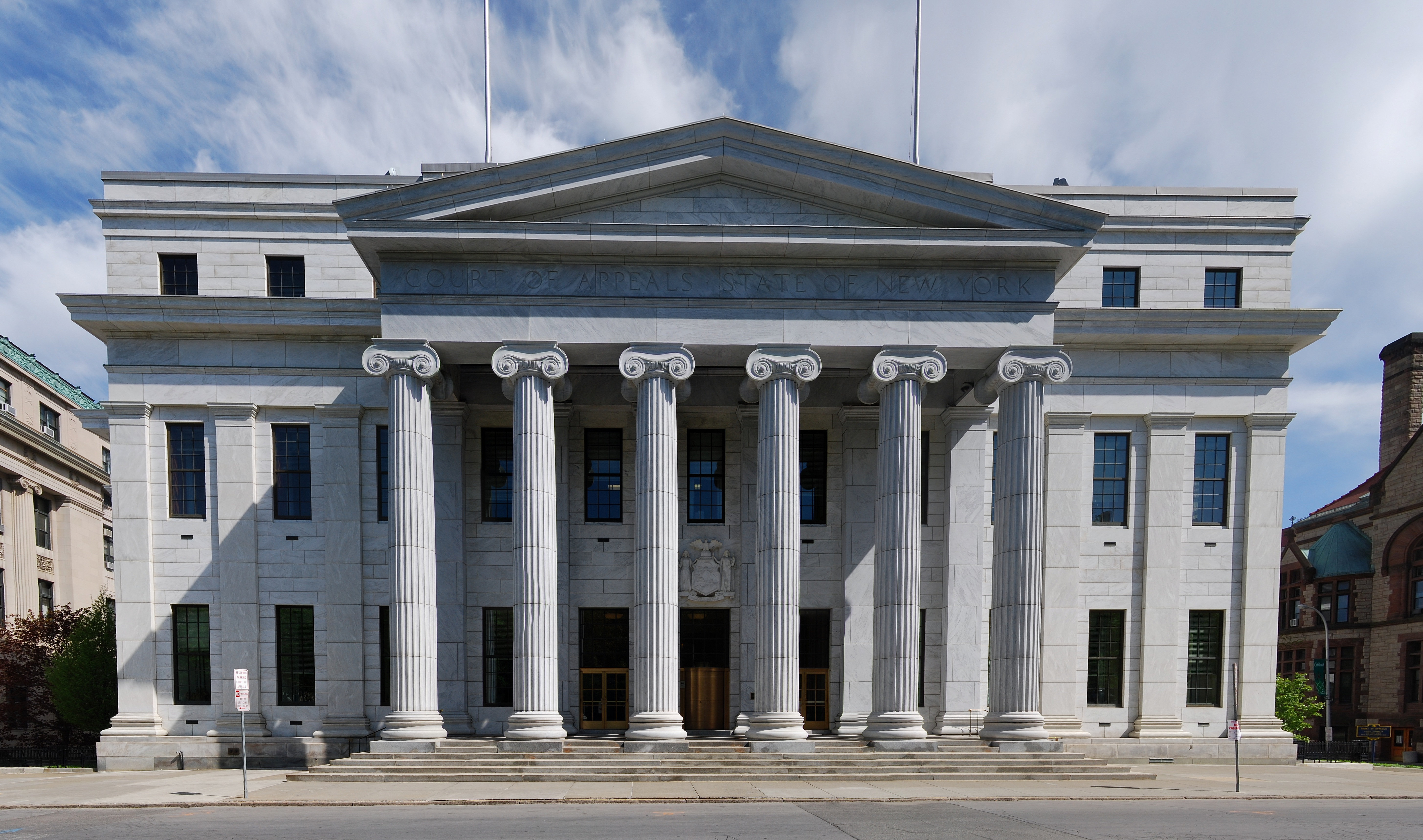
- New York Court of Appeals
- Judge
- Bonnie Wittner
- AI tool named
- No AI tool named
- Ruling date
- Mar 22, 2018
- Source document
- View primary court order ↗
- Last verified
- Aug 2, 2026
Lex Machina Review is an independent risk-tracking and reference resource. Nothing on this site is legal advice, and using it does not create an attorney-client relationship. Every record is reviewed against primary sources but may not reflect the most current status of a matter — always verify directly against the cited court order, rule text, or a licensed attorney before relying on it.
Companion explanation — secondary to the source document above
Last-verified status: August 2, 2026
The verified update on the Nicholas Brooks / Sylvie Cachay murder case is that the criminal case is procedurally closed. Brooks’ second-degree murder conviction and 25-years-to-life sentence were affirmed by New York’s intermediate appellate court in 2015 and by the New York Court of Appeals in 2018; the 2018 court described the proof as overwhelming and held that one evidentiary error was harmless.[1][2]
I found no verifiable 2024–2026 court filing in the supplied source set that reopens, resentences, vacates, or otherwise changes Brooks’ conviction. A&E’s custody update, published July 16, 2026, reports that Brooks remains incarcerated at Sullivan Correctional Facility in Fallsburg, New York.[3] Parole eligibility should be described as reported, not independently calculated: Wikipedia lists earliest parole eligibility as 2038, while CNN’s 2013 sentencing report said he would be eligible for parole “in 25 years.”[4][2]
| Question | Verified status | How to phrase it |
|---|---|---|
| Is the murder conviction still active on appeal? | No current appeal is verified in the reviewed materials. The conviction was affirmed by the Appellate Division in 2015 and unanimously affirmed by the New York Court of Appeals in 2018.[1] | “The conviction is final on the reviewed appellate record.” |
| What was Brooks convicted of? | A Manhattan jury convicted him of second-degree murder, Penal Law § 125.25(1), in July 2013.[1][2] | “Brooks was convicted of intentional second-degree murder.” |
| What sentence is in effect? | Judge Bonnie Wittner sentenced Brooks on September 23, 2013 to 25 years to life, described by CNN as the maximum sentence.[2] | “He is serving 25 years to life.” |
| Where is Brooks now? | A&E’s July 16, 2026 update reports that he remains incarcerated at Sullivan Correctional Facility.[3] | “Current custody is reported at Sullivan Correctional Facility.” |
| When is parole eligibility? | 2038 is reported by Wikipedia and is broadly consistent with CNN’s 2013 statement that parole eligibility would be “in 25 years,” but the reviewed sources do not independently show the New York parole calculation.[4][2] | “Earliest parole eligibility is reported as 2038.” |
| Is there a civil judgment? | Yes. The family is reported to hold a $12.5 million wrongful-death judgment, and 2018 reporting said collection was unblocked after the final criminal appeal.[5] | “A $12.5 million civil judgment has been reported; verify the civil docket before stating its exact entry date.” |
The case identifier, without the true-crime rerun
Sylvie Cachay died on December 9, 2010. The Court of Appeals described the medical examiner’s conclusion as death by “neck compression and drowning,” and the case that followed was prosecuted as an intentional murder case against Nicholas Brooks.[1] Brooks, Cachay’s boyfriend, was arrested in connection with the death the same day, according to later case coverage.[3]
Those facts identify the matter. They are not an invitation to keep rebuilding the hotel-room narrative each time someone searches for an “update.” For current use, the controlling questions are narrower: what did the jury decide, what did the appellate courts do with that verdict, what sentence remains in effect, and whether any later proceeding has changed that status.
What the criminal courts confirmed
On July 11, 2013, a Manhattan jury convicted Brooks of second-degree murder. CNN’s sentencing coverage reported that Cachay’s family addressed the court and that Judge Bonnie Wittner imposed 25 years to life on September 23, 2013, the maximum term for the conviction.[2]
The Appellate Division, First Department affirmed the conviction on December 22, 2015, in People v. Brooks, 134 A.D.3d 574.[6] That affirmance matters because it is the intermediate appellate checkpoint often omitted in short case summaries: by the time the case reached New York’s highest court, the conviction had already survived direct review once.
The final state appellate word came on March 22, 2018. The New York Court of Appeals unanimously affirmed. The court did identify an evidentiary error: the trial court should not have admitted a witness’s double-hearsay account of an alleged death threat. But the Court of Appeals held the error harmless because, in its view, the evidence of guilt was “overwhelming” and the case was “not a close case.”[1]
That distinction is the center of the legal update. The 2018 decision is not an order for a new trial. It is not a partial reversal. It is an affirmance that acknowledges one evidentiary mistake and then explains why that mistake did not require disturbing the verdict.[1]
What has not changed since 2018
The word “update” creates a recurring problem in this case because later public materials can look like developments when they are not legal developments. Brooks has published first-person prison writing, including a July 8, 2022 Marshall Project essay, and Solitary Watch lists an author page for him with later work.[8][9] Those items may matter to someone studying prison writing, solitary confinement commentary, or Brooks’ own public position. They do not change the judgment of conviction.
Brooks’ continued denial also needs to be kept in the right column. His own writings are attributable to him; the affirmed conviction is attributable to the courts. A clean case note can include both, but it should not let a defendant’s later statement make the procedural status sound unsettled.[8][1]
The same rule applies to later media and documentary coverage. A&E’s 2026 update is useful for custody status and case orientation, but it is not a court filing and does not reopen the appellate record.[3] A similarly named “People v. Brooks” item should not be treated as this case unless it can be tied to Nicholas Brooks, Sylvie Cachay, the New York County indictment, or the known appellate path. The caption alone is not enough.
The civil judgment: confirmed amount, cautious date
The civil side is simpler in amount than in dating. Reporting after the 2018 Court of Appeals decision said Cachay’s family had a $12.5 million wrongful-death judgment and that collection had been blocked while Brooks’ criminal appeal remained pending. After the final affirmance, that reporting said the family could pursue collection.[5]
The exact judgment date should be handled carefully. Earlier coverage in 2012 discussed the family’s potential multimillion-dollar recovery from Brooks, while later summaries treat the judgment as already awarded by the time of the 2018 final appeal; A&E’s current account places the judgment in the post-conviction timeline.[7][5][3]
Without the civil docket in hand, the safe formulation is: Cachay’s family is reported to hold a $12.5 million wrongful-death judgment, and 2018 reporting said the Court of Appeals affirmance removed the appellate barrier to collection. Do not give a definitive judgment-entry date unless you have verified the civil docket.
Current custody and parole eligibility

For present-tense status, the available custody source is A&E’s article updated July 16, 2026, which reports that Brooks remains incarcerated at Sullivan Correctional Facility in Fallsburg, New York.[3] That is a custody-status update, not a new court event.
Parole eligibility should stay attributed. Wikipedia lists 2038 as the earliest parole-eligibility year, and CNN’s 2013 sentencing story reported that Brooks would be eligible for parole in 25 years.[4][2] The reviewed sources do not provide the underlying New York Department of Corrections and Community Supervision calculation, jail-credit accounting, or parole-board record. For a brief, article, or database field, “reported earliest parole eligibility: 2038” is more accurate than presenting the date as independently computed.
Useable wording for a current case note
A compact, defensible entry would read:
- Nicholas Brooks was convicted by a Manhattan jury in 2013 of second-degree murder in the death of Sylvie Cachay and was sentenced to 25 years to life.[2]
- The Appellate Division, First Department affirmed in 2015, and the New York Court of Appeals unanimously affirmed in 2018.[6][1]
- The Court of Appeals found one evidentiary error but held it harmless in light of what it called overwhelming proof and a case that was not close.[1]
- Current custody is reported at Sullivan Correctional Facility as of A&E’s July 16, 2026 update.[3]
- Earliest parole eligibility is reported as 2038, but that date should be attributed rather than independently calculated from the reviewed materials.[4][2]
The verification habit here is the same one used in other public-record cleanup work: separate what the primary record proves from what headlines, summaries, and later commentary imply. For a comparable classification exercise, see Why the Linda Blair Warrant Wasn’t a Search Warrant. For a checklist-style approach to verifying summary claims against live procedural posture, see Verify AI summaries of the DOE professional-degree stay. This case does not have an AI-sanctions angle; it belongs in that lane only as a record-status verification exercise.
As of this check, the verified update is finality plus custody: an affirmed conviction, an affirmed 25-years-to-life sentence, reported incarceration at Sullivan Correctional Facility, a reported $12.5 million civil judgment, and no verified 2024–2026 filing changing the criminal judgment. Any future change would need to come from a new court filing, parole record, correctional-status update, or verified civil docket entry—not from recycled case summaries.
References
- People v Brooks, 2018 NY Slip Op 01956; New York State Law Reporting Bureau; March 22, 2018.
- Boyfriend gets maximum sentence in swimsuit designer's murder; CNN; September 23, 2013.
- Murder at Soho House...; A&E; July 16, 2026.
- Murder of Sylvie Cachay; Wikipedia.
- Nicholas Brooks loses final appeal of Soho House murder conviction; New York Post; March 22, 2018.
- Son of “You Light Up My Life” songwriter Joseph Brooks loses murder conviction appeal; New York Daily News; December 22, 2015.
- Nicholas Brooks, suspect in slaying of Sylvie Cachay, may pay millions to victim’s family; New York Daily News; January 23, 2012.
- You Shouldn’t Have Used the D-Word; The Marshall Project; July 8, 2022.
- Nicholas Brooks; Solitary Watch.
Related records
Tool profile
How Meta's AI Spending Reshapes Law Firm ProfitabilityGoverning regulation
Browse the obligations tracker →Preventive workflow
Browse verification workflows →
Report a correction or tip
Spotted an outdated figure, a misstated fact, or a ruling this case record should reflect? Public comments are disabled for this content given the professional cost of a misreported case outcome, penalty amount, or rule text — use the structured correction channel instead.
Report a correction or tip for this record →