
Verify AI summaries of the DOE professional-degree stay
- Authority
- U.S. District Court for the District of Columbia
- Rule type
- court order
- Jurisdiction scope
- US federal
- Effective date
- Jun 24, 2026
- Source text
- Read primary rule text ↗
Verify AI summaries against the primary order before stating the DOE professional-degree definition was ruled unlawful or the loan caps were blocked.
Start by deleting the neat version of the search phrase. The June 24, 2026 order in American Association of Nurse Practitioners v. McMahon did not finally rule the DOE professional degree definition unlawful for student loans. It preliminarily set aside and stayed part of the definition under 5 U.S.C. § 705, left another part untouched, denied an injunction against the statutory loan caps, and left some program-designation questions for the Department of Education to address first. The statutory caps still took effect on July 1, 2026. [1]
Last verified: August 2, 2026. The load-bearing source is the June 24 Order, ECF No. 45. The Memorandum Opinion, ECF No. 46, is separately linked but was not crawled for this article, so no quotation from Judge Howell’s opinion is used here without direct verification. The Department’s implementation announcement, FSA GENERAL-26-42, was published June 29, 2026 and updated July 10, 2026. This is a legal-research verification workflow, not borrower, school, or financial-aid advice. [1][2][3]
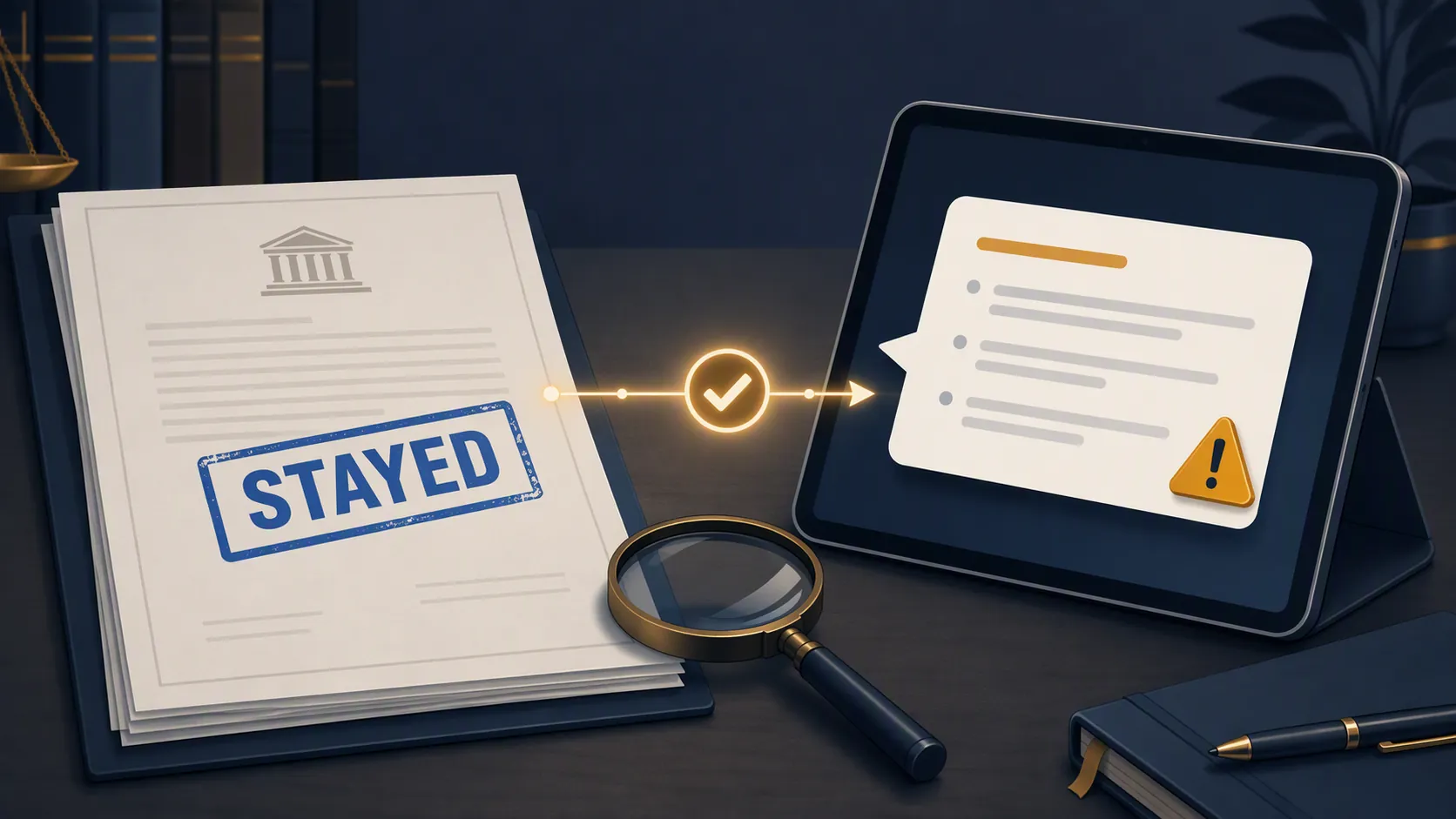
The operative verbs are the whole story
The order is short enough that an AI summary should not be trusted until its verbs match the docket. It says part (i) of the challenged definition is “preliminarily SET ASIDE and STAYED” under 5 U.S.C. § 705. It does not disturb part (ii), the list of eleven fields: pharmacy, dentistry, veterinary medicine, chiropractic, law, medicine, optometry, osteopathic medicine, podiatry, theology, and clinical psychology. It denies the request to enjoin the statutory loan caps. It also says physician-associate and physician-assistant program determinations should be made by the agency in the first instance. [1]
That combination is exactly where AI legal summaries tend to flatten the case. A system sees a plaintiff win something, a DOE rule, professional degrees, and student-loan caps, then produces a headline-shaped sentence. The problem is not that the sentence is skeptical of the agency. The problem is that it collapses procedure, remedy, scope, and implementation into one unsupported merits conclusion.
| If the AI summary says | Check this first | Why it matters |
|---|---|---|
| DOE’s definition was ruled unlawful | Was it stayed, set aside, vacated, or finally invalidated? | A preliminary § 705 stay is not the same thing as a final merits ruling. |
| The court blocked the student-loan caps | Did the order grant or deny the injunction against the caps? | The caps took effect even though part of the definition was stayed. |
| The court declared nursing programs professional degrees | Did the designation come from the order or from FSA implementation? | Agency follow-up is not the judicial holding. |
| The ruling only helps the plaintiffs | What scope does the order and APA context indicate? | Party-only phrasing can understate the practical reach of the stay. |
| The issue is resolved | Is the case pending and is there a schedule order? | A preliminary stay is not final judgment. |
A fifteen-minute primary-source check
The fastest useful review is not a full memo. It is a posture check. Open the order, search for the verbs, then compare the AI summary against five traps that would change the advice a lawyer gives.
1. Stayed is not vacated, and it is not a final unlawfulness ruling
The first trap is the most common because “set aside,” “stayed,” and “vacated” sit close together in ordinary language and far apart in legal effect. The June 24 order uses preliminary relief language under § 705. It does not say the court entered final judgment on the merits. It does not say the entire professional-degree definition is gone. It does not convert the plaintiffs’ likelihood showing into a final holding that DOE acted unlawfully. [1]
A reliable AI summary should preserve both pieces of the operative phrase: “preliminarily SET ASIDE and STAYED.” Dropping “preliminarily” turns the posture into something cleaner than the order. Dropping “stayed” makes the remedy sound more final than it is. Dropping “part (i)” makes the relief sound broader than it is. Each deletion makes the summary easier to read and less safe to reuse.
This also matters because the definition did not exist in isolation. The RISE Final Rule was published on May 1, 2026, and the order addresses statutory incorporation mechanics, including the One Big Beautiful Bill Act / Working Families Tax Cuts Act treatment of 34 C.F.R. § 668.2 “as in effect on July 4, 2025.” The court read that incorporation as limiting the agency’s discretion to narrow the definition, but that discussion still belongs inside the preliminary-relief posture. [1][4]
2. The caps were not blocked
The second trap is more consequential for anyone advising an institution or reviewing a public-facing alert. The court denied the request to enjoin the statutory loan caps. The professional-student limits of $50,000 annually and $200,000 aggregate, and the graduate-student limits of $20,500 annually and $100,000 aggregate, took effect July 1, 2026; Grad PLUS was eliminated. [1][5]
A summary can be directionally correct about the plaintiffs receiving relief and still wrong on the question a client is likely asking. “The definition was stayed” does not mean “the caps were stopped.” “A professional-degree classification dispute remains open” does not mean “pre-July 1 borrowing rules continue.” These are different parts of the order, and the order treats them differently.
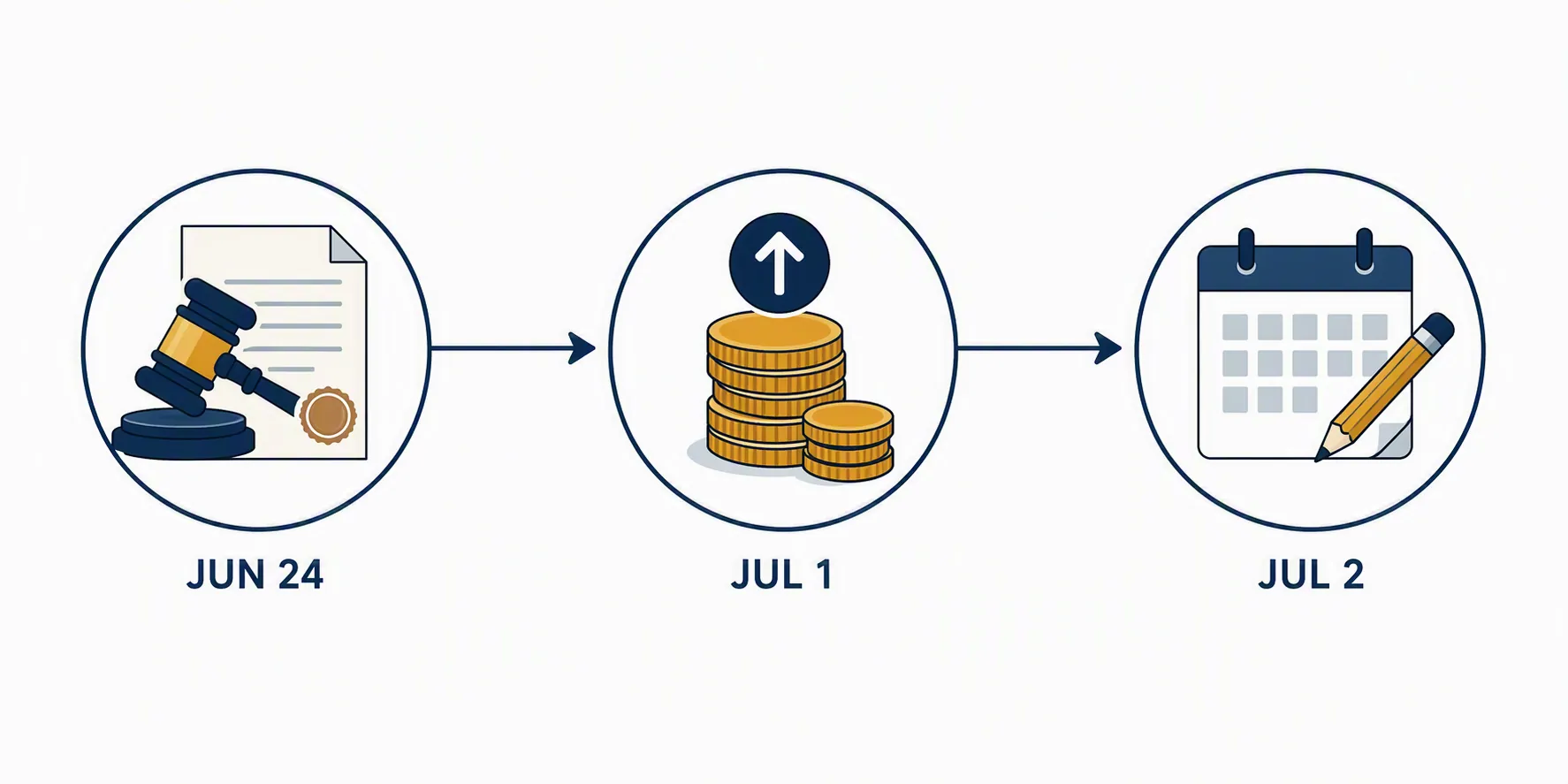
For verification, look for the caps paragraph separately from the definition paragraph. If an AI answer blends them into one sentence, rewrite it before relying on it. The right structure is: definition relief granted in part; caps injunction denied; caps effective July 1.
3. FSA’s stay-period list is implementation, not a court declaration
The order did not declare MSN, DNP, or every disputed health-profession program to be a professional degree. After the stay, Federal Student Aid issued GENERAL-26-42, identifying 29 programs treated as professional degree programs during the stay period. That list is agency implementation while the stay is in place, not a judicial classification of each program on the merits. [3]
This is where summaries often smuggle agency action into the holding. If the answer says “the court held nursing programs are professional degrees,” ask whether the source is the order or FSA’s announcement. The answer matters because agency guidance can be updated, and this one already carries a July 10, 2026 update date. [3]
The same caution applies to physician-associate and physician-assistant programs. The order expressly leaves those determinations to the Department in the first instance. That is not an invitation to let a chatbot fill the gap with a program list of its own. [1]
4. Do not assume party-only effect
Scope is the shortest check, but it still needs to be done. Practitioner and financial-aid analyses treated the APA-based stay as having nationwide practical effect, not as relief limited only to the named plaintiffs. NASFAA described the court as temporarily pausing key parts of the professional-student definition days before the July 1 effective date, and Duane Morris analyzed the uncertainty created by a federal court stay of the narrowed definition. [5][6]
The verification point is modest: do not write “only AANP’s members are covered” unless the order and current docket support that limitation. Conversely, do not let nationwide practical effect become a final nationwide merits ruling. Scope and merits are separate checks.
5. The case was still pending
The order required the parties to propose a schedule by July 2, 2026. That is the opposite of a finished case. Any summary that says the dispute “ended,” “resolved,” or “settled” because of the June 24 order should be quarantined until the current docket is checked. [1]
Do not use press-reported language from the Memorandum Opinion as if it has been independently verified unless ECF No. 46 has been opened and checked directly. The public link exists, but this article does not rely on uncrawled quotations from that opinion. [2]
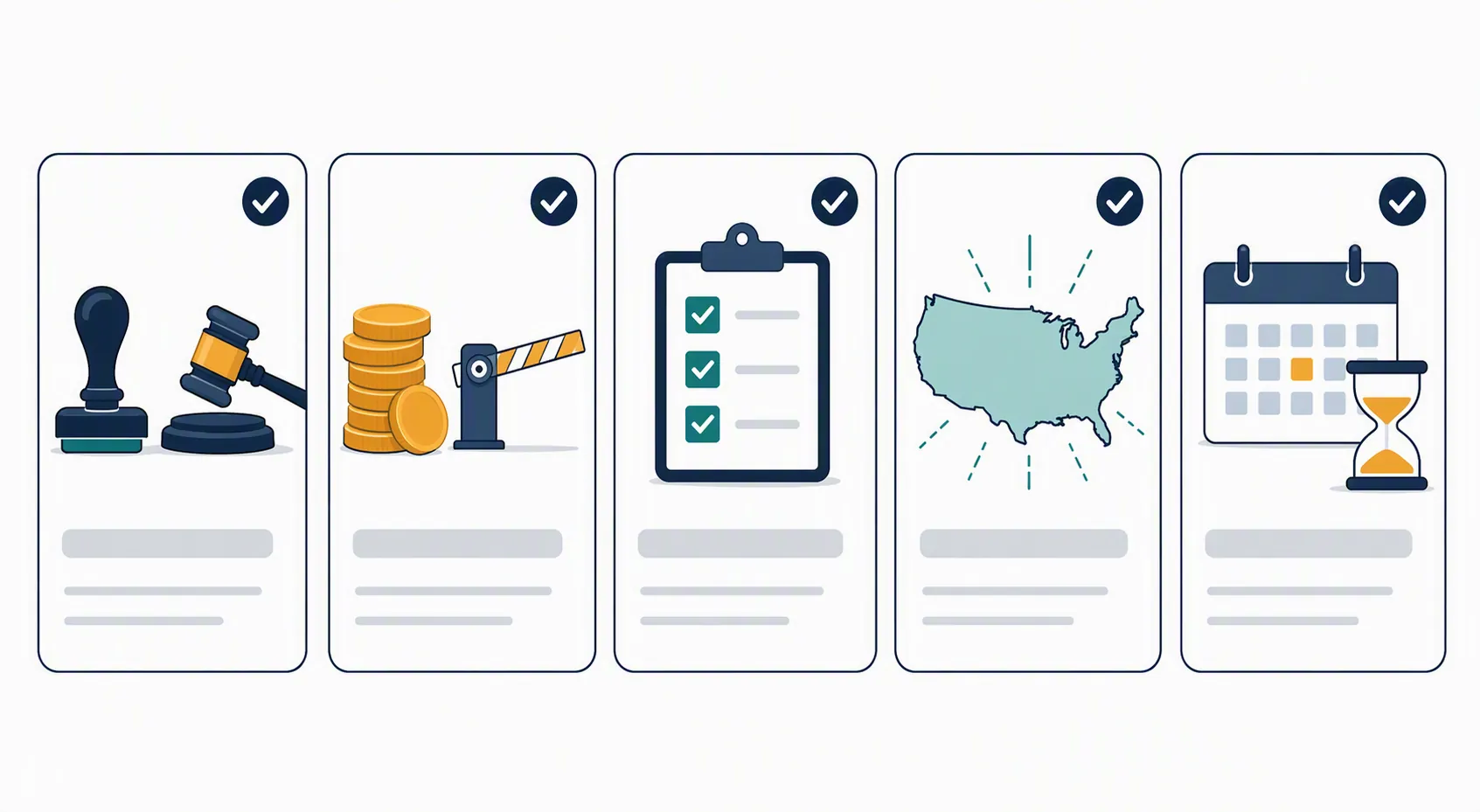
Where AI summaries tend to break
This is not an argument against using AI for legal research. It is an argument against letting the first generated answer supply the legal posture. A model can be useful for finding the case, surfacing the agency announcement, or drafting a comparison table. It is much less useful when it compresses administrative-law relief into a client-ready sentence.
The benchmark evidence is now too large to treat this as a theoretical hygiene issue. A Stanford RegLab and Stanford HAI study tested more than 200 legal research queries and found leading legal AI tools hallucinated between 17% and 33% of the time, while general-purpose chatbots hallucinated between 58% and 82% of the time. The study used a preregistered dataset and evaluated proprietary closed tools, so the exact percentages should not be casually transferred to every workflow or product. They are still a warning about using generated legal summaries without primary-source verification. [7][8]
The sanctions record supplies the consequence layer. Norton Rose Fulbright’s 2026 update identified more than 1,148 documented U.S. lawyer hallucination cases. The same update describes 2026 sanctions including Whiting v. City of Athens, with $15,000 punitive sanctions for each sanctioned lawyer plus fees and double costs, and Fletcher v. Experian, with a $2,500 sanction. [9]
In Lnu v. Blanche, the Ninth Circuit sanctioned lawyers on June 3, 2026 over AI hallucinations and lack of candor, imposing $2,500 sanctions on each, six-month suspensions, and a two-year AI-disclosure requirement. [10]
For a reusable research loop, compare this record with the site’s AI legal research workflow and the verification template used in the personality-and-impulse-control sentencing checklist. The same basic move applies here: prompt for orientation, verify against the primary source, then audit the verbs before anyone quotes the result.
Keep related litigation and impact reporting in their lanes
There are related DOE professional-degree challenges, including the Maryland-led suit against the Department of Education filed May 19, 2026. Thompson Coburn summarized that case, and the New York Attorney General announced the filing by twenty-five states plus the District of Columbia. Those materials are useful for understanding the broader litigation environment, but they do not change the operative language of the June 24 order in AANP v. McMahon. [11][12]
The same restraint applies to borrower-impact numbers. Secondary higher-education reporting may be relevant for a policy article, but a verification workflow should not import borrower counts or health-student percentages unless the underlying data source has been pulled. This article is limited to checking the legal posture of a generated ruling summary.
For DOE regulatory lifecycle context, the same caution shows up in the site’s student-loan reapply notice verification workflow, Sweet v. McMahon discharge timeline, and SAVE Plan regulatory timeline. The work is not to make every DOE case fit one narrative. It is to preserve the procedural posture that controls the next legal step.
The checklist to run before reusing the summary
- Open ECF No. 45 before reading commentary. Search for “SET ASIDE,” “STAYED,” “DENIED,” “part (i),” “part (ii),” and “July 2.”
- Replace “ruled unlawful” with the narrower procedural phrase unless a later final merits ruling supports stronger language.
- Separate the definition relief from the loan-cap relief. The definition stay and the denied caps injunction are different holdings.
- Treat FSA GENERAL-26-42 as agency implementation during the stay, not as the court’s own program-by-program declaration.
- Check whether the summary states or implies party-only effect, nationwide effect, or final judgment. Each requires its own support.
- Open the current docket before publication if the answer will be used in a filing, client alert, institutional policy, or borrower-facing communication.
A summary that says “DOE professional degree definition ruled unlawful student loans” has already failed the first check. Quarantine it until it matches the primary order, the FSA announcement, and the current docket posture.
References
- Order, AANP v. McMahon, No. 26-1780 (BAH), ECF No. 45 — CourtListener
- Memorandum Opinion ECF No. 46 — U.S. District Court for the District of Columbia
- Update on List of Professional Degree Programs Due to Court Order — Updated July 10, 2026 — Federal Student Aid, June 29, 2026
- Reimagining and Improving Student Education; Federal Student Loan Program Final Regulations — Federal Register, May 1, 2026
- Court Temporarily Pauses Key Parts of Professional Student Definition Days Before July 1 Effective Date — NASFAA
- Navigating Uncertainty After Federal Court Stays Department of Education’s Narrowed Definition — Duane Morris, June 26, 2026
- Hallucination-Free? Assessing the Reliability of Leading AI Legal Research Tools — Stanford RegLab
- AI on Trial: Legal Models Hallucinate in 1 out of 6 or More Benchmarking Queries — Stanford HAI
- AI in litigation: update on gen AI sanctions in 2026 — Norton Rose Fulbright
- US appeals court sanctions lawyers over AI hallucinations, lack of candor — Reuters, June 3, 2026
- Twenty-five states plus D.C. rise up in lawsuit against the Department of Education over new rules professional degree definition — Thompson Coburn, May 20, 2026
- Attorney General James Sues to Stop Student Loan Cuts for Future Health Care Workers — New York State Attorney General, May 19, 2026
Operationalizing workflow
No workflow has been explicitly linked to this obligation yet. See Workflows generally.
Illustrative cases
No illustrative case is currently tracked for this obligation. See Risk Digest for documented incidents generally.
← Back to RegulationReport a correction or tip
Spotted an outdated figure, a misstated fact, or a ruling this regulation entry should reflect? Public comments are disabled for this content given the professional cost of a misreported case outcome, penalty amount, or rule text — use the structured correction channel instead.
Report a correction or tip for this record →