
What the Tesla Insane Mode Lawsuit Alleges
Lawgalet v. Tesla is the first U.S. negligence suit to center on Tesla's Insane Mode setting. This docket-linked case file separates the September 2024 test-drive allegations from verified record facts so litigators can assess exposure before the case reaches merits.
- Jurisdiction
- United States (E.D. Va.)
- Court
- U.S. District Court for the Eastern District of Virginia, Alexandria Division
- Judge
- Leonie M. Brinkema
- AI tool named
- Tesla Insane Mode
- Ruling date
- Jul 24, 2026
- Source document
- View primary court order ↗
- Last verified
- Aug 1, 2026
Lex Machina Review is an independent risk-tracking and reference resource. Nothing on this site is legal advice, and using it does not create an attorney-client relationship. Every record is reviewed against primary sources but may not reflect the most current status of a matter — always verify directly against the cited court order, rule text, or a licensed attorney before relying on it.
Companion explanation — secondary to the source document above
Lawgalet v. Tesla, Inc. et al., No. 1:26-cv-02208, is pending in the U.S. District Court for the Eastern District of Virginia, Alexandria Division, after removal on July 22, 2026 from Arlington County Circuit Court, case No. CL-26001295, under 28 U.S.C. § 1446. The federal docket identifies nature of suit 350, District Judge Leonie M. Brinkema, and Magistrate Judge William B. Porter; the current schedule sets an initial pretrial conference for August 12, 2026, discovery due by December 11, 2026, and a final pretrial conference for December 17, 2026.[1][2]
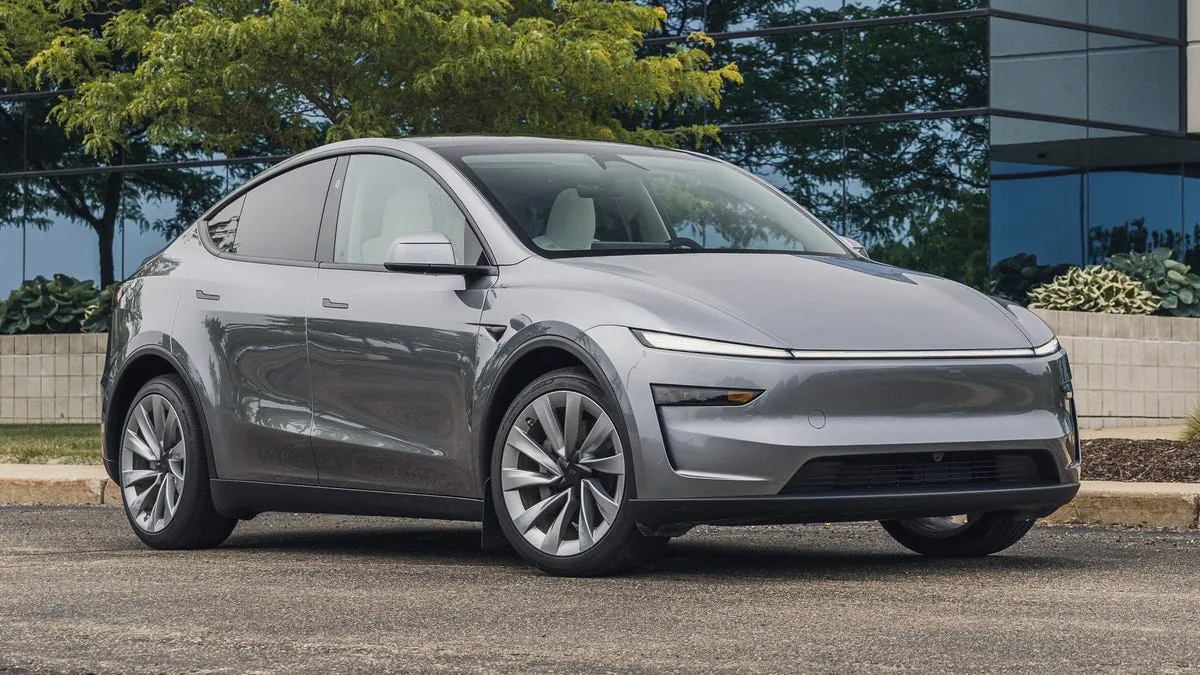
That is the clean starting point for any Insane Mode lawsuit analysis: a removed negligence case in early discovery, not a merits ruling, not a product-defect verdict, and not an Autopilot or Full Self-Driving case. This record is a litigation-risk note, not legal advice. The docket facts above are verified procedural facts. The crash narrative, the sales-process statements, the warning failures, and the alleged causal chain are complaint allegations unless and until discovery supplies admissible proof.
| Record item | Current status |
|---|---|
| Court and case number | E.D. Va., Alexandria Division, No. 1:26-cv-02208 [1][2] |
| Prior forum | Arlington County Circuit Court, CL-26001295 [1][2] |
| Removal | July 22, 2026, under 28 U.S.C. § 1446 [1][2] |
| Identified court action | July 24, 2026 scheduling order placing the case in early discovery [1][2] |
| Next docket dates | Initial pretrial conference August 12, 2026; discovery due December 11, 2026; final pretrial conference December 17, 2026 [1][2] |
What the complaint alleges about the test drive
The complaint centers on a September 21, 2024 test drive in Arlington, Virginia. Alemzewd Lawgalet alleges she went to test-drive a Tesla Model Y, was sent out alone, and was assured that the vehicle “operated the same as a gas vehicle.” She further alleges she was not warned about regenerative braking or the vehicle’s acceleration behavior before leaving the dealership.[3]
The alleged crash sequence is short and important. Lawgalet says that, while stopped at a red light near the Pentagon, the Model Y “lurched forward at an extreme speed” and crashed into Posh Salon. The complaint alleges that the crash led to a vehicle fire and forced evacuation of the building.[3]
There is a roughly 22-month gap between the September 2024 crash and the July 2026 removal docket. The materials available here do not explain that gap. It may later matter for discovery logistics, witness memory, preservation questions, or limitations arguments, but the present record does not support a reasoned explanation for it.
The alleged warning failure is the case
The useful way to read the pleading is not “Tesla acceleration is dangerous” in the abstract. The pleaded theory is narrower: in a dealership test-drive setting, a customer allegedly unfamiliar with EV driving behavior was put into a Model Y configured in Insane Mode, allegedly without meaningful briefing on acceleration or regenerative braking, after allegedly being told it would drive like a gas car.[3]
That narrower frame matters because the dealership context changes the proof questions. An owner who has configured her own car and driven it for months is not in the same posture as a prospective buyer sent out from a showroom. In the test-drive version, warnings, handoff scripts, salesperson statements, screen settings, and customer unfamiliarity are not decoration. They are the hinge.
| Alleged fact | Discovery question | Why it matters |
|---|---|---|
| The salesperson allegedly said the Model Y operated the same as a gas vehicle | Who said it, whether anyone heard it, and whether Tesla or the dealership used a standard test-drive script | The statement may support reliance and failure-to-warn theories if corroborated |
| Lawgalet allegedly was sent out alone | Whether solo test drives were normal practice and whether any pre-drive checklist was completed | A solo drive can increase the significance of pre-drive warnings |
| The car allegedly was in Insane Mode | Who selected the mode, when it was selected, and whether the vehicle data logs show the setting | The allegation only becomes useful exposure evidence if the setting and timing can be proven |
| She allegedly was not warned about regenerative braking | What was said about one-pedal driving, braking response, and pedal feel before the drive | The warning theory depends on the gap between ordinary gas-car expectations and EV behavior |
| The vehicle allegedly accelerated from a red light and crashed | Vehicle telemetry, pedal input, traffic-signal timing, crash reconstruction, and any nearby video | Causation will not be resolved by the pleading description alone |
Insane Mode is therefore not self-proving evidence of negligence. A dramatic feature name may be good headline material, but it does not answer the litigation questions. The plaintiff still has to connect the selected setting, the alleged absence of warning, her own driving inputs, and the crash mechanism. Tesla, in turn, does not get to make the dealership setting disappear by treating this like ordinary owner use.
The regenerative-braking allegation deserves separate attention because it is not simply another way to say “fast car.” Regenerative braking changes deceleration behavior when the driver eases off the accelerator. A first-time EV driver who expects gas-vehicle pedal feel may experience that difference as unfamiliar. Whether that unfamiliarity had anything to do with this crash is a proof question, but the alleged pre-drive assurance that the car operated like a gas vehicle makes the warning record central rather than incidental.[3]
Feature context, with the right evidentiary label
Secondary reporting describes Insane Mode as one option in a Chill/Standard/Insane acceleration selector and reports, citing Tesla owner-manual material, that a Model Y in Insane Mode can reach 0–60 mph in 3.3 seconds. The same reporting describes touchscreen navigation as required to select the mode.[4]
That manual context is useful, but it should not be overread. It is reported owner-manual context, not a court finding and not, by itself, proof of what this particular vehicle displayed, what mode it was in when Lawgalet took custody, or who selected that setting. Likewise, the reported proposition that Insane Mode cannot be accidentally activated is not primary evidence in this docket. If it becomes important, counsel will want the actual manual, vehicle configuration records, software-version evidence, and testimony from whoever prepared the test-drive vehicle.
The touchscreen point can cut more than one way. For Tesla, it may support an argument that Insane Mode is not a hidden, random condition. For Lawgalet, it may sharpen the question of why a dealership vehicle offered to a prospective customer allegedly remained in that setting before a solo test drive. Neither inference decides the case at the pleading stage.
Tesla’s answer reframes the accident around driver conduct
The Independent reports that Tesla’s state-court answer pleaded comparative fault, including that Lawgalet “failed to take reasonable care,” and also raised failure to mitigate.[4] That is exactly the defense posture one would expect in a sudden-acceleration test-drive case: even if warnings are disputed, driver input, observation, braking, and post-accident damages conduct remain live issues.
Comparative fault does not make the warning theory vanish. It changes the allocation problem. If a jury were ever reached, Tesla and the dealership defendants would likely try to separate any alleged handoff defect from the immediate operation of the vehicle. The plaintiff would try to keep those facts linked: unfamiliar customer, solo drive, performance setting, alleged gas-car assurance, no regenerative-braking warning, then acceleration from a stop.
The most important missing materials are ordinary but decisive: test-drive paperwork, any signed acknowledgment, dealership training documents, the salesperson’s testimony, vehicle logs, touchscreen state, event data, fire and crash reports, video, and medical and property-damage proof. Without those, the case remains a pleaded story with a procedurally real docket.
Exposure is pleaded, not yet measured
The complaint seeks at least $10 million in compensatory damages and $350,000 in punitive damages, using recklessness, willful-and-wanton conduct, and conscious-disregard language.[3] Those figures matter because they define the pleaded demand and settlement atmosphere. They do not measure probable liability, likely verdict value, or punitive exposure on the present record.
At this stage, the exposure analysis is qualitative. The plaintiff’s strongest path is a process-failure case: a dealership allegedly failed to control or explain a high-acceleration test-drive configuration before handing the vehicle to a customer. Tesla’s strongest early responses are factual and comparative: the driver’s own conduct, what the vehicle data shows, whether warnings were actually given, whether Insane Mode was in fact engaged, and whether regenerative braking has any causal connection to the collision.
Punitive language should be handled with particular care. Alleging recklessness is not proving it. If discovery were to show a known dealership practice of sending first-time EV drivers out alone in high-performance settings without explanation, the case would look different from a one-off disputed handoff. If discovery instead shows warnings, customer acknowledgment, different mode data, or driver-input evidence inconsistent with the complaint narrative, the exposure picture narrows quickly.
What this case is not
This is not an autonomous-driving liability record. It does not plead a failure by Autopilot or Full Self-Driving to perceive a hazard, control steering, or execute a driving task. For that regulatory bucket, the better comparator is the separate federal oversight discussion in NHTSA Tesla FSD Investigations Fuel Federal AV Preemption Debate. Importing that framework here would blur the issue rather than sharpen it.
Nor is this controlled by other Tesla litigation records on staffing, repair disputes, door defects, or large verdict chatter. The site’s Medrano Tesla self-driving staffing record and Budget Insurance Tesla repair-dispute record belong in the same broad Tesla litigation file, but they are not useful analogies for predicting this complaint’s merits. Different defect theories and different proof records create different exposure.
The same restraint applies to verdict-number comparisons circulating around Tesla crash litigation. Unless a verdict is directly verified and analytically tied to the same theory, using it to price this test-drive warning case does more harm than good. The operative questions here are dealership conduct, customer briefing, vehicle setting, driver input, and causation.
Where the record actually ends
As of August 1, 2026, the federal record shows removal and scheduling, with early discovery ahead. The case has not reached a merits ruling. No court has found that Insane Mode caused the crash, that Tesla or a dealership failed to warn, that Lawgalet was comparatively at fault, or that punitive damages are available.
The litigation risk is real enough to track because the pleaded facts target a concrete dealership process: what was said before the drive, what was not said, who configured the car, and whether the plaintiff’s alleged unfamiliarity with EV behavior was foreseeable. It is not yet measurable in any honest way from the complaint alone. Every substantive fact in the crash narrative remains an allegation until the docket develops.
References
- Lawgalet v. Tesla, Inc. et al, PacerMonitor.
- Lawgalet v. Tesla, Inc. et al, Justia Dockets & Filings.
- Complaint, Lawgalet v. Tesla, Inc. et al., DocumentCloud.
- Federal employee sues Tesla after 'Insane' acceleration mode test-drive crash, The Independent.
Related records
Tool profile
Browse tool evaluations →Governing regulation
Browse the obligations tracker →Preventive workflow
Browse verification workflows →
Report a correction or tip
Spotted an outdated figure, a misstated fact, or a ruling this case record should reflect? Public comments are disabled for this content given the professional cost of a misreported case outcome, penalty amount, or rule text — use the structured correction channel instead.
Report a correction or tip for this record →