
What a trade name legally is — and what it isn't
Under 15 U.S.C. § 1127, a trade name is any name used to identify a business or vocation — legally distinct from a trademark, which identifies goods and services. Conflating the two can trigger TMEP registration refusals, UCC perfection defects, and Rule 17 dismissal, so practitioners need to verify the definition against primary sources before relying on AI-generated legal research.
- Jurisdiction
- US federal
- Court
- U.S. Court of Appeals for the Second Circuit
- AI tool named
- Westlaw AI-Assisted Research, Lexis+ AI, Ask Practical Law AI
- Ruling date
- Jan 1, 2025
- Source document
- View primary court order ↗
- Last verified
- Jul 31, 2026
Lex Machina Review is an independent risk-tracking and reference resource. Nothing on this site is legal advice, and using it does not create an attorney-client relationship. Every record is reviewed against primary sources but may not reflect the most current status of a matter — always verify directly against the cited court order, rule text, or a licensed attorney before relying on it.
Companion explanation — secondary to the source document above
The legal definition of a trade name starts with one sentence, not a branding discussion. The Lanham Act defines “trade name” and “commercial name” as “any name used by a person to identify his or her business or vocation.” In the same definitional section, a trademark does different work: it identifies and distinguishes goods, and a service mark identifies and distinguishes services. [1]
That split is small enough to miss and large enough to damage a filing. If the name is identifying the business, it may be a trade name. If the name is functioning as a source identifier for goods or services, it may be a trademark or service mark. If the name belongs in an entity record, an assumed-name filing, a financing statement, or a complaint caption, the answer may turn on a different source entirely.
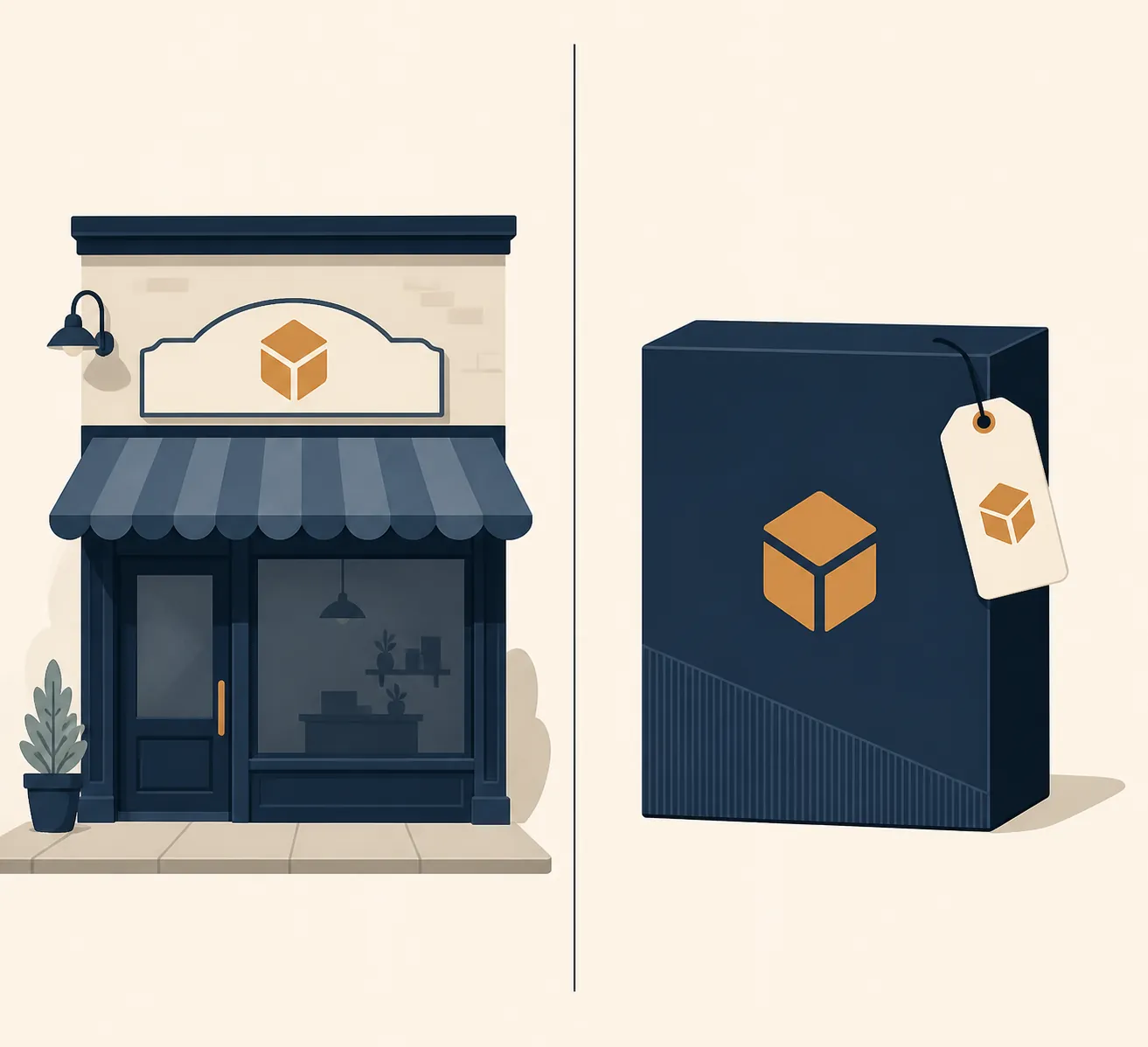
The statutory split: business identity is not goods identity
The useful question is not “what does the public call this business?” The useful question is: what legal function is the name performing in this document?
| Label | What it identifies | Where the distinction matters |
|---|---|---|
| Trade name / commercial name | A business or vocation | Lanham Act definition; DBA and assumed-name analysis; evidence showing business-name use rather than mark use |
| Trademark | Goods and their source | USPTO applications, specimens, infringement claims, ownership records |
| Service mark | Services and their source | USPTO applications and claims involving services rather than goods |
| Legal entity name | The registered corporation, LLC, partnership, or other legal person | Complaint captions, contracts, UCC debtor-name fields, good-standing records |
| DBA / fictitious or assumed business name | A public-facing name under which a legal person does business | State or local filings; notice and registry searches; sometimes publication requirements depending on jurisdiction |
The table is not a hierarchy. One string of words can appear in more than one box. A company may use the same words as its storefront name, as a product mark, and as part of a registered entity name. The filing problem begins when a drafter assumes that one appearance proves all the others.
Trademark law itself recognizes this dual-function point. TMEP § 1202.01 states that matter used solely as a trade name is not registrable as a trademark or service mark, but it also recognizes that a designation may function both as a trade name and as a mark when the evidence shows trademark or service-mark use. [2]
That is why specimen review matters. A name splashed across an “About Us” page may look like a company identifier. The same name placed on packaging, labels, a point-of-sale display, or service advertising may support a different conclusion. The question is not whether the words are attractive or familiar; it is whether the record shows the words doing mark work.
DBA language adds another layer, not a universal answer
A DBA, fictitious business name, or assumed business name is often the source of the confusion. Cornell’s Wex describes a fictitious business name as a name under which a business operates that is different from its legal name. [3] That does not make the DBA the legal entity name. It also does not make the DBA a trademark.
State terminology is not uniform. A jurisdiction may use “trade name,” “assumed name,” “fictitious name,” or “fictitious business name” for a registration system that is not the Lanham Act definition and not the UCC debtor-name rule. For filing purposes, the right move is usually dull and decisive: check the record in the filing jurisdiction and copy the name from the governing source, not from a marketing page or an AI summary.
Where the mistake becomes a filing defect
The definition matters because different filing systems punish different kinds of naming shortcuts. Three of them come up often enough to deserve a place in any name-verification workflow: USPTO registration, UCC financing statements, and litigation party naming.
USPTO applications: trade-name use can trigger refusal
TMEP § 1202.01 is the registration consequence in plain form: “matter used solely as a trade name is not registrable” as a trademark or service mark. The section cites In re Letica Corp., where the TTAB treated the matter as a trade name and refused registration on that basis. [2]
This is where loose terminology in a research memo can become expensive. If a draft says “the trade name is registrable” without asking how the name appears on the specimen, it skips the actual USPTO question. The examiner is not registering a general business label. The examiner is looking for use that identifies and distinguishes goods or services.
The overcorrection is also dangerous. A designation is not disqualified merely because it is also a business name. The applicant’s evidence has to show the relevant use. That is a specimen and record problem, not a vocabulary preference.
UCC financing statements: the debtor’s trade name alone is not enough
Article 9 is less forgiving than many drafts sound. UCC § 9-503(c) states that a financing statement providing only the debtor’s trade name does not sufficiently provide the debtor’s name. [4] Once that error is in the debtor-name field, the analysis moves toward the serious-misleading rules of § 9-506 rather than toward a harmless-label discussion.
The operational consequence is easy to state and easy to neglect: do not lift the name from a storefront, invoice logo, domain footer, or sales deck when the UCC form requires the debtor’s correct name. Pull the legal name from the source Article 9 tells you to use for that debtor type. For a registered organization, that usually means the public organic record or the relevant filing-office record, not the company’s trade style.
This is one of the places where an AI answer can be particularly unhelpful if it merges “the company does business as X” with “the debtor is X.” The secured party does not get credit for conversational accuracy if the filing system requires a different name.
Complaints: the caption must name the party with the claim
The litigation version is not always a “trade name” issue in the narrow Lanham Act sense, but it is the same repair problem: the wrong name travels from a business label into a caption, and the case then has to survive party-capacity and real-party-in-interest scrutiny.
Ripple Analytics v. People Ctr. is the useful caution. A Katten client alert describes the Second Circuit’s 2025 decision dismissing a trademark case because the wrong corporate entity sued, while the individual owner held the relevant trademark rights. [5] The lesson is narrower than “all name mistakes are fatal,” and it is more useful: the plaintiff named in the caption must be the party that owns or may enforce the claim.
A complaint drafted from a brand page, press release, or AI-generated company profile can easily pick the public-facing name, the affiliated operating company, or the entity that sounds most plausible. Rule 17(a) does not ask which name sounded right. It asks whether the action is prosecuted in the name of the real party in interest.
The AI risk is a verification problem, not a proven trade-name sanctions pattern
There is a careful line to draw here. The available materials do not identify a documented sanctions decision where a lawyer was punished specifically for copying an AI-generated trade-name-versus-trademark error into a filing. That narrower absence matters.
What is documented is the broader failure mode. A May 2024 Stanford HAI summary of RegLab/HAI benchmarking reported hallucination rates of 58% to 82% on legal queries for general-purpose chatbots, and hallucination rates of more than 17% for Lexis+ AI and Ask Practical Law AI and more than 34% for Westlaw AI-Assisted Research on the benchmarked queries. [6] The National Center for State Courts’ 2026 guide also lists “blended legal concepts or standards” as a hallucination category. [7]
Trade name versus trademark is exactly the sort of blend that reads confidently in a generated paragraph. Both involve names. Both may appear in a brand file. Both may be relevant to the same client. Only one identifies a business or vocation under § 1127; the other identifies goods or services. A tool that collapses those functions can still sound fluent enough to make it into a memo.
The practical answer is not to ban AI from first-pass orientation. It is to keep generated definitions away from final filing language until they have been checked against primary sources. That is the same verification posture used in broader legal AI comparison and workflow reviews, and it is the same lesson that runs through hallucinated-citation incidents such as DPP v. GR and other Risk Digest matters involving AI legal research.
A pre-filing routine for names
For a short definition question, the safest workflow is also short. The point is to stop the wrong label before it is copied into a field that has legal consequences.
- Pull the statutory definition. Start with 15 U.S.C. § 1127 when the question is whether the term is a trade name, trademark, or service mark under the Lanham Act.
- Identify the filing forum. A USPTO application, a UCC financing statement, a complaint, and a state DBA filing are not asking the same name question.
- Confirm the legal entity or debtor name from the governing record. Do not substitute a trade name, website footer, invoice style, or affiliate name where the filing rule requires the legal name.
- Check the state DBA, assumed-name, or fictitious-name registry when a public-facing business name is involved. Treat state labels as jurisdiction-specific.
- Verify USPTO status and specimens when trademark rights are asserted. A business name may also function as a mark, but the evidence has to show that use.
- Use primary court orders, docket materials, or official ownership records when litigation consequences are cited. Client alerts and AI summaries are starting points, not substitutes for the operative record.
A trade name is not legally “whatever the business is called.” Under § 1127, it identifies the business or vocation. That small definition check is not academic neatness; it is a pre-filing control against turning an AI-blended concept into a USPTO refusal, a UCC debtor-name defect, or a party-name problem.
References
- 15 U.S. Code § 1127 - Construction and definitions; intent of chapter, Legal Information Institute, Cornell Law School.
- 1202.01 Refusal of Matter Used Solely as a Trade Name, BitLaw.
- fictitious business name, Legal Information Institute, Cornell Law School.
- UCC § 9-503. Name of Debtor and Secured Party, Legal Information Institute, Cornell Law School.
- Selecting Who Sues: Picking the Proper Party for Offensive Trademark Litigation, Katten.
- AI on Trial: Legal Models Hallucinate in 1 out of 6 (or More) Benchmarking Queries, Stanford HAI, May 2024.
- Legal Practitioner's Guide to AI & Hallucinations, National Center for State Courts, 2026.
Related records
Tool profile
Dunia AI funding exposes legal industry's verification gapGoverning regulation
Browse the obligations tracker →Preventive workflow
Browse verification workflows →
Report a correction or tip
Spotted an outdated figure, a misstated fact, or a ruling this case record should reflect? Public comments are disabled for this content given the professional cost of a misreported case outcome, penalty amount, or rule text — use the structured correction channel instead.
Report a correction or tip for this record →