
Pet travel fees and rebooking rights during WestJet strike
Pet passengers on WestJet face two layers of risk: the APPR labour-disruption gap means no cash compensation, while prepaid pet fees and pet-space transfers are not guaranteed by regulation. This Risk Digest record explains which protections apply, why waiting for a cancellation is safer than rebooking proactively, and the key authorities supporting that judgment.
- Jurisdiction
- Canada
- Court
- Canadian Transportation Agency
- AI tool named
- None
- Ruling date
- Aug 2, 2026
- Source document
- View primary court order ↗
- Last verified
- Aug 2, 2026
Lex Machina Review is an independent risk-tracking and reference resource. Nothing on this site is legal advice, and using it does not create an attorney-client relationship. Every record is reviewed against primary sources but may not reflect the most current status of a matter — always verify directly against the cited court order, rule text, or a licensed attorney before relying on it.
Companion explanation — secondary to the source document above
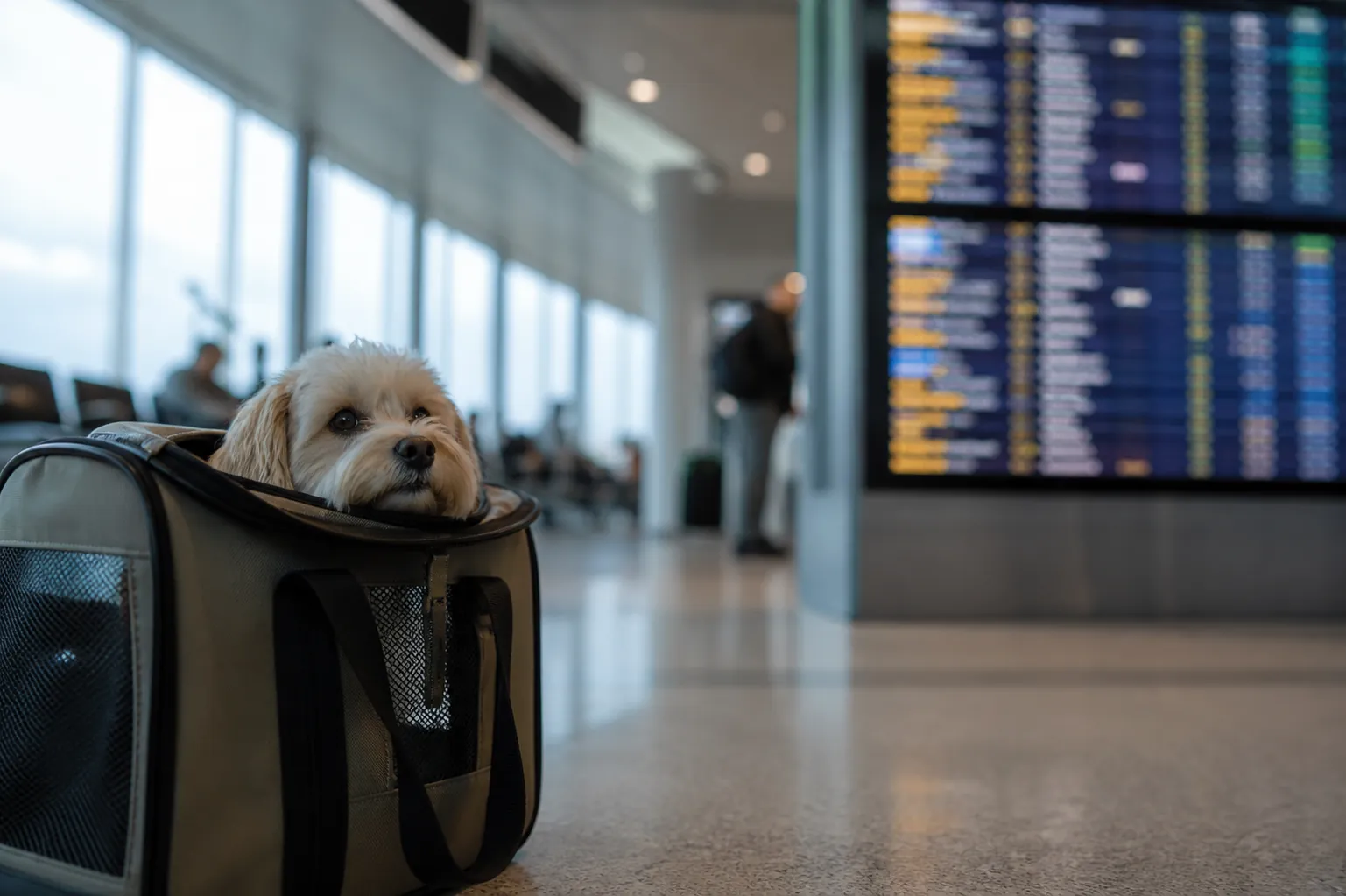
Anneli Hilton was not trying to take an optional weekend away. She was trying to get from Edmonton to Ottawa on Aug. 5 with a dog-related trip tied to the AAC National Dog Agility Championships in Brome, Quebec, beginning Aug. 6. With a WestJet disruption looming, she was offered credit or a change before an official cancellation, not a refund. After about six hours on the phone, she rebooked four days early and faced an extra hotel bill she estimated at $1,000 to $1,500, plus a car rental that had roughly doubled in price.[1]

That is the pet-travel problem in its least theoretical form. A passenger can have a legitimate reason to move early, a paid itinerary, a narrow competition window, and an animal that cannot be treated as a loose piece of baggage. Yet the legal position can change sharply depending on who moves first: WestJet cancelling the flight, or the passenger changing the trip before WestJet does.
Last verified Aug. 2, 2026 (UTC). WestJet advisories and flight status can change quickly during the strike window, so travellers should recheck them before travel. The legal point is narrower than many disrupted-travel summaries make it sound: if WestJet cancels, the passenger keeps the statutory rebooking-or-refund layer under the Air Passenger Protection Regulations. If the passenger moves first, the dispute may slide into voluntary-change rules, travel credits, pet-space availability, and carrier policy language.
The strike-rights layer does not solve the pet problem
For the general strike framework, the important split is between cancellations made before the labour disruption legally sits outside the carrier’s control and cancellations after that point. The Canadian Transportation Agency’s WestJet customer notice directs affected passengers to the APPR framework, and passenger-rights analysis of the 2026 WestJet strike treats a strike by the carrier’s own employees as an event outside the carrier’s control under APPR s. 10(1)(j) once the labour disruption is operating as the cause of cancellation.[2][3]
That classification matters because APPR cash compensation is not the same thing as APPR rebooking or refund rights. For a cancellation within the carrier’s control, APPR s. 17 can move to a competitor-carrier option after the applicable 9-hour threshold. For a cancellation outside the carrier’s control, APPR s. 18 uses a different rebooking rule, including the 48-hour outside-control framework, and the cash-compensation path is not available in the same way.[2][3][4]
The broader strike classification, the refund baseline, and the Canada Labour Code notice mechanics are covered separately in the WestJet strike legal-rights record, the WestJet strike refund-rights record, and the strike-notice record. The pet question starts where those general records end: even when the passenger has a rebooking or refund right, what exactly happens to the animal reservation and the pet fee?
Pet fees and pet space sit in a weaker layer
The available APPR and CTA materials do not identify a rule that expressly protects a prepaid pet fee as a separate refundable charge when a strike cancellation occurs. They also do not say that an in-cabin pet reservation, checked-pet arrangement, or WestJet Cargo Pet’Air space must transfer onto a competing carrier’s aircraft when the human passenger is rebooked.
That silence is not a small drafting inconvenience. Pet travel depends on capacity and operational limits that may not match across airlines: carrier dimensions, one-pet-per-passenger rules, aircraft-by-aircraft space, checked-animal restrictions, cargo temperature windows, and documentation rules. A seat for the person does not necessarily mean a place for the carrier under the seat, a kennel in the hold, or a cargo booking that another airline will accept.
WestJet maintains official pages for pets and for Pet’Air cargo transport, and those pages should be treated as the first verification point before any booking decision.[6][7] The fee and constraint figures below come from third-party summaries because the official WestJet pet page text was not cleanly available in the research file; they are useful as a risk map, not as a substitute for checking WestJet’s current page and tariff at the moment of travel.[8][9][10]
| Pet travel route | Reported fee or rule | Why it matters during a strike rebooking |
|---|---|---|
| In-cabin pet | Reported at CAD/USD $50–$59 within or between Canada and the U.S., and $100–$118 for other international travel. Reported constraints include one pet per passenger, soft-sided carrier maximum 41 x 21.5 x 25.4 cm, combined pet-and-carrier weight limit of 16 kg, and minimum age of 8 weeks.[8][9][10] | The fee may be modest compared with hotels or replacement tickets, but the real exposure is space. A competitor flight may not have the same under-seat dimensions or remaining pet capacity. |
| Checked pet | Reported at CAD/USD $100–$118 for domestic or U.S. travel, and $200–$236 for other international travel.[8][9] | A passenger rebooked onto another carrier still has to satisfy that carrier’s checked-animal rules. The APPR materials cited here do not say the checked-pet arrangement follows automatically. |
| WestJet Cargo Pet’Air | Third-party summaries report roughly $185–$395 per kennel, with cargo-temperature restrictions reported below 7°C or above 29°C.[8][9] | Cargo transport is more operationally fragile than a standard seat rebooking. Weather, aircraft type, cargo acceptance windows, and kennel handling can all matter. |
| Emotional support animals and service dogs | Third-party summaries state that emotional support animals are treated as pets for travel privileges, while task-trained service dogs may fly free with the required DOT Service Animal Air Transportation Form submitted at least 48 hours ahead.[8] | A passenger should not assume an animal avoids pet-capacity or fee rules unless it qualifies under the service-animal process. |
Why waiting for the cancellation usually preserves more leverage
Gabor Lukacs’ advice in the WestJet strike coverage was to wait for the airline to cancel, then require WestJet to meet its rebooking duty and bill the carrier if it fails to do so.[5] Hilton’s file shows why that advice is uncomfortable in practice: the traveller is the one watching hotel rooms disappear, car-rental prices rise, and a dog-event deadline approach. But the discomfort is not the same as legal advantage.
When the airline cancels first, the passenger can point to the APPR rebooking or refund obligation and argue from a statutory starting point. When the passenger changes first, the airline can characterize the move as voluntary and apply whatever strike-waiver, no-fee-change, credit, or tariff rule is available for that booking. Hilton’s report that WestJet offered credit or change before cancellation, not a refund, is the practical warning.[1]
Waiting does not guarantee a pet space. It does not force another carrier to accept a kennel, waive its own animal limits, ignore temperature restrictions, or create an in-cabin pet slot that is already gone. The point is more limited: waiting keeps the passenger’s statutory rights layer intact. Acting early can leave the passenger arguing over a discretionary travel-credit decision while also trying to rebuild the animal portion of the trip.
What to document before making the expensive move
- Keep the original WestJet itinerary active if the trip can safely wait for an official cancellation.
- Save screenshots of the flight status, strike advisory, booking page, pet-fee receipt, and any agent chat or email.
- Ask the agent to confirm in writing whether the pet reservation is included in any proposed rebooking search.
- If the rebooking covers the passenger but not the animal, ask for a written explanation of what happens to the pet fee and the pet space.
- Before buying replacement travel, check the receiving carrier’s pet capacity, carrier dimensions, checked-animal rules, cargo acceptance hours, and weather limits.
- If self-help rebooking becomes necessary after WestJet fails to provide the required option, keep the replacement-ticket receipt, hotel and ground-transport receipts, and proof of the failed rebooking attempt.
The prepaid kennel fee is not the largest number in many strike files. Hilton’s extra lodging and car-rental costs dwarfed it. But the pet fee is where the uncertainty becomes visible: if no one can say whether the paid pet arrangement follows the booking, the passenger is being asked to make a time-sensitive decision without knowing what part of the original transaction still exists.
The usable conclusion for WestJet pet travellers
During the WestJet strike, a pet traveller has stronger leverage after an official cancellation than before one. After cancellation, the APPR rebooking-or-refund layer is at least engaged, even if the labour-disruption classification blocks cash compensation. Before cancellation, a passenger who moves early may receive only the voluntary option WestJet is prepared to offer, and may still have to solve the animal booking from scratch.
Neither the APPR materials nor the available WestJet pet-policy anchors establish a guaranteed transfer of prepaid pet fees or pet space to another carrier. That is the hard boundary: waiting may preserve the passenger-rights claim, but it does not make a pet reservation portable.
References
- WestJet Edmonton rebooking fees, Global News, July 31, 2026
- Important information for WestJet customers, Canadian Transportation Agency
- WestJet Strike 2026: What are my rights?, Air Passenger Rights
- WestJet Preemptive Flight Cancellations 2026: What are my rights?, Air Passenger Rights
- WestJet strike passenger rights, Global News
- Pets, WestJet
- Pets, WestJet Cargo
- WestJet Pet Policy, CertaPet
- WestJet Pet Policy, BringFido
- WestJet Fee Update for Pets Travelling in Cabin, Canadian Kennel Club, 2018
Related records
Tool profile
Browse tool evaluations →Governing regulation
Browse the obligations tracker →Preventive workflow
Browse verification workflows →
Report a correction or tip
Spotted an outdated figure, a misstated fact, or a ruling this case record should reflect? Public comments are disabled for this content given the professional cost of a misreported case outcome, penalty amount, or rule text — use the structured correction channel instead.
Report a correction or tip for this record →