
AI Copyright and Fair Use Research: A Practical Guide to Available Tools and Trackers
With over 100 AI copyright lawsuits filed by early 2026 and contradictory fair use rulings, legal professionals need a reliable research strategy. This guide evaluates free specialized case trackers, commercial AI-enhanced legal databases, and primary government sources, recommending a tiered approach that combines tools for efficient monitoring and deep analysis.
- Hallucination rate
- Not measured / undisclosed
AI copyright fair use legal research tools now have to solve a very particular problem: the field is crowded enough to miss something important, but not settled enough to treat any tracker, practice note, or model-generated answer as complete. By early 2026, more than 100 copyright lawsuits had been filed against AI companies, with at least 42 still ongoing in U.S. courts and additional cases across Europe and Asia.[1] In 2025, three fair use rulings moved in different directions: Bartz v. Anthropic treated training on lawfully acquired books as fair use before a later $1.5 billion settlement; Kadrey v. Meta found training fair use even where the record included pirated sources while leaving a market-dilution theory open; and Thomson Reuters v. Ross Intelligence held that AI legal-search training was not fair use.[2]
That last case is still the hinge. The Third Circuit heard oral argument in Thomson Reuters v. Ross Intelligence on June 11, 2026, and no decision has issued as of Q3 2026.[3] A careful research plan therefore has to do two things at once: catch new filings and docket movement quickly, and keep the legal analysis honest enough that an associate can cite it in a brief without quietly importing a tracker’s editorial shorthand.

Start With The Job The Source Is Supposed To Do
The fastest way to choose the wrong source is to ask which tool is “best” without first asking what kind of failure would matter. Missing a newly filed complaint is a different failure from misunderstanding how the fourth fair use factor was treated in a district-court opinion. Citing a law-firm summary where the court’s language is needed is different again.
For AI copyright work in 2026, the useful division is not free versus paid. It is monitoring, analysis, and authority checking. Free specialized trackers are often the best first pass because they are built around this litigation wave. Commercial legal platforms become necessary when the question turns into jurisdiction-specific fair use analysis, procedural posture, citator treatment, or motion drafting. Government and academic sources sit underneath both layers: they are not daily alert systems, but they keep the research from floating away from primary authority.
| Research Need | Best First Source Type | What To Verify Before Relying On It |
|---|---|---|
| Find the universe of AI copyright disputes | Free specialized litigation trackers | Coverage scope, last update, jurisdiction filters, and whether full details require registration |
| Analyze fair use in a motion, memo, or risk assessment | Subscription legal platforms and practice notes | Primary case text, citator status, jurisdiction, procedural posture, and subscription limitations |
| Confirm Copyright Office policy, registration treatment, or congressional background | Government and academic sources | Publication status, date, whether the item is binding authority, and whether litigation developments have overtaken it |
The Free Tracker Layer: Broad Awareness, Not Final Analysis
The strongest free trackers have a virtue that older research habits sometimes undervalue: they are built around the actual shape of the problem. AI copyright litigation is not just copyright litigation with a new adjective. The same search may need to separate training-data claims from output-similarity claims, class actions from individual author cases, U.S. disputes from European text-and-data-mining questions, and pending appeals from settled trial-court rulings.
Hogan Lovells: the broad monitoring workhorse
Hogan Lovells’ AI Litigation Case Law Tracker is the most useful starting point when the first question is, “What might I be missing?” It covers more than 14 jurisdictions and allows filtering by 18 topic categories and more than 30 key issues, including fair use, AI training, text and data mining, and memorization.[4] Those filters matter. A tracker that merely lists “AI cases” creates a second research task: the user must read sideways through a pile of summaries to determine whether the case is about copyright, privacy, consumer protection, employment, or something else.
The practical use case is early-stage issue spotting. If a partner asks whether there are non-U.S. cases touching training data, or whether memorization has appeared as a pleaded issue rather than a blog concern, a jurisdiction-and-issue filter can reduce the first pass from a loose web search to a reviewable list. That does not make the tracker authoritative. It makes it a better door into the record.
Before relying on it, test the access path. Law-firm trackers can place full case details behind registration or gated interfaces, and coverage claims are only as useful as the visible fields that support them. For deadline work, record the date checked, the filters used, and whether the entry linked to complaints, orders, docket materials, or only commentary.
BakerHostetler: U.S. copyright focus
BakerHostetler’s AI Copyright Case Tracker is narrower and, for some assignments, more efficient. Its stated frame is artificial intelligence, copyrights, and class actions, making it a sensible place to check U.S. copyright litigation without wading through every adjacent AI dispute.[5] If the assignment is a U.S. copyright memo, a narrower tracker can be preferable to a global AI-litigation database because it is less likely to bury the relevant cases under privacy, employment, or consumer-protection material.
The tradeoff is predictable: a focused tracker can make the visible universe feel cleaner than the actual litigation environment. Use it to confirm U.S. copyright-specific developments, not to rule out overseas proceedings, non-copyright AI claims that may affect settlement posture, or appellate developments beyond the tracker’s editorial scope.
Taylor Wessing: the European complement
Taylor Wessing’s AI & Copyright Case Tracker is valuable because it does not force European developments into a U.S. fair use frame. Its coverage includes the BoligPortal v. ReData appeal decision of May 12, 2026, and LAION v. Kneschke, which is pending before the German Federal Court of Justice.[6] That distinction is not academic. A U.S. lawyer advising a product or licensing team may be asked for “the AI copyright answer,” but text-and-data-mining exceptions, database rights, and national procedural posture can change the answer across markets.
Use the Taylor Wessing tracker when the research question has any European footprint: training in Europe, datasets sourced from European platforms, model outputs offered in European markets, or a business team that wants one global risk statement. It is also a useful check against a common U.S.-centric error: treating fair use decisions as if they settle the legality of training everywhere.
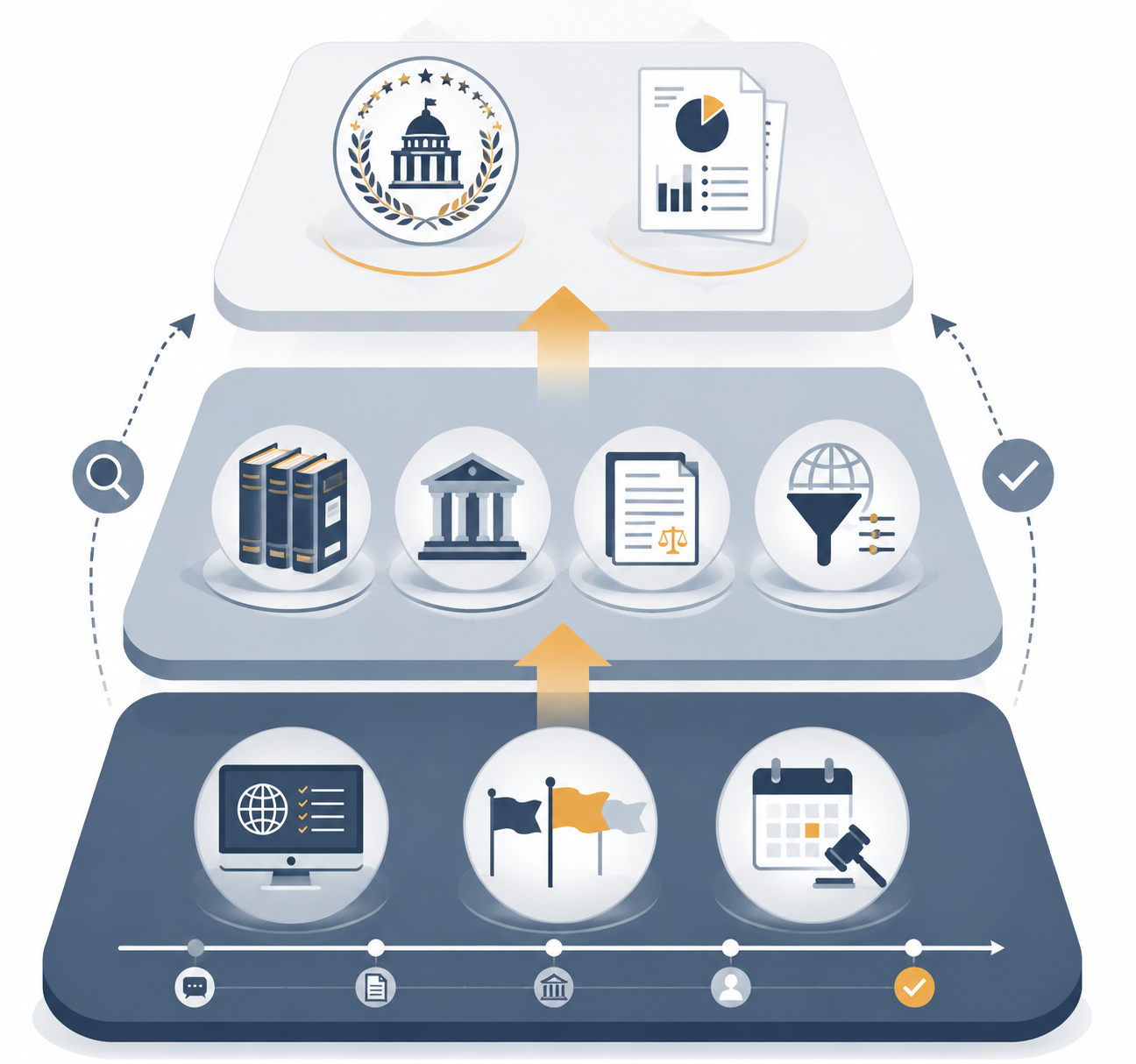
The Paid Platform Layer: Where Monitoring Becomes Legal Analysis
The handoff from a free tracker to a paid platform should happen when the question stops being “what happened?” and becomes “what can we responsibly say the law is?” That point arrives earlier than many teams expect. A litigation tracker can identify Bartz, Kadrey, and Thomson Reuters. It will not, by itself, tell you whether a district-court discussion of transformativeness survives the procedural posture, how a citator treats related orders, or how to frame a fair use argument in a jurisdiction where the next filing will land.
Westlaw’s Practical Law Generative AI and Copyright Practice Note is designed for this more analytical layer, with jurisdiction-specific treatment of generative AI and copyright issues updated through the 2025–2026 rulings.[7] Its value is not that it replaces primary research. Its value is that it can organize the relevant doctrines, flag litigation posture, and connect a researcher back to authorities inside a subscription environment where citator, secondary-source, and primary-law tools are adjacent.
CoCounsel, Lexis+, and Protégé belong in the same practical conversation, but with a plain caveat: subscriptions, firm configurations, and product access determine what a user can actually test. A firm with Westlaw and CoCounsel access can ask different workflow questions than a solo practitioner using free trackers plus occasional docket pulls. A team using Lexis+ with Protégé should test whether the tool reliably retrieves the controlling documents, distinguishes a court holding from commentary, and preserves enough citation trail for professional review.
This is where general enthusiasm about legal AI becomes least helpful. The relevant test is not whether the system produces a fluent answer about fair use. It is whether it can take a known case list, locate the current procedural posture, surface negative or distinguishing treatment, and show the authorities a human reviewer must inspect. That same discipline applies to free AI legal research tools, where cost savings should be weighed against hallucination and verification risk; a broader comparison of that tradeoff belongs in a risk-tiered review of free AI for legal research and in cost comparisons asking whether free AI can replace Westlaw.
The Authority Layer: Copyright Office, CRS, Courts, And Academic Charts
Government sources are not good substitutes for litigation trackers. They are too slow and too selective for that. Their role is different: they keep a memo from treating commentary as law and help identify which propositions come from agency registration practice, congressional background, or a court order.
The U.S. Copyright Office AI page is the central authority anchor for Office activity, including the three-part Copyright and Artificial Intelligence report and registration materials involving works such as SURYAST, Théâtre D’Opéra Spatial, and Zarya of the Dawn.[8] The Part 3 report, released in May 2025 as a 108-page pre-publication version, rejected the analogy that AI training is simply equivalent to human learning, calling that analogy “mistaken.”[8]
The publication posture matters. The Part 3 report appeared under unusual circumstances, with the Register of Copyrights reportedly removed the following day, and its final-version status remains uncertain as of Q3 2026.[8] That does not make the report useless. It means a researcher should describe it accurately: a significant Copyright Office policy document in pre-publication posture, not a final judicial resolution of fair use for model training.
Congressional Research Service materials serve a similar grounding function when the audience is legislative, policy, or executive rather than trial-court focused. They can be useful for explaining the institutional landscape, but they should not be asked to do the work of a docket search. Stanford’s Copyright and Fair Use Center charts and tools are also useful for orienting fair use analysis, especially when a researcher needs a structured way to think about factors, examples, and teaching materials.[9] Ohio State’s 2026 fair use and artificial intelligence update is another helpful academic-library style source for keeping the doctrinal conversation organized without pretending that the case law has become stable.[10]
A Practical Workflow For A Live AI Copyright Fair Use Assignment
For a live assignment, the workflow should leave a trail. That trail matters because the landscape is changing, and because professional responsibility does not care that a missed case was hidden behind a registration gate or outside the first search terms. Tool choice is part of legal-risk management, not just research convenience; the same point applies more broadly to AI hallucinations and attorney ethics.
- Run the broad tracker pass first. Search Hogan Lovells for jurisdiction, issue, and procedural posture; then check BakerHostetler for U.S. copyright-focused coverage and Taylor Wessing for European developments.
- Save the search trail. Note the date, filters, visible coverage claims, registration limits, and whether the tracker links to complaints, orders, or docket entries.
- Move the key cases into a subscription platform. Pull the primary opinions, orders, docket history, citator treatment, and any relevant practice notes before drafting legal analysis.
- Separate holding, posture, and commentary. A denial, settlement, interlocutory appeal, or discovery order does not carry the same weight as a final appellate ruling.
- Verify policy and registration points against the Copyright Office, CRS-style background, and academic charts where useful.
- Flag the Thomson Reuters appeal as unresolved. Do not write as if the Third Circuit has already settled the training-data fair use question.
The workflow can be compressed for a quick business briefing, but it should not be inverted. Starting with a model-generated answer and then hunting for support is how stale case posture and overbroad fair use statements enter client communications. If AI assistance is used, legal-native tools deserve different scrutiny from general-purpose systems; that distinction is addressed more fully in comparisons of general-purpose versus legal-native AI risks and free AI legal research accuracy benchmarks.
Where The Current Record Is Especially Easy To Overstate
The 2025 fair use rulings are the main danger zone. They are important, but they do not announce one settled rule for AI training. Bartz involved lawfully acquired books and later settled. Kadrey accepted fair use on the record before it while leaving a market-dilution theory open. Thomson Reuters came out differently in the legal-search context and is now before the Third Circuit.[2][3] A source that flattens those cases into “training is fair use” or “training is infringement” is choosing convenience over legal analysis.
Discovery posture is another place to slow down. In the OpenAI multidistrict litigation in the Southern District of New York, the court ordered production of more than 108 million output logs, creating a discovery record that may shape future fair use analysis.[1] That is significant, but it is not a merits holding that answers the fair use question. It belongs in monitoring and litigation-strategy analysis, not in a doctrinal paragraph as if it decided factor four.
Vendor pages need the same discipline. A legal database’s product page can tell you what the vendor claims the platform does; it does not independently prove coverage quality. A law-firm tracker can be excellent and still editorially selective. An academic chart can clarify doctrine without being current on yesterday’s docket event. Those limits are not reasons to avoid the sources. They are reasons to assign each source the right job.
What To Use Now
For Q3 2026, the defensible research posture is interim and layered. Use Hogan Lovells to avoid broad blind spots, BakerHostetler to sharpen the U.S. copyright pass, and Taylor Wessing to keep European developments from disappearing behind U.S. fair use vocabulary. Move from those trackers into Westlaw, Lexis+, CoCounsel, Protégé, or comparable subscription tools when the work product requires legal analysis rather than awareness. Then verify Copyright Office, registration, and policy statements against primary government materials.
The next mandatory update point is the Third Circuit’s decision in Thomson Reuters v. Ross Intelligence. The other is any clarified final status for the Copyright Office Part 3 report. Until then, the safest memo or client briefing is the one that shows its source trail and refuses to turn unsettled district-court decisions into a rule the appellate courts have not yet supplied.
References
- AI in litigation series: An update on AI copyright cases in 2026, Norton Rose Fulbright
- A Tale of Three Cases: How Fair Use Is Playing Out in AI Copyright Lawsuits, Ropes & Gray
- Third Circuit Hears Oral Argument, Baker Botts
- Hogan Lovells AI Litigation Case Law Tracker, Hogan Lovells
- BakerHostetler AI Copyright Case Tracker, BakerHostetler
- Taylor Wessing AI & Copyright Case Tracker, Taylor Wessing
- Westlaw Practical Law Generative AI and Copyright Practice Note, Westlaw Practical Law
- US Copyright Office AI page, U.S. Copyright Office
- Stanford Copyright and Fair Use Center Charts and Tools, Stanford Copyright and Fair Use Center
- Ohio State Copyright Corner Fair Use and AI 2026 Update, Ohio State University Libraries, March 20, 2026
Chronological incident history
No sanction cases have named this tool in the tracked record set to date. This does not imply the tool is safe — see Risk Digest for ongoing monitoring.
← Compare peer toolsReport a correction or tip
Spotted an outdated figure, a misstated fact, or a ruling this tool profile should reflect? Public comments are disabled for this content given the professional cost of a misreported case outcome, penalty amount, or rule text — use the structured correction channel instead.
Report a correction or tip for this record →