
Who qualifies as missing elderly under Silver Alert now?
- Authority
- New Mexico Legislature
- Rule type
- statute
- Jurisdiction scope
- US state
- Effective date
- Jun 20, 2025
- Source text
- Read primary rule text ↗
No formal dementia or Alzheimer's diagnosis is required; a reporting party's stated belief of signs or symptoms of cognitive decline can satisfy Silver Alert eligibility.
Record controls: last verified Aug. 3, 2026; U.S. state-law scope; legal information only, not legal advice; legal-background editorial review completed before release by Elena Park, J.D.; primary-source citations appear throughout.

As of Aug. 3, 2026, there is no single national legal definition for who qualifies as missing elderly under Silver Alert rules. The important current split is between eligibility and notification. New Mexico has enacted an eligibility change: a missing person can qualify when the reporting party states a belief that the person shows signs or symptoms of cognitive decline, without requiring a formal Alzheimer’s disease or dementia diagnosis. HB197 was signed March 21, 2025, and took effect June 20, 2025.[1] Michigan SB 456, by contrast, is treated here as a Senate-passed proposal unless a current House/enactment source is verified; it would change what law enforcement must do after receiving a qualifying report by requiring notification to Michigan State Police and public alerting through the Wireless Emergency Alert system.[3]
| Jurisdiction | Verified status in this record | Legal movement | Practical consequence |
|---|---|---|---|
| New Mexico | Enacted; effective June 20, 2025 | Eligibility can rest on a reporting party’s stated belief of signs or symptoms of cognitive decline, without a formal dementia or Alzheimer’s diagnosis. | The intake question shifts from proof of diagnosis to what the reporter observed, stated, and provided. |
| Michigan | Senate-passed Oct. 21, 2025; House/enactment status must be verified before treating it as current law | SB 456 would require local law enforcement to notify MSP and use Wireless Emergency Alerts for Silver Alerts. | The notification question shifts from responder-only sharing to mandatory public broadcast if enacted. |
That distinction matters because a broader eligibility rule and a broader notification rule allocate risk differently. New Mexico changes who can enter the Silver Alert lane. Michigan’s proposal changes how far the alert must travel once the lane is entered.
New Mexico is the enacted change: reported belief can now satisfy the cognitive-decline criterion
Before HB197, New Mexico’s Silver Alert framework was anchored to the criteria published by the Department of Public Safety under NMSA 29-15-3.2, including a dementia/Alzheimer’s-type cognitive-impairment baseline rather than a general missing-adult rule.[2] That older structure gave intake personnel a cleaner legal category but created an obvious practical gap: a person can be cognitively impaired, missing, and in danger before a family has paperwork in hand.
HB197 addresses that gap directly. The bill removed the requirement that the missing person have a formal diagnosis of Alzheimer’s disease or dementia and allows the reporting party’s stated belief that the person shows signs or symptoms of cognitive decline to satisfy that part of the criteria. The enacted change applies regardless of age.[1]
The phrase doing the work is not “concern,” “fear,” or “family emergency.” It is the reporting party’s stated belief about observable signs or symptoms of cognitive decline. That is a lower gate than a documented diagnosis, but it is still a gate. A facility employee, relative, neighbor, or other reporter should be able to say what caused the belief: confusion about location, inability to navigate a familiar route, recent disorientation, impaired judgment, or another concrete observation. The statute’s loosening does not make every missing person a Silver Alert case.
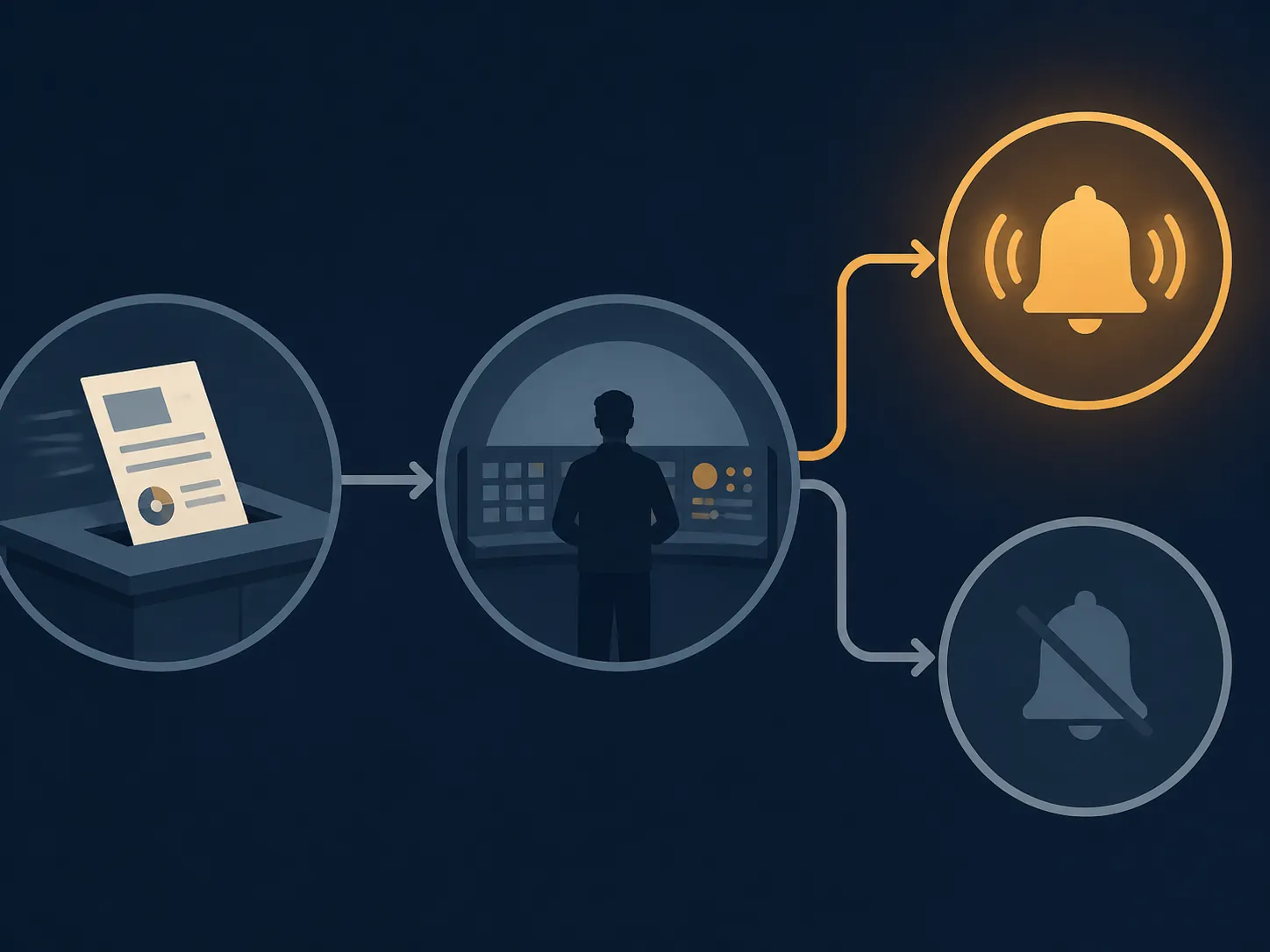
The change also does not turn the reporting party into the activating agency. It changes what information can satisfy eligibility. The activation decision still sits in the public-safety process, where the responsible official must decide whether the statutory and agency criteria are met and whether the alert should be issued. That is where the paperwork problem now moves: not “where is the diagnosis,” but “who reported cognitive decline, what was reported, who assessed it, and what decision followed.”
For families and long-term-care staff, the change is substantial. A person does not become safer because a clinic has not yet coded a diagnosis. A facility also cannot assume that the absence of a formal dementia label ends the inquiry. In New Mexico, after June 20, 2025, the legally relevant intake record should preserve the reporter’s belief and the facts supporting it, even if no medical diagnosis is available at the time of the report.[1]
Michigan SB 456 is about public notification, not the threshold diagnosis question
Michigan SB 456 belongs in the same conversation, but not because it makes the same legal move. The Senate-passed bill would require local law enforcement receiving a qualifying Silver Alert report to notify Michigan State Police, and it would require activation through the federal Wireless Emergency Alert system. The Michigan Senate Democrats release described the bill as moving Silver Alerts beyond first-responder-only sharing and toward public notification; it also reported unanimous Senate passage on Oct. 21, 2025.[3]
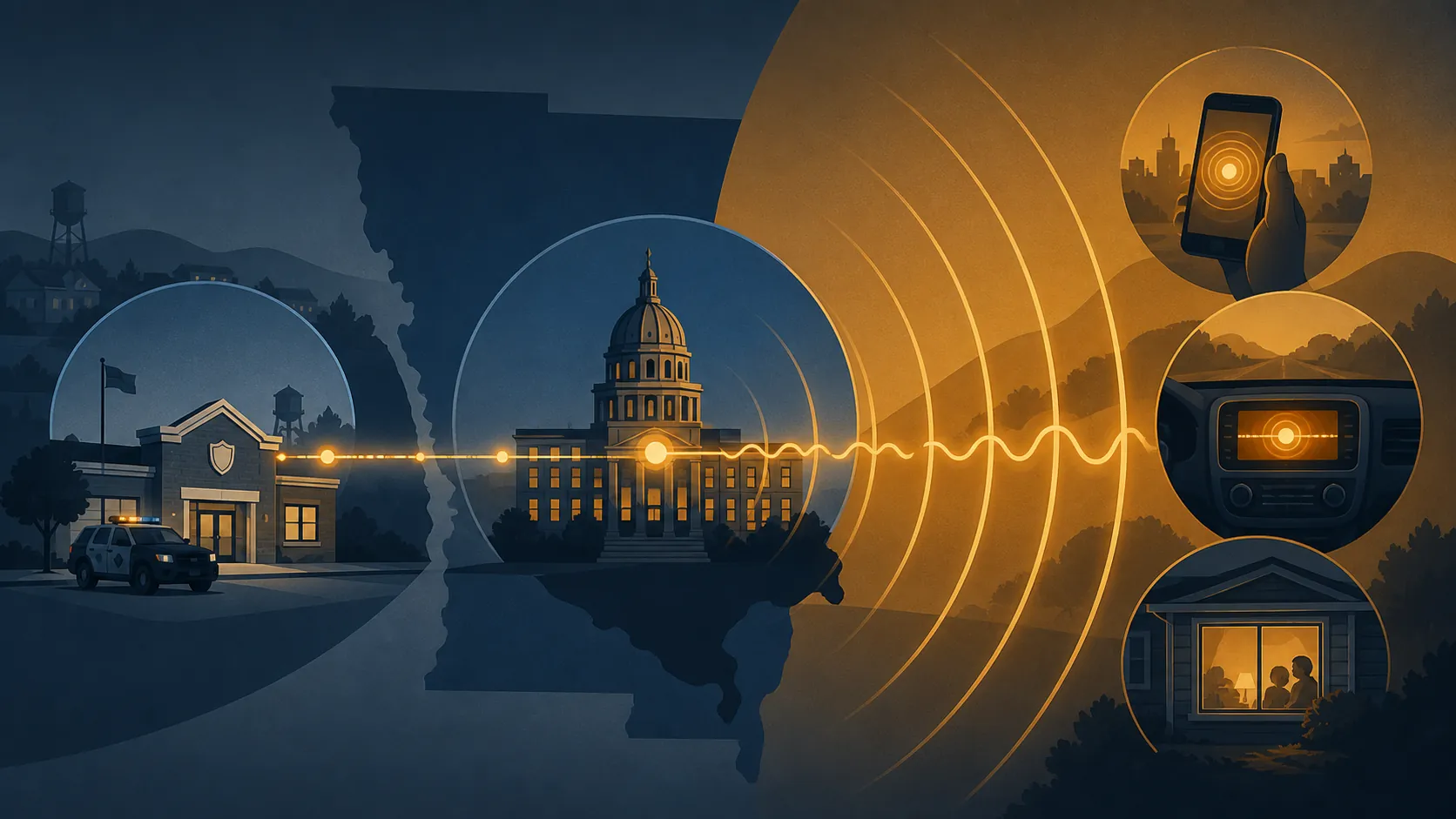
This record does not treat SB 456 as enacted law without a current House passage, governor-signature, or codification source. That caution is not a technicality. If SB 456 is only Senate-passed, a Michigan agency’s duty remains whatever current law and policy require. If enacted, the legal question changes: a local agency that receives the report may have less room to keep the matter within responder channels once the triggering criteria are met.
The Michigan press release also placed the proposal against a broader state landscape, saying that 37 states plus the District of Columbia have Silver Alert systems.[3] That number is useful orientation, not a substitute for a statutory census. Silver Alert laws remain state-built, state-triggered, and uneven. For the broader patchwork baseline, see Silver Alert criteria differ across state laws. For the AMBER/Silver distinction, see AMBER vs. Silver Alert difference and AMBER and Silver Alert legal requirements.
The legal risk shifts from category proof to decision proof
A diagnosis-based rule gives decision-makers a hard document to ask for, even when that document is unavailable at the moment it matters. A belief-based rule gives decision-makers more room to act, but it also requires a better record of why they acted. The harder question becomes who had enough information to request, approve, escalate, or decline the alert.
For a long-term-care facility, that may mean the shift begins before law enforcement arrives. Staff who notice a resident missing may have to record who last saw the person, whether the person had recent confusion or disorientation, whether family or clinicians had communicated cognitive concerns, and who made the report. For a dispatcher or officer, the shift is at intake: the report should separate what the caller personally observed from what the caller inferred or heard from someone else.
- Who made the report and what relationship that person had to the missing individual.
- The exact cognitive-decline signs or symptoms stated by the reporter.
- Whether any formal diagnosis was known, unavailable, disputed, or not asked for because current law did not require it.
- Who had authority to request, approve, escalate, or decline the alert.
- Whether public notification was mandatory, discretionary, or unavailable under the state law in force at the time.
- The timestamp for each report, agency contact, approval, denial, cancellation, or public broadcast.
That recordkeeping is not just defensive. It is how a faster eligibility rule can operate without becoming a vague public-broadcast rule. A reporter’s belief may open the door; it should not erase the need to identify the source of the belief and the official who relied on it.
Recovery statistics do not settle the statutory question
New Mexico DPS’s bill analysis reportedly cited a roughly 95% found-after-alert rate for Silver Alerts from 2022 through Jan. 31, 2025.[1] That figure is relevant to why lawmakers might remove a barrier to activation, but it should be labeled carefully. It is a state agency bill-analysis claim for a defined period, not independent national proof that broader criteria always improve outcomes.
The older empirical literature is more cautious. Petonito and coauthors wrote in 2012 that the lack of reliable national data made Silver Alert effectiveness impossible to determine.[4] That does not mean alerts are ineffective. It means recovery-rate claims should not be converted into legal conclusions about how broad eligibility ought to be in every state.
The privacy concern sits beside the effectiveness concern. Wasser and Fox warned that loosely defined eligibility terms can raise privacy and liberty stakes for adults who are missing but not necessarily incapacitated in the way the public alert implies.[5] That concern becomes sharper when a state moves from documented diagnosis to reported belief, or from responder sharing to public phone alerts. For a related consent-focused discussion, see Silver Alert, dementia, GPS, and consent.
Older state baselines still matter, but they cannot answer the 2026 question alone
Silver Alert statutes have long differed on age, impairment, law-enforcement discretion, and notification channels. A 2009 Connecticut Office of Legislative Research report described state programs that varied by age thresholds, cognitive-impairment requirements, and alert procedures.[6] That kind of baseline remains useful for orientation, but it does not answer whether a 2025 amendment has removed a diagnosis requirement or whether a 2025 bill has made public notification mandatory.
The 2026 compliance task is therefore date-sensitive. A static state-by-state chart may say a state has a Silver Alert program. It may even summarize age and dementia criteria. The operative file still needs to identify the current statutory text, effective date, agency criteria, and alerting channel. In New Mexico, June 20, 2025, is the key date for the diagnosis requirement. In Michigan, Oct. 21, 2025, is evidence of Senate passage, not proof of enactment.[1][3]
What to preserve when an alert is requested or declined
For counsel, compliance staff, and agency reviewers, the practical file should follow the legal movement. If eligibility can rest on a reporter’s belief, the file should show the content and source of that belief. If the statute mandates public notification, the file should show whether the mandate was triggered and when the required state-level or public-broadcast step occurred.
- For a family report: record the reporter’s stated belief, supporting observations, last-known location, and urgency facts without overstating diagnosis.
- For a facility report: keep the missing-person timeline separate from the cognitive-decline basis, and identify which employee supplied each fact.
- For law enforcement intake: document whether the current state rule requires a formal diagnosis, accepts reported signs or symptoms, or leaves activation discretionary.
- For public notification: distinguish internal responder alerts, state police notification, highway signs, media releases, and Wireless Emergency Alerts.
- For later review: preserve the statute or agency criteria in force on the report date, not the version found weeks later.
Silver Alert eligibility is loosening in important but uneven ways. New Mexico has enacted a belief-based eligibility change. Michigan’s cited material shows a Senate-passed proposal for mandatory public notification, not a verified enacted rule in this record. In affected states, the responsible compliance question is now whether the file shows who reported cognitive decline, who had authority to activate or escalate, what source was relied on, and whether public notification was mandatory or discretionary under law current at the time.
References
- New Mexico lifts diagnostic criteria for Silver Alerts, News From The States, Mar. 28, 2025.
- Silver Alert Information, New Mexico Department of Public Safety.
- Senate Passes McMorrow Bill to Help Find Missing Seniors, Michigan Senate Democrats, Oct. 21, 2025.
- Programs to Locate Missing and Critically Wandering Elders: A Critical Review and a Call for Multiphasic Evaluation, The Gerontologist, 2012.
- Silver Alert Legislation: A National Survey and Brief Discussion of Concerns, Journal of the American Academy of Psychiatry and the Law, 2013.
- Silver Alert Systems, Connecticut Office of Legislative Research, 2009.
Operationalizing workflow
No workflow has been explicitly linked to this obligation yet. See Workflows generally.
Illustrative cases
No illustrative case is currently tracked for this obligation. See Risk Digest for documented incidents generally.
← Back to RegulationReport a correction or tip
Spotted an outdated figure, a misstated fact, or a ruling this regulation entry should reflect? Public comments are disabled for this content given the professional cost of a misreported case outcome, penalty amount, or rule text — use the structured correction channel instead.
Report a correction or tip for this record →