
What the transgender athlete rulings decided and left open
- Authority
- Supreme Court of the United States
- Rule type
- court decision
- Jurisdiction scope
- US federal
- Effective date
- Jun 30, 2026
- Source text
- Read primary rule text ↗
State school-sports bans are permissible; no state is required to adopt a ban.
Start with the correction that will prevent the most downstream errors: the Supreme Court did not impose a national ban on transgender athletes. On June 30, 2026, in West Virginia v. B.P.J. and Little v. Hecox, the Court held that state school-sports laws excluding transgender girls and women from girls’ and women’s teams do not violate Title IX, unanimously, and do not violate the Equal Protection Clause, 6-3. [1]
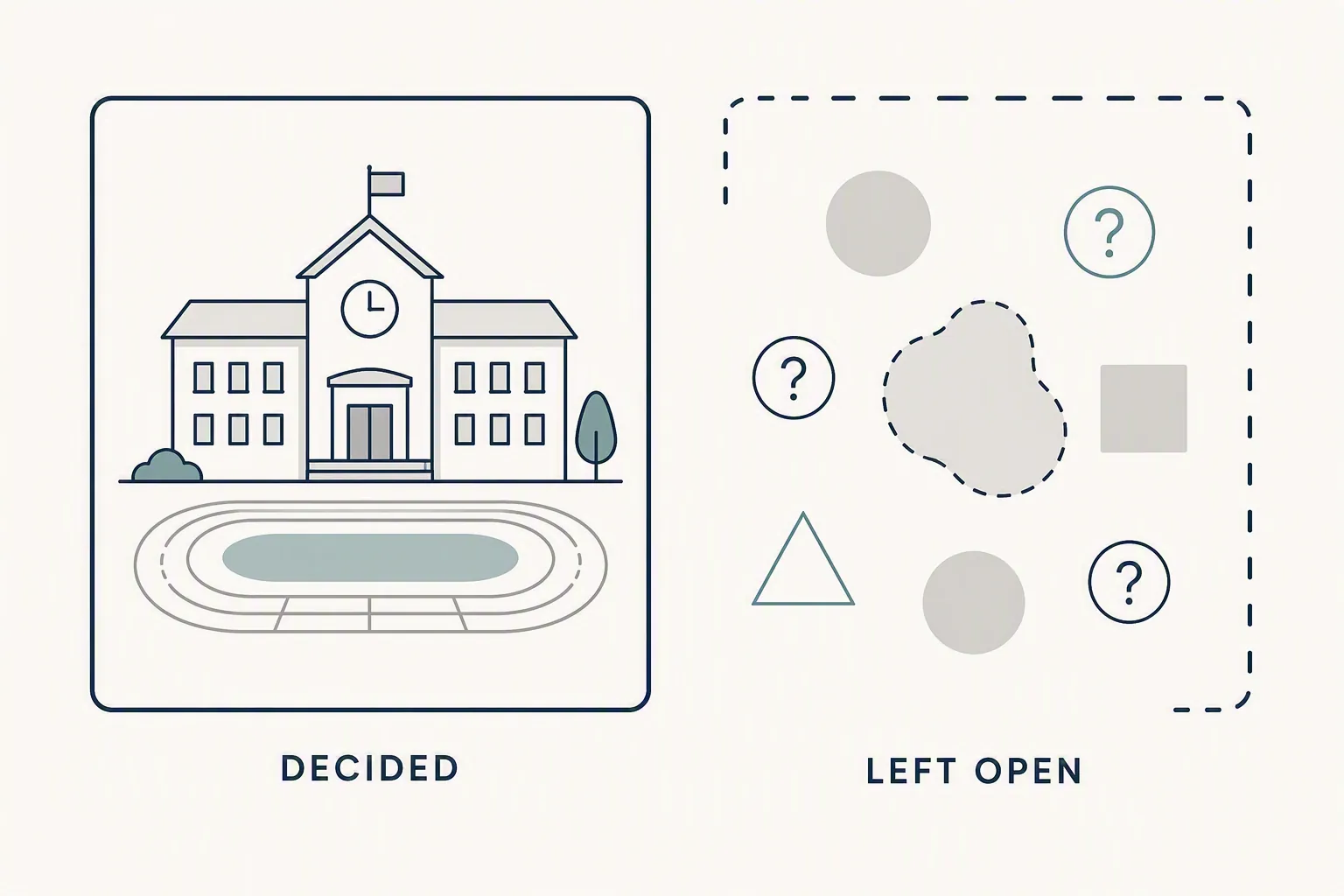
That is the central answer for anyone tracking transgender athlete participation laws and court cases. It is also the point at which many summaries become too broad. The rulings make those state bans permissible under the federal statutes and constitutional claim before the Court. They do not require any state, school, athletic association, club league, or recreational program to adopt a ban.

| Question | What the Court decided |
|---|---|
| Title IX | State school-sports bans of the kind before the Court do not violate Title IX. The result was unanimous. [1] |
| Equal protection | The bans do not violate the Equal Protection Clause. The vote was 6-3. [1] |
| National effect | The decisions permit bans in the covered school-athletics setting; they do not mandate bans in states without them. |
| Unresolved settings | The decisions leave open questions involving athletes who never underwent male puberty, nonschool sports, grammar-school play, and club or recreational leagues. [1] |
For jurisdiction-by-jurisdiction consequences, the better companion records are the maintained state eligibility map, the transgender athlete lawsuit tracker, and the broader sports-policy reference. This piece stays with the opinions themselves: what carried the Court, what divided it, and where the legal boundary still stops.
The procedural path, kept in its lane
The two cases arrived from different statutes and circuits. Idaho enacted its Fairness in Women’s Sports Act in 2020. West Virginia’s case arose from the Save Women’s Sports Act, which ACLU case materials identify as signed in 2021; any publication chronology should be checked against the enacted statutory text because secondary summaries have not always used the same date. [2][3]
The lower-court opinions came in 2024: the Fourth Circuit decided B.P.J. v. West Virginia State Board of Education on April 16, 2024, and the Ninth Circuit decided Hecox v. Little on June 7, 2024. [4][5] The Supreme Court granted certiorari on June 30, 2025, heard argument on January 13, 2026, and issued the decisions one year after the cert grant, on June 30, 2026. [2][1]
That timeline matters because it explains why the Court was reviewing concrete school-sports statutes, not writing a general code for every athletic setting. It is orientation, not the holding.
Kavanaugh’s opinion: Title IX, sex-separated teams, and administrability
The practical rule is built in Justice Kavanaugh’s reasoning. On Title IX, the Court treated “sex” by reference to biological sex as the term would have been understood when Title IX was enacted in the 1970s. From there, the opinion placed substantial weight on the Title IX athletics regulation, 34 C.F.R. § 106.41, which expressly permits recipients to operate separate teams on the basis of sex. [1]
That pairing matters. If Title IX itself and its athletics regulation allow sex-separated school teams, then a state rule assigning eligibility by biological sex does not automatically become sex discrimination barred by Title IX merely because it excludes transgender girls from girls’ teams. The unanimous Title IX holding rests there: in the Court’s view, these statutes fit within a school-athletics structure that federal law has long permitted. [1]
The equal-protection analysis followed a different path because constitutional sex classifications trigger intermediate scrutiny. The Court applied that framework and upheld the statutes. The 6-3 majority concluded that the state laws survived the applicable level of scrutiny in the school-sports setting before it. [1]
The administrability point is not a side note. The majority rejected a requirement that states create individualized exemptions for transgender athletes who used pre-puberty blockers or hormone treatment. The opinion treated that kind of individualized inquiry as unworkable for state and school administrators charged with setting and applying team-eligibility rules. [1]
That is where the opinion becomes most consequential for legal and compliance readers. The Court did not simply say that sex-separated sports may exist in the abstract. It allowed states to use a categorical eligibility rule in this setting rather than requiring a case-by-case medical or developmental assessment for each transgender athlete seeking to play on a girls’ or women’s team. [1]
The equal-protection split and the dissent’s remand point
The cleanest vote count is also the easiest one to misstate. Title IX was unanimous. Equal protection was not. Justices Sotomayor, Kagan, and Jackson dissented from the equal-protection holding. [1]
The dissent’s central point was not that every transgender athlete must be eligible for every girls’ or women’s team. It would have remanded the equal-protection claim for factual development on whether transgender athletes who never underwent male puberty are similarly situated to cisgender girls. [1]
That distinction is important because the dissent treated the pre-puberty question as a factual problem with constitutional consequences. If an athlete has not experienced the physiological changes associated with male puberty, the dissent saw a need for a record on whether the state’s categorical line still fits the athletes it excludes. The majority, by contrast, did not require that individualized inquiry before allowing the state rules to stand. [1]
For briefing purposes, that is the principal unresolved pressure point inside the case. The Court upheld categorical bans in the school-athletics context, but the dissent’s remand argument preserves why future disputes may focus less on broad labels and more on which athletes are being compared, at what developmental stage, and under what evidentiary record.
The concurrences are separate signals, not extra holdings
Justice Thomas wrote separately to emphasize a biological and binary understanding of sex. His concurrence stated: “Sex is an immutable, biological characteristic; it is binary.” [1]
That concurrence matters because it states a broader interpretive premise than the narrowest route needed to resolve the two statutes. It should not be confused with the exact holding. The operative result remains that the particular school-sports bans before the Court do not violate Title IX or equal protection. [1]
Justice Gorsuch wrote separately on the Spending Clause clear-statement rule. The point is institutional as much as substantive: when Congress imposes conditions on recipients of federal funds, those conditions must be stated clearly. In his view, that rule reinforced the rejection of a Title IX interpretation that would make school-funding recipients liable under a requirement not clearly announced in the statute. [1]
Those concurrences may matter for later statutory-interpretation fights, especially where a litigant tries to extend Title IX beyond the school-athletics context. They are not, by themselves, a nationwide athletics eligibility code.
What the decisions do not settle
The most useful way to read the decisions is by keeping the word “school” in view. The cases concerned state restrictions on school sports participation. They did not decide every sports setting in which sex, gender identity, eligibility rules, and competitive categories intersect. [1]
- Pre-puberty athletes: the Court did not create a separate constitutional rule for transgender athletes who never underwent male puberty, even though that question was central to the dissent’s remand analysis. [1]
- Nonschool sports: the decisions do not resolve eligibility rules for professional, Olympic, private, workplace, or other non-school competitions.
- Grammar-school teams: the opinions do not settle how the analysis applies to young children’s teams where sex separation may be used differently, or where boys and girls may routinely play together.
- Club and recreational leagues: private or community leagues may involve different governing documents, different legal obligations, and different enforcement mechanisms.
- No-ban states: the Court did not require states without bans to enact them, and it did not invalidate inclusive policies as such.
Two related gaps matter for readers who work across institutions rather than only inside school systems. The first is the enforcement gap outside school sports, addressed separately in the Sophie Cunningham Title IX gap. The second is the legal blind spot created when sports rules assume only male and female categories, discussed in the Nikki Hiltz nonbinary sports-law piece. Neither issue is answered by saying that the Supreme Court upheld state school-sports bans.
The safe formulation
A careful formulation is narrow and complete: the Supreme Court held that state laws excluding transgender girls and women from girls’ and women’s school sports teams do not violate Title IX and do not violate the Equal Protection Clause. The Title IX holding was unanimous; the equal-protection holding was 6-3. [1]
The equally important limiting sentence is this: the rulings permit such bans in the covered school-athletics setting, but they do not require them, and they leave unresolved the pre-puberty, nonschool, grammar-school, club and recreational, and no-ban-state questions. That is the boundary the opinions draw.
References
- West Virginia v. B.P.J., No. 24-43, slip opinion, Supreme Court of the United States, June 30, 2026.
- The transgender athlete cases: An explainer, SCOTUSblog, January 8, 2026.
- B.P.J. v. West Virginia State Board of Education, ACLU.
- B.P.J. v. West Virginia State Board of Education, U.S. Court of Appeals for the Fourth Circuit, April 16, 2024.
- Hecox v. Little, U.S. Court of Appeals for the Ninth Circuit, June 7, 2024.
Operationalizing workflow
No workflow has been explicitly linked to this obligation yet. See Workflows generally.
Illustrative cases
No illustrative case is currently tracked for this obligation. See Risk Digest for documented incidents generally.
← Back to RegulationReport a correction or tip
Spotted an outdated figure, a misstated fact, or a ruling this regulation entry should reflect? Public comments are disabled for this content given the professional cost of a misreported case outcome, penalty amount, or rule text — use the structured correction channel instead.
Report a correction or tip for this record →