
Does a US embassy advisory to leave create a legal duty?
- Authority
- U.S. Department of State
- Rule type
- travel advisory
- Jurisdiction scope
- US federal; Middle East host-country
- Effective date
- Aug 1, 2026
- Source text
- Read primary rule text ↗
No standalone departure duty; treat the advisory as a trigger to review insurance, employment, visa, assisted-departure, and custody documents.
Short answer: a US embassy or State Department advisory telling Americans to leave the Middle East does not, by itself, create a federal legal duty for private US citizens to depart. It is a Consular Information Program product, not a court order, immigration order, quarantine order, or military command. On the authorities located for this tracker, no federal statute makes it unlawful for a private US citizen to remain in a country because the State Department has issued a Level 3, Level 4, Worldwide Caution, or “DEPART NOW” warning; no case law was located holding a citizen liable simply for ignoring one.
That does not make the advisory harmless paper. Once issued, it can become the fact that another instrument uses: an insurance exclusion, an employer travel-risk protocol, a refusal-to-work analysis, a host-country visa deadline, an assisted-departure reimbursement form, or a custody order requiring travel consent. The advisory is best treated as a trigger to pull documents, not as the document that answers every legal question.
Legal-information notice: this article is not legal advice and does not create an attorney-client relationship. Named legal-background reviewer: Anika Rao, J.D., for source hierarchy and issue-spotting only. Last verified for the March 2, 2026 “DEPART NOW” reporting: Aug. 2, 2026, 00:00 UTC. Last verified for the February 28 and July 2026 Worldwide Caution records discussed here: Aug. 2, 2026, 00:00 UTC. Last verified for the August 1, 2026 US Mission Saudi Arabia security alert: Aug. 2, 2026, 00:00 UTC.

The obligations map
The useful legal question is not whether the advisory sounds mandatory. It is whether some enforceable instrument incorporates the advisory, advisory level, destination status, or official evacuation condition.
| Instrument to check | What the advisory itself does | Where legal or financial consequences may attach | Document to preserve now |
|---|---|---|---|
| State Department travel advisory / embassy security alert | Warns and informs. It is not itself a departure order for private US citizens. | May become evidence of known risk, notice, or changed conditions. | Screenshot or PDF with URL, date, time zone, destination, advisory level, and full text. |
| Travel insurance policy | May supply the advisory level or destination condition used by the policy. | Coverage may be excluded if a Level 4 advisory existed at purchase; CFAR or IFAR may be the only useful add-on coverage. | Policy, declarations page, purchase date, trip dates, advisory history, cancellation date. |
| Employment contract, travel policy, safety protocol | May mark the point when employer duty-of-care review becomes unavoidable. | Pay, refusal, remote-work, repatriation, and occupational-safety exposure depend on employer documents and governing law. | Assignment letter, mobility clause, travel directive, risk assessment, refusal emails, payroll rules. |
| Host-country visa, residence permit, sponsor record | Does not pause the host country’s immigration clock. | Overstay, sponsor, exit-permit, or employment-status consequences turn on local law and administrative practice. | Passport bio page, visa page, entry stamp, residence card, sponsor contact, expiry date. |
| Assisted-departure or repatriation paperwork | May coincide with an evacuation or assisted-departure program, but does not create an individual entitlement to rescue. | Reimbursement, promissory-note, loan, and waiver questions are statutory and program-specific. | Departure offer, registration confirmation, promissory note, waiver notice, receipts. |
| Custody order or travel-consent document | Does not override a custody order or cure missing parental consent. | Relocation, emergency travel, passport control, and notice duties depend on the order and forum law. | Custody order, parenting plan, consent form, passport provisions, communications with the other parent. |

Which official warnings are in scope
The March 2, 2026 record matters because Reuters reported that the United States urged citizens to “immediately depart” more than a dozen Middle Eastern countries amid regional instability.[1] The July 2026 record matters because the State Department’s broader worldwide travel-warning posture was again reported during the same crisis window.[2] The freshest status point in this tracker is the August 1, 2026 US Mission Saudi Arabia security alert.[3]
Those records establish currency and scope. They do not settle the legal effect. A news headline, embassy email, or advisory page may use urgent language. The next step is to identify the legal form of the instrument and then the downstream documents that borrow from it.
Why the advisory is not the same thing as a departure order
Congress has authorized a consular information system. The statutory travel-advisory framework at 22 U.S.C. 2715 concerns development and implementation of international travel advisories: risk information, dissemination, and warning practices.[4] CRS describes the State Department’s Consular Information Program as the system through which the Department provides destination-specific information and warnings to US citizens abroad.[5]
That is a warning function. It is not the same as a statute commanding private citizens to leave, and it is not a general police-power instrument. The synthesis is limited but important: the located statutory materials support treating the advisory as official risk information, not as a self-executing legal command to private citizens.
A separate statute, 22 U.S.C. 4802, concerns the Secretary of State’s responsibility for security and evacuation programs for US government personnel and certain others abroad.[6] That matters for government planning and mission responsibility. It still does not say that a private citizen commits a federal violation by remaining after an advisory.
Another separate authority, 22 U.S.C. 2671, permits emergency expenditures for the relief and protection of US citizens and others abroad, including evacuation-related loans and reimbursable expenses, with repayment generally tied to no more than the reasonable commercial airfare and related expenses for comparable transportation.[7] That is a funding and reimbursement authority. It is not a private-citizen departure mandate.
CRS has also warned, in the context of Gaza-related litigation and evacuation disputes, that US citizens abroad do not have a general individual entitlement to government evacuation.[8] That point cuts both ways. The government may warn and may operate assisted-departure programs under statutory authority; a citizen should not assume either a legal command to leave or a legally enforceable right to be extracted on demand.
Insurance: the advisory can matter because the policy says it matters
Travel insurance is where urgent advisory language often gets converted into a financial surprise. The question is not whether the trip became frightening. The question is what the policy covered, what it excluded, and what the advisory level was when the policy was purchased.
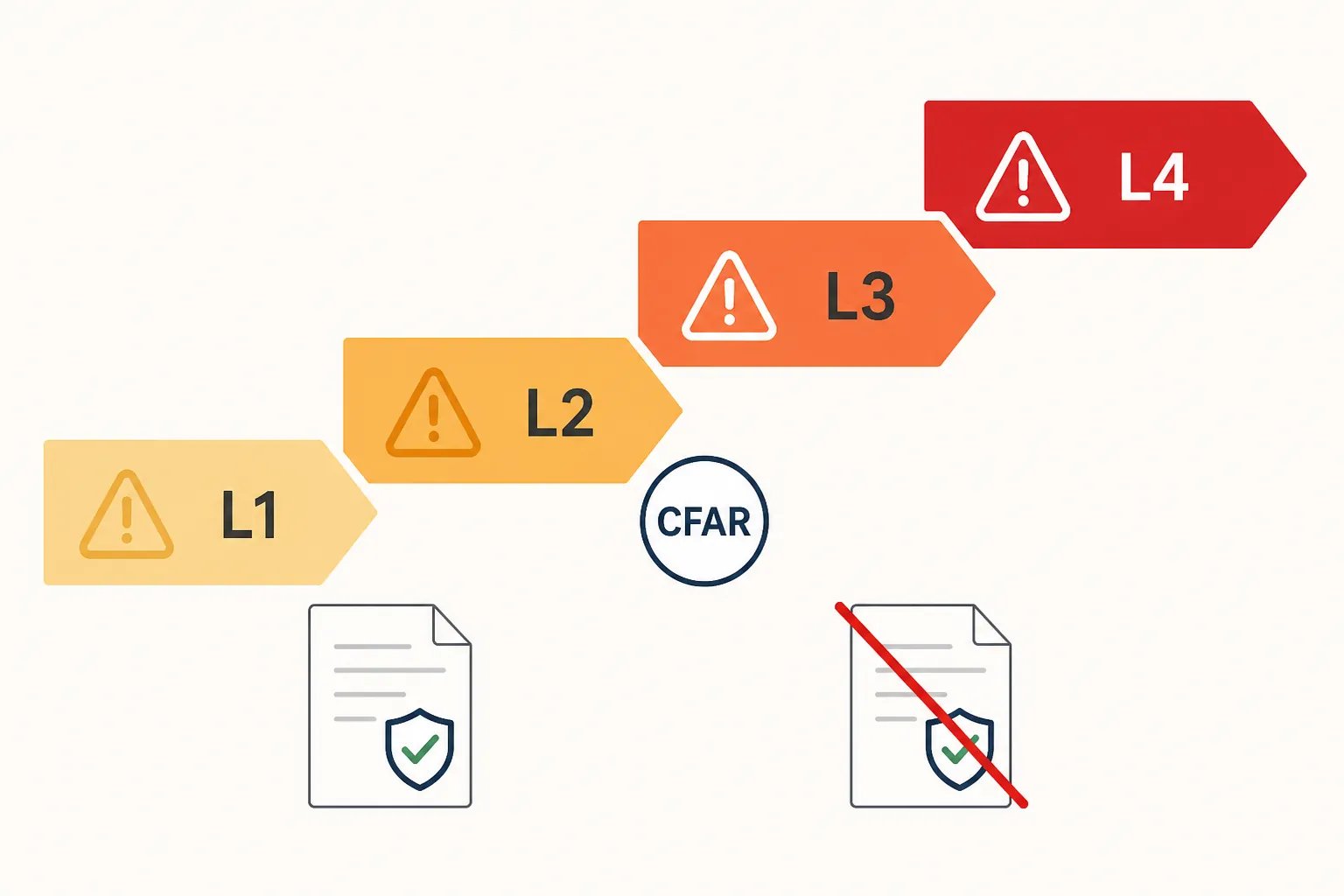
Squaremouth states that standard travel insurance typically does not cover cancellation simply because a travel advisory is issued, and that a Level 4 advisory in place when the policy is purchased may affect coverage availability or exclusions.[9] InsureMyTrip similarly explains that travel advisories are not automatically covered reasons under many standard policies; Cancel For Any Reason coverage is the common route for broader cancellation protection, subject to policy conditions.[10]
CFAR is not full reimbursement. The cited insurance sources identify typical CFAR reimbursement at roughly 50% to 75% of prepaid, nonrefundable trip costs, and only if the traveler satisfies the policy’s purchase, timing, and cancellation requirements.[9][10] Interruption For Any Reason can play a similar role after a trip begins, but it is also an add-on with its own conditions, not a general legal rescue clause.
For a claims file, preserve four dates before arguing coverage: the policy purchase date, the date the advisory level changed, the date the traveler cancelled or interrupted the trip, and the scheduled departure date. A Level 4 warning that predates purchase is a different coverage problem from a warning that arises after purchase. The policy, not the embassy headline, decides which difference matters.
Employment: duty of care is not the same question as immigration status
For employers, the advisory is usually a notice event. It may not create an automatic duty to buy every ticket out of the region, but it makes it much harder to say the risk was unknown. Ogletree’s Middle East crisis guidance separates evacuation support from the employer’s broader duty-of-care and employee-management obligations.[11] SHRM’s discussion of workers refusing to stay in or travel to war zones frames the problem through workplace-safety duties, refusal discipline, and the Occupational Safety and Health Act’s General Duty Clause for US-covered employers.[12]
That distinction matters when a manager wants a clean answer. “The State Department said depart” does not automatically answer who pays, whether refusal is protected, whether remote work must be allowed, or whether wages continue. Those questions come from the assignment contract, travel policy, governing employment law, payroll rules, local labor code, and safety record.
The Gulf employment problem is especially easy to misfile. Pinsent Masons’ regional analysis emphasizes that employers managing employee concerns during conflict must consider local employment obligations, safety concerns, remote-work arrangements, and practical disruption.[13] Ogletree also notes that in many Gulf jurisdictions, stranded employees may remain entitled to base pay depending on the governing jurisdiction and employment arrangement.[11]
That is not an immigration conclusion. A stranded employee’s pay status and the employee’s visa status can move on different tracks. A company may owe wages under one body of law while the employee’s residence permit, sponsor obligation, or exit paperwork remains governed by host-country immigration rules. The advisory does not pause those clocks unless the host country or a controlling administrative authority says so.
Employer file to build before the dispute
- The advisory or security alert as it appeared when the employer made the decision.
- The written risk assessment, including who approved continued presence or travel.
- The employment agreement, mobility clause, secondment letter, and local addendum.
- The refusal or repatriation request, with time zone and recipient list.
- Payroll treatment during delay, remote-work approval, leave classification, and expense approval.
- Visa sponsor contacts and any host-country instruction about overstays, exits, or renewals.
Visa and overstay risk: the US warning does not amend host-country law
A US citizen may read an embassy alert and reasonably focus on flights. The visa clock may be less dramatic and more punishing. Nothing in the located US advisory authorities makes a GCC or other Middle Eastern host country extend a tourist visa, residence permit, work authorization, exit deadline, or sponsor obligation.
This is where “Americans should leave” can become a trap in office shorthand. Leaving late may solve the safety problem while creating an immigration problem. Staying because flights are disrupted may be understandable while still requiring a host-country extension, sponsor filing, or documented attempt to regularize status.
The minimum file is mechanical: passport, visa page, entry stamp, residence card, sponsor name, employment sponsor if different, expiry date, local counsel or government portal screenshots, and proof of attempted extension or departure. A US advisory is useful evidence of context. It is not a substitute for a valid local status document.
Assisted departure and reimbursement: evacuation help is not always free, and not always owed
Assisted departure sits under a different legal frame from travel advisories. Under 22 U.S.C. 2671, the State Department may make emergency expenditures for the relief and protection of US citizens abroad, including repatriation-related assistance, and may require reimbursement subject to statutory limits.[7] CRS’s 2026 evacuation brief states that evacuation assistance has historically involved reimbursement obligations, while also discussing an announced 2026 waiver and reporting that nearly 24,000 Americans had been returned in the relevant Middle East evacuation context.[14]
The “nearly 24,000” figure is an attributed CRS figure, not a promise that every similarly situated person will be moved, reimbursed, or waived.[14] The waiver point is also program-specific. A person offered a seat, a manifest entry, or a promissory note should not rely on a headline about evacuation policy; the controlling document is the form the person signs and the waiver instruction that applies to that departure.
Congress has revisited repayment after past evacuations. The Smith-Payne legislative history around evacuation repayment relief after the Lebanon crisis shows that reimbursement policy has been contested and adjusted legislatively before.[15] That history is useful for context, but it does not eliminate the need to read the current program documents.
Constituent guidance from Rep. Shontel Brown’s office likewise treated Middle East assistance as a practical repatriation process with limits, not as comprehensive compensation for every lodging, onward-travel, pet, payroll, or private-security cost a family may incur.[16] The clean file is the one with the actual offer, the acceptance, the reimbursement language, the waiver language if any, and receipts separated by category.
Custody and travel consent: treat it as a checklist, not a doctrine invented by the advisory
The custody issue is narrower than the employment or insurance issue because the available cited support is thinner. The safe statement is this: an embassy advisory does not, by itself, rewrite a custody order, supply missing travel consent, or authorize unilateral relocation of a child. It may be evidence of emergency conditions, but the controlling instruments remain the order, parenting plan, passport provisions, forum law, and any emergency-relief procedure available in the relevant court.
A family lawyer does not need a geopolitical essay before acting. The first questions are document questions: Who has legal custody? Who holds the passport? Does the order require notice before international travel? Does it name countries, travel windows, or return dates? Is there a relocation restriction? Is there an emergency judge or agreed dispute process? The advisory belongs in the exhibit packet, not in place of the order.
What can be said confidently, and what should be left open
It is fair to say this: the March 2026 “DEPART NOW” guidance and related Worldwide Caution or embassy alerts are official risk communications, not self-executing federal orders requiring private US citizens to depart. It is also fair to say that no located federal statute or case law in this review makes mere presence after such an advisory a standalone federal-law violation.
It is not fair to flatten every downstream consequence into that sentence. An insurer can deny a claim because the policy excludes travel after a Level 4 advisory. An employer can face duty-of-care questions because it kept staff in place after official warnings. A host country can enforce its own visa rules even when flights are disrupted. The State Department can offer assisted departure under a reimbursement regime without creating a general entitlement to rescue. A custody court can treat the advisory as relevant evidence without letting it override consent requirements.
The same document-first habit applies in other regulatory settings. For comparison, see the site’s statutory-gate treatment of ICE body cameras and case-type duties and its map of Turkey F-35 sale legal requirements. For travel-status verification, the better model is still to verify the governing source, as in How to Verify a US Passport Visa-Free Claim in 2025.
The evidence file to build before anyone rewrites the story
Advisory language changes. Screenshots get overwritten. Travel desks summarize. Partners remember the headline as stronger than it was. If the decision may later affect reimbursement, payroll, discipline, insurance, immigration, or custody, build the file while the record is still fresh.
- Save the advisory, embassy alert, or Worldwide Caution page with URL, timestamp, and full visible text.
- Save the policy or contract that actually uses the advisory: insurance, employment, travel, mobility, reimbursement, or custody.
- Record the decision time, the decision-maker, and the alternatives available then, not the alternatives that became available later.
- Separate safety advice from legal compulsion in internal communications.
- For insurance, preserve purchase date, advisory level at purchase, advisory level at cancellation, and the exact covered-reason language.
- For employment, preserve the refusal or repatriation request, the risk assessment, payroll decision, and governing-law analysis.
- For immigration, preserve visa expiry records and any host-country extension or sponsor communications.
- For assisted departure, preserve signed forms, promissory notes, waiver notices, manifests, and receipts.
For evidence-file discipline in other fast-moving administrative settings, compare the site’s verification workflows on continuing resolutions, federal courts, and AI oversight and Amazon tariff refund eligibility. The recurring task is the same: identify the operative instrument before the office folklore hardens.
Ignoring the advisory is not, on the located authorities, a standalone federal-law violation for a private US citizen. Ignoring the documents that the advisory activates is where the legal and financial damage usually begins.
References
- U.S. urges citizens to immediately depart over dozen Middle Eastern countries, Reuters, March 2, 2026
- State Department travel warning, The Hill, July 19, 2026
- Security Alert – U.S. Mission Saudi Arabia – August 1, 2026, U.S. Embassy & Consulates in Saudi Arabia, August 1, 2026
- 22 U.S. Code § 2715 - Development and implementation of international travel advisories, Legal Information Institute
- The State Department’s Consular Information Program, Congressional Research Service
- 22 U.S. Code § 4802 - Responsibility of Secretary of State, Legal Information Institute
- 22 U.S. Code § 2671 - Emergency expenditures, Legal Information Institute
- Gaza: U.S. Citizens and Lawful Permanent Residents Seeking Departure, Congressional Research Service
- Travel Insurance Coverage & Travel Advisories, Squaremouth
- Does Travel Insurance Cover Travel Advisory?, InsureMyTrip
- Navigating Employment Obligations During the Current Middle East Crisis, Ogletree
- When Workers Refuse to Stay or Travel to War Zones, SHRM
- Middle East crisis: manage employee concerns during conflict, Pinsent Masons
- Evacuations and Repatriations of U.S. Citizens Abroad, Congressional Research Service, updated March 6, 2026
- Smith-Payne Bill to Help Americans Evacuated from Lebanon Passes House, Office of Rep. Chris Smith
- FAQ: Information for U.S. Citizens in the Middle East, Office of Rep. Shontel Brown
Operationalizing workflow
No workflow has been explicitly linked to this obligation yet. See Workflows generally.
Illustrative cases
No illustrative case is currently tracked for this obligation. See Risk Digest for documented incidents generally.
← Back to RegulationReport a correction or tip
Spotted an outdated figure, a misstated fact, or a ruling this regulation entry should reflect? Public comments are disabled for this content given the professional cost of a misreported case outcome, penalty amount, or rule text — use the structured correction channel instead.
Report a correction or tip for this record →