
Callella's Sentencing Exposure in the Guthrie Ransom Case
A docket-sourced preview of United States v. Callella, the first documented conviction tied to the Nancy Guthrie fake-ransom-note wave, now set for sentencing Sept. 10, 2026. It compares statutory exposure on two 47 U.S.C. § 223(a) counts with the plea's reported probation-and-treatment terms, flags the unreconciled five- versus ten-year probation reports for PACER verification, and explains what the outcome signals about enforcement rhetoric versus docketed results.
- Jurisdiction
- US Federal (Arizona)
- Court
- U.S. District Court for the District of Arizona
- Judge
- John C. Hinderaker
- AI tool named
- No AI tool named
- Ruling date
- Sep 10, 2026
- Source document
- View primary court order ↗
- Last verified
- Aug 2, 2026
Lex Machina Review is an independent risk-tracking and reference resource. Nothing on this site is legal advice, and using it does not create an attorney-client relationship. Every record is reviewed against primary sources but may not reflect the most current status of a matter — always verify directly against the cited court order, rule text, or a licensed attorney before relying on it.
Companion explanation — secondary to the source document above
The next legally operative date in the Nancy Guthrie ransom note case is not another press conference or another theory about the underlying abduction. It is Sept. 10, 2026, when Derrick Anthony Callella is set for sentencing before U.S. District Judge John C. Hinderaker in the District of Arizona. As of Aug. 2, 2026, the public RECAP record for United States v. Callella, No. 4:26-mj-04209, shows the magistrate-case spine through termination on March 4, and Reuters reports the Sept. 10 sentencing date following Callella’s guilty plea in connection with fake ransom communications sent during the Guthrie investigation.[1][2]

The sentencing exposure starts with two harassment counts, not an extortion count
The statutory side of the ledger is straightforward enough to matter and narrow enough to resist overstatement. Callella pleaded to two counts under 47 U.S.C. § 223(a), the federal communications-harassment statute. Section 223(a) carries a maximum imprisonment term of two years for covered harassing communications; the reported penalty exposure also includes a fine of up to $250,000 under the Title 18 fine cap and possible supervised release.[2][3]
That is the ceiling on paper. It is not the same thing as a prediction, and it is not how the plea has been reported. Reuters and ABC7 have reported a five-year probation term, while azfamily/KOLD, KVOA, and KSDK have reported ten years or up to ten years. Until the plea agreement and any sentencing filings are verified directly in PACER, the only disciplined formulation is that the plea is reported to call for probation and treatment, with the length of probation unresolved in public reporting.[2][4]
| Issue | Record posture |
|---|---|
| Counts | Two counts under 47 U.S.C. § 223(a), reported as harassment counts tied to fake ransom communications.[2][3] |
| Imprisonment ceiling | Up to two years per count under § 223(a).[3] |
| Fine exposure | Reported as up to $250,000 under the Title 18 fine cap.[2] |
| Supervised release | Reported possible supervised-release exposure of up to one year.[2] |
| Plea outcome reported in public accounts | Probation plus treatment; public reports conflict between five years and ten years or up to ten years of probation.[2][4] |
| Open verification item | Plea agreement and sentencing papers should be checked in PACER before stating a single probation term. |
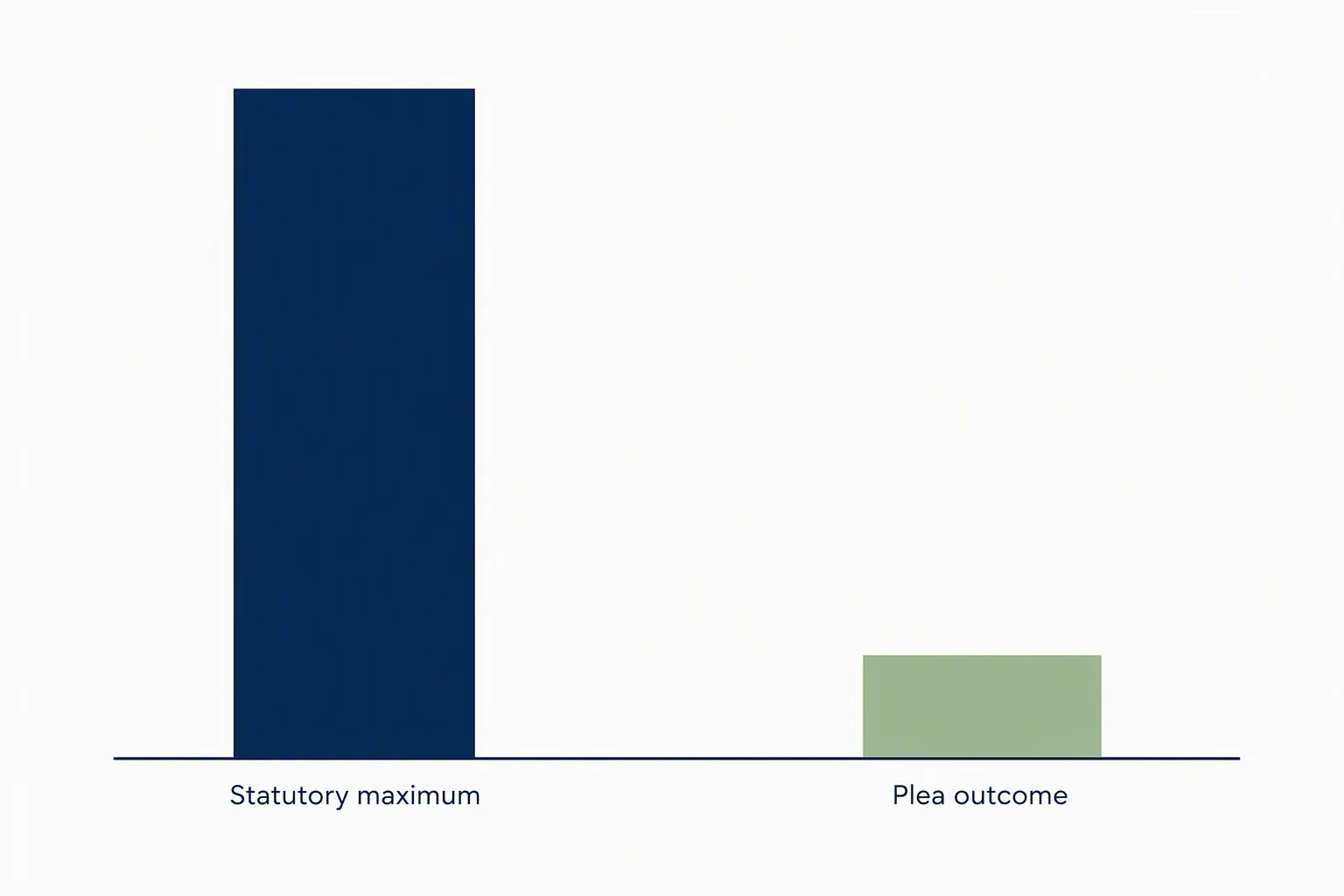
The distance between those two columns is the useful part of the record. A two-count § 223(a) case gives the government a visible federal conviction and a real custodial maximum. The reported negotiated result points somewhere else: supervision, treatment, and a harassment framework rather than an extortion-style prosecution. That distinction should not be softened simply because the communications used ransom language.
For readers tracking the broader Guthrie matter, the confirmed-versus-reported case chronology belongs in the Nancy Guthrie kidnapping case timeline. This record is narrower: what Callella admitted, what the statute permits, and what sentencing will actually put on the federal docket.
How the docket got from complaint to sentencing
The public docket does not need to be stretched into a full case timeline. It shows a compact federal charging sequence: complaint, warrant return, release conditions, preliminary-hearing waiver, and termination of the magistrate case after the matter moved forward.[1]
| Date | Docket event |
|---|---|
| Feb. 5, 2026 | Complaint filed in United States v. Callella, No. 4:26-mj-04209; arrest warrant returned executed.[1] |
| Feb. 6, 2026 | Release-conditions order entered by Magistrate Judge Karen E. Scott in the Central District of California.[1] |
| Feb. 12, 2026 | Release-conditions order entered by Magistrate Judge Maria S. Aguilera in the District of Arizona; docket also reflects Brady order activity and a passport restriction.[1] |
| After initial appearance | Preliminary hearing waived.[1] |
| March 4, 2026 | Magistrate case terminated.[1] |
| July 2026 reporting | Callella pleaded guilty; sentencing reported for Sept. 10, 2026 before Judge John C. Hinderaker.[2] |
The alleged conduct matters here only because it explains the statutory fit. Public reporting, quoting the U.S. Attorney’s account, describes a Feb. 4, 2026 call and text messages to Nancy Guthrie’s daughter and son-in-law. Callella allegedly demanded a bitcoin transfer, knew an earlier ransom demand had been made, and acted with intent to harass while trying to obtain information about the investigation.[2]
Those facts are cruel in a very practical way. They did not merely add noise to an online rumor cycle; they reached people who had to decide whether a communication might bear on an active abduction crisis. The legal charge, however, stayed in the communications-harassment lane. That is why the subsection question still matters. News accounts describe the case consistently as two § 223(a) counts, but the exact subsection theory should be checked against the complaint and plea papers before anyone treats it as settled.
The release posture also points toward the kind of case the government and court appear to be managing. NewsNation reported amended release conditions requiring Callella to enter inpatient substance-use treatment or a halfway house, authorizing the U.S. Marshals to take temporary custody if he failed to comply, and requiring a court-approved residence after completion.[5]
That treatment language should not be turned into a moral verdict or a substitute for sentencing analysis. It is still one of the most revealing parts of the public file. The court was not merely waiting for a punishment number; it was supervising placement, compliance, and custody consequences before sentencing.
Why the § 223 charge choice does the real work
A fake ransom demand can sound, in ordinary speech, like an extortion case. The federal docketed charge here is different. Section 223(a) reaches certain interstate or foreign communications made with harassing intent, including covered calls or electronic communications depending on the subsection invoked. It is built for abusive communications conduct, not for proving a completed ransom scheme.[3]
That does not make the conduct trivial. It does make the sentencing benchmark different. The maximum imprisonment term is measured in two-year § 223(a) increments, not in the heavier federal threat, extortion, kidnapping, or ransom statutes that can dominate public discussion when a communication uses ransom language. For statutory comparison outside this article’s scope, the separate map of 18 U.S.C. § 875 and § 876 threat statutes is the better place to start.
The same boundary applies to evidence questions. This article does not assess ransom-note authentication, the reported cryptocurrency-deposit test, or AI-authorship claims. Those issues may be important to the wider Guthrie investigation, but they are not what determines Callella’s present sentencing exposure on two § 223(a) counts. The related authentication record is handled separately in the Nancy Guthrie ransom-note FRE 901 analysis.
Enforcement rhetoric is broader than the docketed result
Sheriff Chris Nanos’s public posture was stronger than the federal disposition now visible for Callella. azfamily/KOLD reported Nanos saying there had been “two or three arrests already” and warning that people sending fake notes would be prosecuted “to the fullest extent.”[4]
That kind of warning has an obvious public-safety function. In a live missing-person or abduction investigation, fake ransom communications can redirect family attention, consume investigative resources, and force officials to evaluate signals that may have no connection to the victim. But the record-checking question is not whether the warning was understandable. It is what the criminal process has produced.
On that point, Reuters reported Callella as the only criminal conviction to date tied to the fake ransom notes.[2] That does not disprove every law-enforcement lead or every claimed arrest; it simply marks the difference between public enforcement language and a documented conviction that can be evaluated by count, plea, and sentence.
The distinction matters for practitioners because “fullest extent” language can obscure the actual enforcement posture. Here, the government obtained a federal guilty plea, but the charged statute and reported plea terms indicate a controlled harassment case with treatment-centered supervision, not a maximalist ransom prosecution.
What Sept. 10 can measure
The Sept. 10 hearing should answer several record questions that public reporting cannot yet settle: the exact probation term, any special conditions, whether treatment remains central to the judgment, the fine or assessment imposed, and whether the court’s written judgment tracks the reported plea framing. It should also clarify whether the government asks for any sentence materially different from the probation-and-treatment outcome already reported.
It should not be treated as a sentencing referendum on the unresolved Guthrie abduction. Nor should it be used to imply that all fake-ransom-note conduct will receive the same disposition. Callella’s case is one docketed conviction, under one statute, with one reported plea agreement and one unresolved public-record conflict over probation length.
The clean follow-up after Sept. 10 is a judgment check, not a guess. The site’s federal sentencing verification guide is the right discipline for that update: verify the judgment, compare it against the plea reporting, and separate sentence actually imposed from pre-sentencing exposure.
For now, Callella’s sentencing is the first measurable docketed outcome from the fake-ransom-note wave. Its importance lies less in the maximum penalty available than in whether the final judgment confirms the government’s apparent treatment of the case as communications harassment with supervised treatment, rather than as an extortion-style prosecution.
References
- United States v. Callella — CourtListener RECAP.
- California man admits sending fake ransom notes in Nancy Guthrie abduction — Reuters, July 2, 2026.
- 47 U.S. Code § 223 - Obscene or harassing telephone calls in the District of Columbia or in interstate or foreign communications — Cornell Legal Information Institute.
- Man pleads guilty to writing imposter ransom note in Nancy Guthrie case — azfamily/KOLD, July 2, 2026.
- Man who sent fake ransom notes in Guthrie case ordered into inpatient treatment — NewsNation.
Related records
Tool profile
How Meta's AI Spending Reshapes Law Firm ProfitabilityGoverning regulation
Browse the obligations tracker →Preventive workflow
Browse verification workflows →
Report a correction or tip
Spotted an outdated figure, a misstated fact, or a ruling this case record should reflect? Public comments are disabled for this content given the professional cost of a misreported case outcome, penalty amount, or rule text — use the structured correction channel instead.
Report a correction or tip for this record →