
Nancy Guthrie kidnapping case timeline and legal updates
A confirmed-vs-reported, source-linked timeline of the Nancy Guthrie kidnapping investigation (Jan. 31–Aug. 1, 2026), so readers can separate verified facts from reported claims. It records the one docketed guilty plea, the unresolved ransom-note dispute, and the abduction's current posture: no arrest, charge, or named suspect.
- Jurisdiction
- Arizona, United States
- Court
- U.S. District Court, District of Arizona
- AI tool named
- No AI tool named
- Ruling date
- Jul 2, 2026
- Source document
- View primary court order ↗
- Last verified
- Aug 1, 2026
Lex Machina Review is an independent risk-tracking and reference resource. Nothing on this site is legal advice, and using it does not create an attorney-client relationship. Every record is reviewed against primary sources but may not reflect the most current status of a matter — always verify directly against the cited court order, rule text, or a licensed attorney before relying on it.
Companion explanation — secondary to the source document above
Risk Digest verification status: this record was last checked against the available public source set on Aug. 1, 2026. The Nancy Guthrie matter remains a live kidnapping-for-ransom investigation. As of that cutoff, the public record does not show an arrest, charge, or named suspect in the abduction itself. The FBI’s public wanted poster remains a seeking-information record, not a charging document, and lists an FBI reward of up to $100,000 for information leading to Guthrie’s location or to the arrest and conviction of those responsible for her kidnapping.[1]
The one identified docketed outcome in the available public record is separate from an abduction charge: a July 2, 2026 guilty plea by a 42-year-old California man to two counts of harassment using a telecommunication device, with sentencing scheduled for Sept. 10, 2026. That entry should be checked against the underlying docket before it is treated as final in any partner memo, because the USAO District of Arizona URL was not crawlable when checked and the plea description also has to be reconciled against a related on-site record that describes the event differently.[2][3]

Current legal posture
| Issue | Status as of Aug. 1, 2026 | Source posture |
|---|---|---|
| Abduction case | Open kidnapping-for-ransom investigation; no public arrest, charge, or named suspect in the abduction. | FBI seeking-information posture; no public charging record identified in the supplied source set.[1] |
| Only identified adjudicated outcome | July 2 guilty plea by a 42-year-old California man to two counts of harassment using a telecommunication device; sentencing scheduled Sept. 10. | USAO-AZ release title and CNN reporting identify the plea, but the USAO page should be docket-verified because the URL was not crawlable when checked.[2][3] |
| Ransom-note authenticity | Contested. Reuters reported, citing an anonymous source, that the FBI had deemed all three notes fake; FBI Phoenix’s public rebuttal preserved a split category: some notes described as illegitimate extortion attempts, others still under investigation. | Do not collapse this into “the notes were fake.” The broad Reuters formulation and the agency rebuttal are not the same statement.[3] |
| Second note’s death claim | Unverified. The claim may be described only as note content that was reported or released, not as proof of Guthrie’s condition. | The delayed note-content disclosure and law-enforcement media hold are reported in CNN’s June 24 explainer.[4] |
| Forensic updates | Glove DNA reportedly did not produce a CODIS match and was later traced to an unrelated local restaurant worker; hair found at the home reportedly returned no results. | Investigative updates, not court rulings.[5][6] |
The phrase “legal updates” needs discipline here. Most of the public record consists of investigative statements, searches, forensic updates, reward announcements, and media reports. Those can matter operationally, but they are not rulings and they do not create a court-sanctioned account of who abducted Guthrie.
Verified timeline: Jan. 31–Aug. 1, 2026
Each entry below is marked by source posture. “Confirmed” means the date or action is attributed to a named agency, public official, court-facing release, or source-linked public record. “Reported” means the entry comes through media reporting or later-described note content and should not be treated as independently adjudicated fact.
| Date | Flag | Record entry |
|---|---|---|
| Jan. 31, 2026 | Reported | Guthrie was reported last seen at about 9:50 p.m. after a son-in-law drop-off. This is a timeline fact, not a finding about what happened afterward.[3][7] |
| Feb. 1, 2026 | Reported / confirmed by public-search posture | She was reported missing after missing a church service. The public record then moved into a missing-person search posture.[3][7] |
| Feb. 2, 2026 | Confirmed as sheriff’s public belief; reported as note date | Sheriff Nanos publicly said investigators believed the matter was a crime and an abduction. The first ransom note is dated Feb. 2 in later note-content reporting.[3][4] |
| Feb. 4, 2026 | Reported | The family sought proof of life, and threats to Guthrie’s daughter and son-in-law were reported in the same early public window. Treat this as a reported investigative fact unless quoting a primary family or agency statement directly.[3] |
| Feb. 5, 2026 | Confirmed as public FBI statement | FBI Special Agent in Charge Janke addressed proof-of-life concerns in the setting of possible AI or synthetic-media risk. The point for this timeline is narrow: proof of life was not a casual family request; it had become an authentication issue in a high-pressure kidnapping investigation.[3] |
| Feb. 6, 2026 | Reported | The second note is dated Feb. 6 in later reporting. Its contents, including a death claim, remain note content rather than verified truth about Guthrie’s condition.[4] |
| Feb. 10, 2026 | Confirmed / reported | The FBI released doorbell-camera images of a masked armed male described as about 5 feet 9 inches to 5 feet 10 inches tall and carrying a black 25-liter Ozark Trail Hiker Pack. A Rio Rico traffic-stop detention was also reported; the person was released.[1][3][7] |
| Feb. 13, 2026 | Confirmed as public law-enforcement update | A SWAT operation about two miles from Guthrie’s home led to three detentions and no arrests. Nanos said, “if detectives weren’t satisfied, they wouldn’t have been released,” a useful statement because it draws the line between detention and arrest.[7] |
| Feb. 16, 2026 | Confirmed by public reporting of agency position | Family members were publicly cleared. That update matters because suspicion created by proximity can outlive the evidence if the correction is not kept attached to the timeline.[3][7] |
| Feb. 17, 2026 | Reported forensic update | Glove DNA reportedly produced no CODIS match. This is an investigative update, not an identification.[5][6] |
| March 4, 2026 | Reported forensic update | The glove DNA was reportedly traced to an unrelated local restaurant worker. The public significance is exculpatory for that trace, not accusatory toward anyone else.[5][6] |
| June 22–23, 2026 | Reported / released note-content window | Contents attributed to the second note emerged after an approximately five-month law-enforcement media hold. CNN’s June 24 explainer described the privacy rationale for not publishing the note contents earlier.[4] |
| June 30, 2026 | Reported by Reuters from anonymous source | Reuters reported that the FBI had determined all three notes were fake and that a crypto deposit had gone unclaimed. Because the report relied on an anonymous source and was followed by an agency rebuttal, it should be quoted as Reuters’ report, not as the final federal position.[8] |
| July 1, 2026 | Confirmed as agency-position conflict | FBI Phoenix publicly rebutted the broad “all fake” formulation: some notes were described as extortion attempts without legitimacy, while others remained under investigation. The agency also maintained the kidnapping-for-ransom designation. The defensible summary is a split authenticity posture, not a clean exoneration of all note evidence.[3][8] |
| July 2, 2026 | Confirmed plea report; docket verification required | A 42-year-old California man pleaded guilty to two counts of harassment using a telecommunication device in connection with a ransom demand; sentencing was scheduled for Sept. 10. This is the only identified adjudicated outcome, but it is not an abduction charge.[2][3] |
| July 30, 2026 | Reported forensic update | Hair found at the home reportedly returned no results. That closes one reported forensic lead for public purposes; it does not close the kidnapping investigation.[5] |
| July 31, 2026 | Confirmed / released note-content update | The sheriff’s office released full note contents. This record links the source trail rather than reproducing the contents, because note language tends to become more dramatic than probative when separated from authentication status.[5] |
| Aug. 1, 2026 | Record cutoff | No public arrest, charge, or named suspect in the abduction itself had been identified in the available source set. The open items remain note authenticity, Guthrie’s status, and docket reconciliation for the July 2 plea.[1][2][3] |
The ransom-note dispute is narrower than many summaries make it
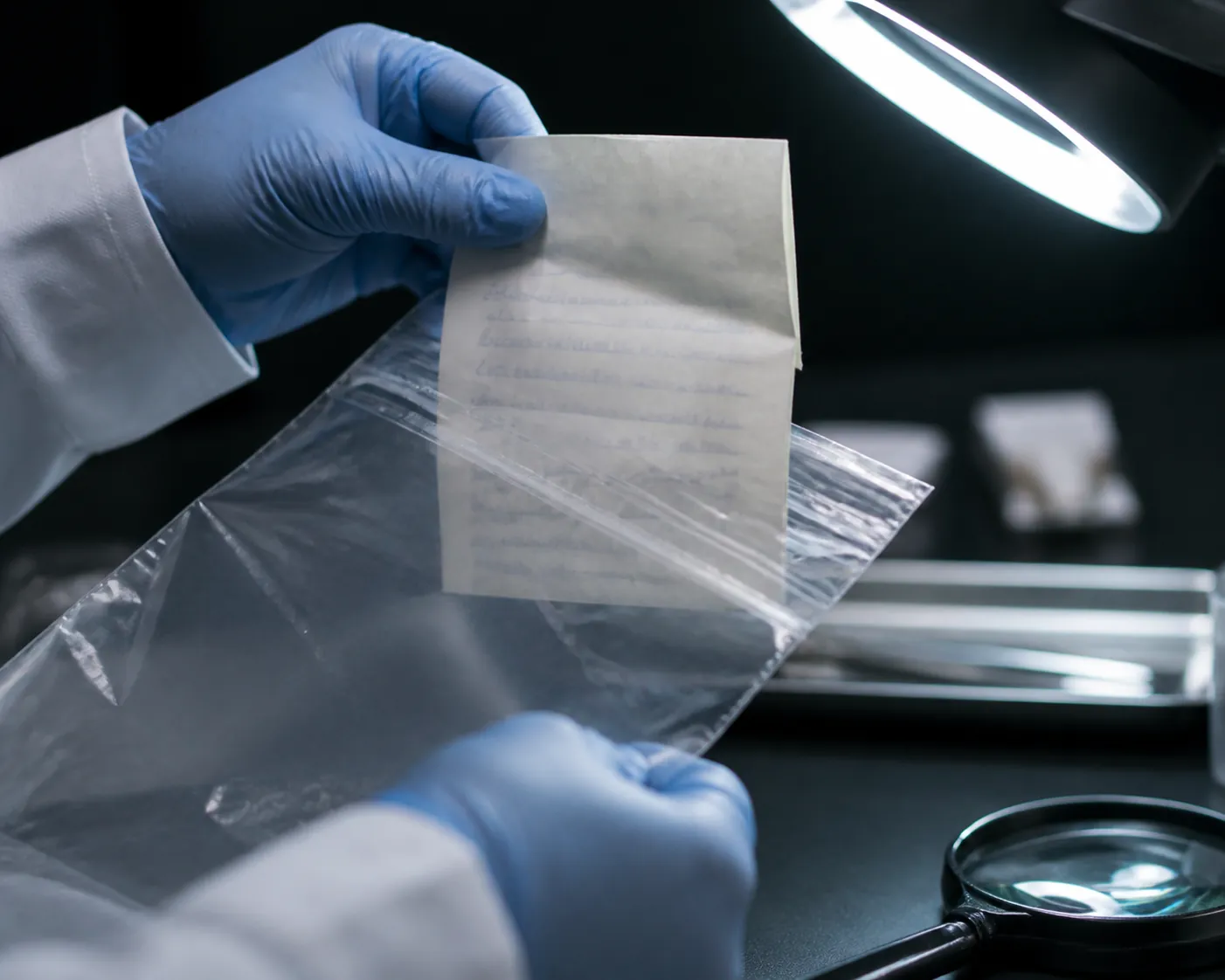
The note record is where imprecision can do the most damage. The public source set supports discussion of note contents, note dates, ransom demands, and agency disagreement over authenticity. It does not support treating the notes as proven communications from an abductor, proven hoaxes in their entirety, or proof of Guthrie’s death.
The reported demand sequence was bitcoin-based: an initial $4 million demand, an increase to $6 million, and a Feb. 9 deadline of 5 p.m. The second note reportedly included a claim that Guthrie had died “heart related” and was “buried in nature.” Those phrases should remain framed as note content. They are not medical evidence, location evidence, or a court finding.[4][8]
Reuters’ June 30 report used a much broader formulation, saying an anonymous source stated the FBI had determined the notes were fake and that a crypto deposit had gone unclaimed.[8] FBI Phoenix’s July 1 response did not leave the record that tidy. The agency position preserved two categories: some notes characterized as illegitimate extortion attempts, and other notes still under investigation. That distinction matters because “fake” can mean several different things in a ransom investigation: a non-abductor’s extortion attempt, a forged proof-of-life communication, a note that contains false factual claims, or a document whose source has not been authenticated.
For the same reason, this record does not reproduce the full note text. The existence of a released note and the truth of what the note asserts are different propositions. A briefing that merges those propositions will overstate the public record.
Adjudicated action identified in the public record
| Date | Person / matter | Disposition | Limits on use |
|---|---|---|---|
| July 2, 2026 | 42-year-old California man | Guilty plea to two counts of harassment using a telecommunication device in connection with a ransom demand; sentencing scheduled Sept. 10, 2026.[2][3] | This is not a charge for kidnapping Guthrie. It should be docket-verified before publication because the USAO URL was not crawlable when checked. |
There is also an internal consistency issue to preserve rather than smooth over. A related site record, FBI’s ransom-note test in the Savannah Guthrie mother case, describes a “Derrick Callella” guilty plea to false interstate ransom demands per NBC News. This record identifies the July 2 event as a 42-year-old California man’s guilty plea to telecommunications harassment based on the USAO-AZ/CNN source trail. Until the docket is checked directly, the safer treatment is to flag the discrepancy and avoid treating either label as reconciled.
Reward and tip structure
| Source | Amount | Condition / channel |
|---|---|---|
| FBI | Up to $100,000 | For information leading to Guthrie’s location or to the arrest and conviction of those responsible for her kidnapping.[1] |
| Family | Up to $1 million | Publicly reported family reward; treat as a tip incentive, not evidence of any suspect or theory.[3] |
| 88-Crime | Up to $102,500 | Reported local tip reward structure.[5] |
| Out-of-state attorney via Crimestoppers | Additional $100,000 | Reported additional reward offer through a tip channel.[5] |
Reward announcements can expand the number of incoming tips while doing nothing to narrow the legal posture. They belong in a reference block for exactly that reason: useful for routing information, weak as proof.
Proof-of-life and synthetic-media caution
The proof-of-life issue should be handled as an authentication problem, not as a dramatic aside. The FBI’s broader IC3 public service announcement warns that criminal uses of AI-generated content can affect trust in communications and apparent identity, which is why proof-of-life workflows now require attention to source, channel, timing, metadata, and independent corroboration rather than emotional force alone.[9]
For the site’s separate operational treatment of that issue, see FBI proof-of-life verification and AI deepfakes. This timeline does not need to restate the entire authentication workflow; it needs to keep proof-of-life claims in their correct evidentiary lane.
Related Guthrie records
- Ransom notes, AI, and authentication: Nancy Guthrie ransom notes and AI
- Wrongful-arrest and detention-risk layer: Wrongful-arrest lawsuit in the Savannah Guthrie matter
- Perjury, Brady, and public-official statement risk: Sheriff Nanos perjury and Brady analysis
- Ransom-note admissibility path: Nancy Guthrie ransom note and FRE 901
- Evidence-access delay analysis: Why the FBI blocked Nancy Guthrie evidence
- Comparable no-charges-yet record format: Coldcard hack AI claim investigation
Open questions that remain open
- Whether any note still under investigation will be authenticated, excluded, or attributed to a non-abductor.
- Whether the second note’s death claim has any evidentiary support beyond the note itself.
- Whether the July 2 guilty plea described by USAO-AZ/CNN is the same event described differently in the sibling record, and what the docketed charge language actually says.
- Whether any forensic material not publicly reported has produced a viable investigative lead.
- Whether any person will be publicly charged in the abduction itself.
As of Aug. 1, 2026, the defensible record stops there: unresolved investigation, contested ransom-note authenticity, one plea requiring docket reconciliation, and no public abduction suspect charged or named.
References
- NANCY GUTHRIE — FBI
- California man pleads guilty to harassment in connection with ransom demand — U.S. Attorney’s Office, District of Arizona — July 2, 2026
- CNN timeline — CNN
- Nancy Guthrie notes privacy explainer — CNN — June 24, 2026
- Nancy Guthrie search timeline — NewsNation
- Nancy Guthrie Disappearance Timeline — PEOPLE
- Timeline of Nancy Guthrie disappearance as search intensifies — CBS News
- EXCLUSIVE: FBI determines Nancy Guthrie kidnapping notes to be fakes, source says — Reuters — July 1, 2026
- PSA251205 — FBI Internet Crime Complaint Center
Related records
Tool profile
How Meta's AI Spending Reshapes Law Firm ProfitabilityGoverning regulation
Browse the obligations tracker →Preventive workflow
Browse verification workflows →
Report a correction or tip
Spotted an outdated figure, a misstated fact, or a ruling this case record should reflect? Public comments are disabled for this content given the professional cost of a misreported case outcome, penalty amount, or rule text — use the structured correction channel instead.
Report a correction or tip for this record →