
What Charges Follow a Fake Cruise Emergency Announcement?
Six passengers were arrested or referred after a fake emergency announcement aired on MSC Divina's PA system July 30, 2026. This record separates confirmed facts from press reports, maps the reported Italian charges plus flag-state and cruise-line exposure, and flags that no charging document has been located.
- Jurisdiction
- Italy
- Court
- Italian judiciary
- AI tool named
- MSC Divina PA system
- Ruling date
- Jul 30, 2026
- Source document
- View primary court order ↗
- Last verified
- Aug 4, 2026
Lex Machina Review is an independent risk-tracking and reference resource. Nothing on this site is legal advice, and using it does not create an attorney-client relationship. Every record is reviewed against primary sources but may not reflect the most current status of a matter — always verify directly against the cited court order, rule text, or a licensed attorney before relying on it.
Companion explanation — secondary to the source document above
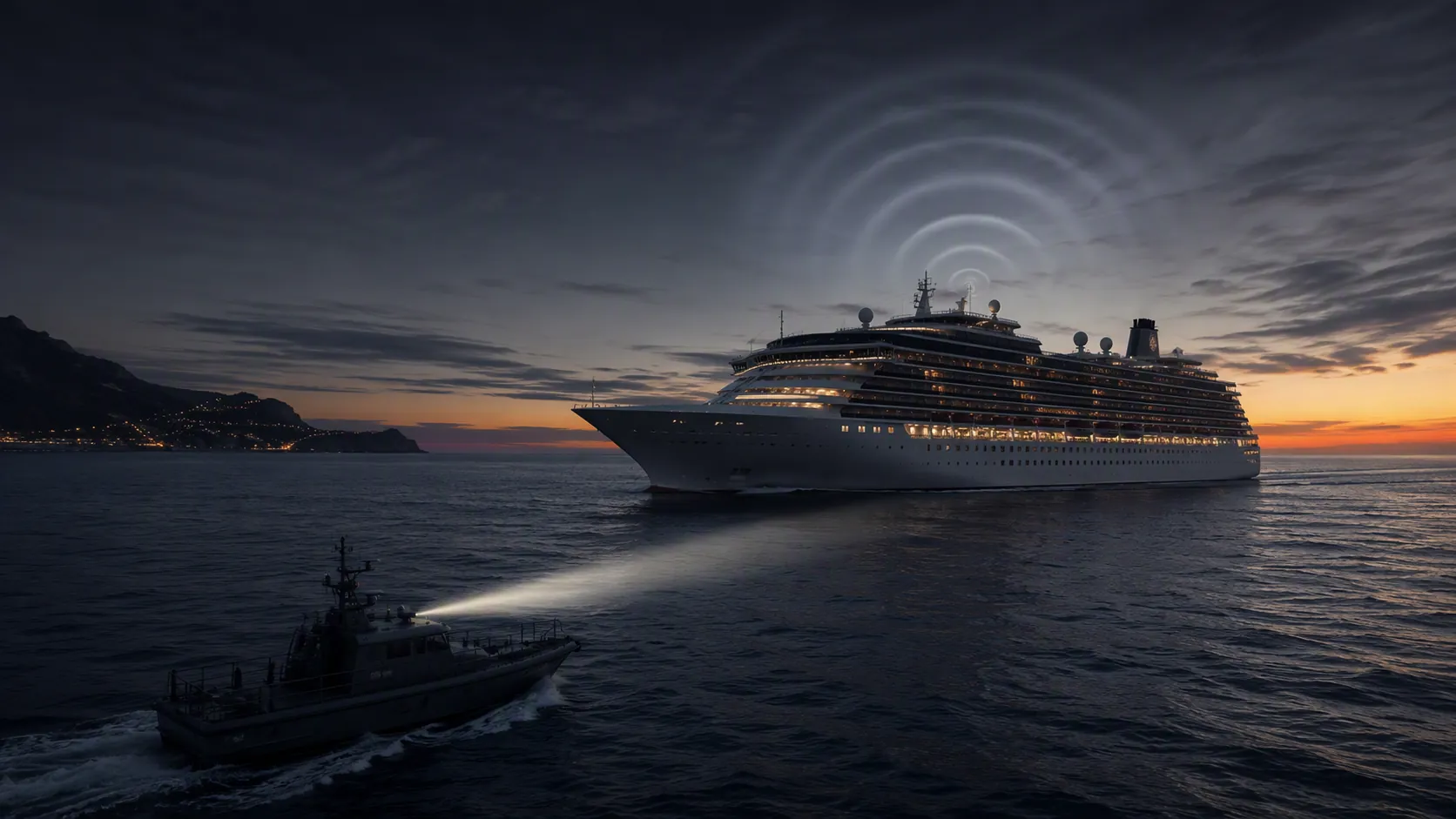
The answer is narrower than the early headlines. As of Aug. 4, 2026, the MSC Divina matter is a reported incident and investigation, not an adjudicated criminal case: six adults have been tied by press reports to two staterooms; a fake emergency message was reportedly broadcast over the ship’s public-address system around 6:30 a.m. on July 30, 2026, and heard in public areas of two decks; the ship arrived in Naples at about 11 a.m.; and the public record still uses conflicting status language, with People describing the passengers as “reportedly arrested” while cruise-industry reports describe them as referred to authorities or facing charges. [1][2][3]
That distinction is not bookkeeping trivia. The legal consequences may be serious, but the present record does not yet prove a conviction, an imposed sentence, or even the exact contents of a charging document. It supports a more disciplined conclusion: reported Italian criminal exposure, flag-state notification to Panama, and possible MSC passenger-contract sanctions, with MSC also disputing the word “hack” as a description of what happened. [2][3]
The record starts with verification, not the shipboard spectacle
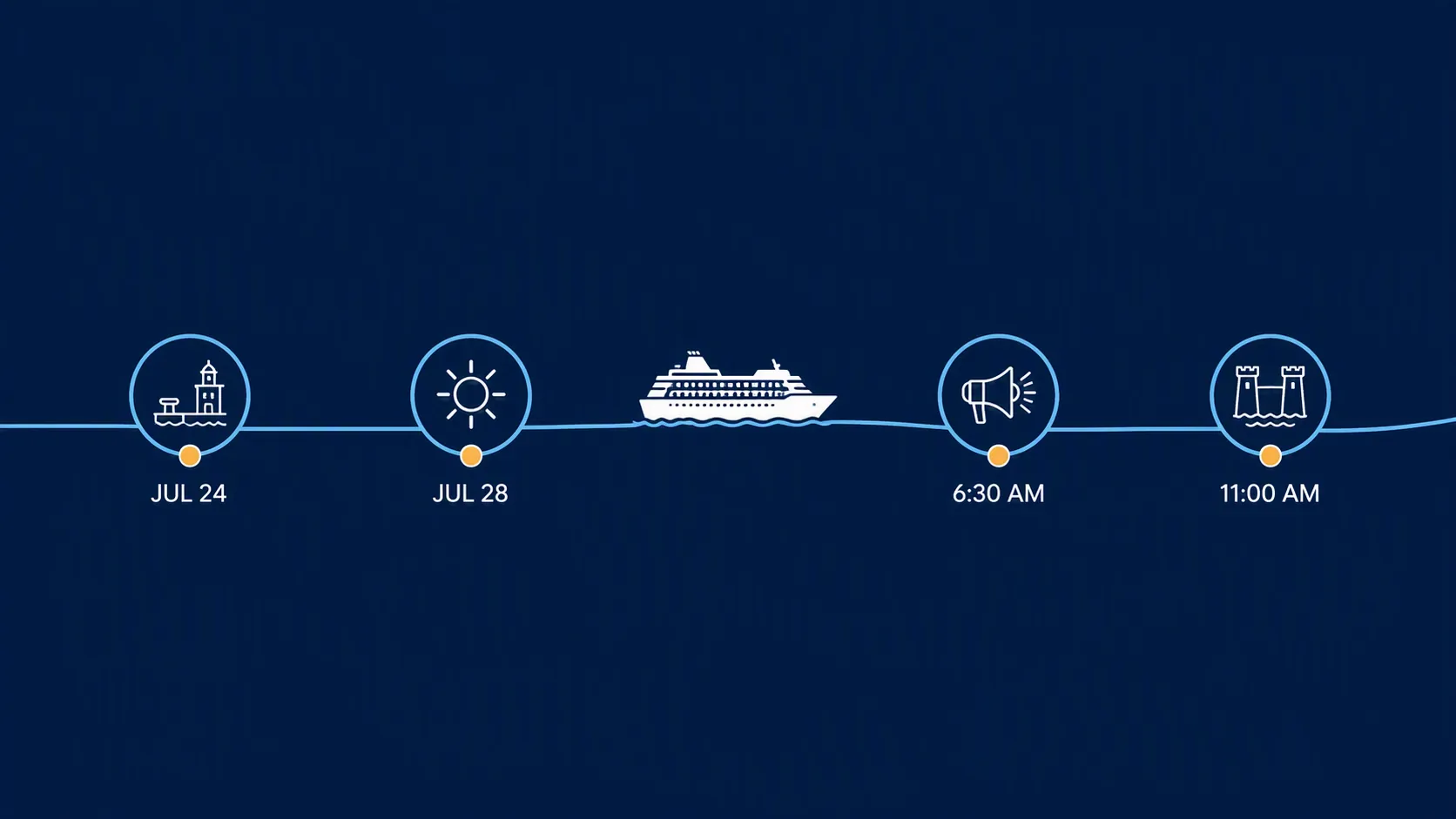
The basic sequence now reported is compact. MSC Divina departed on July 24, called at Marmaris on July 28, and was approaching Naples on July 30 when a false emergency announcement was heard over the PA system at about 6:30 a.m. The reports describe the announcement as reaching public areas on two decks, not as a shipwide disaster, evacuation, or operational shutdown. Naples arrival is placed at about 11 a.m. [2][3]
| Point in the record | What can be said safely |
|---|---|
| Vessel and date | MSC Divina; false PA announcement reported on July 30, 2026. [1][2][3] |
| Reported passengers involved | Six adults, reportedly associated with two staterooms. [2][3] |
| Broadcast detail | A fake emergency message around 6:30 a.m., reportedly heard in public areas of two decks. [2][3] |
| Authority response | Reports say passengers alerted the Italian Coast Guard General Command Operations Center in Rome; Naples Coast Guard and Border Police later boarded after the master filed a complaint and the transmissions were traced. [2][3] |
| Legal status language | People says “reportedly arrested”; CruiseHive and Crew Center describe referral to authorities or facing charges. [1][2][3] |
| What is not yet located | A final charging document, conviction, or imposed sentence. |
The more important operational fact is not that passengers heard an odd announcement. It is that passengers reportedly treated the alert as something authorities should know about, contacting the Italian Coast Guard General Command Operations Center in Rome. Once that happened, the event stopped being a shipboard annoyance and entered an enforcement chain involving the master, the Coast Guard, Border Police, and later the vessel’s flag state. [2][3]
CruiseHive and Crew Center both report that, after the master filed a complaint, the relevant transmissions were traced to six adults in two staterooms and that Naples Coast Guard personnel and Border Police boarded the vessel after arrival. Those are the facts that make the “prank” framing thin. A ship’s master does not file a complaint so that a headline can be amusing; authorities board because an emergency alert on a passenger vessel creates a verification burden whether or not the alert later turns out to be false. [2][3]
MSC’s statement narrows the technology claim
The word “hacked” appears in coverage, including in a cruise-industry headline, but it should not be treated as a settled technical finding. MSC’s reported position is more limited: the announcement was unauthorized, no systems were hacked or compromised, and ship operations were not impacted. [2][3]
That distinction matters because “unauthorized access,” “misuse,” “breach,” and “hack” do not carry identical factual or legal weight. The present record does not identify a method of access. It does not support speculation about credentials, hardware, network intrusion, social engineering, AI voice cloning, or any other mechanism. For this incident record, the safer formulation is the one MSC’s statement permits: an unauthorized PA announcement, with MSC disputing that ship systems were hacked or compromised. [2][3]
That is the same source discipline problem that appears in other fast-moving risk records. The site’s Fatehabad court bomb-threat record is useful here because it keeps a reported threat record separate from court-confirmed disposition. The same habit applies to technical labels: a headline’s chosen noun is not a forensic finding.
The reported Italian charges and the statutory exposure
The Italian-law discussion has to be kept in two columns. One column is what press reports say the passengers face. The other is what the cited statutory provisions say in the abstract. Neither column proves what a prosecutor has formally charged in a document not yet located.
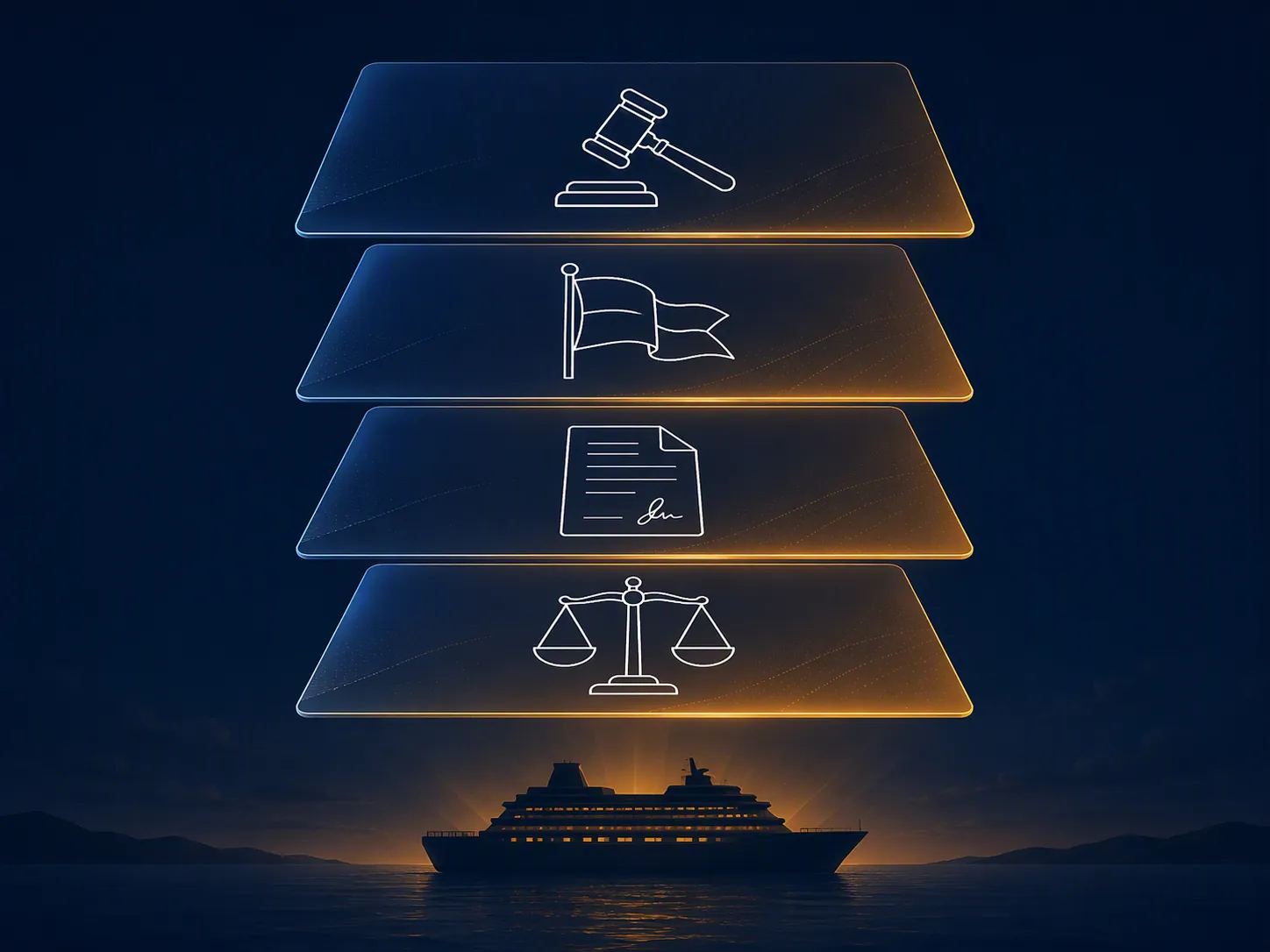
CruiseHive reports that the six passengers face charges under Italian Criminal Code Article 615-ter, unauthorized access to a computer or telematic system, and Article 658, procurato allarme, commonly translated as causing alarm to authorities. Crew Center likewise describes the matter as a security investigation involving Italian authorities and reports that findings are to be shared with Panamanian authorities because the vessel is Panama-flagged. [2][3]
Article 615-ter, in the UNODC-hosted text of the Italian Criminal Code, addresses unauthorized access to a computer or telematic system and provides imprisonment of up to three years in the base provision. [4] If that provision is in fact charged, the relevant point for this record is exposure, not outcome: the statutory maximum is not a sentence imposed on these passengers.
Article 658 is the provision that more directly matches the false-alert character of the reported conduct. Brocardi’s text describes procurato allarme presso l’Autorità and provides for arrest up to six months or a fine from EUR 10 to EUR 516 for conduct that causes alarm to the authority by announcing disasters, accidents, or dangers that do not exist. [5] Again, that is a statutory penalty range, not proof that a court has imposed it in this case.
Some local-press framing, as summarized in the available cruise-industry coverage, also refers to conspiracy. That should remain in the reported-only column unless a charging document or another primary legal record supplies the exact provision, factual theory, and defendants to whom it applies. A vague “conspiracy” label is not enough to build a penalty analysis.
| Layer | Current support | Consequence if the report is accurate |
|---|---|---|
| Italian Criminal Code Article 615-ter | Reported by cruise-industry coverage; statutory text available through UNODC. [2][4] | Unauthorized-access exposure; base provision carries imprisonment up to three years. [4] |
| Italian Criminal Code Article 658 | Reported by cruise-industry coverage; statutory text available through Brocardi. [2][5] | False-alarm exposure; arrest up to six months or EUR 10–516 fine. [5] |
| Conspiracy | Reported in local-press framing as relayed by available coverage. | Not analyzable on this record without the exact legal source and charging document. |
| Panama flag-state notification | Reported because MSC Divina is Panama-flagged. [3] | Possible flag-state review or action, depending on what authorities receive and do. |
| MSC passenger sanctions | Grounded in carrier policy and contract remedies rather than the criminal statutes. | Possible denial of boarding, removal from travel, or bans, depending on MSC’s application of its policy. |
Italy is not the only consequence channel
The Italian referral is the most visible legal track because the ship arrived in Naples and Italian authorities boarded there. It is not the only track. Crew Center reports that the investigation’s findings are expected to be shared with Panamanian authorities, Panama being the vessel’s flag state. [3]
That split is familiar in legal-risk work even when the subject matter is not maritime. A territorial authority may act because the vessel is in port or approaching port; a flag state may receive notice because the ship is registered under its flag; the carrier may impose contract consequences because the passengers agreed to conduct rules as a condition of carriage. For a jurisdiction-splitting analogy outside the cruise setting, the site’s Microsoft AI data center legal docket is a useful model: one factual project can produce different legal questions in different forums.
MSC’s own consequences sit outside the criminal-code analysis. Passenger conduct rules can support refusal of boarding, removal, future travel restrictions, or bans across a carrier group if the company determines that a passenger’s conduct endangered safety, disrupted operations, or violated security rules. The available record does not show which sanctions MSC has already imposed on these six passengers. It does support the narrower point that carrier sanctions may proceed independently of a criminal conviction.
Private claims are also possible in theory, especially if a false alert causes measurable cost, delay, or injury. This record does not identify a filed civil complaint, an injury, or a quantified loss. MSC’s reported statement that operations were not impacted cuts against treating operational damages as established fact at this stage. [2][3]
The “arrested” versus “referred” discrepancy is the central status issue
People’s account uses the phrase “reportedly arrested.” CruiseHive says the passengers face charges. Crew Center describes referral to the Italian judiciary and an ongoing investigation. [1][2][3] Those are not interchangeable statuses.
A passenger can be detained, identified, questioned, referred to prosecutors, charged, convicted, sanctioned by a carrier, or barred from future sailings. Each status has a different evidentiary burden and a different source trail. The available public materials do not let those stages be collapsed into one tidy sentence.
That is why the absence of a located charging document matters. A docket or charging instrument would identify the named defendants, provisions invoked, factual allegations, and procedural posture. Without it, the correct form is the one used in docket-status work: say what is reported, name the reporting source, separate statutory exposure from imposed punishment, and leave guilt out of the sentence. The site’s Trump immunity docket-status record is the same posture applied to a very different matter.
The same caution applies to statutory quotations. Article 615-ter and Article 658 can be cited for what Italian law says in general. They cannot, by themselves, prove that every element is satisfied aboard MSC Divina, that every passenger had the same role, or that a court will accept the reported theory. For a source-control checklist in another context, the Fauci hearing record on AI legal research pitfalls is relevant for the simple reason that it insists on separating primary documents from summaries.
What the legal consequences look like today
The practical consequence stack is already visible even without a final court outcome. Italian authorities reportedly received the alert path, boarded in Naples, and took the matter into a criminal-investigation channel. Reported Italian provisions carry potential custody or fine exposure if properly charged and proved. Panama may receive the investigative findings as flag state. MSC may apply passenger-conduct remedies under its own rules. [2][3][4][5]
No injury is needed for that stack to matter. A false emergency message aboard a passenger vessel consumes decision time: passengers decide whether to report, crew decide whether the alert is real, the master decides whether to complain, and authorities decide whether to board. That is enough to make the incident legally and operationally consequential, even if the ship keeps operating.
The stopping point is equally important. As of Aug. 4, 2026, the MSC Divina incident appears to carry serious multi-jurisdiction consequences, but the accurate present status is reported exposure and investigation. It is not adjudicated guilt, not an imposed Italian sentence, and not a proven system hack.
References
- 6 Cruise Passengers Reportedly Arrested After Issuing False Alerts on Ship's PA System — People.
- Six Cruise Passengers Face Charges for Hacking Ship’s PA System — CruiseHive.
- MSC Divina PA System Breach Triggers Security Investigation — Crew Center.
- Article 615-ter — UNODC.
- Articolo 658 Codice Penale - Procurato allarme presso l'Autorità — Brocardi.
Related records
Tool profile
Browse tool evaluations →Governing regulation
Browse the obligations tracker →Preventive workflow
Browse verification workflows →
Report a correction or tip
Spotted an outdated figure, a misstated fact, or a ruling this case record should reflect? Public comments are disabled for this content given the professional cost of a misreported case outcome, penalty amount, or rule text — use the structured correction channel instead.
Report a correction or tip for this record →