
Landon Doty's 54-year sentence, verified against the docket
A 54-year sentence was real in the Landon Doty school-bus rape case, but the viral figure hides the split: 50.5 years executed and 3.5 years suspended. This record runs the five-field verification routine against the Jennings Circuit Court docket and flags every disputed detail as confirmed or reported.
- Jurisdiction
- Indiana, United States
- Court
- Jennings Circuit Court
- Judge
- Murielle Bright
- AI tool named
- None
- Ruling date
- Aug 24, 2026
- Source document
- View primary court order ↗
- Last verified
- Aug 26, 2026
Lex Machina Review is an independent risk-tracking and reference resource. Nothing on this site is legal advice, and using it does not create an attorney-client relationship. Every record is reviewed against primary sources but may not reflect the most current status of a matter — always verify directly against the cited court order, rule text, or a licensed attorney before relying on it.
Companion explanation — secondary to the source document above

On the circulating claim that Landon Doty was sentenced to 54 years, the short answer is: yes, the 54-year figure is real, but it is incomplete. The docket-checked sentencing figure is 54 years total, split into 50.5 years executed to the Indiana Department of Correction and 3.5 years suspended to probation. The sentence was imposed on Aug. 24, 2026, in Jennings Circuit Court by Judge Murielle Bright. Last verified against Indiana’s public case portal on Aug. 26, 2026 UTC.[1]
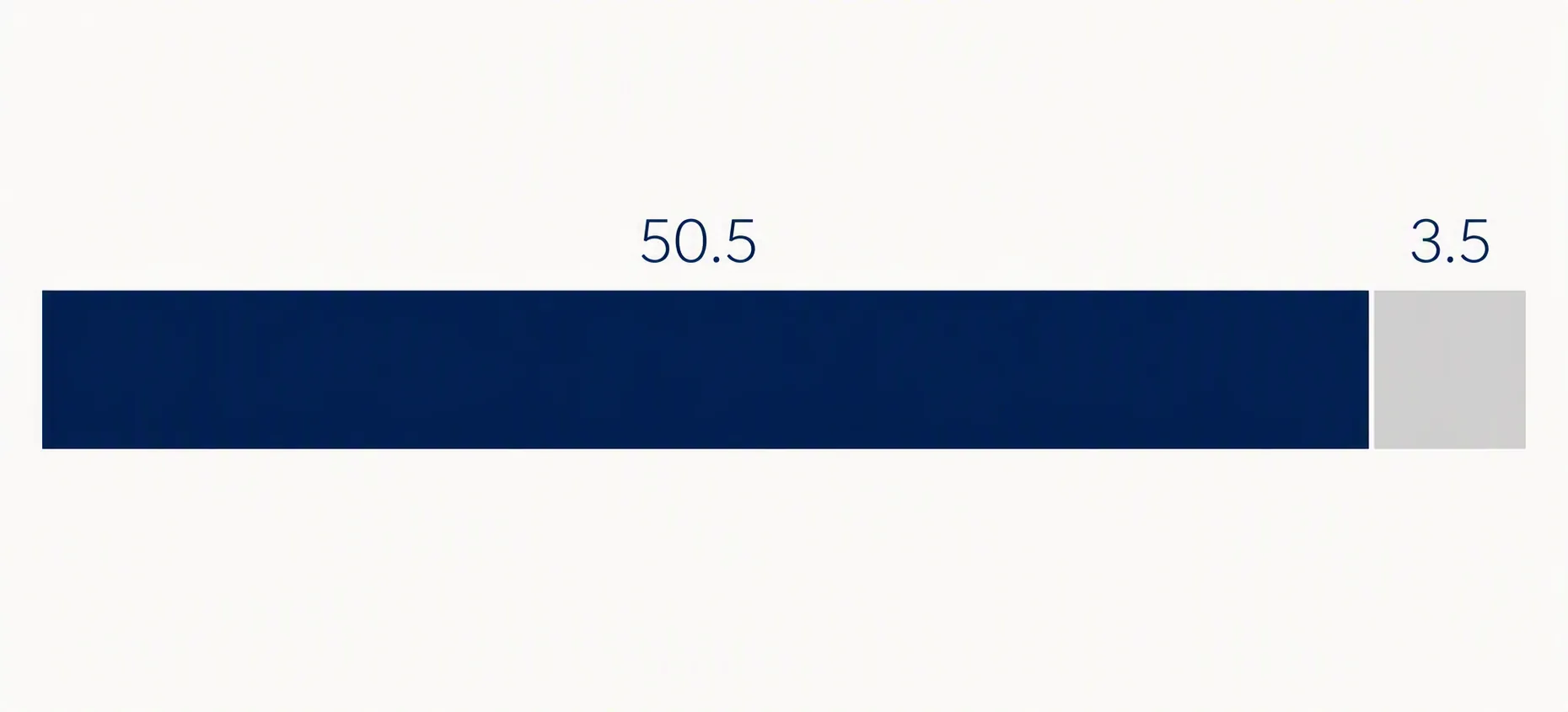
That distinction matters. A headline saying “54 years in prison” is not fabricated, but it hides the legal split between executed time and suspended time. Local and regional reports broadly converge on the same total sentence and the same executed-versus-suspended split, but the docket is the source that should carry the number when the number is repeated in a brief, article, or case note.[2][3][4]
This record is not an AI incident, and it should not be filed as one. It belongs here only as an out-of-scope verification-workflow companion: a worked example of how to pin a viral criminal sentence to court, judge, counts, terms, and dates before anyone repeats it. The same habit appears in records such as the Shiloh Hendrix appeal-status verification and the Brooklyn Bridge Jump discrepancy-log record: do not smooth over source conflicts just because a cleaner sentence would publish faster.
The five docket fields that control the answer
The reliable version of this case starts with administrative fields, not with the most graphic facts. The victim’s disability and the school-bus setting are part of the case identification, but they are not a reason to turn a child’s harm into loose search copy. The sentence has to be checked like a sentence: court, judge, counts, terms, and dates.
| Verification field | Docket-checked value | Status to use |
|---|---|---|
| Court | Jennings Circuit Court, Indiana.[1] | Confirmed. |
| Judge | Judge Murielle Bright.[1] | Confirmed. Do not substitute variant names from summaries unless quoting the source. |
| Counts | Adult criminal case with convictions reported on 12 counts, including four counts of rape, two counts of child molesting, four counts of sexual battery, criminal confinement, and public indecency.[1][3] | Confirmed as to docket count structure; press summaries using a different count total should be treated as secondary. |
| Sentence terms | 54 years total; 50.5 years executed to the Indiana Department of Correction; 3.5 years suspended to probation.[1] | Confirmed. This is the field that fixes the viral “54 years” wording. |
| Sentencing date | Aug. 24, 2026.[1][4] | Confirmed. |
For legal journalists and knowledge-management staff, the operational rule is simple: if the sentence is the fact being repeated, quote the sentence field with the executed/suspended split. A story can use “54-year sentence” after that. It should not leave the reader to guess whether 54 years means 54 years executed.
What “54 years” does and does not mean
The cleanest repeatable formulation is: Landon Doty was sentenced to 54 years total, with 50.5 years executed and 3.5 years suspended. WDRB’s sentencing account describes the sentence components as including 16-year terms attached to rape counts, 16-year terms attached to attempted-rape or child-molesting counts, 2.5-year terms on sexual-battery counts, 2.5 years suspended to probation for criminal confinement, and 1 year suspended to probation for public indecency.[2]
The important correction is not that “54 years” was false. It was too blunt. The executed portion is the part ordered to be served in the Indiana Department of Correction; the suspended portion is tied to probation. That is why “sentenced to 54 years” is safer than “sentenced to 54 years in prison” unless the executed/suspended split appears immediately beside it.
| Phrase | Safe to repeat? | Why |
|---|---|---|
| “Sentenced to 54 years” | Yes, if followed by the split. | The total sentence is confirmed, but the phrase is incomplete standing alone.[1] |
| “Sentenced to 54 years in prison” | Use with caution. | The executed portion is 50.5 years; 3.5 years were suspended to probation.[1] |
| “Sentenced to 50.5 years” | Incomplete. | That states the executed portion but omits the 54-year total and suspended probation time.[1] |
| “54 years total: 50.5 executed, 3.5 suspended” | Yes. | This is the most precise short form.[1] |
The case spine, kept to what is needed for identification
The criminal case arose from allegations involving a child on a Jennings County special-needs school bus in April 2025. WDRB reported that bus surveillance was part of the case and that a bus monitor reported seeing Doty push the child from his lap on Apr. 17, 2025.[2] That is enough here to identify the proceeding. The point of this record is not to reconstruct the abuse narrative; it is to prevent a second layer of harm through sloppy case description.
| Date or period | Event | Verification status |
|---|---|---|
| June 2025 | Doty was waived from juvenile court into adult court after a reported finding that he was beyond rehabilitation in the juvenile system.[5] | Reported; docket should be used for the waiver entry. |
| December 2025 | A motion to dismiss was denied.[1] | Docket-checked. |
| April 2026 | A jury verdict was returned.[1] | Docket-checked as to the verdict entry; exact press date conflicts are logged below. |
| Apr. 27, 2026 | Sentencing had been expected earlier and was delayed.[4] | Reported by local coverage. |
| July 18, 2026 | The Republic reported that Doty had been deemed ineligible for transition programs ahead of sentencing.[6] | Reported by local coverage. |
| Aug. 24, 2026 | Sentencing was imposed in Jennings Circuit Court.[1][4] | Confirmed. |
There is a professional temptation, especially under deadline, to use the most detailed news account as the master record. That is the wrong hierarchy. Reported accounts are useful for context and for locating a docket entry, but the docket is what decides whether a field is confirmed. This is the same discipline used when tracing a quoted settlement figure back to its origin or when verifying a ruling before relying on AI-generated summaries, as in the Trump mail-in ballot ruling workflow.
Discrepancy log
A single smooth narrative would hide too much. The surrounding reports do not all agree on age, count total, exact verdict date, judge name variants, or civil damages. Some of those conflicts are immaterial to the sentence; others are exactly the kind of field drift that later turns into a bad brief.
| Contested or easily misstated field | Status | Safe handling |
|---|---|---|
| Total sentence | Confirmed: 54 years total.[1] | Repeat with the executed/suspended split. |
| Executed prison time | Confirmed: 50.5 years executed to the Indiana Department of Correction.[1] | Do not round this into “54 years in prison” without explanation. |
| Suspended time | Confirmed: 3.5 years suspended to probation.[1] | Include when explaining what the sentence means. |
| Judge | Confirmed: Judge Murielle Bright.[1] | Use the docket name. Treat shortened or variant names in summaries as non-controlling. |
| Number and type of counts | Confirmed at docket level; WLKY reported 12 counts including four rape counts, two child-molesting counts, four sexual-battery counts, criminal confinement, and public indecency.[1][3] | Use the docket count structure. If citing a report that uses a different total, label it as that outlet’s report rather than the verified field. |
| Victim age | Reported in several accounts as 7; press summaries also contain conflicting age language.[2][3][5] | If age is not necessary to the sentence point, avoid repeating it. If used, attribute to the cited report. |
| Exact verdict date | Reported inconsistently in press accounts; The Republic and legal coverage tie the verdict to early April 2026.[4] | Use “April 2026 jury verdict” unless the exact docket entry is being quoted. |
| Civil damages amount | Reported, not part of the criminal sentence. WDRB reported $10.5 million; The Indiana Lawyer reported $9.8 million.[2][7] | Do not use a civil damages figure to explain the criminal sentence. If mentioned, keep the conflict visible. |
| Criminal-confinement wording involving a victim under four | Unresolved statutory or reporting ambiguity. | Do not restate the under-four wording as fact unless quoting the docket or charging instrument directly. |
| Claim that prosecutors sought 41 years | Excluded here. | No primary confirmation in the materials used for this record. |
| Social-media wording such as “50½ years” versus “50.5 years” | Formatting variance, not evidence. | Normalize to 50.5 years executed and cite the docket. |
The civil lawsuit is adjacent, not controlling
The victim’s family also brought a federal civil suit in the Southern District of Indiana against the school corporation, bus driver, and bus monitor. It belongs in the verification record only because it is another place where numbers diverge: WDRB reported damages of $10.5 million, while The Indiana Lawyer reported $9.8 million.[2][7]
That lawsuit may matter in its own record. It does not change the criminal-sentence field. Mixing the civil damages number into a paragraph about the prison sentence is a reliable way to create a citation mess later.
What can safely be repeated
The safe version is narrow: Landon Doty was sentenced on Aug. 24, 2026, in Jennings Circuit Court by Judge Murielle Bright to 54 years total, with 50.5 years executed to the Indiana Department of Correction and 3.5 years suspended to probation.[1]
Adjacent details should carry their verification status. The bus setting, the reported age of the victim, the verdict-date variants, the count-total conflict in summaries, and the civil damages figure are not all equally settled fields. The viral claim was not fabricated. It was just too imprecise to rely on without the docket split.
References
- Indiana Courts Case Search, Indiana Courts.
- Indiana teen sentenced to decades in prison for raping 7-year-old on school bus, WDRB.
- Southern Indiana teen raped nonverbal child sentenced, WLKY.
- Teen in Jennings County rape case sentenced to 54 years in prison, The Republic, Aug. 24, 2026.
- Jennings County 15-year-old who is accused of raping 7-year-old now charged as an adult, Fox59.
- Doty deemed ineligible for transition programs ahead of sentencing, The Republic, July 18, 2026.
- Family of disabled child raped by classmate sues district, bus employees for $9.8M, The Indiana Lawyer.
Related records
Tool profile
Browse tool evaluations →Governing regulation
Browse the obligations tracker →Preventive workflow
Browse verification workflows →
Report a correction or tip
Spotted an outdated figure, a misstated fact, or a ruling this case record should reflect? Public comments are disabled for this content given the professional cost of a misreported case outcome, penalty amount, or rule text — use the structured correction channel instead.
Report a correction or tip for this record →