
MyPillow parade handouts test Minnesota campaign finance law
For counsel screening parade giveaways under Minnesota's Fair Campaign Practices Act, this record reports Fiskum v. Lindell (OAH 0320-41898): pillows marked 'Mike Lindell for Governor' cleared prima facie review under Minn. Stat. 211B.13, with felony exposure riding on the pillow-valuation dispute. Probable-cause hearing outcome unverified as of Aug. 4, 2026.
- Jurisdiction
- US-MN
- Court
- Minnesota Office of Administrative Hearings
- AI tool named
- None
- Ruling date
- Jul 22, 2026
- Source document
- View primary court order ↗
- Last verified
- Aug 4, 2026
Lex Machina Review is an independent risk-tracking and reference resource. Nothing on this site is legal advice, and using it does not create an attorney-client relationship. Every record is reviewed against primary sources but may not reflect the most current status of a matter — always verify directly against the cited court order, rule text, or a licensed attorney before relying on it.
Companion explanation — secondary to the source document above
Risk Digest status as of Aug. 4, 2026
This record is for legal-risk screening and is not legal advice. Last verified: Aug. 4, 2026, UTC. The current posture is OAH Case No. 0320-41898, Fiskum v. Lindell, before the Minnesota Office of Administrative Hearings. The administrative law judge found that the complaint stated a prima facie violation under Minnesota’s bribery/treating statute, Minn. Stat. 211B.13; the probable-cause hearing outcome is unverified as of this timestamp pending an OAH docket check.[1][2]
| Screening item | Current record |
|---|---|
| Forum and case | Minnesota Office of Administrative Hearings, Fiskum v. Lindell, OAH 0320-41898.[1] |
| Statute at issue | Minn. Stat. 211B.13, covering willful giving or offering of money, food, liquor, clothing, entertainment, or another thing of monetary value to induce a vote.[2] |
| Posture | Prima facie threshold crossed; probable-cause process triggered under Minnesota’s Fair Campaign Practices Act procedure.[1][3] |
| Unresolved flag | Probable-cause hearing held / outcome unverified as of Aug. 4, 2026, pending docket check. |
| Risk hinge | Whether the pillows are treated as low-value campaign handouts or as things of monetary value outside any narrow carve-out. |
At this posture, casual swag analysis stops being useful. The question is not merely whether someone disliked a parade giveaway enough to file a complaint. A Minnesota administrative law judge has allowed the allegation to move past prima facie review, which means counsel now has to work from the statute, the valuation evidence, and the docket—not from campaign optics.
What was alleged at the Delano parade
The parade facts are concrete, which is part of why this matter is useful for compliance screening. The complaint concerns pillows marked “Mike Lindell for Governor” that were allegedly distributed from a parade float to spectators at the Delano, Minnesota, Fourth of July parade. CBS Minnesota reported that citizen complainant Fiskum filed the complaint on July 22, 2026, and that the record included social-media evidence from June Foley showing the parade giveaway and packaging connected to the campaign message.[4]
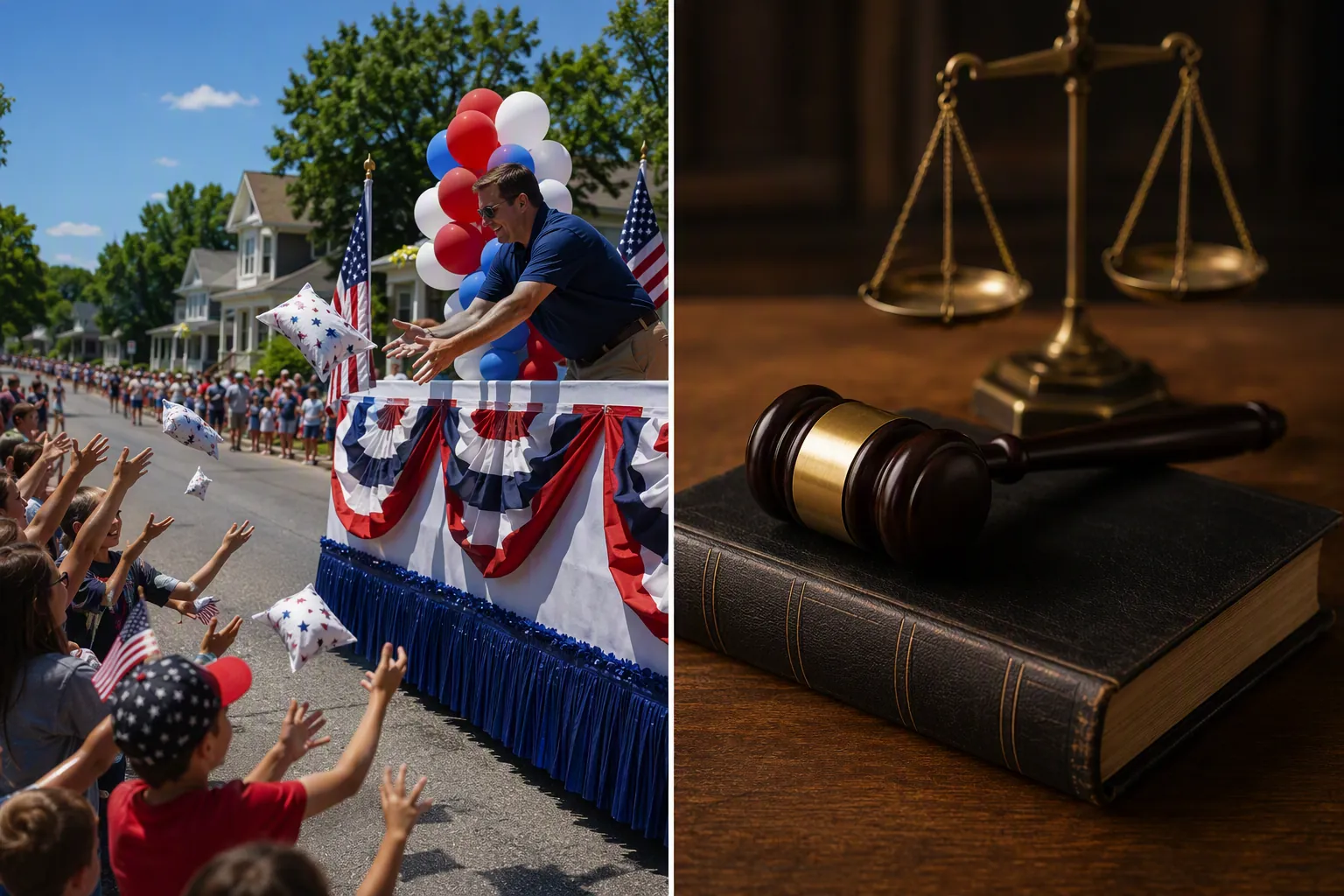
KSTP separately reported the prima facie ruling and the call for a probable-cause hearing. Its account also placed the matter in the August 2026 primary-election setting, with early voting already underway, but timing alone does not decide the statutory issue. The legal question remains whether the handout was a prohibited thing of monetary value allegedly given to induce votes, and whether the record can support or defeat that characterization at the next procedural stage.[5]
The celebrity noise around Lindell can make the matter feel larger than it is, or simpler than it is. Neither instinct helps the person who has to approve campaign merchandise before it leaves a warehouse. The operative file is narrower: a Minnesota parade, a governor campaign slogan, pillows handed to spectators, a citizen complaint, and an OAH prima facie order under Chapter 211B.
The statutory path: why the pillow is not just a prop
Minn. Stat. 211B.13 is not a general anti-swag provision. It is framed as bribery, treating, and solicitation. The relevant statutory language reaches a person who willfully, directly or indirectly, gives or offers “money, food, liquor, clothing, entertainment, or other thing of monetary value” to induce a voter to vote in a particular way or refrain from voting. The statute also implicates felony exposure, which is why the valuation dispute is not a footnote.[2]
That wording creates two separate screening questions. First, is the item a “thing of monetary value” rather than campaign expression with merely incidental worth? Second, if it has monetary value, was it given with the prohibited inducement? A pillow is awkward for the usual parade-handout assumptions because it is not a sticker, a palm card, or a piece of candy. It is a physical consumer product associated with a private company, bearing a campaign message, and allegedly handed to people watching a candidate’s parade appearance.
The prima facie order does not decide those questions finally. It means the complaint alleged enough, if taken as true at that threshold stage, to proceed under the administrative process. Under Minn. Stat. 211B.34, after a prima facie determination the matter moves to a probable-cause hearing on the statutory timeline, and under Minn. Stat. 211B.35 a case that survives can move toward an evidentiary hearing before a panel.[3][6]
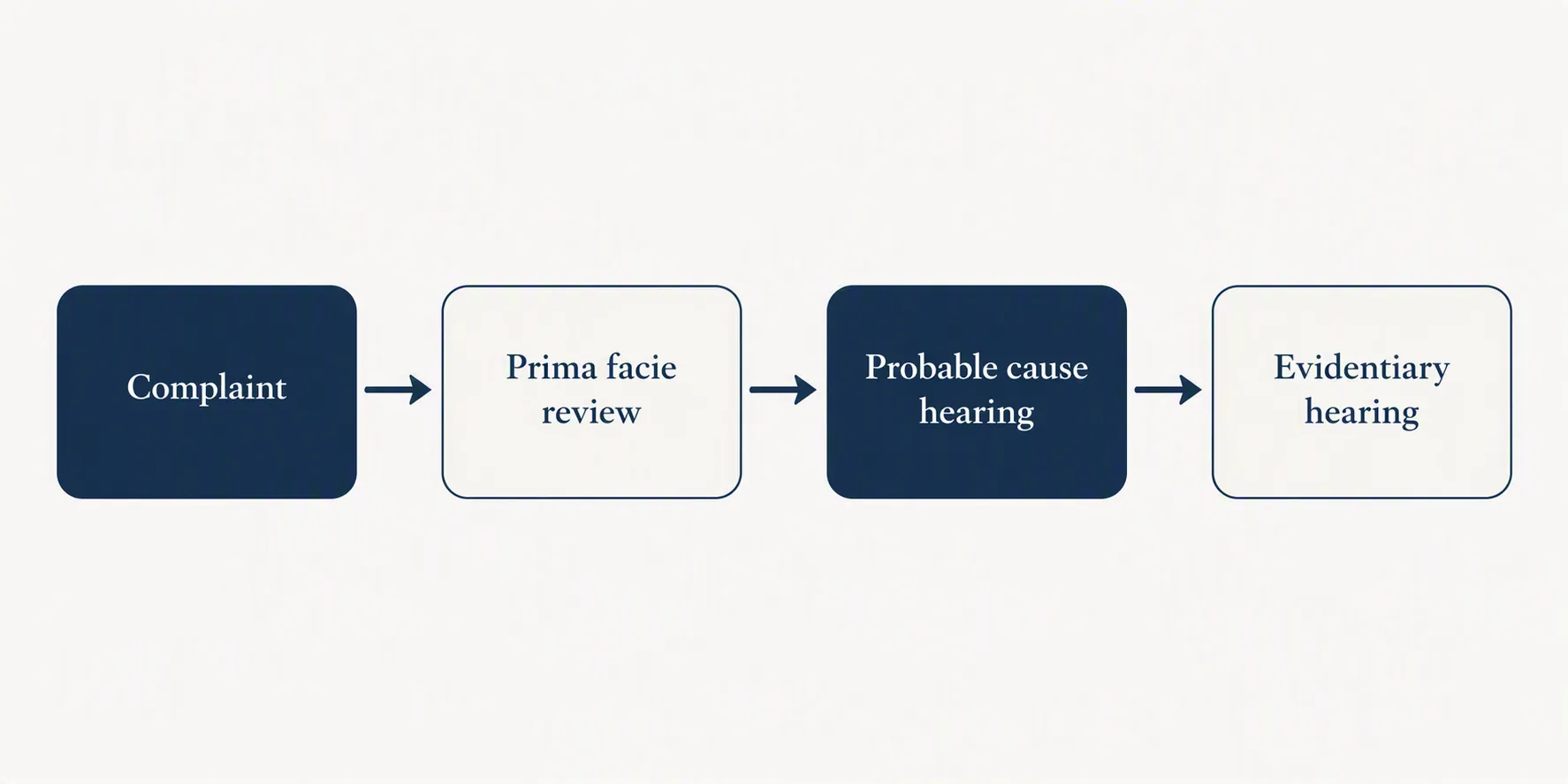
For counsel, that sequence matters because each step asks a different question. Prima facie review is not a liability finding. Probable cause is not a final evidentiary determination. An evidentiary hearing, if reached, is where disputed facts can be tested more fully. A compliance memo that treats the prima facie order as either a conviction or a dismissal-proof merits ruling is already off track.
The valuation dispute is the hinge
The public record now turns on a valuation fight that is easy to trivialize and hard to avoid. CBS Minnesota reported the complainant’s position that the pillows had a retail value of about $34.95 each. KSTP reported Lindell’s response that the value was about $4.90 per pillow, and CBS Minnesota reported an invoice for 2,500 pillows at $4.50 each from MyPillow to the campaign.[4][5]
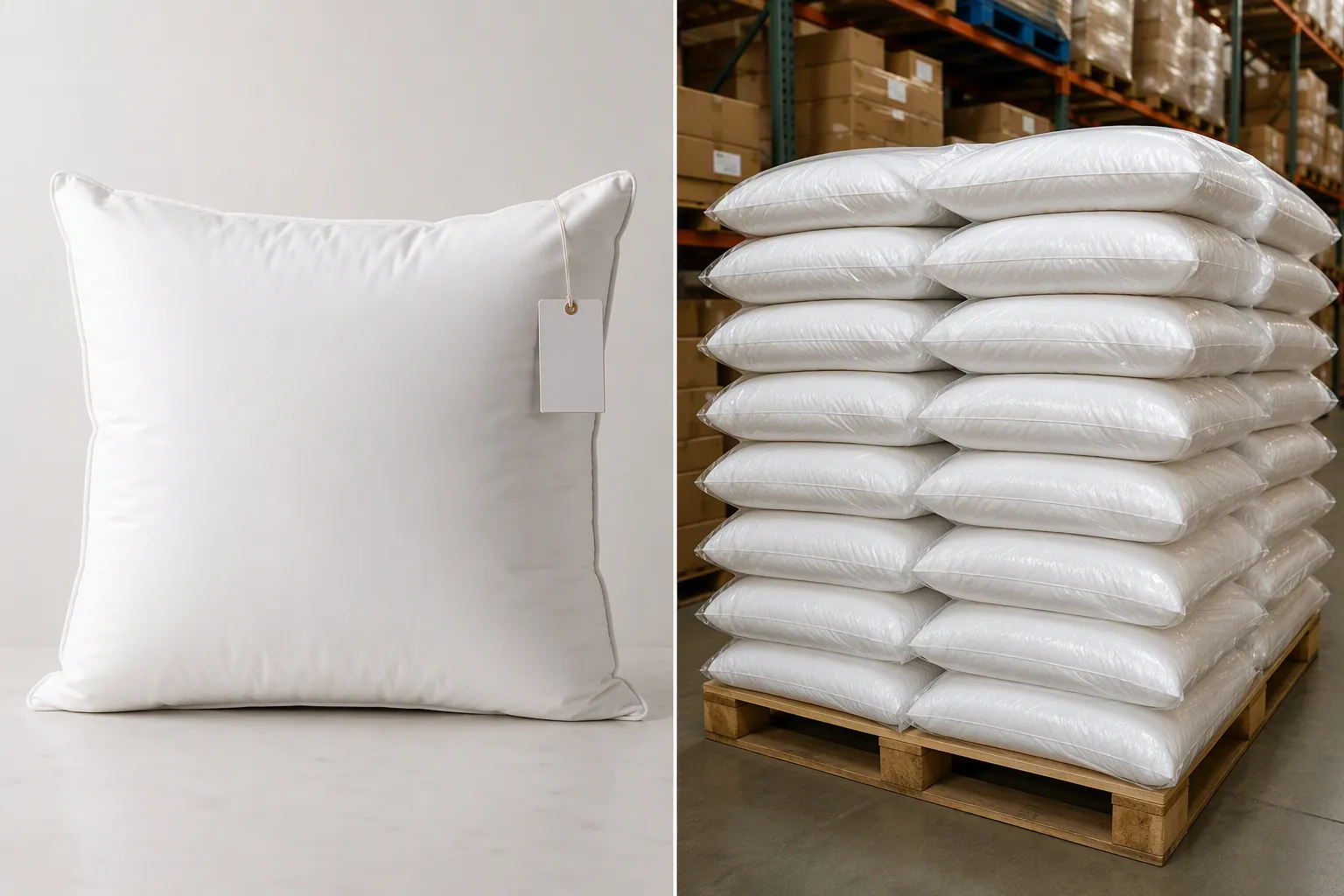
Those figures should remain visibly contested. The complainant’s retail-value theory is not automatically the legal value of the thing given. The campaign’s invoice or asserted cost is not automatically dispositive either, particularly where the seller is associated with the candidate and the item is a branded consumer product. A careful file would separate at least three concepts: consumer retail price, campaign acquisition cost, and fair-market value for the item actually distributed in the form distributed.
That distinction matters because the low-value argument has to fit the statute, not just the campaign’s accounting. Minnesota’s related framework includes a narrow carve-out concerning low-value refreshments, but that does not automatically answer whether a pillow handed from a parade float is covered. Refreshment language is not a blanket exemption for merchandise merely because the campaign says its unit cost is low.[7][8]
A screening lawyer looking at the numbers would not need to decide the final valuation on the spot. The immediate work is more basic: preserve the invoice, identify who paid, identify who supplied the pillows, determine whether the campaign reported the expense, document the quantity actually distributed, and avoid making public clearance claims that cannot be backed by a written agency communication or docketed record.
The difference between roughly $34.95 and roughly $4.90 is not accounting trivia. It is the difference between a record that looks more like the distribution of a consumer item with meaningful retail value and a record that the campaign will likely frame as a low-cost promotional handout. The OAH record has not resolved that difference as of this status snapshot.
The reported Board-approval claim is not a record defense yet
KSTP reported Lindell’s assertion that the Minnesota Campaign Finance and Public Disclosure Board approved the giveaways. The same report said a board spokesperson would not confirm that claim.[5] That leaves the assertion where compliance people most dislike finding it: potentially important if documented, but not something the present public record allows counsel to treat as established clearance.
There is a practical reason to be strict about that. “The board said it was okay” can mean several different things in political practice: an advisory opinion, informal staff guidance, a phone call, a question about a different fact pattern, or a campaign-side interpretation of silence. Those are not interchangeable. Until the campaign produces the communication or the agency confirms it, the safer description is “reported but unconfirmed.”
A separate corporate-contribution issue may be worth counsel review
There is also a separate, labeled analysis point that should not be confused with the OAH prima facie finding under 211B.13. If a company sold goods to a campaign below fair-market value, counsel may need to review whether any in-kind corporate contribution issue arises under Minn. Stat. 211B.15. That is not a sourced conclusion about this case; it is a compliance issue to examine because the reported invoice came from MyPillow and the disputed value gap is large enough to notice.[4][9]
The right sequencing is important. First verify the 211B.13 docket status and valuation evidence. Then, if the documents show a below-market transfer or an expense paid by someone other than the campaign, evaluate the contribution rules with Minnesota counsel. Folding every possible campaign-finance theory into the prima facie order would overstate the administrative record.
What counsel can verify now
- Pull the OAH docket for Case No. 0320-41898 and confirm whether a probable-cause order has been issued after the hearing.
- Collect the campaign invoice, payment record, vendor identity, quantity ordered, quantity distributed, and any remaining inventory.
- Preserve the packaging and campaign labeling, because the statutory theory depends on what spectators received, not only what the campaign intended to call it.
- Request or locate any written communication with the Campaign Finance and Public Disclosure Board before relying on an approval claim.
- Keep the 211B.13 treating issue separate from any later review of corporate contributions, disclaimers, reporting, or candidate-committee accounting.
This is the same discipline used in other Risk Digest records where a public claim has to be separated from the verifiable file, including verified-record caveats and the independent-verification duty. For broader campaign-finance context, adjacent records on AI PACs and campaign finance, state-level disclosure gaps, and super PAC loopholes may help with issue-spotting, but they do not change the Minnesota docket posture here.
As of Aug. 4, 2026, the reliable status-and-risk snapshot is limited but consequential: the complaint crossed prima facie review; 211B.13 puts felony exposure in view if the statutory elements are proved; the valuation dispute between the reported retail figure and the campaign’s claimed per-pillow cost is central; and the probable-cause outcome remains unverified pending a docket check.
References
- Fiskum v. Lindell Campaign Violation Prima Facie Order, Minnesota Office of Administrative Hearings
- 211B.13 BRIBERY, TREATING, AND SOLICITATION, Minnesota Revisor of Statutes
- 211B.34 PROBABLE CAUSE HEARING, Minnesota Revisor of Statutes
- Mike Lindell pillow handouts campaign law complaint, CBS Minnesota
- Judge calls probable cause hearing on campaign finance complaint against Lindell, KSTP
- 211B.35 EVIDENTIARY HEARING, Minnesota Revisor of Statutes
- 211B.07 UNDUE INFLUENCE ON VOTERS PROHIBITED, Minnesota Revisor of Statutes
- 211B.19 PENALTIES, Minnesota Revisor of Statutes
- 211B.15 CORPORATE POLITICAL CONTRIBUTIONS, Minnesota Revisor of Statutes
Related records
Tool profile
Browse tool evaluations →Governing regulation
Browse the obligations tracker →Preventive workflow
Browse verification workflows →
Report a correction or tip
Spotted an outdated figure, a misstated fact, or a ruling this case record should reflect? Public comments are disabled for this content given the professional cost of a misreported case outcome, penalty amount, or rule text — use the structured correction channel instead.
Report a correction or tip for this record →